
This article contains full spoilers for Supergirl (2026), including the ending.
The Cameo That Was Enough
Sometimes a cameo does precisely what it is supposed to do.
Milly Alcock’s brief appearance near the end of James Gunn’s Superman in 2025 was not an elaborate franchise presentation or one of those increasingly exhausting scenes where seven future projects wander into shot carrying contractual obligations. She arrived with attitude, irritation and the strong suggestion that Superman’s cousin was going to be rather less house-trained than Superman himself.
That was enough.
Alcock was only on screen briefly, but the character already felt present. This was not simply another Kryptonian waiting for her turn beneath the familiar red cape. She looked as though she had been somewhere, probably somewhere loud, and would rather not explain herself. Krypto was involved. Clark looked resigned. A family dynamic appeared almost instantly.
It gave me a good enough reason to watch out for Supergirl.
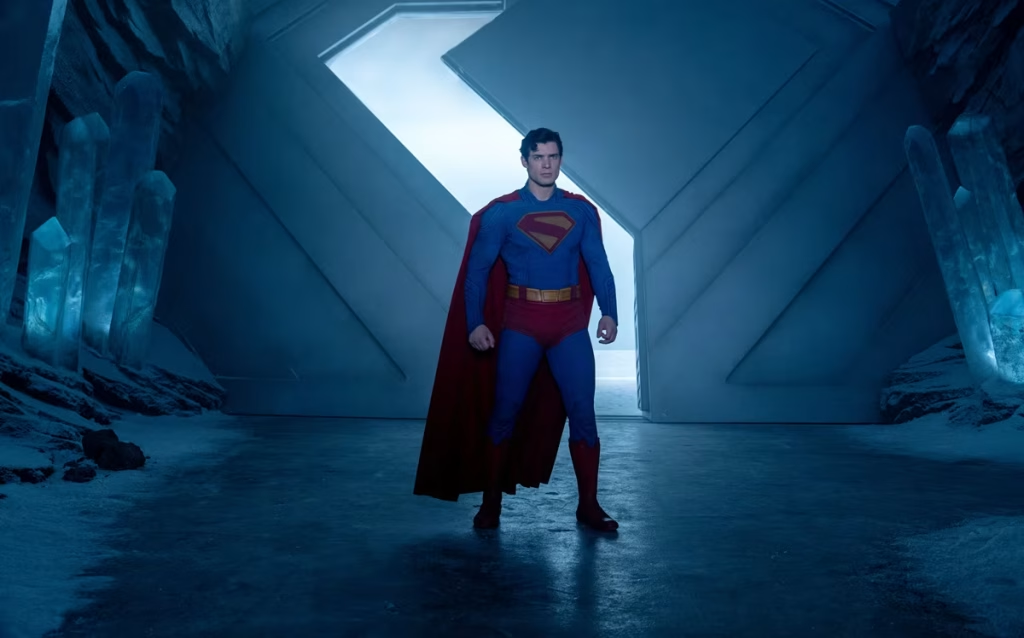
The cameo had been designed to lead into the second film in James Gunn and Peter Safran’s new DC Universe, with Alcock’s Kara Zor-El moving from Superman’s untidy relative at the door to the centre of her own interstellar story.
What we eventually got is recognisably part of the same universe as Superman. It has the odd creatures, damaged outsiders, practical silliness, sudden brutality and carefully deployed pop songs that have become familiar features of Gunn-adjacent superhero cinema.
Craig Gillespie directs rather than Gunn, however, and the film is not merely Superman with a different cape. Its colours may be related, but the emotional weather is rougher.
Personally, I liked it.
Not without reservations. Not in the breathless way superhero films are sometimes discussed during their first weekend, when everyone is apparently required to declare either the rebirth or death of cinema before Monday morning. I liked it because Milly Alcock makes Kara feel distinct, because the film gives grief a physical texture, and because it understands that being related to Superman would probably be less inspiring than people imagine.
A Superhero Who Would Rather Be Somewhere Else
Credit: DC Studios/Warner Bros. Pictures.
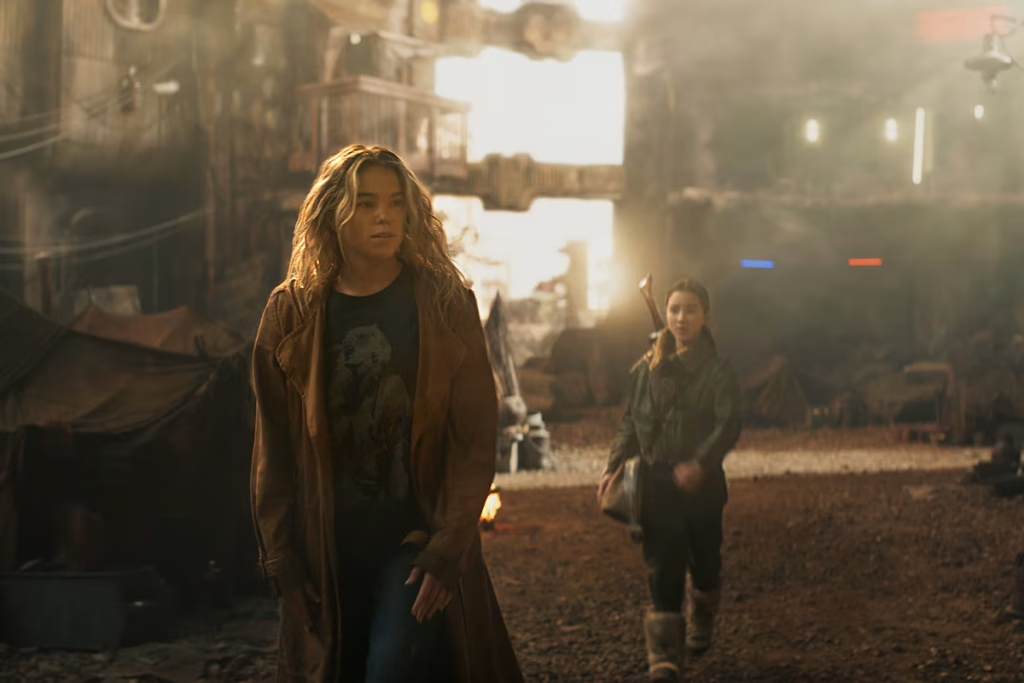
Kara Zor-El is celebrating her twenty-third birthday on a planet with a red sun when the story properly begins. Red sunlight removes her Kryptonian powers, allowing her to drink, get hurt and briefly experience the ordinary vulnerability that Clark Kent has spent most of his life trying to conceal.
Kara, naturally, uses this rare opportunity to get drunk.
She is travelling with Krypto, whose behaviour suggests that superpowers have done little to improve his respect for furniture, personal space or newspapers. The film’s opening joke has him relieving himself on a copy of the Daily Planet. Superman has saved a town from a nuclear accident. Supergirl, according to the smaller headline, has saved some cats.
The hierarchy has been established.
The red-sun birthday, Kara’s drinking and her meeting with Ruthye Marye Knoll all come from the broad foundation of Supergirl: Woman of Tomorrow. The film changes Kara’s comic-book birthday from twenty-one to twenty-three, but keeps the useful idea of introducing a super-powered character in one of the few places where she cannot rely on those powers.
That decision is more than a comic-book mechanism. It lets Alcock establish Kara through posture, speech and temperament rather than flight.
She is guarded, funny without trying to be charming, and already tired of whatever expectations have followed her through the galaxy. Alcock plays her cynicism as armour rather than personality. There is always something working beneath it: grief, embarrassment, anger and the suspicion that Superman has somehow inherited the life she was supposed to have.
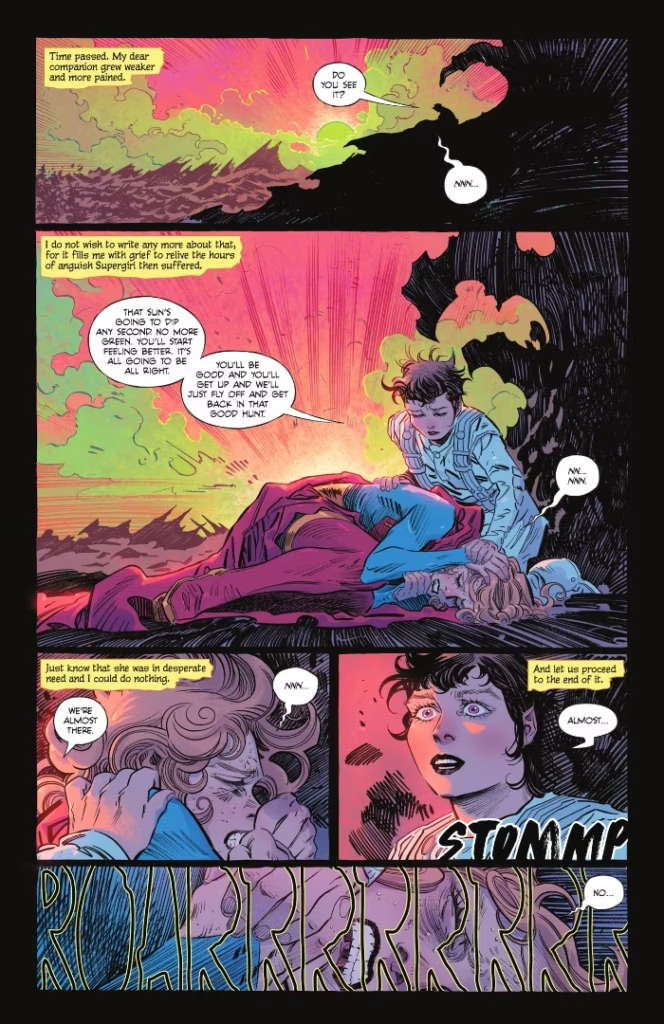
Clark was sent away as a baby. He remembers Krypton through recordings, archives and the stories other people tell him. Kara remembers the place itself.
She remembers her parents.
She remembers the language, the ceremonies and the texture of an ordinary day before ordinary days stopped existing.
She remembers watching the end arrive slowly.
The Comic I Still Haven’t Read
Credit: DC Studios/Warner Bros. Pictures.
I had intended to read Supergirl: Woman of Tomorrow before seeing the film. It seemed like the sensible thing to do. Eight issues, one collected volume and enough time before release to approach the adaptation with at least a basic knowledge of what was being adapted.
I still have not got around to it.
The book remains on that expanding internal list of things I am definitely going to read after finishing several other things I was definitely going to read. Collectors, readers and people with shelves will recognise the system. It is very efficient right up until you examine the results.
That means I cannot honestly judge the adaptation panel by panel. I do not know whether a scene preserves Bilquis Evely’s composition, whether a line lands differently on the page, or whether a particular omission changes the story’s rhythm more than a summary can suggest. My comparison here is based on production interviews, DC’s published material and accounts of the comic’s ending, not on pretending I have read something I have not.
The original Supergirl: Woman of Tomorrow was an eight-issue limited series written by Tom King, drawn by Bilquis Evely and coloured by Mat Lopes. The first issue appeared in June 2021, the eighth in February 2022, and the collected graphic novel followed later that year. Its premise sends Kara, Krypto and the angry young Ruthye into space on a revenge journey after the murder of Ruthye’s father.
The acknowledged structural influence is True Grit: a determined girl recruits an older, damaged and frequently difficult figure to help her pursue the man who killed her father. Screenwriter Ana Nogueira also looked to Unforgiven while adapting the story, keeping the Western spine while compressing the comic’s more expansive science-fiction detours into a conventional three-act film.
So the film is faithful in the way many adaptations are faithful when they are not being literal. It keeps the travellers, the murdered father, Krem, the poisoned Krypto, the space-western journey, the green sun, Kara’s history on Argo City and the argument between justice and revenge.
Then it makes several rather large changes.
A Space Western Wearing a Superhero Cape

Credit: DC Studios/Warner Bros. Pictures.
The film was directed by Craig Gillespie from Nogueira’s screenplay, with James Gunn and Peter Safran producing. Rob Hardy served as director of photography, Neil Lamont as production designer, Tatiana S. Riegel and Fred Raskin as editors, Anna B. Sheppard and Michael Mooney as costume designers, and Claudia Sarne composed the score.
Gillespie is an interesting fit. His previous films include I, Tonya and Cruella, both of which revolve around abrasive women being presented through restless visual style, complicated sympathy and music that occasionally arrives with its elbows out. That does not automatically make him the obvious Supergirl director, but it does explain why this Kara is allowed to remain difficult.
Gunn described Alcock as a “rock-and-roll Supergirl”, while Gillespie talked about treating the individual DC films like separate graphic novels rather than forcing them into one rigid visual template. He also designed the action around Kara’s emotional state: angry fights become rougher and more frantic, while moments of control allow the camera to move more fluidly.
That approach is visible throughout the film.
The story moves from red-sun bars to public transport travelling through wormholes, pirate attacks, frontier settlements, yellow-sun brawls, damaged spacecraft and a planet where green sunlight turns Kara’s own body against her. It is a superhero film, but it often behaves like a road movie in which the road has been replaced by an unreliable interstellar transport network.
The worlds are busy without requiring lengthy explanation. Languages, species and bits of machinery enter the frame and are allowed to remain unexplained. The influence of Gunn’s Guardians of the Galaxy films is difficult to miss, but the film’s surfaces are less polished. These places feel scraped, repaired and occupied rather than newly generated for a theme-park ride.
There are moments when it starts to resemble a particularly expensive collection of science-fiction paperback covers: strong silhouettes, battered metal, dangerous suns and people wearing clothes that suggest nobody has invented a convenient washing machine anywhere in the galaxy.
For a visually minded viewer, there is plenty to look at.
The People Travelling Through the Wreckage
Credit: DC Studios/Warner Bros. Pictures.
The central group is relatively compact. Milly Alcock plays Kara Zor-El; Eve Ridley is Ruthye Marye Knoll; Matthias Schoenaerts plays Krem of the Yellow Hills; Jason Momoa appears as Lobo; David Krumholtz and Emily Beecham play Kara’s parents, Zor-El and Alura In-Ze; Ferdinand Kingsley plays Ruthye’s father, Elias; Diarmaid Murtagh is Krem’s lieutenant Drom Baxton; and David Corenswet returns as Clark Kent. Krypto, sensibly, plays himself with the assistance of effects artists, trainers and several dogs who presumably had more professional discipline than the character.
The film belongs to Kara and Ruthye, but the others represent the choices surrounding them.
Clark is the heroic standard Kara resents.
Her parents are the life she cannot recover.
Krem is grief converted into cruelty.
Lobo is violence without much interest in moral philosophy.
Krypto is home.
Kara Zor-El: The Survivor Behind the Symbol
Credit: DC Studios/Warner Bros. Pictures.
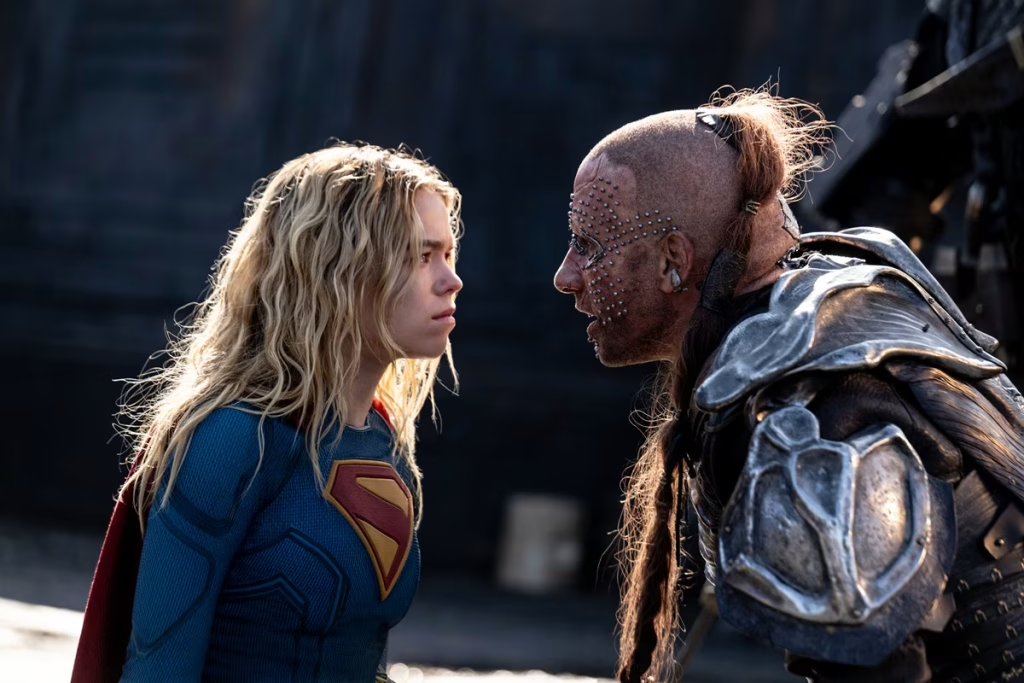
The crucial distinction between Kara and Clark is not that she is angrier or more sarcastic.
It is memory.
Clark has the benefit and burden of being raised by the Kents. His Kryptonian identity is inherited, reconstructed and occasionally imposed upon him. Kara’s is lived experience. She did not lose an abstract heritage. She lost streets, routines, people and a future she had already begun inhabiting.
The Argo City flashbacks are therefore the emotional centre of the film.
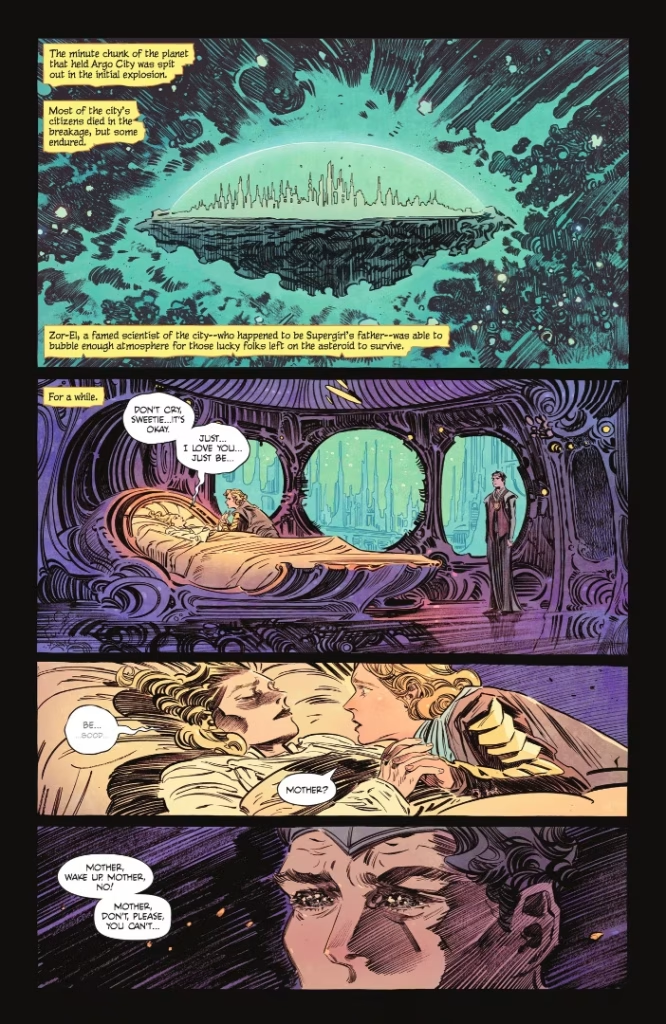
Krypton does not disappear in one clean explosion. Argo survives as a fragment beneath a protective structure, carrying the remaining population through a prolonged death. The imagery is beautiful and sickening: a civilisation continuing its rituals while the conditions sustaining it become increasingly fragile.
Zor-El and Alura are not holographic dispensers of exposition. They are parents trying to preserve some kind of ordinary life while knowing that the ordinary has already ended.
David Krumholtz brings a gentle, exhausted intelligence to Zor-El. Emily Beecham gives Alura warmth without turning her into a symbolic mother waiting to die for character development. Their scenes explain Kara without excusing everything she does.
She did not simply survive Krypton.
She had to keep surviving it.
DC’s own history of the character has changed repeatedly since Kara first appeared in Action Comics #252 in 1959, but Woman of Tomorrow returned to the particularly cruel image of Argo City enduring after Krypton’s initial destruction before radiation, structural failure and further catastrophe finished the job. The film’s flashbacks adapt that version of her origin.
Alcock is very good at letting this history appear without announcing it. Kara can be standing still while her face seems to be resisting three different reactions. She is flippant when sincerity would expose her. She becomes aggressive when frightened and irritated when somebody needs her.
Her heroism is not absent. It is buried beneath the belief that she has already failed the people who mattered most.
That makes her relationship with Ruthye less a conventional mentorship than a collision between two versions of grief.
Ruthye Marye Knoll: A Child Carrying a Sword
Credit: DC Studios/Warner Bros. Pictures.
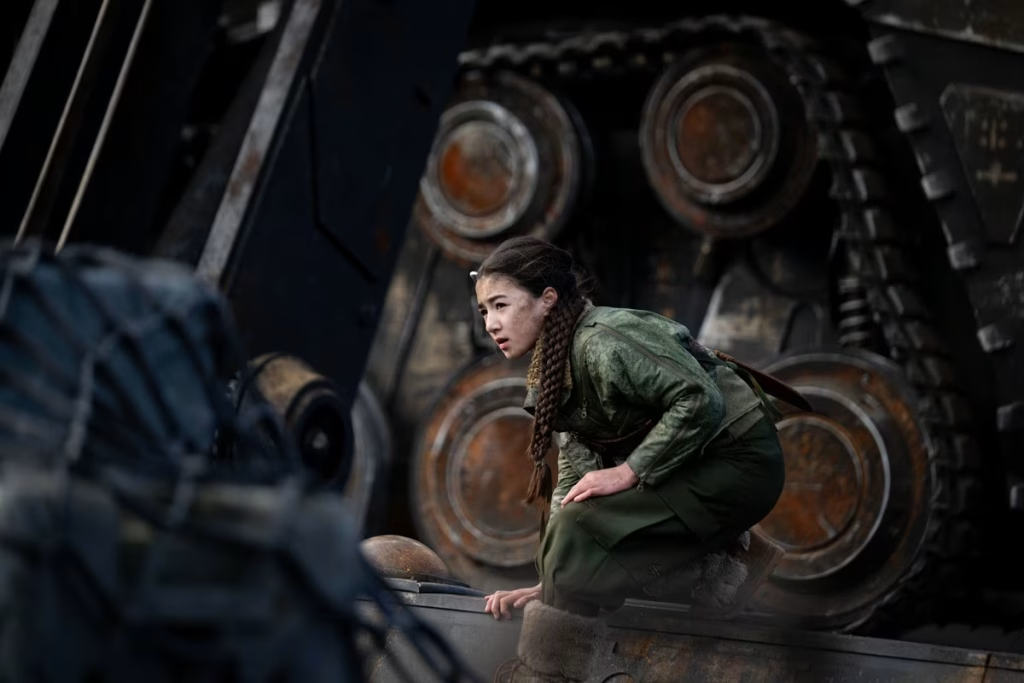
Eve Ridley has the difficult task of playing determination without turning Ruthye into a small adult.
Ruthye is brave, but much of that bravery is desperation with good posture. She has decided that killing Krem will settle the universe into a shape she can understand. Her father is dead. Krem is alive. Therefore, Krem must die.
It is the sort of logic grief produces when grief wants a job.
Ruthye initially sees Kara as a weapon she can hire. Kara sees Ruthye as a nuisance she cannot easily abandon. Neither is particularly interested in being emotionally useful to the other.
Their relationship develops through irritation, danger and the recognition that each has survived something the other understands. Kara sees what Ruthye is becoming because she has spent years becoming a more elaborate version of the same thing. Ruthye sees past Kara’s performance because children with a fixed objective are often immune to adult attempts at appearing unavailable.
Ridley does not try to compete with Alcock’s larger physical presence. She holds the frame through concentration. Ruthye watches, calculates and keeps moving. Even when the film surrounds her with pirates, monsters and people who can fly, she remains the person most committed to reaching the end of the road.
There are stretches where the speed of the film gives her emotional development less room than it deserves. The transition from solitary vengeance to genuine attachment happens convincingly, but quickly. Another ten or fifteen minutes of the two simply travelling together might have helped.
Then again, most modern franchise films are criticised for being too long. It is almost refreshing to find one that could have used a little more road.
Krypto: The Plot Device With Muddy Paws
Credit: DC Studios/Warner Bros. Pictures.
Krypto is not merely present to sell soft toys, although I doubt Warner Bros. has objected to that side effect.
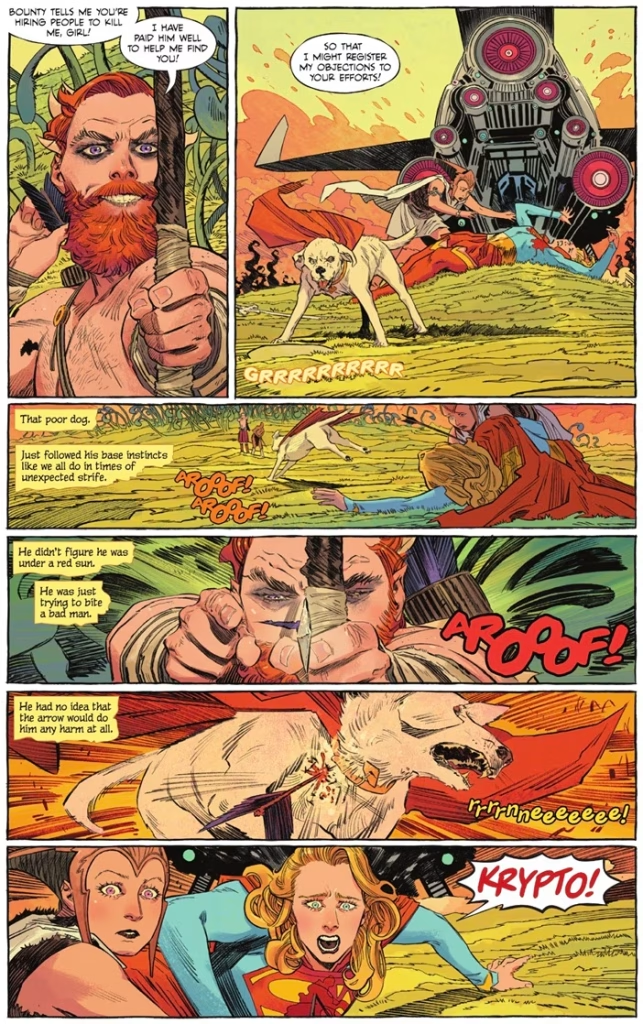
Krem attacks him with a poisoned projectile, leaving Kara with a narrow window in which to find the poison’s source and obtain an antidote. Ruthye’s revenge mission and Kara’s attempt to save Krypto become the same journey.
The comic also begins with Krem shooting Krypto, although the book later complicates the actual danger posed by the poison. The film plays the threat more directly.
Krypto gives Kara’s grief somewhere practical to go.
People are complicated. They ask questions. They see through excuses. A dog simply needs to be saved.
The flashbacks showing Kara finding Krypto as a vulnerable animal on the dying Krypton make their relationship more than a franchise handover from Superman. They are both creatures rescued from the same collapse. Krypto is one of the few surviving links between Kara’s past and present that does not require interpretation.
That is why the poisoning works, even though threatening an animal is one of cinema’s least subtle emotional buttons. The film knows exactly what it is doing. So does the audience. We press the button anyway.
Krem of the Yellow Hills: Evil Made Efficient
Matthias Schoenaerts plays Krem as a brutal, heavily modified space pirate whose appearance suggests an industrial accident involving armour, piercings and a box of very determined rivets.
He is physically convincing. Schoenaerts has the weight and stillness to make Krem dangerous even before the action begins. He does not bounce around the screen performing villainy. He occupies it.
The film substantially changes him from the comic. On the page, Krem is not originally the leader of the Brigands. The adaptation consolidates the threats by making him head of the group and recasting the Brigands as traffickers who abduct girls and women to serve as their “Brides”. Nogueira has explained that the change was intended to connect the villain’s crimes more immediately to Kara and Ruthye while simplifying material that would have been difficult to carry through a two-hour film.
I understand the practical decision.
I am less sure it improves the drama.
Turning Krem into the leader of an organised trafficking operation removes any uncertainty about whether he deserves punishment. He becomes a concentrated package of reasons to hate him. That gives the film moral urgency, but it also makes him less interesting than Kara.
There is little tension in deciding whether Krem is redeemable. The tension lies entirely in deciding what killing him will do to the person holding the sword.
That becomes important later.
Lobo and the Danger of Enjoying the Wrong Man
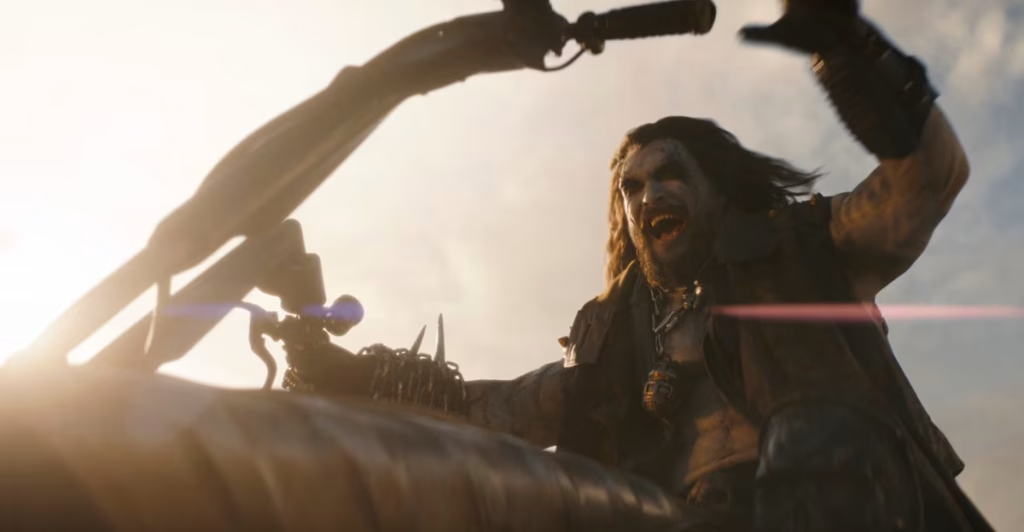
Jason Momoa’s Lobo arrives looking as though Aquaman has been left overnight in a garage with heavy-metal albums, engine parts and no responsible adult.
It is obvious casting, which is not always an insult.
Momoa understands the physical joke of Lobo immediately. He is huge, loud, vain and perfectly comfortable with the fact that everyone else finds him exhausting. His flying Spacehog, chains, weapons and biker styling all lean into the character’s deliberately excessive 1990s energy.
Lobo first appeared in Omega Men #3 in 1983 and eventually became a parody of grim, hyperviolent comic-book masculinity. The film keeps that sense of somebody who has mistaken being unbearable for a personal philosophy.
He is entertaining because the film does not ask him to become respectable.
There is still a slight problem with his presence. Whenever Momoa appears, the film pauses to admire the arrival of Lobo. That is understandable, but it briefly shifts attention away from Kara and Ruthye’s story towards the machinery of future DC appearances.
He does not derail the film. He comes close to stealing it in short bursts, then leaves before the theft becomes permanent.
That is probably the correct amount of Lobo.
The Scenes That Stayed With Me
The first is the red-sun introduction. Kara is powerless, drunk and unimpressed, which is a far better way to begin than another sequence showing a Kryptonian discovering flight. We already know she can fly. The question is what remains when she cannot.
The attack on Ruthye’s family and Krypto gives the film its forward motion. Krem’s cruelty is immediate, and Kara’s response tells us how much of her apparent detachment is performance.
The Wormhole Xpress sequence is the film at its most casually strange. Kara and Ruthye are travelling by interstellar public transport when the vehicle is attacked by the Sklarian Raiders. Seth Rogen voices the small bus attendant, one of those Gunn-era creatures designed to be amusing, unsettling and slightly grubby at the same time. The Raiders themselves come from older DC continuity, but the scene works without requiring anyone to know that.
Then there is the bar fight on Bilquis.
Kara is back beneath a yellow sun and therefore fully powered. She asks the musicians to continue playing and dismantles the room while the band carries on. The scene has the familiar pleasure of watching a superhuman stop pretending to be manageable, but Alcock keeps it rough. Kara is not moving with Superman’s clean, public confidence. She fights like somebody emptying a week’s anger into the furniture.
Artwork by Bilquis Evely, colours by Mat Lopes; DC.
The Argo City material lands differently. Gillespie slows down, the colour palette warms and the film allows the scale to become personal. There are crowds, ceremonies and collapsing systems, but the important image is Kara watching her parents become part of the past.
On Barenton, the green sun renders her powerless in a more painful way than the red sun. Ruthye must protect and physically assist the person she had recruited for protection. The reversal strips their partnership of its last transactional element. They are no longer mercenary and client. They are simply two people trying to get each other through a cave.
The final assault on the Brigands returns Kara to full power and uses a cover of “The Middle” by Kelty Greye and KidMotel. It is precisely the kind of pop-song placement that will either pull a viewer into the sequence or make them aware of the director and music supervisor standing just outside the frame.
For me, it mostly works.
Mostly.
Design, Costume and the Pleasure of a Used Universe

The film’s best design choice is allowing Kara’s Supergirl costume to look like clothing rather than a perfectly smooth digital concept.
The blue has texture. The red cape has weight. The gold elements are visible without becoming polished jewellery. Her brown duster makes the superhero suit look like something she actually travels in rather than an outfit waiting beneath office clothes.
It also gives her a faint gunslinger silhouette.
That matters because the film is borrowing Western structure without filling the screen with literal cowboy imagery. Kara’s coat, Ruthye’s sword, the frontier settlements and Krem’s gang provide enough of the language. The rest can remain science fiction.
Krem’s design is less restrained, but that is almost the point. His armour looks assembled through conquest. Lobo appears to have been designed by someone trying to remember every 1990s comic-book cover at once. The Wormhole Xpress has the functional ugliness of transport used by people who cannot afford a private spacecraft.
The different planets do not all receive enough screen time to become places I could map, but each has a readable visual identity. Gillespie and production designer Neil Lamont treat colour as environmental information: red sunlight means chosen vulnerability, yellow means power, and green means bodily danger.
The film does not hide the mechanism. It turns the mechanism into design.
Music for a Woman Running From Herself
Claudia Sarne’s score moves between piano, orchestra, electronics, distorted textures and the dirtier synth sounds associated with Kara’s more chaotic state of mind.
Sarne has said that the central theme needed to cover the full emotional distance between Krypton’s destruction, Kara’s fury and her eventual movement towards acceptance. She also created a smaller piano idea for Ruthye and a harsher sonic palette for Krem, while treating the film’s pop songs as separate, pre-existing set pieces around which the score had to move.
The music is effective, although I am not sure how much of it I would immediately recognise outside the film.
Its strongest material is tied to Kara’s past. The quieter piano and electronic passages give the Argo scenes a feeling of memory being reconstructed from damaged equipment. The action cues are louder and less distinctive, sometimes disappearing into the familiar modern mixture of percussion, distortion and urgent synthetic noise.
The pop songs are more noticeable.
This is where the similarity to Gunn’s other films becomes difficult to ignore. The songs are not merely background. They comment, contradict and occasionally announce that a scene is having a moment.
I enjoy that approach when the choice feels slightly unexpected. I become more resistant when the song seems to be doing emotional work the scene has already completed.
Supergirl lands on both sides.
Sarne’s appointment was also historically notable: DC described her as the first female composer to score a live-action film starring one of its heroes.
It has taken an absurdly long time for that particular ceiling to crack.
The Ending: Mercy for Ruthye, None for Krem
The ending is where the film stops being a fairly straightforward revenge adventure and becomes something more uncomfortable.
Kara defeats Krem and the Brigands. Ruthye approaches the wounded Krem carrying her father’s sword. This is the moment she has been constructing in her mind since the journey began.
Kara does not physically prevent her from killing him.
Instead, she tells Ruthye what the act will cost. Murder will not restore her family. It will not complete her. It will place Krem permanently inside whatever comes next.
Ruthye lowers the sword.

Artwork by Bilquis Evely, colours by Mat Lopes; DC.
She chooses not to become the person her grief had been designing.
Kara embraces her and tells her to walk away.
Then Kara kills Krem herself.
She drives the sword through him, making clear that the death is for Krypto and for what he did to Ruthye.
It is a brutal ending, not because Krem has been presented as deserving mercy, but because Kara has just made a persuasive argument against revenge and immediately performs the act herself.
The comic ends differently. In Woman of Tomorrow, Ruthye talks Kara out of killing Krem. He is imprisoned in the Phantom Zone for three hundred years. An elderly Ruthye later releases a repentant Krem and strikes him with her cane, bringing the story to a stranger, more patient conclusion about punishment, time and the limits of forgiveness.
Nogueira has said that Kara killing Krem was part of her film pitch from the beginning. Her reasoning was that Ruthye could not be allowed to perform the killing after everything Kara had tried to teach her. Kara instead takes the moral damage upon herself, defining a code that is separate from Superman’s absolute refusal to kill.
I am still deciding how I feel about it.
As a character moment, it is powerful. Kara protects Ruthye not only from Krem but from the person Ruthye might become by killing him. She carries another burden because carrying burdens is what she knows how to do.
It also risks turning moral responsibility into a form of adult outsourcing. Ruthye remains innocent because Kara commits the act for her. The death is still revenge. The film simply gives the revenge to the person more capable of surviving it.
Perhaps that is Kara’s tragedy.
She does not believe killing Krem will leave her untouched. She believes she is already damaged enough to absorb it.
Superman would reject that calculation. Kara makes it anyway.
The film finishes with her returning to Earth with Krypto and moving towards a more active acceptance of the Supergirl identity. There is no post-credits scene waiting to convert the ending into an advert.
For once, the credits are allowed to be credits.
What Worked for Me
Milly Alcock is the film’s main strength.
She makes Kara sharp without turning her into a delivery mechanism for sarcasm. The humour comes from impatience, self-protection and the fact that she knows how ridiculous the universe can be. When the film asks her to become emotionally exposed, Alcock does not suddenly replace the character with a more respectable version. Kara remains difficult while becoming understandable.
The relationship with Ruthye gives the story shape. Neither character is present to congratulate the other. They argue, misread each other and gradually develop trust through practical acts rather than speeches about friendship.
Krypto works because he is connected to Krypton rather than attached as a cute accessory. His relationship with Kara carries the history she cannot discuss comfortably with Clark.
The Argo City flashbacks give Supergirl a distinction from Superman that is deeper than tone. Clark represents the possibility of building a home after loss. Kara represents the exhausting work of remembering the home that disappeared.
The film also benefits from leaving Earth for most of its running time. It does not have to invent another reason for Metropolis to be destroyed while people watch from office windows. The cosmic setting allows the story to become its own scruffy science-fiction adventure.
And, yes, Lobo is fun.

There are more sophisticated critical observations available, but sometimes Jason Momoa arriving on a flying motorcycle covered in skulls is doing the work required of him.
Where It Wobbles
The film’s greatest weakness is that its influences are occasionally more visible than its own personality.
The Guardians of the Galaxy comparison is unavoidable: damaged travellers, loud songs, strange aliens, a beloved animal, comic violence and an improvised family moving between colourful planets. Supergirl is darker, but it sometimes seems to be using the same box of tools.
Krem is threatening but not especially layered. Making the Brigands traffickers ensures that nobody has to think very hard about whether they are evil. It increases the stakes while reducing complexity.
Lobo is enjoyable, but his appearances carry the faint glow of franchise management. He belongs in the film, although the camera sometimes behaves as though it has just spotted a future spin-off walking through the door.
The pace is brisk enough that some worlds feel like stops on a guided tour. At 108 minutes, the film is unusually compact by modern superhero standards, but Ruthye and Kara’s developing bond could have used more quiet travelling time. The final act also moves towards familiar digital scale after the earlier sections have done more interesting work with character and environment. The film’s official runtime is one hour and forty-eight minutes.
Then there is the ending.
I admire its nerve. I am not entirely convinced by its moral arithmetic.
That may be why it stays in the mind.
Supergirl After the Noise
This was Kara Zor-El’s first solo live-action film since Helen Slater wore the cape in 1984. More than forty years passed between the two, although Melissa Benoist’s television series, animation, comics and Sasha Calle’s appearance in The Flash kept the character visible in the meantime.
The new film arrives at a strange cultural moment for superhero cinema. The genre is no longer automatically treated as an event. Shared universes have become ordinary, audiences are increasingly selective, and every new release is followed by an argument about fatigue before most people have had time to park.
Supergirl received a divided response. As of 28 July 2026, Rotten Tomatoes listed a 53 per cent critics’ score and a 73 per cent verified audience score, while Metacritic recorded a score of 50.
Commercially, the film also struggled. Box Office Mojo reported a worldwide theatrical total of approximately $124.6 million by 28 July, including $71.6 million domestically and $53 million internationally. Whatever the disputed production-budget figures, that reads as a disappointing return for a major studio superhero release.
None of that changes what is on screen, but it will shape the way the film is remembered.
There is a danger that Supergirl will be discussed mainly as evidence in a larger argument about DC Studios, James Gunn, female-led superhero films or the supposed preferences of an audience treated as a single confused organism.
The film itself is more specific than that.
It is about a young woman who remembers the end of her world and resents being measured against a man who does not. It gives her no conventional romantic subplot. Her central relationships are with a bereaved girl, a destructive dog, her dead parents and a cousin whose goodness feels both admirable and slightly infuriating.
Kara does not need to become Superman in order to justify the emblem on her chest.
The film lets her goodness remain less tidy.
A Rougher Kind of Hope

I went into Supergirl because Milly Alcock’s cameo in Superman made the character look worth following.
The full performance justified that interest.
The film is uneven. Its influences are obvious, some of its worlds pass too quickly, and its villain is more effective as a reason for the story than as a person inside it. The music occasionally pushes where it could have trusted the scene, and the ending asks a moral question it may not have fully answered.
I still liked it.
Alcock gives the new DC Universe a Supergirl who feels connected to Superman without becoming secondary to him. She is not the brighter, younger or more impulsive variation. She is the Kryptonian who remembers Krypton.
That memory has not made her nobler.
It has made her tired, angry, funny, protective and occasionally frightening.
By the end, Kara has not recovered from what happened to her. She has not found a speech capable of arranging grief into something useful. She has simply decided to stop running from the possibility that she might still help somebody.
She returns to Earth with Krypto.
Not cured. Not cleanly redeemed. Just willing to stay.
That seems enough for now.
Affiliate Disclosure: This post contains affiliate links. If you click through and make a purchase, I may earn a small commission—at no additional cost to you. I only recommend products I personally find useful or relevant. Thank you for your support.
Leave a Reply