
Spoilers for all eight episodes of Paradise Season 2, including the finale, “Exodus”.
Somewhere between a dead president, an underground suburb with an artificial sky and a pregnant woman taking refuge at Graceland, Paradise became a rather different television series from the one I thought I had signed up for. I had expected another season of conspiracies beneath a mountain, perhaps with a few more people discovering that the sun overhead was basically an expensive lighting installation. Instead, Dan Fogelman took the roof off the story and sent us out into the wreckage, where other survivors had been living through an entirely different end of the world.
I watched the whole of Season 2 in a stretch, and I think that helped as much as it hurt. The human stories landed harder when I was living with them over a few hours, but by the finale the show was throwing so much at me that I could practically hear a whiteboard being wheeled into the room. An isolated woman in Elvis Presley’s former home, a post office survival community, an increasingly unstable assassin, a father searching for his family, an underground city falling apart and, finally, a machine that may be able to interfere with time itself. It is not a quiet second season, although its quieter moments are often the reason I kept watching.

The Show Finally Lets Us See Who Was Left Outside
The first season’s great trick was revealing that its immaculate town was not really a town. Paradise was an underground simulation of American normality, a beautifully maintained lie built for selected survivors while almost everyone else faced the catastrophe of The Day. The houses, roads and artificial sunshine were an exercise in design as reassurance; the place had the atmosphere of a planned community whose sales brochure neglected to mention the mass extinction happening overhead.
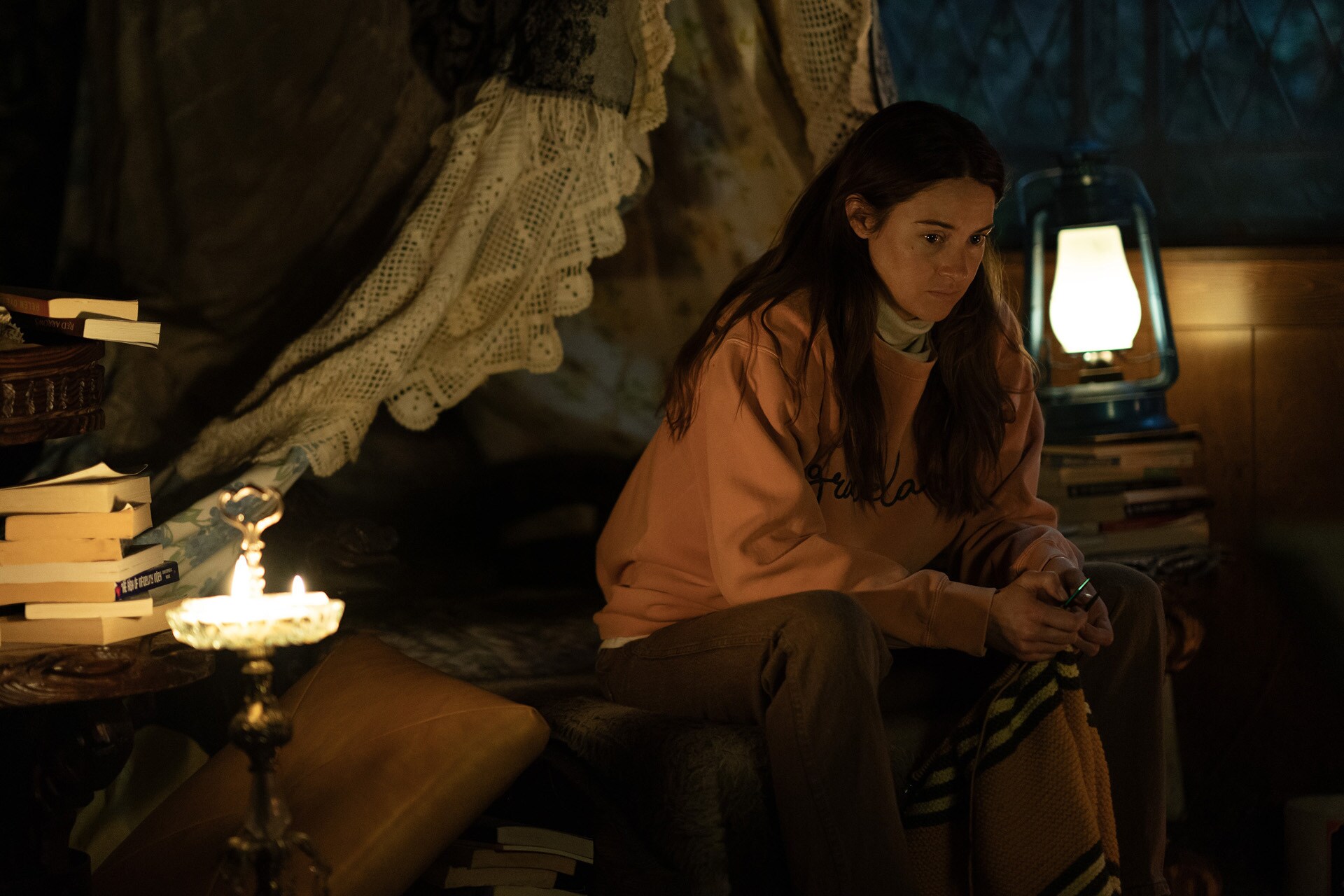
Season 2 understands that you cannot keep pulling the same curtain aside. It opens with “Graceland”, leaving Xavier Collins and the original bunker story behind for an hour to spend time with Annie Clay, played by Shailene Woodley. Annie works at Elvis Presley’s home in Memphis before the catastrophe and survives in an unlikely refuge there afterwards. Where Paradise has budgets, committees, security systems and carefully managed comfort, she has salvage, routine and a place filled with the material remains of somebody else’s life. I found that contrast more compelling than another early twist about the bunker would have been.
Graceland is a shrewd choice of setting, not just because it looks good on screen. It is already a monument to a vanished world, somewhere visitors go to see an ordinary home preserved as a kind of shrine. After civilisation collapses, that preservation becomes both useful and absurd. Annie can make shelter out of a cultural relic, but she cannot make companionship or a future out of display cases. Her loneliness gives the apocalypse a scale that the bunker, with all its crowds and political manoeuvring, sometimes loses.


Annie, Xavier and the Cruelty of Getting Attached
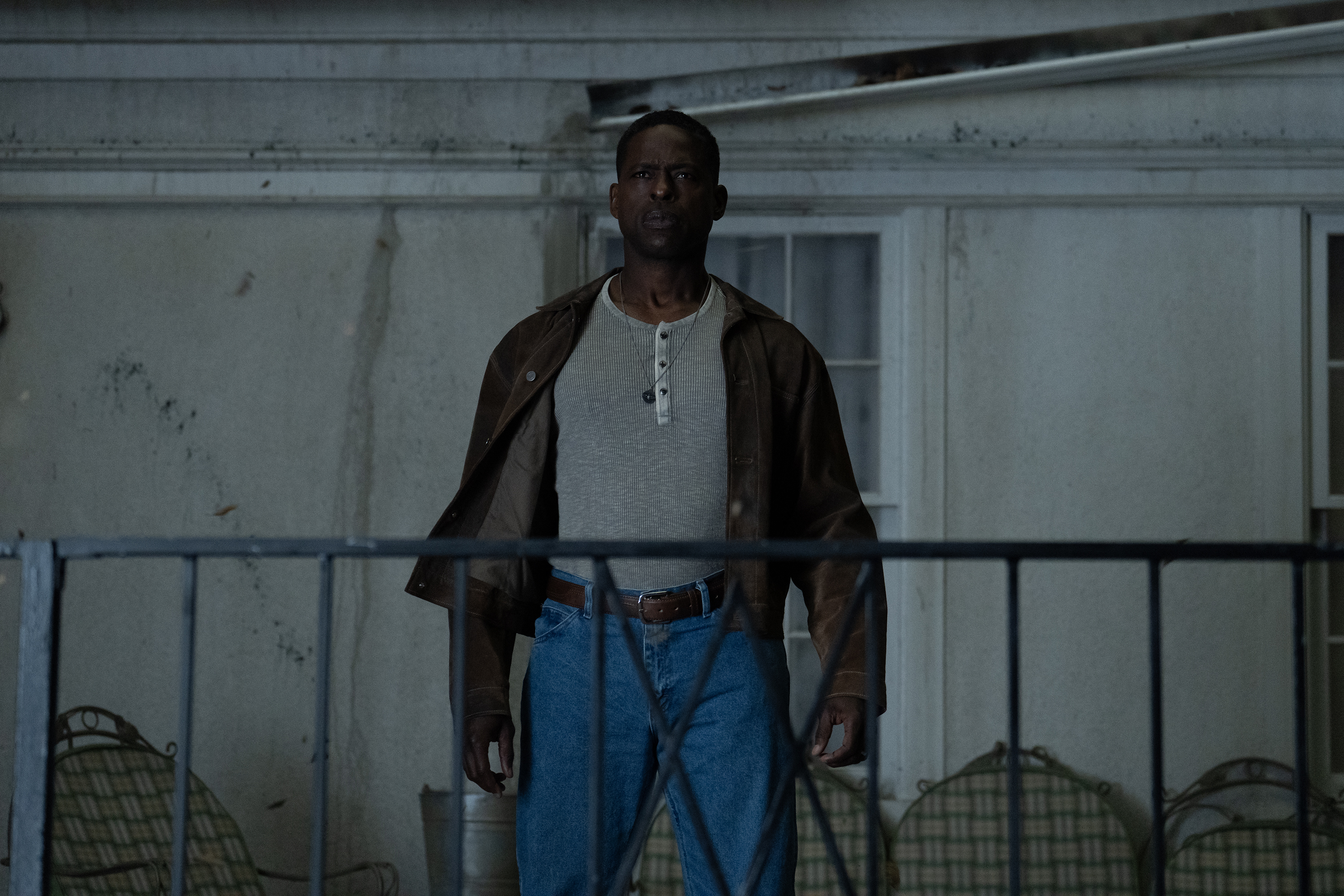
The second episode, “Mayday”, returns to Xavier, now exposed to weather, injury and other human beings without the protections of his old environment. Sterling K. Brown is especially good at making competence look costly. Xavier is capable of violence when he has to be, but he does not stride across the landscape like someone auditioning to lead a franchise. He looks like a tired man whose job description has expanded from protecting one president to locating his wife across a ruined country. The physical damage matters because the show allows him to appear vulnerable rather than invincible.

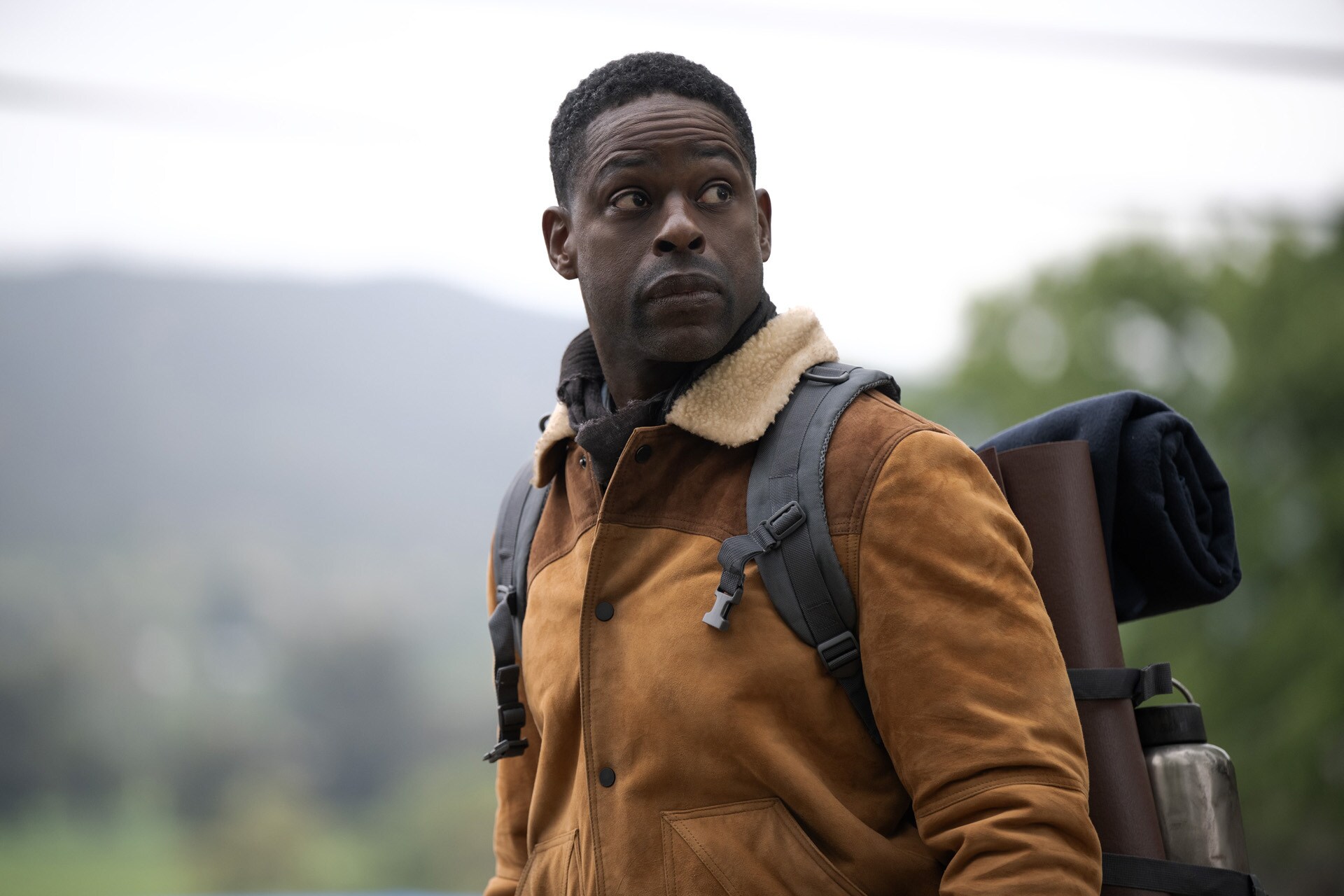
When Xavier and Annie’s stories meet, I assumed she would become a permanent part of the series. Their wary negotiations at Graceland are funny in places, tense in others, and finally rather tender. Annie needs to get to Colorado; Xavier will not abandon his search for Teri. Neither is in a position to dictate terms, and gradually the arrangement becomes less about leverage than trust. For a while the show allows two decent people to be decent to one another without pretending the world has become decent again.


Then comes “A Holy Charge”, the fourth episode, and the story takes one of its hardest turns. Annie is heavily pregnant and develops dangerous complications. Xavier finds people willing to help her deliver her child, and the act of collective care is a rare and welcome refusal of the usual post-apocalyptic assumption that every stranger must be either a cannibal or a future corpse. The baby survives. Annie does not. For all the season’s elaborate mysteries, this is the loss that lingered with me most, partly because the writers had given her just enough ordinary hope for the ending to feel unbearably abrupt.


I can understand why the series made that decision, even though a part of me resents it. Annie’s death changes Xavier’s journey and leaves him carrying a child whose father is Link, the leader of the group trying to reach Paradise. It also reminds us how limited all the grand survival plans really are. A billionaire can build an artificial town beneath a mountain, but outside it a woman can still die after childbirth in a place where enough medical support no longer exists. For once, the end of the world is not a spectacle. It is an absence of ordinary care.
Teri Had an Apocalypse of Her Own
For much of the series, Xavier’s wife Teri is the person he is trying to find, an emotional destination on a map full of threats. “The Mailman”, the fifth episode, corrects that imbalance by showing us how she lived through The Day and the years afterwards. Enuka Okuma makes Teri more than an object of rescue. She is resourceful, technically capable and stubbornly committed to finding a way back to her children, even as the people around her try to persuade her to accept the life immediately in front of her.
Her refuge is a post office, converted by Gary and his associates into a makeshift survival community. It is a particularly good piece of world-building because it feels almost plausible: an old institutional building, supplies put aside by people convinced trouble was coming, and a small collection of survivors with practical skills. Teri helps the group endure, looks after a child called Bean and keeps trying to reach her family over the radio. She contributes far more than an abstract hope of rescue; her work and her insistence on preserving small rituals give the place a life of its own.
There is a contrast running through the whole episode. Paradise’s inhabitants were selected by wealth and power, while this improvised shelter gathered around circumstance, skill and chance. Neither community is free of manipulation, and the show is careful to make that point through Gary. The person who appears to have helped Teri survive slowly becomes someone who cannot bear the thought of her choosing a different future. The apocalypse does not automatically make people nobler; sometimes it simply gives their worst habits fewer witnesses.

Gary Might Be the Season’s Most Recognisable Monster
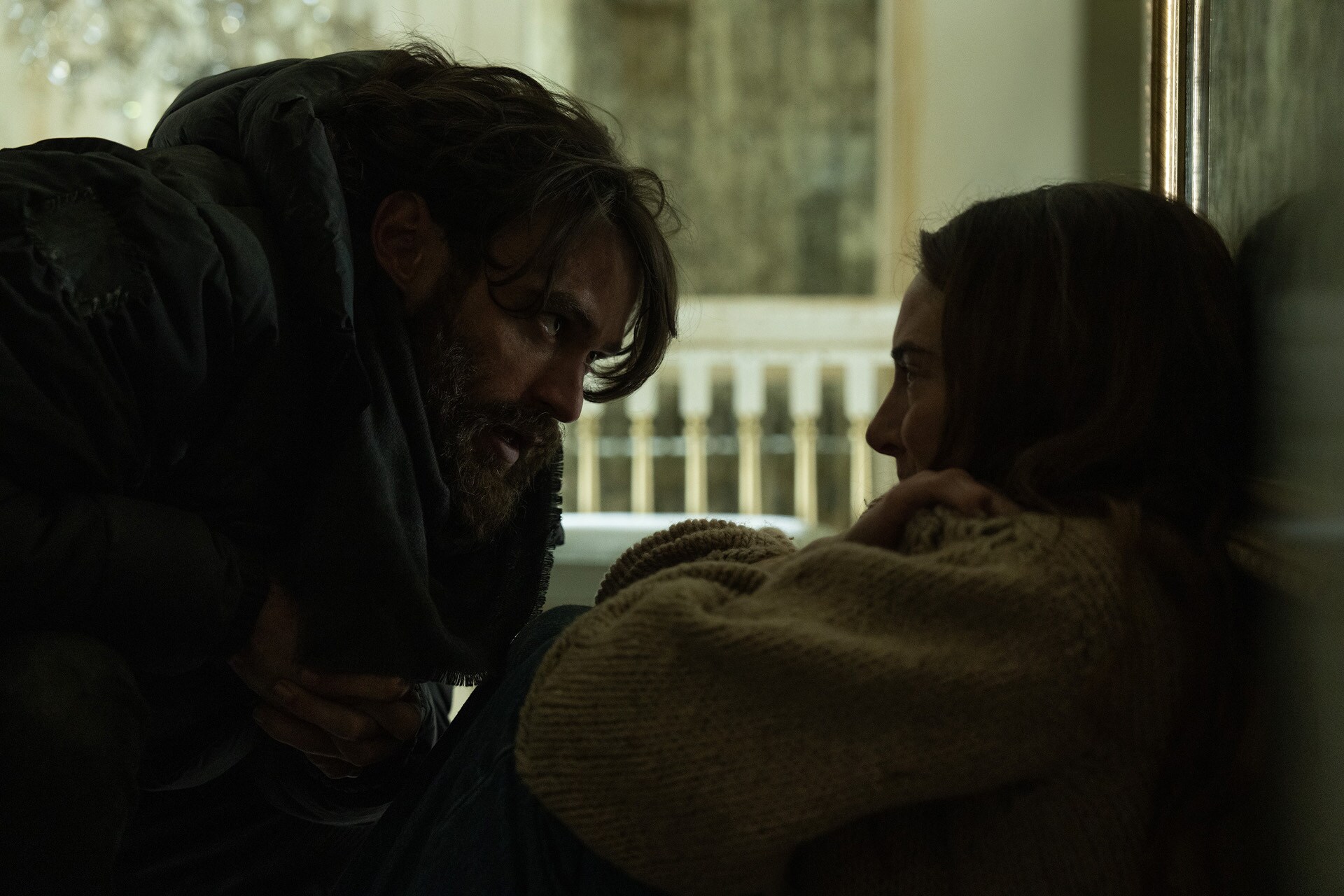
Cameron Britton’s Gary frightened me more than some of the enormous science-fiction machinery that arrives later. There is nothing particularly exotic about him at first. He is lonely, dutiful in his own fashion and pleased that catastrophe has finally given him a role. He helps build a refuge and wants to be considered indispensable, which is perfectly understandable until his need to be needed becomes a reason to control somebody else.
The revelation that he kills Ennis to prevent Teri from leaving is properly nasty, because it exposes the gap between the story Gary tells himself and what he is actually willing to do. His kindness has terms and conditions which Teri never agreed to. He cannot accept that someone might be grateful for being saved without owing him love in return. It is a smaller, more domestic version of the logic that operates inside Paradise, where protection is offered at the price of obedience.
I liked how “The Mailman” slowed the season down long enough to show an entire community being made from practical work. The people who maintain equipment, tend the sick and find useful purposes for old materials feel more real than another committee meeting in an immaculate bunker. It makes Gary’s betrayal worse because it damages something that was genuinely worth protecting. Unlike a comic-book villain, he does not need a secret facility or a sinister machine. He only needs to believe that his loneliness gives him rights over somebody else’s life.
Inside Paradise, the Walls Are Starting to Crack
Meanwhile, the bunker story has not been standing still. The third episode, “Another Day in Paradise”, returns us to Samantha “Sinatra” Redmond and a community that no longer quite believes its own story. The aftermath of Season 1 has unsettled the political order, and the survival project that once appeared almost frictionless now looks like what it always was: a system dependent on withheld information and people agreeing not to ask too many questions.
Julianne Nicholson makes Sinatra difficult to dismiss as a simple tyrant. She has wealth, authority and the hard certainty of somebody who has spent years convincing herself that terrible decisions were necessary. Yet she is also driven by loss, and Nicholson lets that sorrow leak through the composure without asking us to absolve her. The most disturbing thing about Sinatra is not that she enjoys power. It is that she believes her judgement is the only one capable of keeping everybody alive.
Paradise has always reminded me of a luxury development designed by people who consider human behaviour a minor technical complication. As someone who has spent a long time thinking about presentation and visual systems, I find the whole place perversely persuasive. It is a brand environment for denial: sunshine without weather, domestic life without the planet, normality maintained through production design. Season 2 makes the joke less comfortable by revealing how many people are beginning to see the machinery behind the illusion.


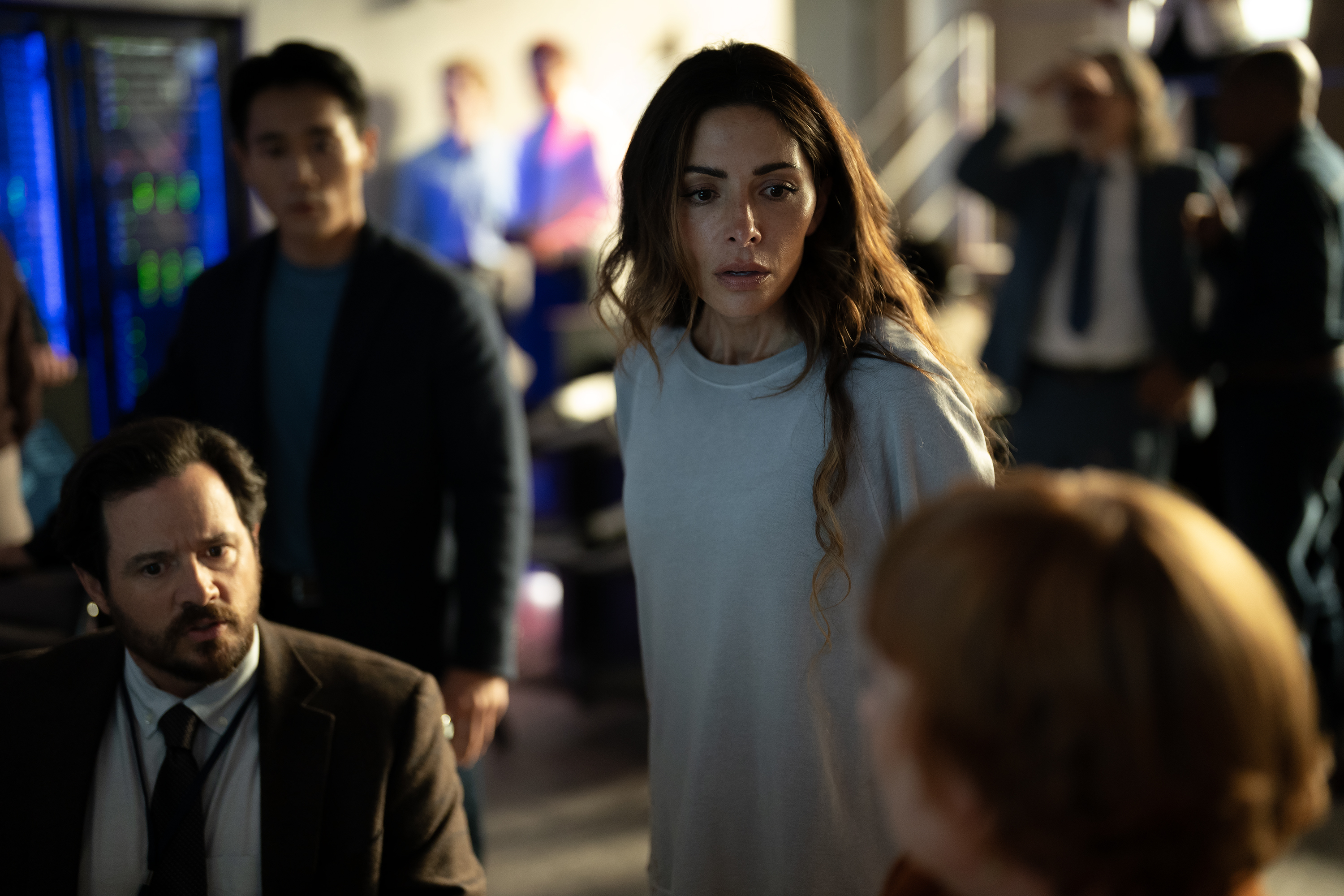
Sarah Shahi’s Gabriela Torabi is important to this breakdown because she is prepared to challenge what those in authority want her to believe. Her work with the residents and her search for answers make her a useful counterweight to Sinatra’s habit of treating knowledge as something that must be rationed. Nicole Robinson, Jeremy Bradford and the younger generation also help show that Paradise is not merely a contest between a wealthy benefactor and a dissatisfied bodyguard. It is a society in which people are discovering that the adults who promised safety may have been managing a deception all along.

The Children Inherit a World They Never Chose
Presley and James Collins are the reason Xavier’s journey retains a human purpose even when the plot starts behaving like a machine assembled from three different thrillers. They have grown up around the consequences of decisions they were too young to understand, and the second season makes the distance between adult secrecy and youthful responsibility particularly sharp. Presley and Jeremy’s relationship offers a smaller space of loyalty within the collapsing civic order, although the show never lets us forget how quickly that space can disappear.
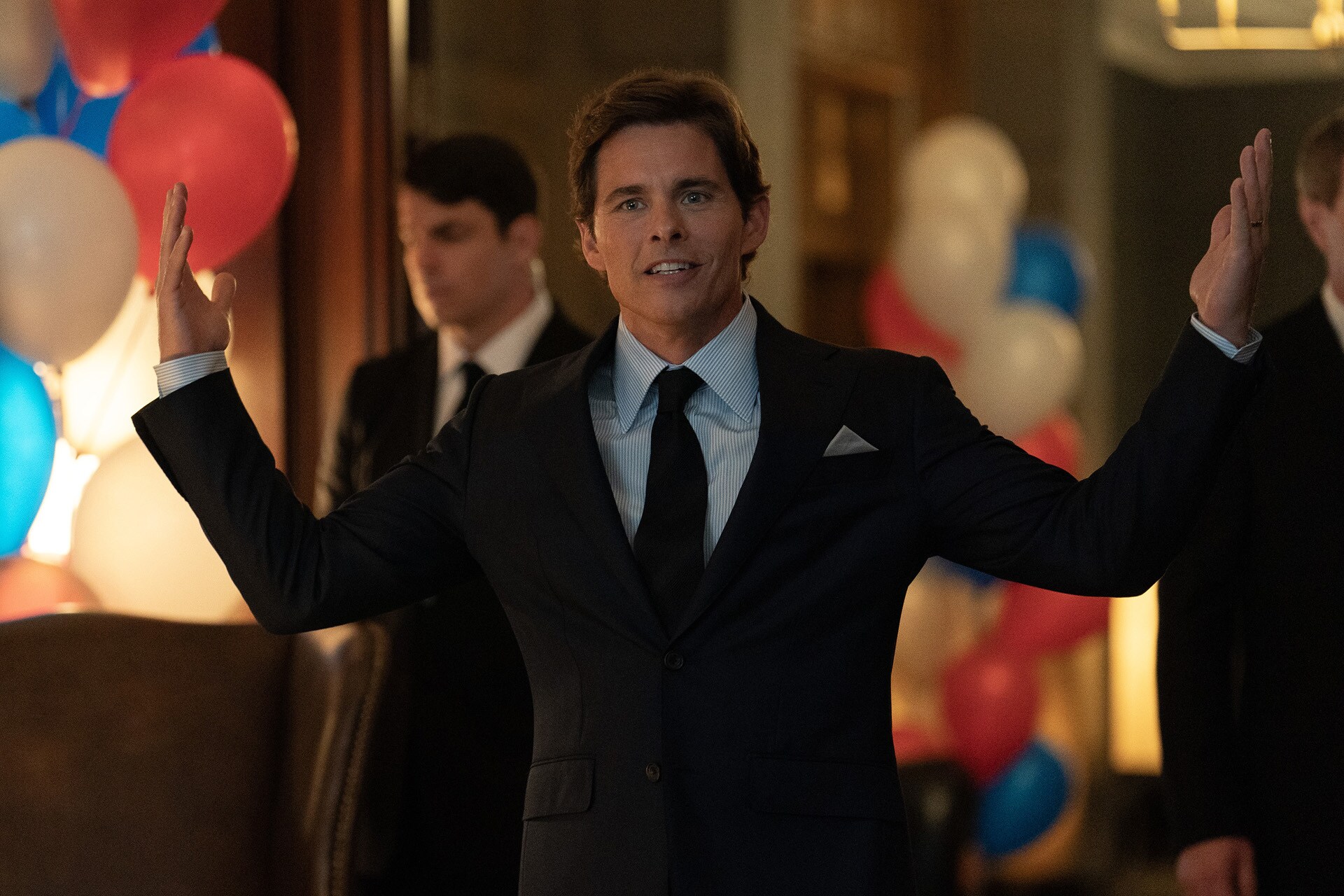
James Marsden’s Cal Bradford remains a presence through memories and flashbacks, a dead president who has somehow never quite left the building. That is a recognisable Dan Fogelman habit: the absent person continuing to shape everyone else’s decisions. It works here because Cal’s legacy is political as well as personal. He was involved in choices whose consequences outlived him, and Jeremy, Sinatra and Xavier are still living inside the structures he helped create.
I occasionally wished the season would spend longer with the people inside Paradise who are not directly connected to its central conspiracies. A settlement of that size ought to have countless petty disputes, practical worries and small domestic compromises. That mundane life would make the final collapse more devastating. Still, when the younger characters have to navigate the failures of the adults around them, the show does at least remind us that a society is more than the names of the people who designed it.



Jane Is What Happens When the Mystery Gets Personal
The sixth episode, “Jane”, takes a risk by devoting substantial time to a character who has mostly operated as a frighteningly efficient instrument of other people’s plans. Nicole Brydon Bloom’s Jane Driscoll is unsettling partly because she seems to occupy a different emotional register from everyone around her. The flashbacks trace her childhood and professional formation, as well as the peculiar messages and interventions that appear to have shaped her life long before the events inside the bunker.


The episode does not simply explain her away. It gives us more information without making Jane easier to excuse, which is a distinction I appreciate. Childhood damage can help account for a person’s behaviour, but television sometimes uses it as a discount voucher for every subsequent crime. Jane remains dangerous. What changes is that her past begins to connect with the wider mystery around Alex and the possibility that events have been anticipated or interfered with long before the characters realised it.
There is a rather old-fashioned puzzle-box pleasure in these connections, especially the strange messages surrounding her birth. I admit that I am susceptible to a well-placed clue in a mystery, although I am also suspicious of series that eventually declare everything was connected all along. A connection can be satisfying when it deepens what we already know; it becomes tedious when every incidental detail is suddenly promoted to destiny. “Jane” walks directly towards that danger and, for the moment, manages to make the journey entertaining.


Link Wants to Break the Machine, Not Join the Club
Thomas Doherty’s Link gives the outside survivors a recognisable face and a conflicting idea of what justice might involve. His people have lived without the protection enjoyed by those inside Paradise, and the existence of an immense concealed resource naturally raises questions about who is entitled to its benefits. The contrast is politically blunt, but effective. The supposedly fortunate few preserved a replica of normal life; those excluded from the project had to invent something new with what was left.

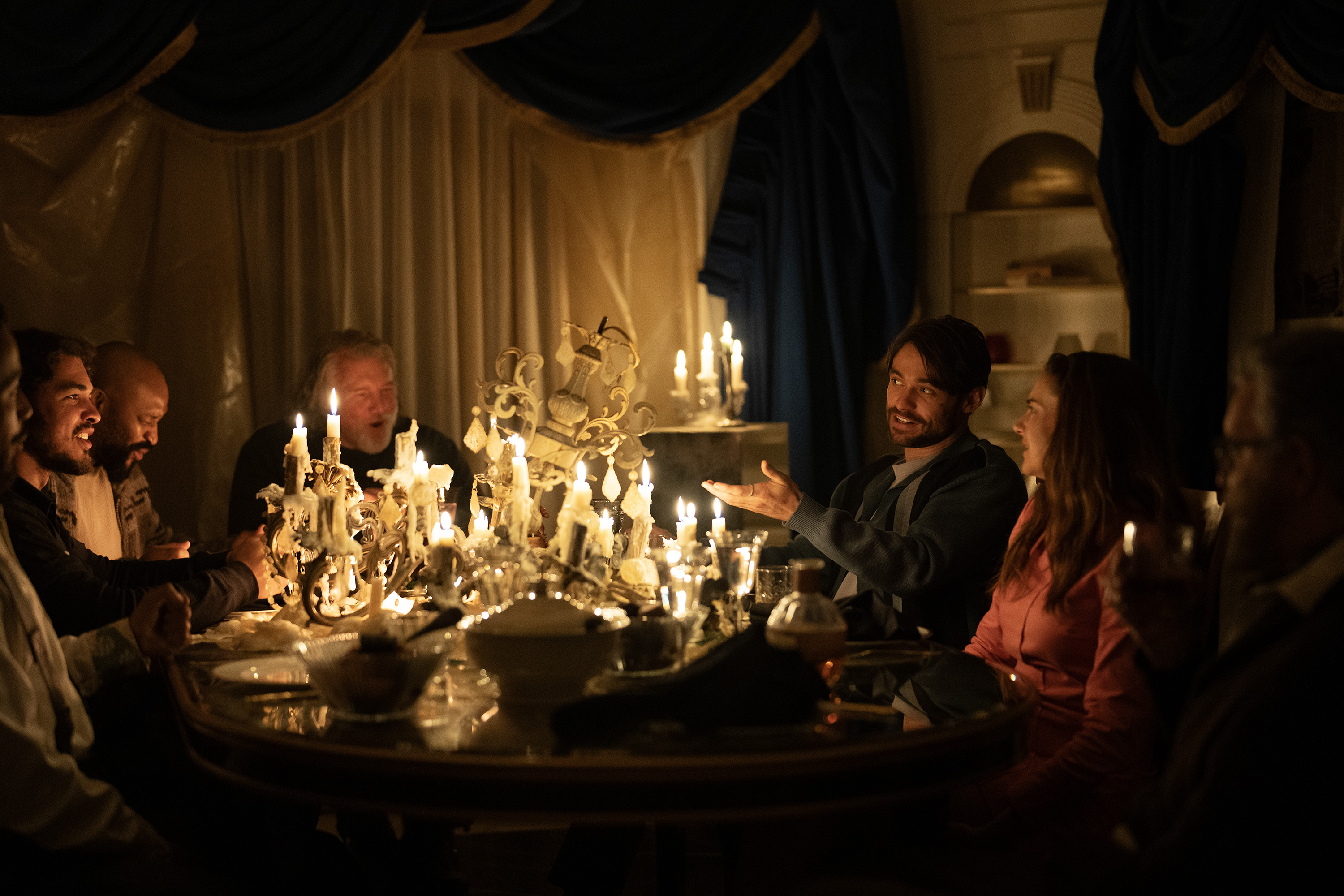
As Link moves closer to Sinatra and the bunker, his history starts to turn into another kind of mystery. Dylan, Dr Henry Miller and the project eventually known as Alex become entangled with Sinatra’s grief over her dead son. The series keeps a useful distance between what is established and what Sinatra wants to believe. Is there a strange connection between Link and Dylan, or is a bereaved mother attaching meaning to what she cannot accept? By the finale the question has become inseparable from the show’s developing ideas about time, but I would hesitate to describe every implication as an answer.
The seventh episode, “The Final Countdown”, piles these tensions together. Xavier and Teri have their own unfinished struggle, Sinatra tries to manage Link’s approach, and the bunker prepares for a threat that can no longer be kept outside by good lighting and authority. Link could have been written as a convenient invading menace, but the revelation of his connection to Annie and the child gives him something more interesting than an ideological objective. He has a human reason to change his mind when the choice finally arrives.


The Collapse of Paradise Is the Real Ending
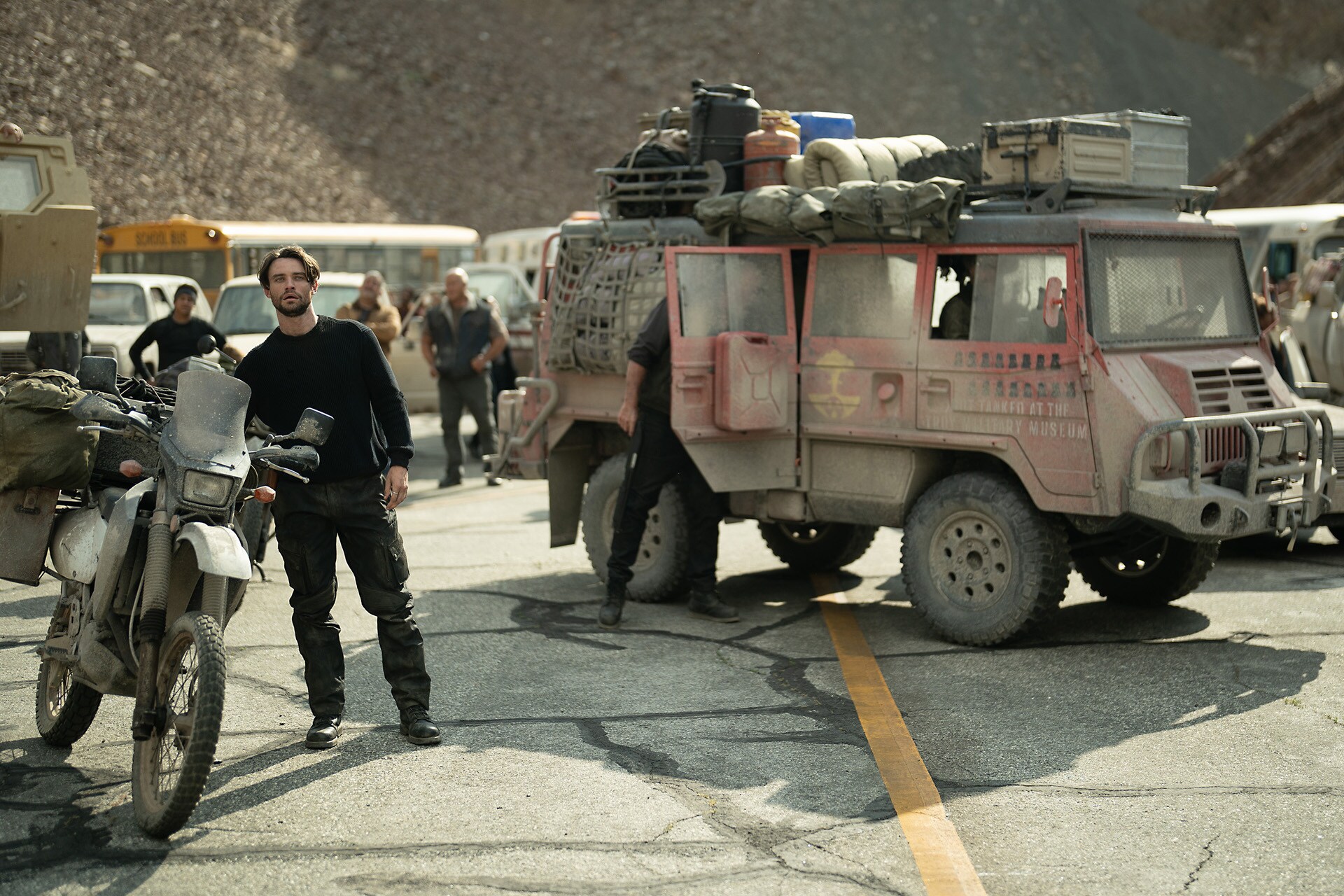
“Exodus”, the eighth and final episode, delivers the destruction that Season 2 has been moving towards. The systems that kept Paradise habitable break down, its reactors become a threat, and the underground town must be evacuated. I found that far more affecting than the abstract idea of the world being destroyed at the beginning of the series. We have now spent enough time under the artificial sky to know that, for all its dishonesty, this was still somebody’s home.

Sinatra’s decision to remain behind and seal the doors gives the finale its clearest emotional image. The woman who tried to purchase, construct and manage a safe future is left inside the failure of that design. I do not think her sacrifice wipes away the manipulation or the lives damaged by her choices, but it is not meaningless either. It saves people, and Nicholson plays it without turning the last moments into a speech about forgiveness. The show is better for allowing her to remain compromised.
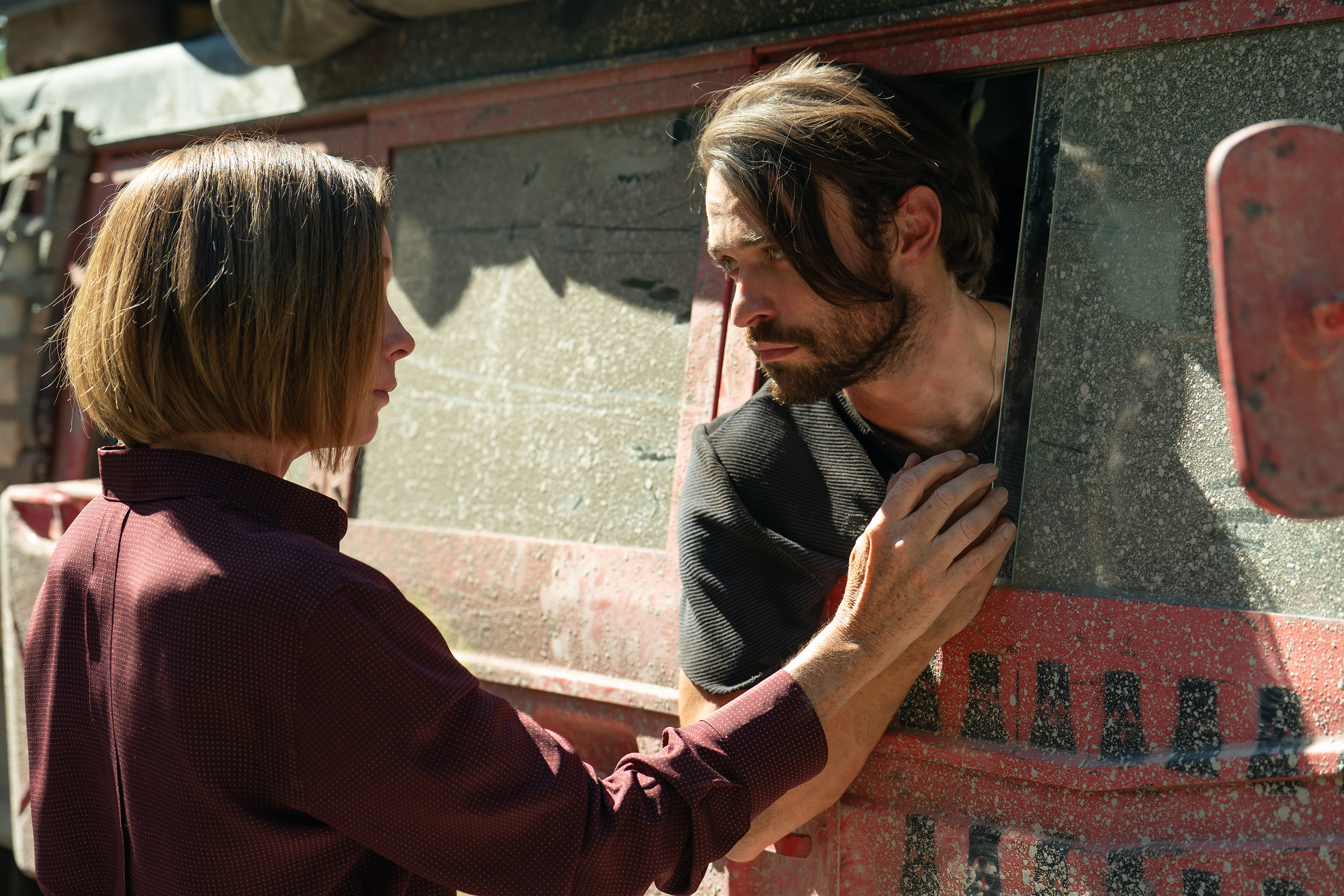
The evacuation also gives Xavier and Teri’s family story the resolution it has been working towards. Their reunion is not a solution to the larger catastrophe, and the children have plainly inherited more trauma than any family ought to carry. But the relief of seeing them together makes sense because Sterling K. Brown has spent the season showing what the search has cost Xavier. The story works best when the stakes are not billions of anonymous lives but the very specific people waiting for one another.
And Then, Of Course, There Is Another Bunker
This was the point at which I stared at the screen and began wondering whether I had accidentally wandered into a completely different programme. With the original Paradise collapsing, Sinatra reveals that there is another facility beneath Denver International Airport, roughly a hundred miles away, containing Alex. The show has already given us one enormous underground secret. Apparently the apocalypse has a second basement, because the first one turned out not to be sufficiently complicated.
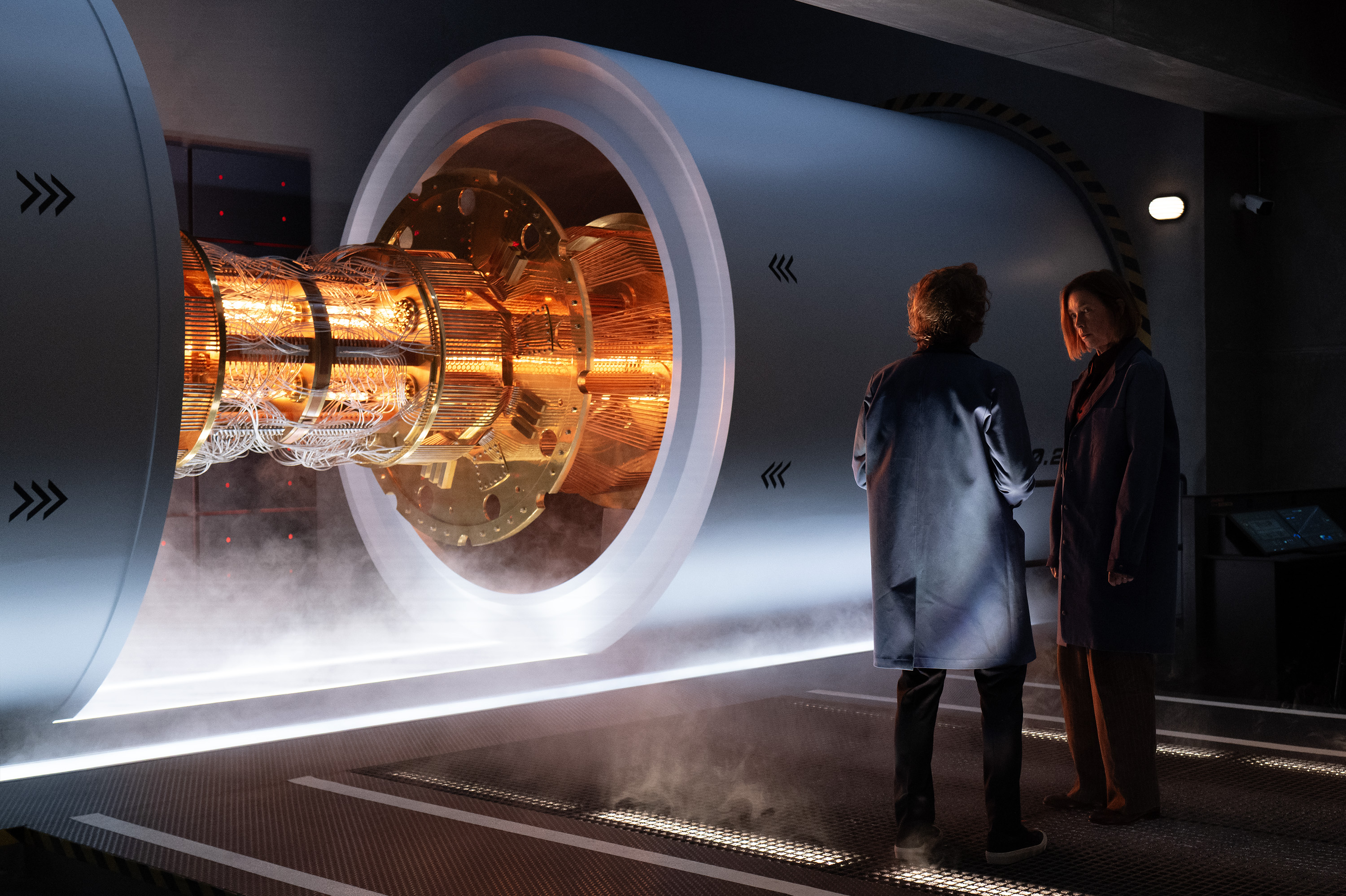
The bigger revelation is what Alex actually is. Rather than a hidden person, it is an exceptionally powerful AI-controlled quantum computer created through work involving Link and Dr Henry Miller, with an apparent capacity to predict events and possibly manipulate time. The finale does not offer a neatly proved operating manual, and I think it is important not to confuse its suggestions with certainties. The idea that events may already have been altered is part of the mystery, not a settled technical explanation.
Sinatra identifies Xavier as User X and gives him a mission to reach the other bunker. Her suggestion that he may already have carried out the task is the kind of finale line designed to make viewers watch the previous episodes again with a notebook and a suspicious expression. It is a big gamble for Paradise, because the story began with the rich using architecture and secrecy to escape consequences. Now it appears interested in the possibility of using computation to interfere with consequence itself.

When the Science Fiction Becomes the Main Attraction
I have nothing against quantum computers, alternate realities or time-bending stories. I have spent too many evenings watching science-fiction series make improbable machinery look quite important to start complaining about genre purity now. My concern is what happens to the human stakes when the story introduces a device that may be capable of changing the conditions under which those stakes arose. If a machine can rewrite outcomes, then grief, responsibility, loss and sacrifice risk becoming provisional.
On the other hand, this may be precisely where Fogelman wants to go. Sinatra’s first solution was to build an artificial environment where privileged survivors could carry on as though the world had not ended. Alex offers a larger, stranger version of the same fantasy: perhaps the ultimate act of power is not to survive a catastrophe but to undo it. The themes connect, even if the genre machinery threatens to overpower them. I am intrigued enough to follow that thread, although I reserve the right to become irritated if every character eventually turns out to have met a future version of themselves.
What makes the turn interesting is Sinatra’s inability to leave the world alone. She cannot accept the ordinary limits of wealth, influence or bereavement, so every failure becomes a reason to commission a larger system. This is the show’s most pointed contemporary idea. Technology becomes not only a tool but a substitute for accountability, and a machine built to solve an existential crisis may become a new authority that nobody is equipped to question. The fake sky was only the first version of that arrangement.
The Look and Sound of an Unreliable Paradise
Visually, the second season benefits enormously from the move beyond the bunker. The pristine suburb was a strong original design concept, but the surface world has dirt, texture, age and objects whose remaining usefulness matters. Clothes are worn because they still work, buildings are occupied because they still stand, and old places are given functions their designers never anticipated. A post office becomes a refuge; Graceland becomes a shelter. I liked those details more than most of the futuristic explanation at the end.
The series also understands the effect of returning to the immaculate underground town after spending time outside it. Paradise looks more artificial each time we see it, less like a miracle and more like an over-funded exhibition space. The contrast between the polished lie and the improvised truth does a lot of narrative work before anyone speaks. It is particularly effective in the moments when the city’s industrial mechanisms become visible and the comforting façade can no longer hide what is keeping it alive.
Siddhartha Khosla’s score and the show’s taste for recognisable pop songs are part of this slightly manipulative, often effective emotional strategy. Music helps carry us from grief to suspense to absurd escalation, sometimes so insistently that I wish it would trust a silence for another few seconds. Yet the return of “Another Day in Paradise” at the close has a satisfyingly pointed irony. A song about looking away from suffering accompanies a world whose most powerful people built a place where they could do precisely that.


What I Loved, and What Began to Test My Patience
The first half of Season 2 is probably the part I will remember most fondly. Annie’s lonely life at Graceland, Xavier’s battered determination, the kindness surrounding an impossible birth and Teri’s improvised community all expand the show’s world without losing its sense of people. The performances carry a lot of that weight. Brown and Okuma make the separated marriage matter, Woodley turns a new arrival into somebody whose absence we feel, and Britton makes Gary’s possessiveness all the more unpleasant by giving it the shape of ordinary vulnerability.
The later episodes are fascinating in a different way, though not always as satisfying. Jane’s background, Link’s connection to Dylan, Sinatra’s hidden project, the collapse of the original bunker and the introduction of Alex arrive in a rush. I like a series that trusts its audience to keep up, but there is a difference between complexity and accumulation. At times, the show feels as though it has been placing pieces on three chessboards while I am still trying to remember where the first bishop went.
It also occasionally pushes for an emotional response before a scene has quite earned the room to breathe. Fogelman has a gift for interlocking personal stories, and sometimes a habit of underlining their importance with a very thick marker. The season’s generosity towards its characters keeps that tendency from overwhelming everything, but I would have welcomed a little more time with Teri and the children outside crisis mode, and rather fewer urgent declarations about the next extraordinary secret. Not every quiet moment needs a clue in its pocket.
The Apocalypse After the Apocalypse
What stays with me is not the glowing machine or the second bunker, though I enjoyed the audacity of both. It is the fact that Season 2 dismantles the original fantasy of safety. Paradise was built on the belief that the right people, with sufficient money and planning, could separate themselves from everybody else’s consequences. The people who survived outside prove that safety was never the same as worthiness, and the collapse of the city makes its residents face a world they were never meant to see.
By the end, the show has travelled from a sealed murder mystery to something closer to a road story, a family drama and an increasingly extravagant science-fiction puzzle. I am not convinced every part sits together comfortably yet. But I like that the season has made its people more important than the walls around them, and I like that the supposed paradise is no longer there to shelter the story from its own questions. Whatever Alex turns out to mean, Xavier has already learnt something the machine cannot improve upon: he cannot save everybody by himself, and he still has to find a way to live with the people standing beside him.
There is another bunker, apparently, and another set of secrets buried beneath an airport. Fine. I will probably be there for Season 3, mildly suspicious and still wondering who is going to repair the things everyone has been breaking. But the image I keep returning to is smaller: Annie in a room full of old Elvis memorabilia, making a life out of what the world has left behind. For all its remarkable machinery, that is where Paradise felt most alive.
Paradise Season 2 consists of eight episodes and is available on Hulu in the United States and Disney+ internationally. For the official synopsis, cast and production details, see Hulu Press; the broader creative direction is discussed in Dan Fogelman’s finale interview.
Leave a Reply