

A Lazy Sunday Behind a Sealed Door
This started as one of those random lazy Sunday horror choices that does not involve much planning. I had recently watched Quarantine 2: Terminal, the 2011 sequel that leaves the apartment building behind and relocates the outbreak to an airport terminal, so returning to the first Quarantine seemed like the logical follow-through. Logical by Sunday standards, anyway. There are worse ways to spend an afternoon than watching people discover that the authorities have welded them inside a building with something extremely bitey.
I had seen Quarantine before, although my relationship with it has always been complicated by knowing exactly why it exists. John Erick Dowdle’s 2008 film is the Hollywood remake of the Spanish [REC], released only the previous year. It is not one of those remakes that takes a basic idea and wanders off in another direction. For most of its running time, it follows the original so closely that watching it after [REC] can feel less like seeing a new film and more like watching an expensive reconstruction of a nightmare I already remember.

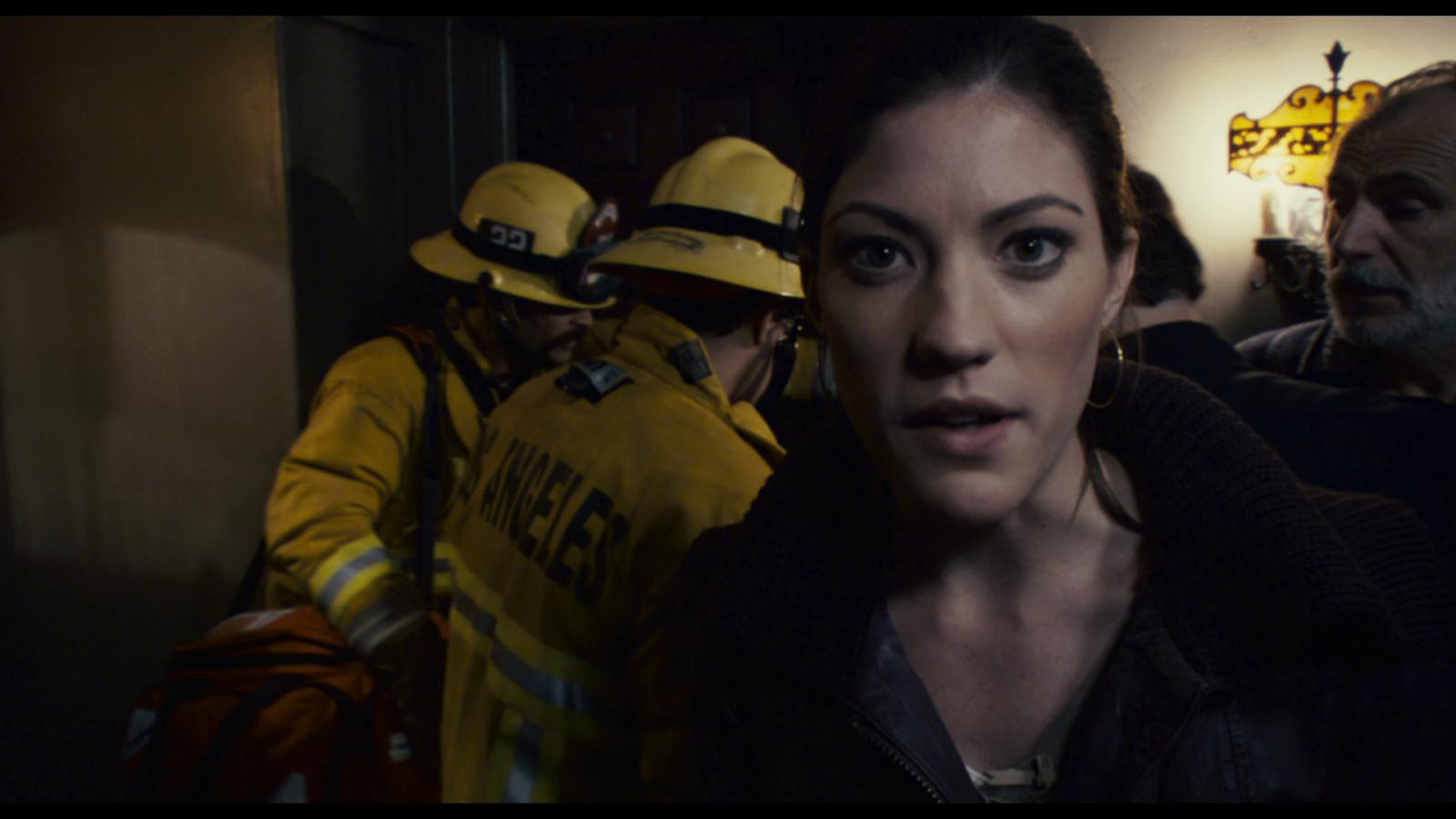
The rooms are different. The faces are different. The language has changed. The infection has been given a more recognisably American scientific explanation. But the route through the building remains much the same.

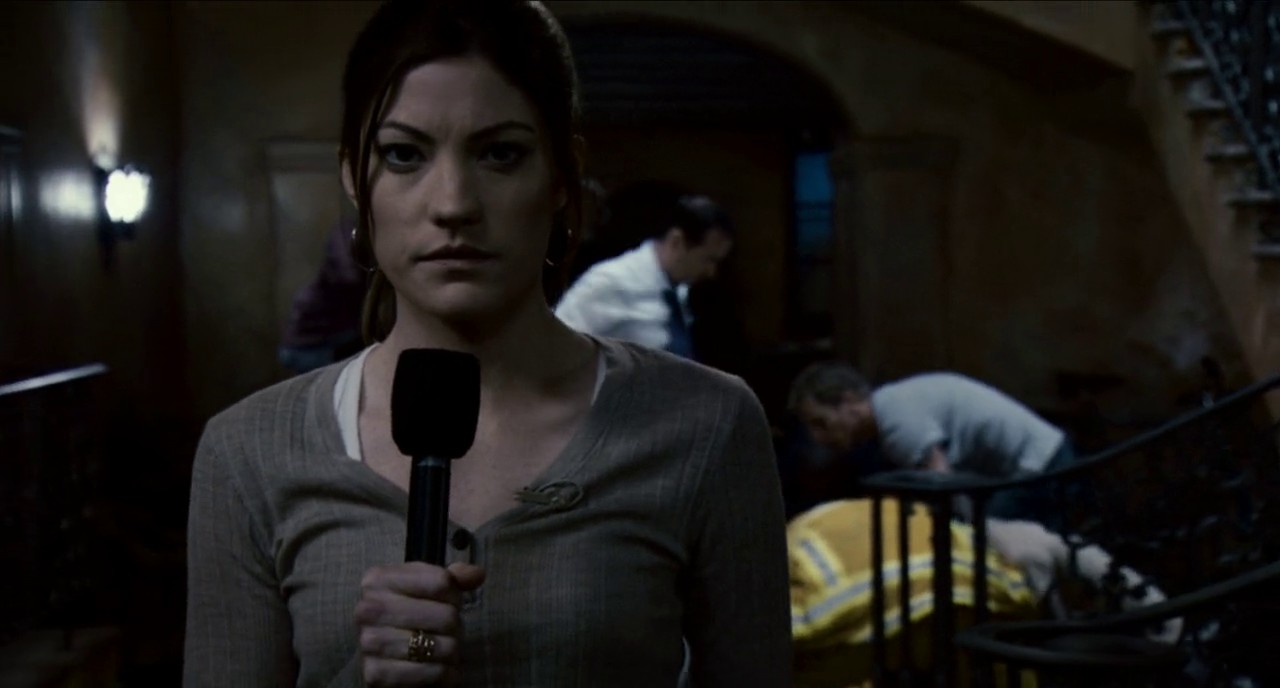
That leaves Quarantine in an awkward position. It is not a bad horror film. Taken on its own, it is tense, unpleasant, well performed and efficiently made. The final stretch still works, even when I know what is waiting in the dark. The problem is that [REC] got there first, did it more economically and carried the additional advantage of unfamiliarity. Its actors did not arrive surrounded by the faint glow of other roles and television appearances. They simply seemed to be people trapped in a Barcelona apartment block while a television report collapsed into panic.
Quarantine gives me Jennifer Carpenter, Jay Hernandez, Columbus Short, Greg Germann, Denis O’Hare and several other faces that register as actors before they fully register as frightened residents and emergency workers. They are not all enormous Hollywood stars, but they are familiar enough to alter the temperature. That does not ruin the film. It merely makes the seams easier to see.
Before Los Angeles, There Was Barcelona
The Spanish [REC] was co-written and directed by Jaume Balagueró and Paco Plaza and starred Manuela Velasco as Ángela Vidal, a television reporter following a Barcelona fire crew during a night shift. What begins as a fairly ordinary local-TV assignment becomes a sealed-building nightmare after the crew responds to an emergency call involving an elderly resident behaving violently. Authorities close the building from outside, an infection spreads inside, and the camera keeps recording because it is both the film’s viewpoint and the only remaining evidence. Balagueró and Plaza described their approach as using the language of live television to tell a classical horror story. The camera was meant to remain reactive rather than anticipating events, always trying to catch up with the chaos. The film was shot chronologically, used long takes and withheld parts of the story from performers to preserve genuine uncertainty. The production even kept rolling through accidents and collisions where possible, allowing the footage to feel as though events were happening faster than the people filming them could control. That method gives [REC] its nervous energy. It does not look as if a polished horror film is pretending to be a television report. It looks as though a television report has accidentally found itself inside a horror film.
The American remake moved quickly. Screen Gems secured a deal to remake [REC] in August 2007, with John Erick Dowdle and Drew Dowdle hired to adapt it. Quarantine opened in the United States on 10 October 2008, less than a year after the Spanish film’s November 2007 theatrical release in Spain. It was made for a reported $12 million and earned roughly $41.3 million worldwide, which made it a commercially sensible piece of Hollywood recycling whether horror viewers needed it or not. That was hardly an unusual practice at the time. Hollywood had spent much of the decade remaking successful Asian and European horror films for English-speaking audiences, often on the assumption that subtitles were a greater threat to ticket sales than ghosts, curses, infected children or people crawling out of television sets. Sometimes the result found a worthwhile new cultural angle. Sometimes it merely translated the dialogue and increased the lighting budget.


Quarantine sits somewhere between those positions. It is too well made to dismiss, but too faithful to feel fully necessary.
A Night Shift That Goes Bad Very Quickly
Jennifer Carpenter plays Angela Vidal, a reporter hosting a late-night programme about people who work while the rest of the city sleeps. Her cameraman, Scott Percival, is played by Steve Harris, although Scott spends most of the film behind the camera, turning Harris’s voice and physical movement into part of the film’s machinery.
The opening at the Los Angeles fire station is intentionally uneventful. Angela tours the building, tries on firefighting gear, jokes with the crew and waits for something useful to happen. She is friendly, mildly flirtatious and professionally restless. It feels like the sort of disposable local-TV segment designed to fill a quiet broadcast slot.


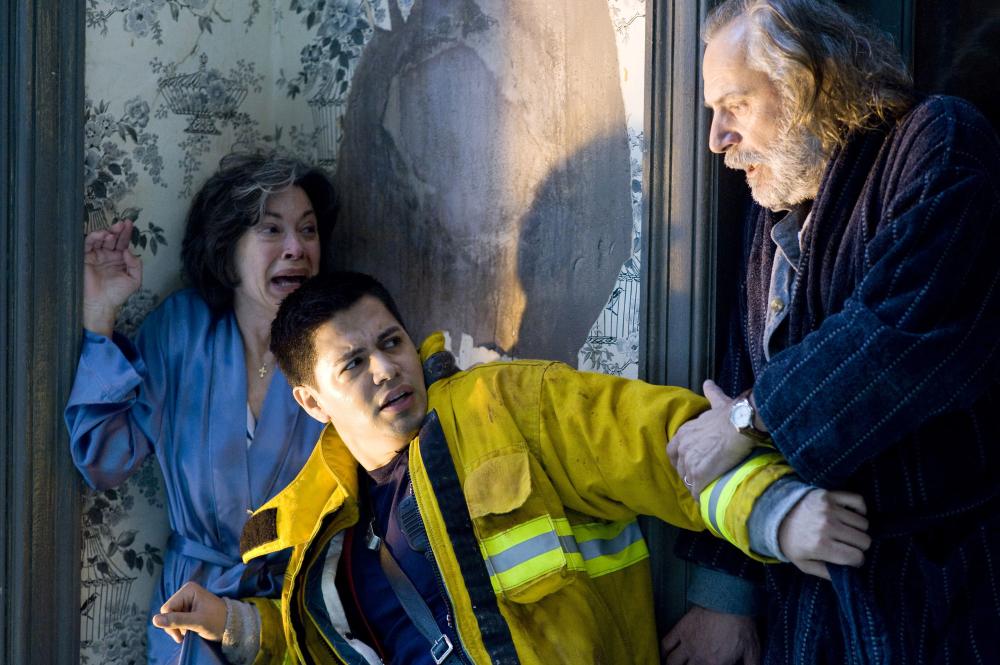
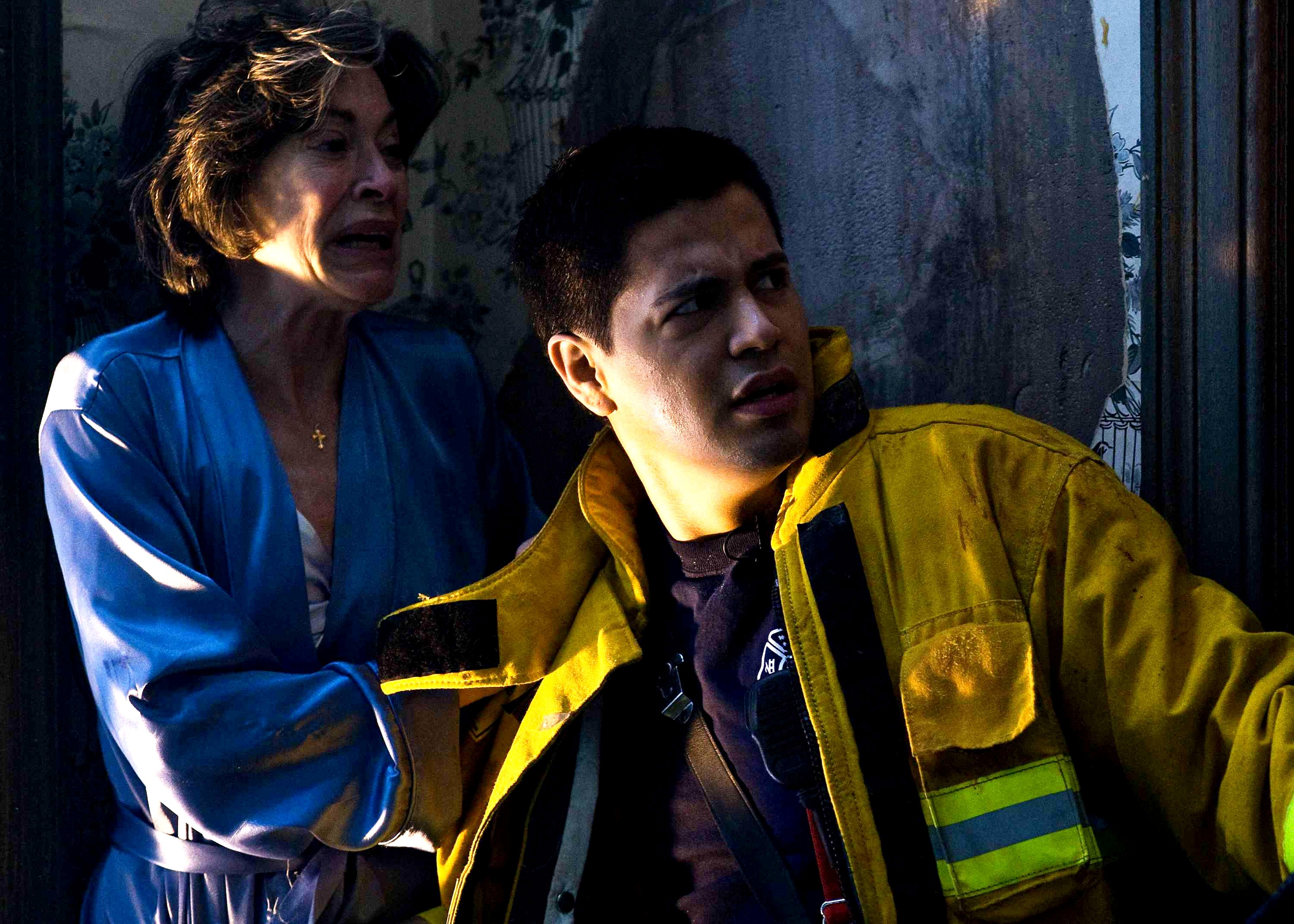
Then the alarm sounds, and Angela and Scott accompany firefighters Jake and George Fletcher, played by Jay Hernandez and Johnathon Schaech, to an apartment building where residents have reported screaming. Police officers Danny Wilensky and James McCreedy, played by Columbus Short and Andrew Fiscella, are already attempting to manage the residents and reach the elderly Mrs Espinoza.
The first attack is still one of the film’s most effective scenes. Mrs Espinoza is disoriented, bloodied and clearly unwell, but the situation has not yet been classified. She could be injured, mentally distressed or suffering some kind of seizure. Everyone enters the room using the language and body posture of professionals dealing with a difficult civilian.


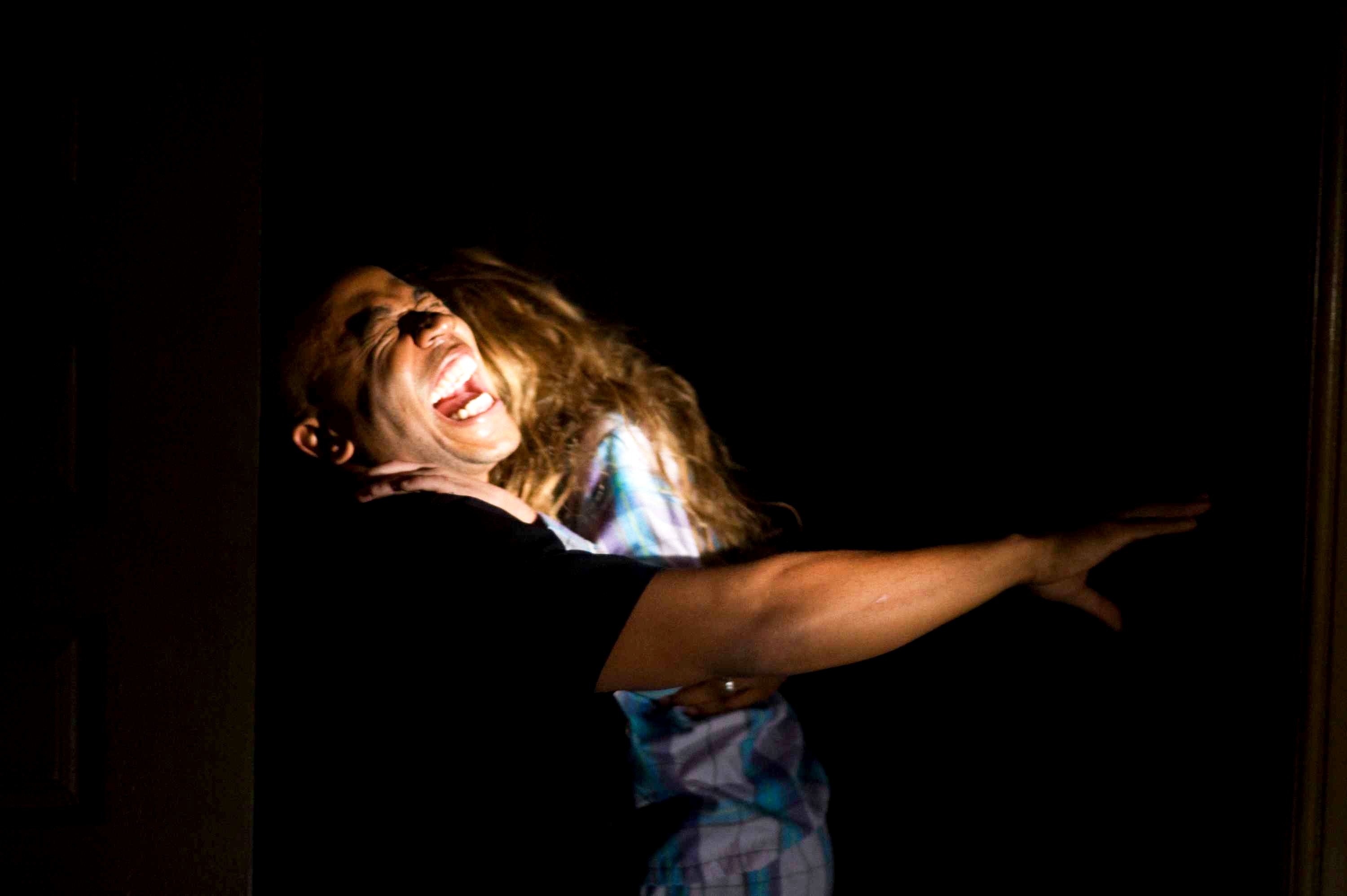
Then she lunges. The attack is fast, wet and ugly. One officer is bitten. Fletcher is injured. The camera struggles to frame what is happening. People shout competing instructions while trying to drag the wounded downstairs. Before anyone has established what they are dealing with, the front doors are sealed and armed authorities outside announce that nobody will be permitted to leave.
The film’s central horror is established almost immediately: the people outside know more than the people inside, and they have decided that containment matters more than rescue. That is the point where the apartment building stops being a location and becomes the entire world.
Angela Vidal and the Performance of Panic
Jennifer Carpenter is particularly good at giving panic a physical weight, rather than merely performing fear for the camera. She has a particular gift for physical panic: the tight breathing, trembling voice, sudden bursts of anger and the look of someone trying to remain useful while her nervous system is rapidly abandoning the project.
Angela begins as the person most accustomed to turning events into a story. Her instinct is to interview people, ask questions and tell Scott to keep filming. The camera provides a professional boundary between her and whatever is happening. At the fire station, it gives her authority. Inside the building, that authority begins to dissolve.


Carpenter handles the transition convincingly. Angela does not suddenly become a hardened action heroine. She becomes frightened, loud and increasingly desperate. She cries. She screams. She demands answers. She occasionally makes the situation worse. Yet she keeps moving because remaining still is not an option.
Some viewers may find the screaming excessive, particularly during the last act. I understand that reaction. By the time Angela and Scott reach the upper apartment, Carpenter is operating at a level of sustained terror that can be physically tiring to listen to.
But the performance makes sense within the situation. Angela has watched people she met only an hour earlier become violent, die, revive and attack others. She has been locked inside by authorities who refuse to explain themselves. The building is dark, the exits are blocked and the infection is moving faster than anyone can understand it. A calm, measured response would probably be less realistic, although it might be easier on the speakers.


Where Manuela Velasco in [REC] feels like a reporter caught in an unfolding event, Carpenter feels more recognisably like a dramatic performer being put through an endurance test. Velasco’s relative unfamiliarity helps the original. Carpenter brings greater overt emotional force, but she also arrives with a more visible layer of performance.
That is the difficulty running through the entire remake: Carpenter is good, and the film knows how to use her, yet I remain more conscious of the acting than I ever am in [REC].
Scott, Jake and the Men Trying to Control the Room
Steve Harris has a difficult role as Scott because most of his performance is delivered through voice, breathing and camera movement. The camera is not neutral. It reacts to fear. It turns away from injuries, moves closer when Scott’s professional instincts take over and becomes increasingly unstable as the building descends into violence.
The remake makes Scott slightly more visible than the cameraman in [REC], allowing him to step in front of the lens during the fire-station material and reminding us that there is a recognisable person carrying the equipment. This adds character, but it also weakens the illusion slightly. In the Spanish film, the cameraman is almost completely absorbed into the device. In Quarantine, Hollywood seems less willing to leave him as an unseen presence. Scott also has the film’s most literal fusion of media and violence. At one point, the camera stops being an instrument for recording the horror and becomes a weapon used against it. It is a clever, brutal moment. The object preserving the evidence is also heavy enough to crush a skull.

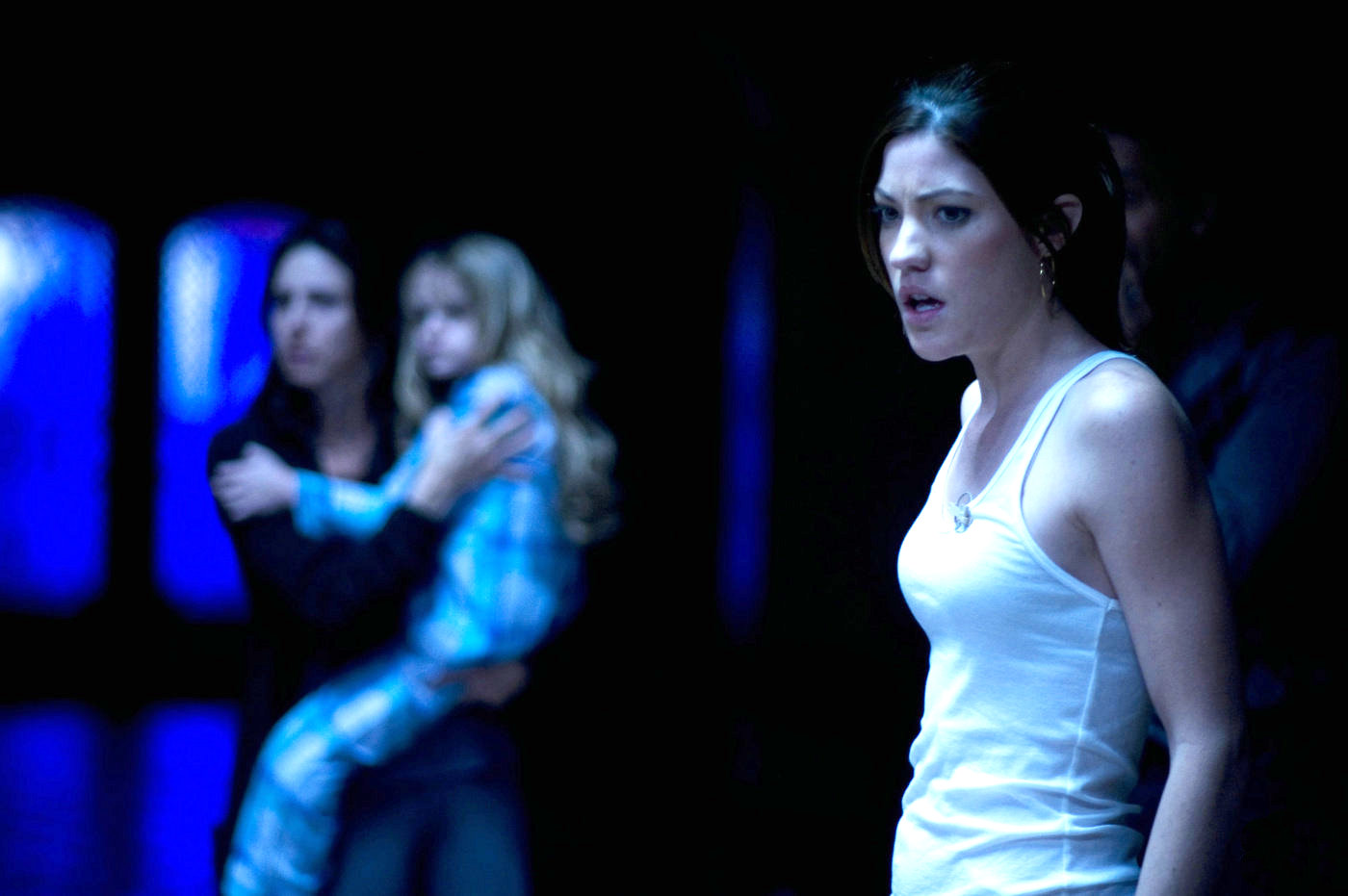
Jay Hernandez’s Jake is the dependable centre for much of the film. He is practical, protective and visibly irritated by Angela’s continued filming, although he understands that the camera light and recorded information may be useful. Jake is not given a complicated inner life, but Hernandez provides enough grounded authority to make him convincing as someone people would follow during an emergency.


Johnathon Schaech’s Fletcher serves as one of the first demonstrations of how quickly professional competence becomes irrelevant. Once injured, he changes from rescuer to burden, then from burden to threat. The progression is cruel because the fire crew arrived expecting an ordinary call. Their training helps with triage and movement, but it does not prepare them for a disease that turns the wounded against those helping them.
Columbus Short’s Officer Wilensky begins with the brittle authority of a policeman trying to control a crowded lobby. As information becomes scarce and the infection spreads, that authority turns increasingly desperate. Andrew Fiscella’s McCreedy is among the first bitten, his declining condition forcing everyone to confront the possibility that the attacks are not isolated acts of violence. Nobody remains in charge for long.
The Residents: Familiar Faces in an Unfamiliar Crisis
The apartment building contains a busy ensemble of residents, and the remake gives several of them recognisable American character-actor faces.

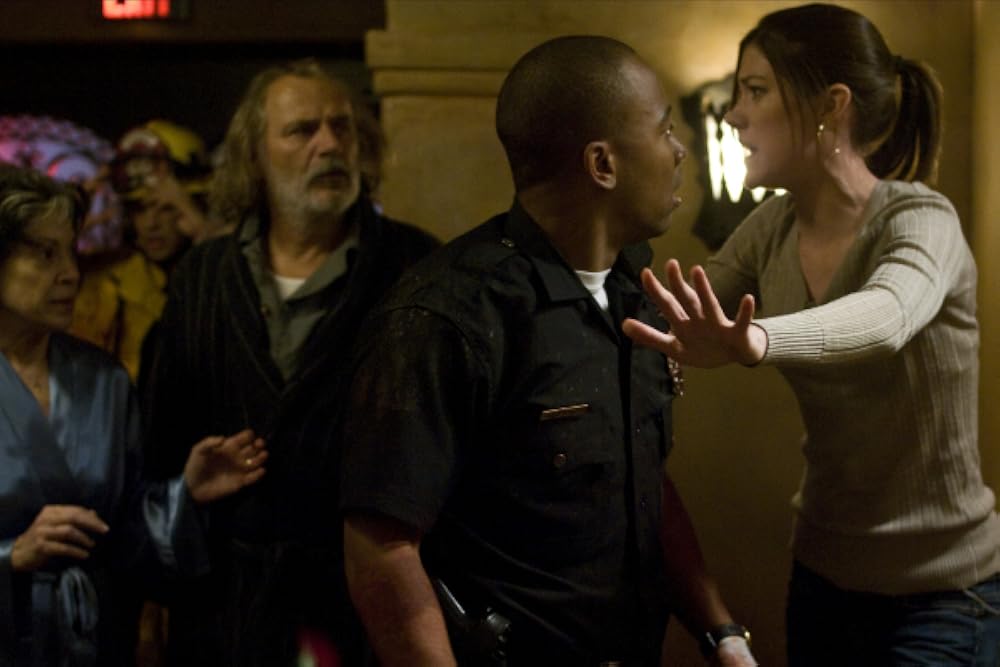
Rade Šerbedžija plays Yuri, the building manager, with Elaine Kagan as his wife, Wanda. Greg Germann plays Lawrence, a veterinarian whose professional knowledge becomes crucial when the group begins connecting the outbreak to a sick dog. Bernard White plays Bernard, while Dania Ramirez plays Sadie, another resident caught in the lobby. Denis O’Hare appears as Randy, a confrontational alcoholic whose belligerence is briefly treated as a problem before the infection introduces a more decisive form of conflict.
Marin Hinkle plays Kathy, mother of the young Briana, played by Joey King. Briana is one of the film’s most memorable threats because horror has always understood that an infected child creates a particular hesitation. Adults who would immediately defend themselves against a charging stranger still want to believe a child can be reached, calmed or rescued. That hesitation is fatal.


The residents also include Nadif and Jwahir, played by Jermaine A. Jackson and Sharon Ferguson; Elise, played by Stacy Chbosky; and Mrs Espinoza, played by veteran stunt performer Jeannie Epper. Doug Jones appears in the finale as the Thin Infected Man, using his extraordinary physical frame to turn the darkened apartment into something resembling a grainy nightmare. The cast is capable throughout. Nobody destroys the illusion by giving a poor performance. The issue is more subtle. Seeing Greg Germann, Denis O’Hare or Rade Šerbedžija creates a small moment of recognition. I know these people from somewhere else. My brain briefly checks the filing cabinet.


In [REC], the residents seem messier and less curated. They feel like people who happened to live in the building. In Quarantine, they sometimes feel like a casting director’s carefully assembled cross-section of Los Angeles character types. It is a small difference, but found footage depends on small differences.
The Building as a Machine for Trapping People
One of Quarantine’s major strengths is its physical environment. The apartment complex was constructed as a fully functioning four-storey set rather than a collection of disconnected rooms. Filming took place in downtown Los Angeles, and the production shot chronologically, using takes that commonly ran between four and six minutes. That matters because the building needs to feel continuous. The characters repeatedly travel between the lobby, stairwells, individual apartments, the lift, upper floors and basement access points. The viewer gradually develops a rough mental map, but never a comforting one. Each route becomes more dangerous as people disappear and return infected.

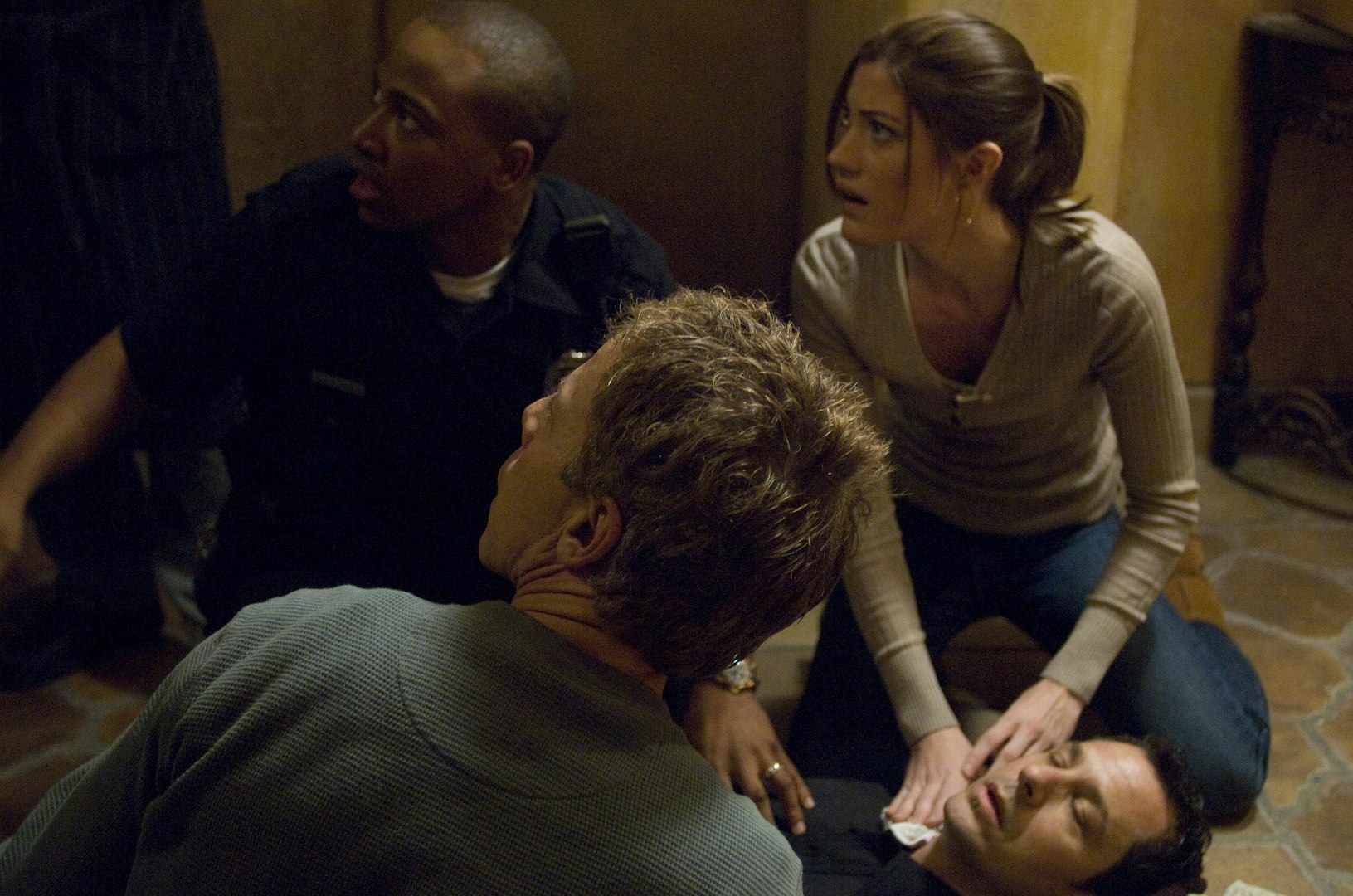
The central lobby provides a temporary illusion of organisation. The residents gather there. The injured are placed on the floor. Police and firefighters issue instructions. Angela conducts interviews. People argue about what the authorities outside are doing.
Yet the lobby is also exposed from every direction. The staircase coils above it. Bodies can fall from the upper floors. Dark corridors open around it. The front entrance remains visible but unreachable, a reminder that safety exists only a few metres away and might as well be on another planet.

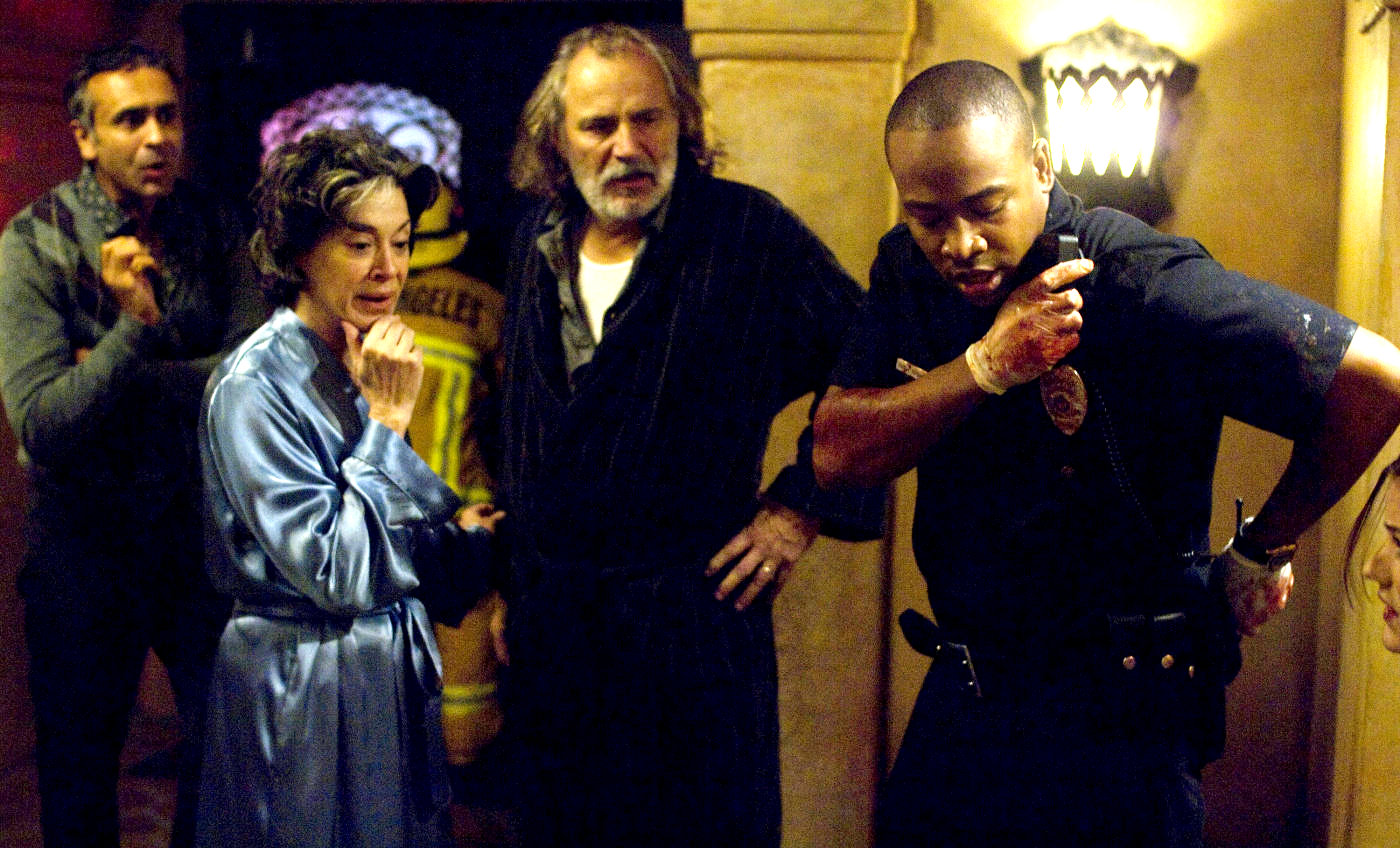
The remake’s set is larger and cleaner than the Barcelona location used in [REC]. That gives the Dowdles more space for movement and staging, but it slightly reduces the original’s suffocating intimacy. [REC] feels as though the walls were already too close before the doors were sealed. Quarantine occasionally feels like an impressive horror set built to support carefully timed chaos. From a design perspective, I can admire the construction while noticing the artifice. The stained walls, cluttered flats, institutional corridors and central staircase all perform their functions. The building has enough wear to feel occupied, but it never quite loses the impression of being designed for the camera. That may be the most Hollywood thing about it.
When the Authorities Become Part of the Threat
The infected are the immediate danger, but the film’s deeper source of anxiety is institutional containment. The people inside are not simply abandoned. They are actively imprisoned. Police and health officials seal the doors, cover the windows and threaten anyone attempting to escape. Information is delivered selectively, when it is delivered at all. The occupants are treated less like citizens needing help than potentially contaminated material.


The decision is logical from the outside. If the infection is as contagious as authorities believe, allowing even one person to escape could spread it across Los Angeles. From inside, the same decision feels monstrous. The characters can hear officials beyond the walls, but they cannot negotiate with them. Their individual innocence no longer matters. The quarantine converts everyone into a biological risk.
There is a grim bureaucratic efficiency to it. The authorities do not need to be villains in the usual sense. They only need to accept that the people in the building are expendable.

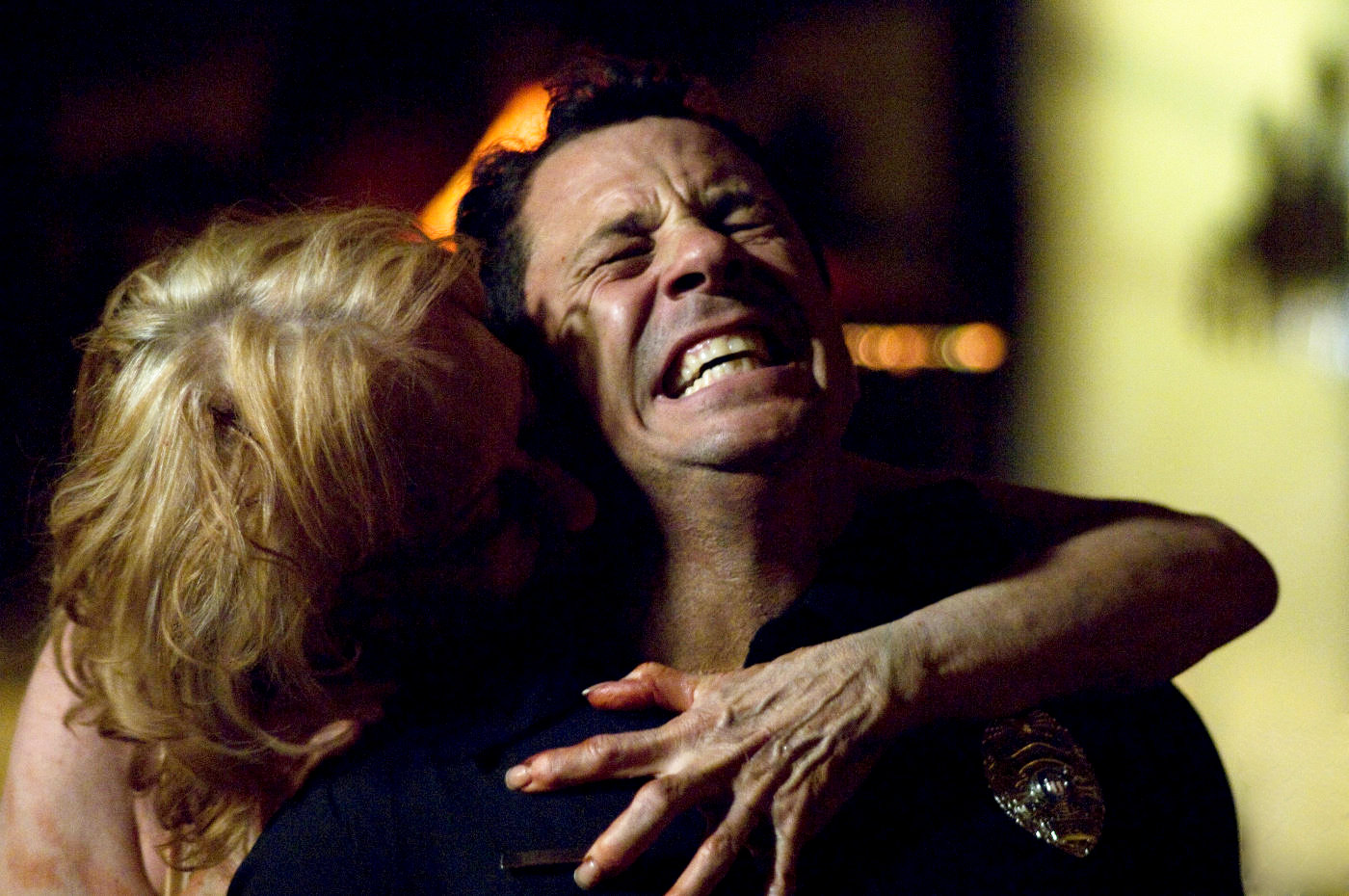
Watching the film now, the word “quarantine” carries more cultural weight than it did in 2008. The experience of the COVID-19 era changed the emotional vocabulary around infection, isolation, official guidance and public distrust. Quarantine is not remotely interested in medical realism, but its images of sealed entrances, protective clothing, conflicting information and frightened people arguing about what the authorities know now feel less safely fictional. The film’s politics remain simple, but the fear has aged into something slightly different.
Rabies, Dogs and the Need to Explain Everything
The most significant alteration from [REC] is the source of the infection. In the Spanish film, the final apartment contains evidence of an investigation into a girl named Tristana Medeiros whose apparent demonic possession has manifested as a contagious biological condition. The story begins as outbreak horror and ends somewhere stranger, where religion, disease and physical corruption have become inseparable.
Quarantine replaces that ambiguity with a doomsday cult member who stole a biological weapon from a military facility. The so-called Armageddon Virus is described as a mutated form of rabies, with the infection spreading through bites and connected to a sick dog removed from the building. The change is understandable. Rabies is immediate, physical and recognisable. It explains the aggression, foaming mouths, animal transmission and rapid spread. It also allows the film to operate as a biological-terror thriller rather than opening a door into Catholic horror during its final minutes. But it makes the film less interesting.

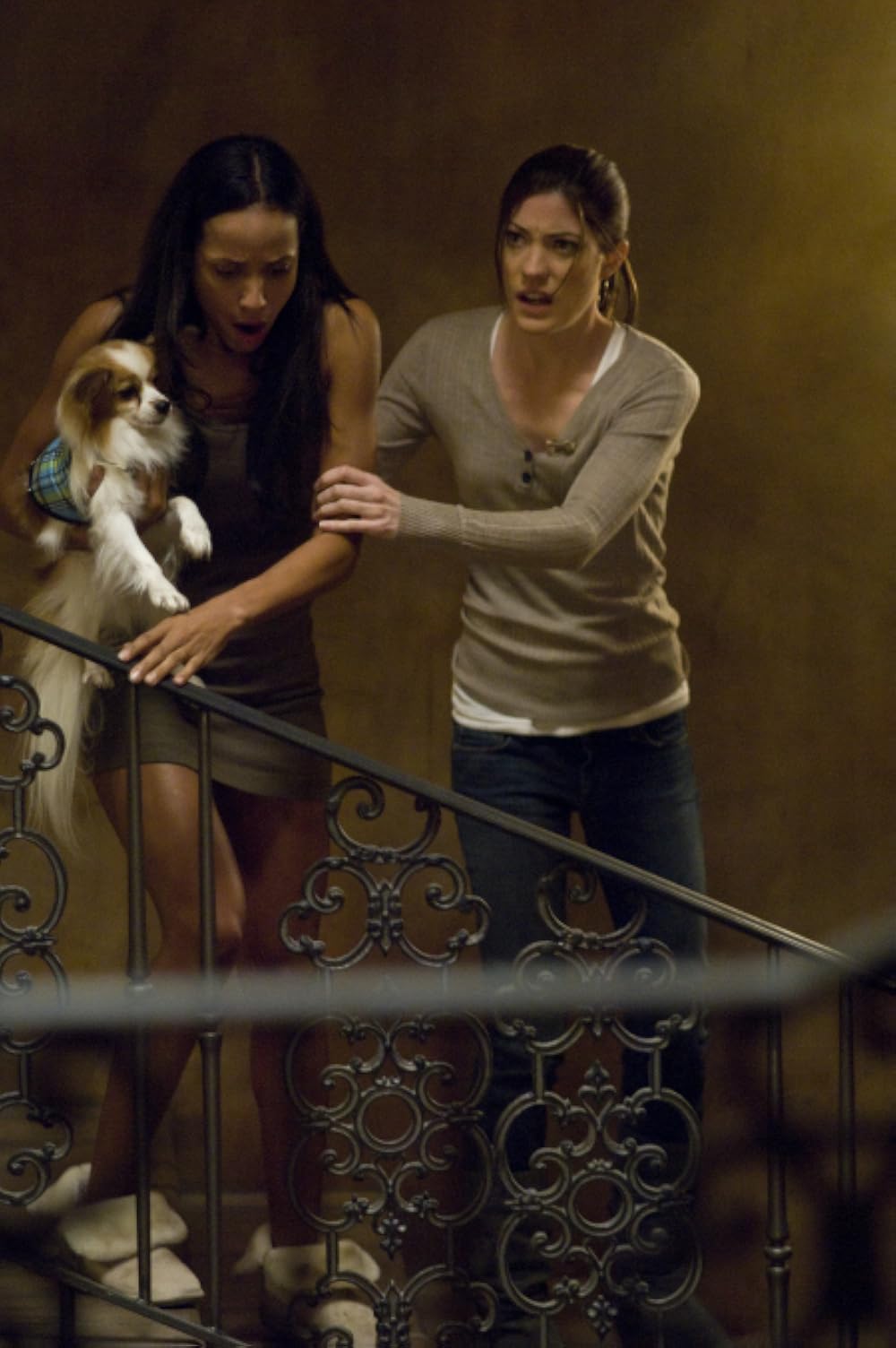
The religious material in [REC] creates a destabilising change of genre. Just when the viewer thinks the rules have become clear, the final room suggests that the infection may not fit comfortably inside modern scientific language. The characters have entered a space where laboratory equipment, Vatican investigation and demonic contamination have been pressed together.


Quarantine gives us stolen weaponry and a cult. It is tidier, easier to explain and also more generic. This is one of those recurring habits in American remakes: the fear that mystery will be mistaken for incompleteness. The audience must be given a mechanism, a motive and a file of newspaper clippings. The horror needs paperwork.
The original leaves a stain on the imagination; the remake, for all its competence, feels more like an incident report prepared for an American audience.
No Music, Nowhere to Hide
One of the better decisions retained by Quarantine is the absence of a conventional musical score. The soundtrack is built from dialogue, screaming, footsteps, impacts, alarms, animal noises, radio communication and the increasingly frantic movement of the camera operator. That restraint helps preserve the found-footage illusion. There is no orchestral warning when an infected resident enters the corridor. The film cannot use music to reassure the viewer that a scene is transitioning or to announce when the threat has passed. Silence is rarely complete, but the lack of score makes the building’s ordinary sounds carry more weight.
The scraping of a door matters, movement above the ceiling matters, and someone breathing near the camera matters.

The sound also becomes more oppressive as the group loses control. Early dialogue has the rhythms of professional communication and ordinary complaint. Later, everyone is shouting over everyone else. Instructions are repeated. People scream names. The camera microphone distorts under the volume. Meaning begins to break down before language does.

This is where the film succeeds on its own terms. Even knowing the structure from [REC], I can still feel the sound tightening the room.
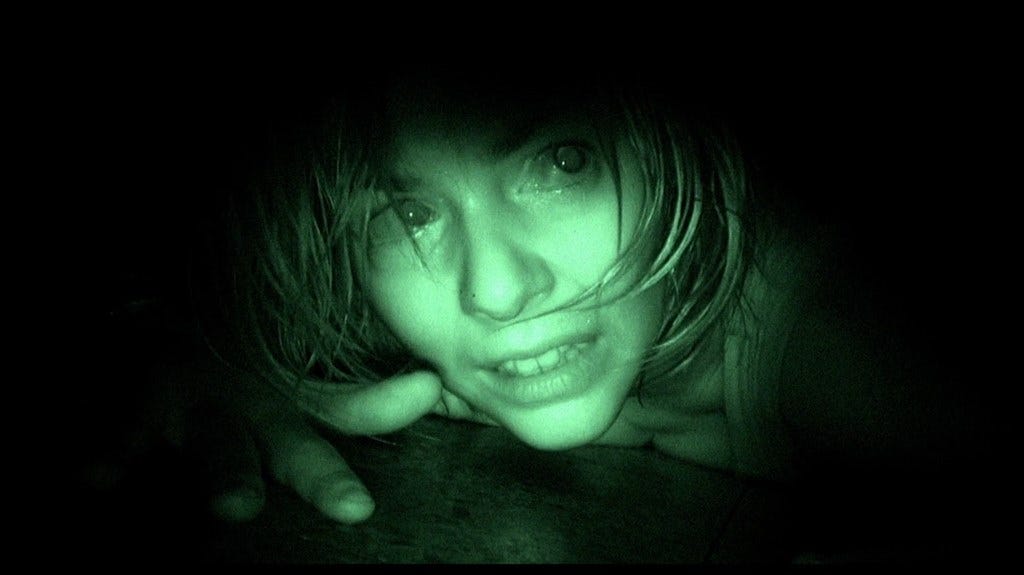
The final night-vision sequence strips the design back further. The camera can see only through a narrow, monochrome field. Angela cannot orient herself without Scott and the equipment. Every small noise suggests something moving just outside the visible frame. There is no music to tell us what it is.
The Scenes That Still Work
The initial attack by Mrs Espinoza remains strong because it transforms uncertainty into violence without allowing anyone time to adjust.
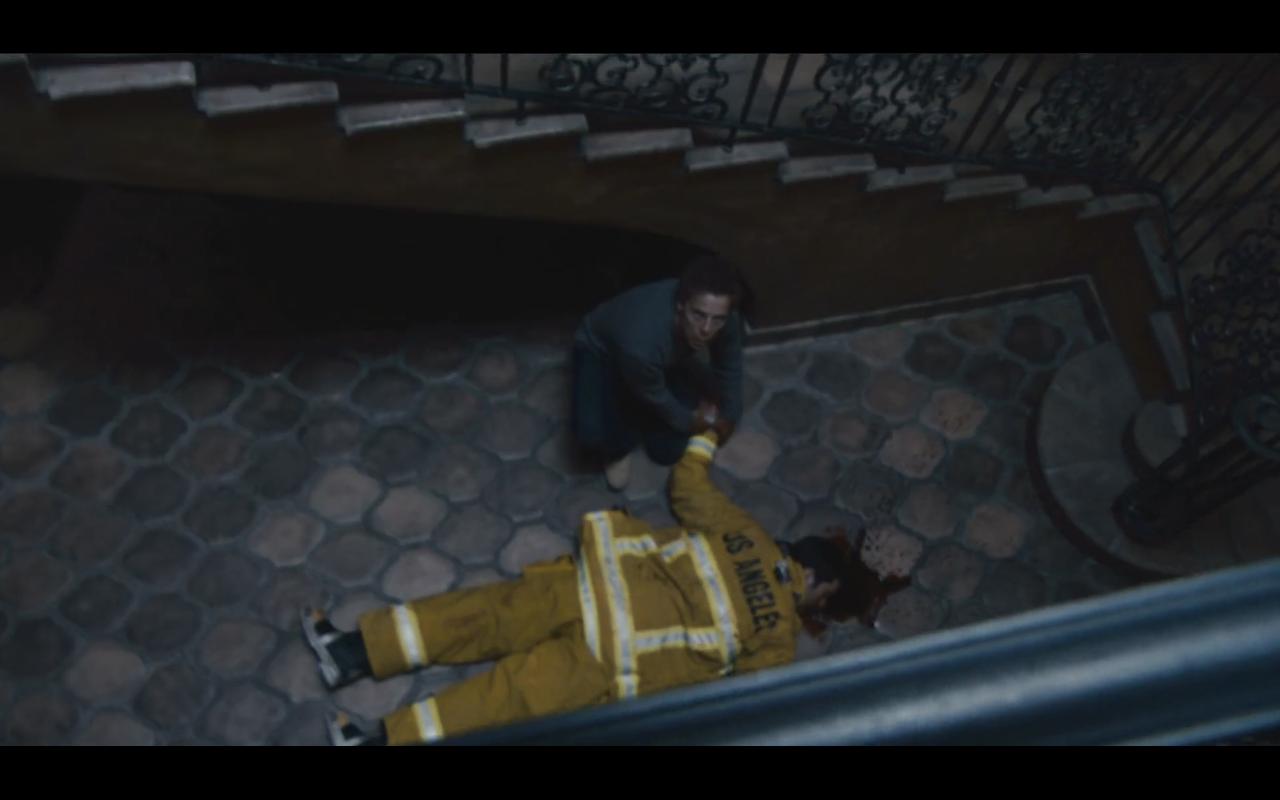
The body falling through the stairwell is another effective shock. It does not simply add a corpse. It changes the vertical space of the building. The upper floors are no longer distant residential areas; they are places from which death can suddenly enter the lobby.

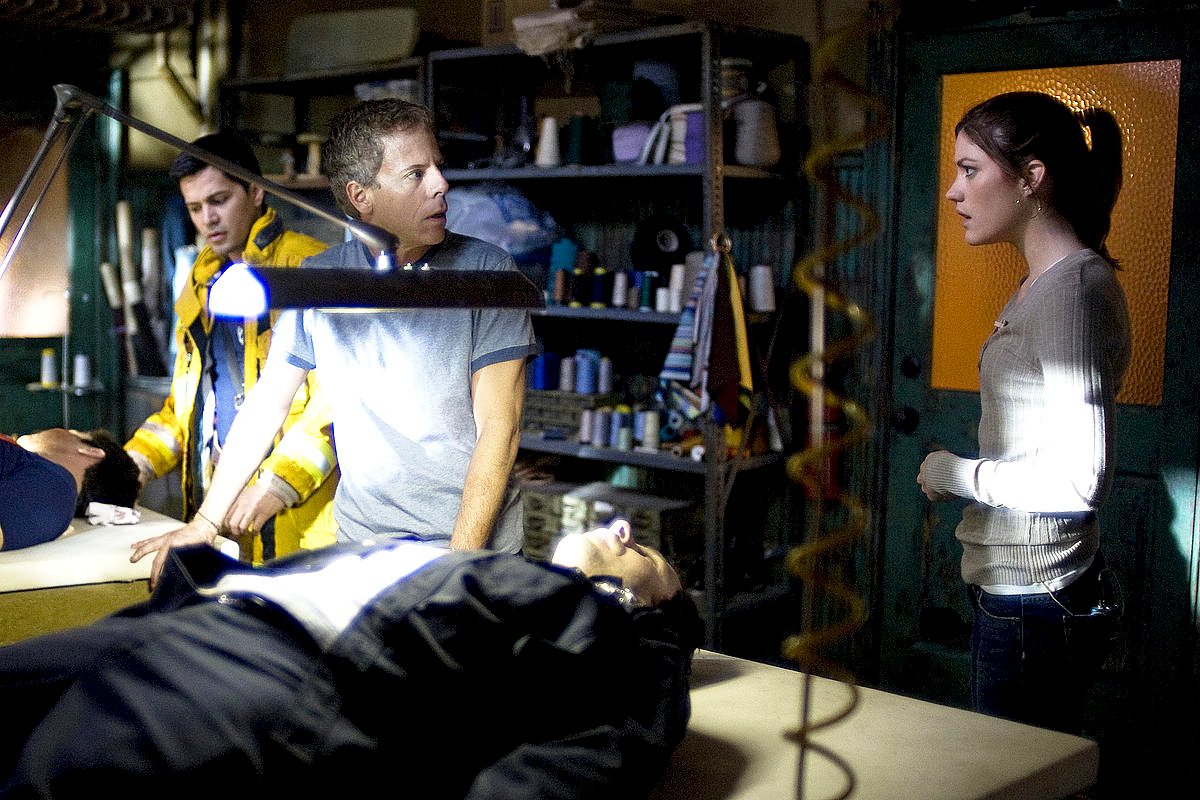
The examination of the wounded is tense because the characters are still trying to apply normal emergency procedures to an abnormal condition. They check pupils, breathing and wounds. They ask for medical assistance. They behave as though information will restore order.
Briana’s transformation is perhaps the film’s most uncomfortable sequence. Kathy still sees her daughter as a frightened child. The others see symptoms. The gap between those positions creates the danger. When Briana attacks, the scene is not only frightening because a child has become violent. It is frightening because parental love delays the necessary response.

The lift sequence involving the infected dog is more overtly manufactured. It provides a sudden animal attack and increases the sense that the virus has escaped the boundaries of human behaviour. It works as a jolt, although it also reflects the remake’s tendency to add gore and bodies rather than deepen the characters.
Jake’s eventual infection has more weight. He has functioned as the closest thing to a protector, guiding Angela and Scott through the building and continuing to search for a way out. Once he is bitten, the film removes its remaining illusion of safety. Angela and Scott are not people being rescued any more. They are simply the last two moving pieces. Then they go upstairs.
What Waits in the Attic
The final apartment is where Quarantine comes closest to escaping the familiarity of its own remake status, even though the sequence again follows the architecture of [REC].
Angela and Scott discover equipment, documents and evidence connected to the virus. The space feels abandoned but not empty. It is part laboratory, part hideout and part tomb. The cramped rooms are filled with objects whose significance can only be partially understood before the lights fail.
Then the camera switches to night vision. Doug Jones’s Thin Infected Man is an ideal creature for the format. His height, narrow limbs and cautious, almost searching movements look unnatural without requiring obvious digital effects. He does not initially charge into the frame. He occupies the darkness as though he belongs to a different visual system.


Scott and Angela can see him only through the camera. That makes the device their sole source of knowledge and their greatest vulnerability. The camera is no longer merely recording the action for some future audience. It is the only thing allowing them to navigate the room.
Scott is attacked and beaten to death. Angela retrieves the camera, and for a brief moment the film reduces survival to holding the lens in the correct direction. She sees the creature feeding. She tries to crawl away. Then she drops the camera. The final image watches her being dragged backwards into the darkness.


It is still an effective ending. It denies escape, rescue and explanation beyond the scraps discovered in the room. The footage stops because there is nobody left to carry it.
The problem is not the execution. The problem is the poster. The film’s marketing used the image of Angela being dragged away, placing the final visual in front of audiences before they entered the cinema. It is a striking image, certainly. From a graphic-design perspective, I understand why somebody chose it. Carpenter’s terrified face, the night-vision green, the suggestion of unseen hands: it communicates the film quickly and looks good on a one-sheet. It also gives away the last shot.
Sometimes a marketing department sees an arresting image and cannot resist putting it on everything, even when that image is the destination.
A Remake Trapped Inside the Original
Calling Quarantine a shot-for-shot remake is not completely literal. It adds characters, expands certain violent moments, alters dialogue and changes the cause of the infection. Scott is made more visible, the apartment building has a different spatial character, and the American version leans more heavily towards biological horror and gore.
But in practical viewing terms, it is extremely close. The narrative sequence, major scares, central character functions and final movement through the building are reproduced with remarkable fidelity. One detailed comparison described it as retaining most of [REC]’s scripting and sequential construction while making a smaller number of thematically important changes. That fidelity is both the film’s strength and weakness.

It works because the original structure is excellent. The television assignment, emergency call, sealed building, spreading infection, collapsing authority and night-vision ending form a brutally efficient line. The Dowdles understand how to stage the mechanics. They do not ruin the timing or smother the footage under unnecessary music. But they also inherit rather than discover most of the film’s best ideas.


A remake does not need to disrespect its source. It does, however, need some reason to exist beyond language and market access. Quarantine never fully establishes that reason. Its most dramatic alteration—the Armageddon Virus explanation—is less distinctive than what it replaces. Its larger set is technically impressive but slightly less claustrophobic. Its familiar actors give strong performances while making the fiction feel more cast.
There is a strange afterlife to remakes this faithful. The copy can become the first version a mass audience encounters and, at the same time, send some of those viewers back towards the original. That does not make the borrowing less obvious, but it complicates the usual argument about whether the remake needed to exist. Quarantine borrowed the film; some of the attention travelled back in the other direction.
The Found-Footage Moment of 2008
Quarantine arrived during a period when found footage was moving from occasional novelty into a highly visible horror method. The Blair Witch Project had already demonstrated the commercial power of low-resolution uncertainty, and Cloverfield had opened earlier in 2008 with a much larger monster-scale variation on the handheld witness account.
The format suited the decade. Cheap digital cameras had become ordinary. Video sharing had changed how people encountered accidents, disasters and private behaviour. The idea that a catastrophe would be recorded continuously no longer required much explanation.


Angela’s instruction to keep filming is not simply a horror-film excuse. It reflects a growing belief that an event is not fully secured until it has been captured. The camera is evidence, protection, employment and compulsion. Even when filming becomes dangerous, stopping would mean surrendering the only record of what the authorities have done and what happened inside.


The film also understands the uglier side of that impulse. The camera does not save anyone. It turns suffering into material. Angela’s professional instinct to document the event remains useful, but the people around her repeatedly question whether filming is helping or merely intruding.
Scott keeps the camera running because the film requires him to, but also because recording has become the only task left that still makes sense. By the end, there will be no broadcast, only footage.
What Works, Despite Everything
The film is compact. At 89 minutes, it does not have time to become comfortable, and the opening’s relative calm is brief enough to establish character without delaying the outbreak. The performances remain committed. Jennifer Carpenter gives the film an emotionally exposed centre, while Steve Harris, Jay Hernandez and Columbus Short provide enough authority and resistance to keep the early chaos structured.
The four-storey set gives the camera a believable continuous environment. The stairwell, lobby, lift and corridors are used repeatedly without becoming visually inert. The audience understands that every route has already been compromised.
The lack of music is crucial. The film trusts sound effects, vocal panic and physical movement rather than applying a conventional horror score over supposedly raw footage.

The practical creature work is effective, particularly Doug Jones in the final apartment. The infected look diseased and physically damaged rather than polished into digital monsters.
Most importantly, the final twenty minutes still generate tension even when I know the route. That is not a small achievement. Familiarity usually damages found footage because the format depends so heavily on uncertainty. Quarantine retains enough physical pressure to survive recognition. It is a competent remake of a very good film. That sounds like faint praise, but it is not nothing.
What the Remake Loses
It loses the original’s roughness, along with some of the accidental quality created by less familiar performers and a location that feels occupied rather than constructed. It also loses the religious contamination that makes [REC]’s ending stranger and more disturbing, and it occasionally replaces claustrophobia with gore, adding violent detail without adding much meaning.
It also suffers from the basic problem of repetition. Seeing Quarantine after [REC] means constantly recognising scenes before they arrive. The remake becomes a technical comparison: how Carpenter handles the reporter, how the American stairwell differs, how much more visible Scott is, whether this attack is bloodier, whether that line has been translated or rewritten.
That is not the ideal state for horror. I should be watching the door. Instead, part of me is checking the tracing paper.
Returning to It Through Terminal
Watching Quarantine 2: Terminal before returning to this film created an odd reversal. The sequel is less prestigious and less formally disciplined, but it has the advantage of moving away from [REC]. It develops its own location, characters and outbreak mechanics rather than reconstructing another film room by room. That freedom makes the sequel easier to judge as itself.
The first Quarantine is a better-made film, but it is permanently attached to a stronger original. It is the sort of remake that can be highly effective for viewers who have never seen [REC] and slightly frustrating for those who have. The scares still function, but they arrive with labels.
My lazy Sunday rewatch did not change my general opinion; it confirmed it. Quarantine is not so bad. In places, it is genuinely good. Carpenter is convincing, the building works, the sound design keeps tightening the space and the night-vision finale retains its unpleasant force. But [REC] feels less mediated. It feels discovered rather than reproduced.
Perhaps that is the unavoidable difference. [REC] enters the building without knowing exactly what it will find. Quarantine arrives a year later with the floor plan, the cast list and a larger set of lights. Then somebody seals the doors, and it does a respectable job of panicking anyway.
Affiliate Disclosure: This post contains affiliate links. If you click through and make a purchase, I may earn a small commission—at no additional cost to you. I only recommend products I personally find useful or relevant. Thank you for your support.
Leave a Reply