
Spoilers throughout.
A Lazy Sunday at the Departure Gate
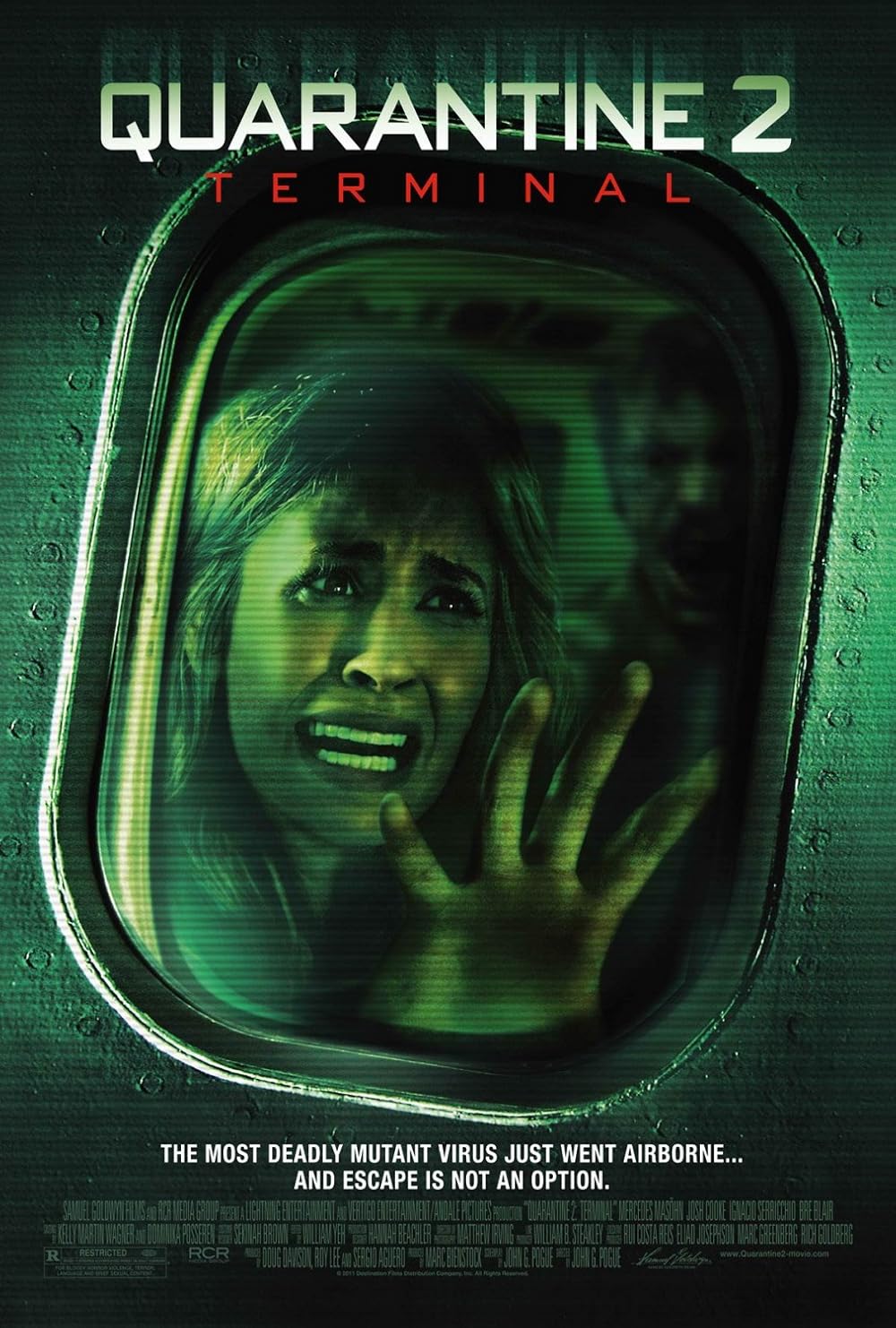
Some films arrive with months of anticipation, a carefully cleared evening and the vague expectation that the viewing should mean something. Others are simply there on a lazy Sunday, sitting in a streaming menu while you look for something watchable, reasonably contained and unlikely to demand emotional paperwork afterwards. Quarantine 2: Terminal belongs firmly in that second category for me. It was not a grand rediscovery or an overlooked classic I had been meaning to reassess; it was a random horror pick, which is probably the ideal way to encounter a sequel this modest.
I had seen it before, although my memory of it was mostly structural: aeroplane, infected passengers, abandoned terminal, unpleasant ending. I originally watched it because it followed Quarantine, the 2008 Hollywood remake I had sought out because it was based on the Spanish horror film [REC] from 2007. That leaves Quarantine 2 sitting at an unusual distance from its source. It is a sequel to a remake, but not a remake of the original film’s sequel. There are two sets of franchise tracks running beside each other, then suddenly separating at the junction.

That degree of separation matters because Jaume Balagueró and Paco Plaza’s [REC] became the beginning of its own Spanish series, while the American Quarantine repeated much of the first film’s apartment-block nightmare with a more explicitly biological explanation. [REC]² returned directly to the quarantined building; Quarantine 2, by contrast, leaves the building behind, abandons the found-footage format and sends the infection into the American transport system. It is therefore not [REC]² with English dialogue and a larger catering budget. It is its own modest branch of the outbreak.
That makes it less culturally significant than the Spanish continuation, but it also gives the film more room to move. Rather than copying the next film, it asks a simple exploitation-movie question: what happens when the virus gets on a plane? The answer is not especially profound, but it is quite watchable.
The Remake That Took a Different Exit
The first Quarantine stayed remarkably close to [REC]. A television reporter and her cameraman follow firefighters into an apartment building, the doors are sealed from outside, the residents become increasingly violent, and the camera keeps recording because the footage is the only witness likely to survive. Sony’s own description still frames the film through the material left behind by the trapped news crew.
Where the American version meaningfully changed course was in its explanation. The infection was treated as a highly aggressive form of rabies connected to experimentation and apocalyptic extremism, rather than following the more overtly demonic mythology developed by the Spanish films.
That change created the opening Quarantine 2 needed. If the threat is engineered rabies rather than something tied specifically to the cursed architecture of one Barcelona building, it can travel. It can be placed in luggage, hidden among ordinary animals and moved through an airport by someone who looks harmless enough to be ignored.

The sequel takes that practical route. A passenger named Henry carries infected laboratory rats aboard a commercial flight, disguising them as classroom pets. One bites fellow passenger Ralph Bundt, who soon begins sweating, convulsing and behaving like the worst person ever asked to remain seated while the seatbelt sign is illuminated.
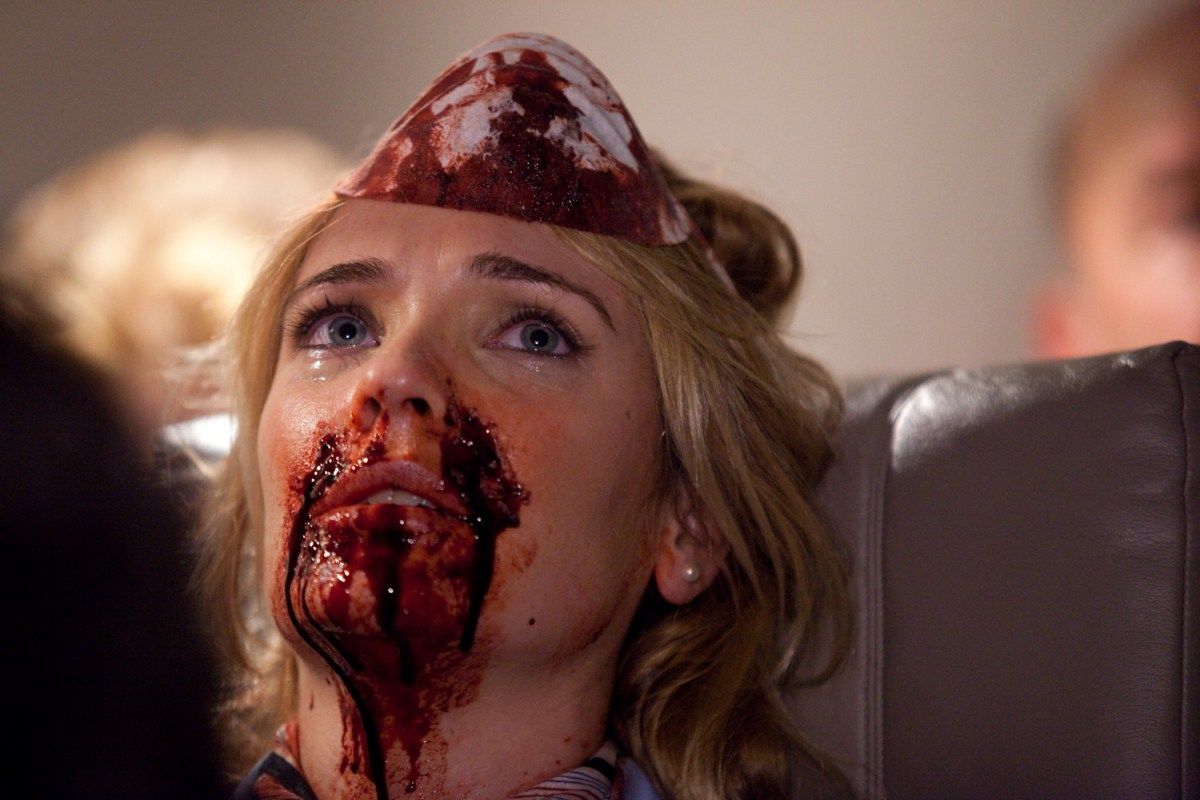
The outbreak moves quickly through the cabin. Ralph becomes violent, tries to reach the cockpit and bites flight attendant Paula across the face. The pilots make an emergency landing. The passengers escape through a jet bridge into what appears to be an inactive terminal, only to discover that the doors have been locked and heavily armed personnel are gathering outside.
The aeroplane sequence is the film’s best idea and perhaps its biggest missed opportunity because commercial aircraft are already uncomfortable containers. The seats are too close, the aisles too narrow and everyone is temporarily dependent on a small group of people behind locked doors. There are few useful places to run, nowhere meaningful to hide and no dignified method of climbing over a stranger during an emergency. Adding a fast-acting infection to that environment barely requires embellishment.
For its opening stretch, Quarantine 2 understands this. Ralph’s deterioration is observed at close quarters. Paula cannot retreat far enough to be safe. Passengers must decide whether they are looking at a medical emergency, a drunken disturbance or something worse. The disease arrives before the characters have settled into recognisable horror roles.
Then the plane lands and the film moves into the terminal, which gives the story more physical variety but also loosens the pressure. The cabin is frightening because every centimetre matters; the terminal offers storage rooms, loading bays, baggage conveyors, trucks, maintenance corridors and tunnels. There is more space for action but less immediate claustrophobia. I liked the plane angle enough that I wished the film had been slightly more stubborn about keeping us there.
A Small Production Built Around Industrial Space
Quarantine 2: Terminal was written and directed by John Pogue, whose earlier screenwriting credits included U.S. Marshals, The Skulls and Ghost Ship. Pogue later described Quarantine 2 as the point where he moved decisively from writing towards directing and discovered that he enjoyed working with actors and controlling the wider production.
The film entered production in 2010. Although early reporting placed the shoot in Los Angeles, filming moved to Atlanta and Griffin, Georgia, with much of the terminal material created inside an abandoned distribution facility. The film premiered at France’s Gérardmer festival in January 2011, received a very limited American theatrical release in June and arrived on US DVD in August.
That release history feels appropriate. This is very much a home-entertainment-era horror sequel: recognisable title, modest scale, functional cast, some good practical nastiness and no expectation that the wider culture will stop to notice.
Unlike the first film, Terminal is not presented as recovered footage. Pogue and cinematographer Matthew Irving retain a restless handheld approach, but the camera is no longer required to belong to a character. Contemporary production information described the visual intention as handheld filmmaking influenced by the immediacy associated with Rodrigo Prieto and Paul Greengrass rather than a continuation of strict found footage.


This is probably the correct decision. Repeating the same device would have made the film feel even more derivative, and inventing another character determined to record everything while being pursued through an airport would have required either satire or an extraordinary tolerance for poor decision-making.
The looser camera still creates proximity. It can rush through the plane, press into faces and shake through the terminal without constantly reminding us who is holding it. It loses the rough credibility of [REC], but it gains freedom.
Hannah Beachler handled the production design, with John Garret Gorman as art director, Daphne Hayes on set decoration and Sekinah Brown on costumes. Much of the terminal material was filmed in a disused towel-and-washcloth distribution facility in Griffin, Georgia, which helps explain why the location does not entirely convince as a functioning passenger terminal but works very well as the forgotten mechanical underside of one: concrete floors, metal shutters, baggage equipment, service vehicles and corridors intended for cargo rather than people.
That industrial quality becomes useful. Airports usually present themselves through polished surfaces, signage and controlled movement; this film lives behind those surfaces. The passengers leave the public-facing world almost immediately and enter the plumbing, until the terminal feels less like an airport than a digestive system.
Jenny, George and the Burden of Being Sensible
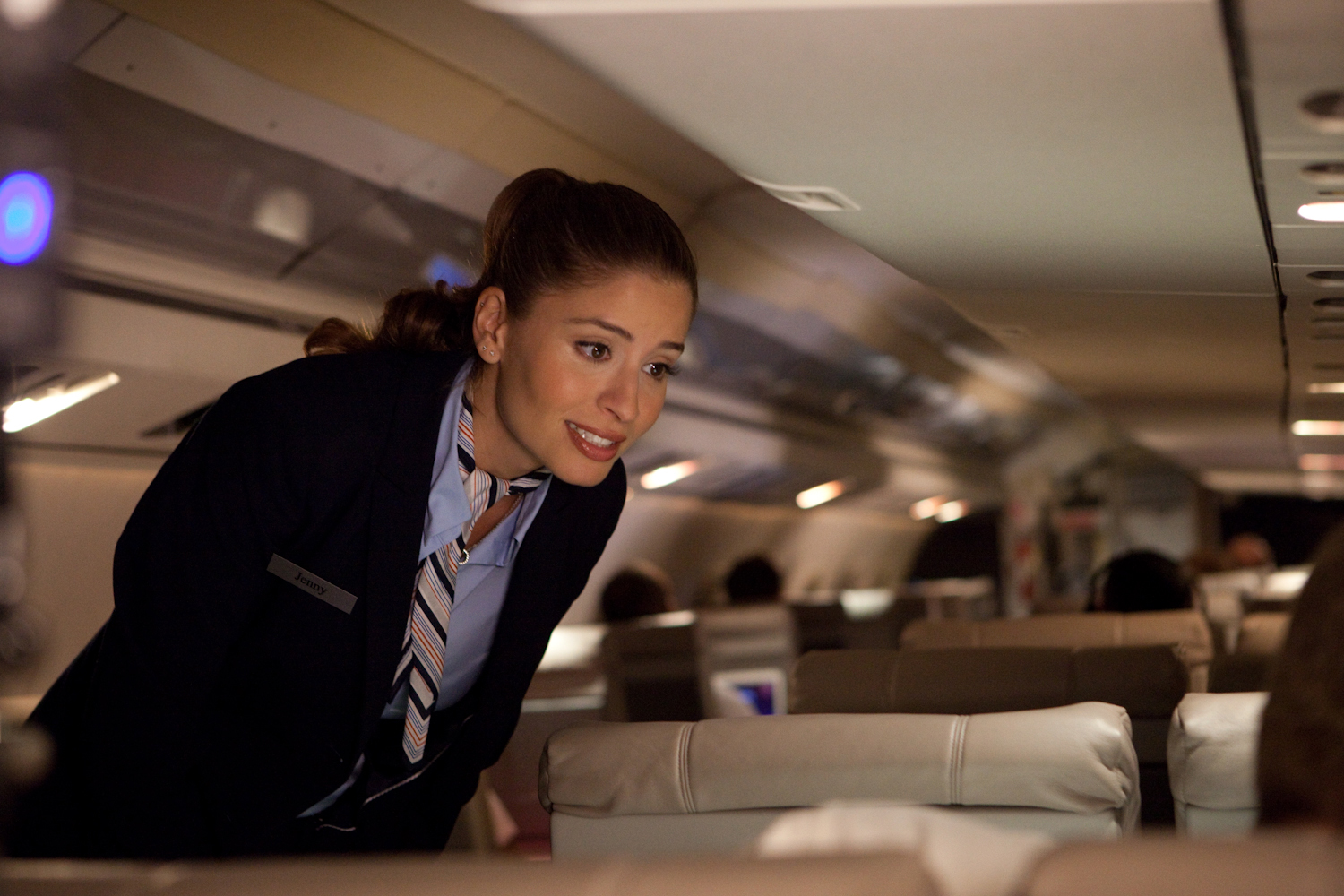
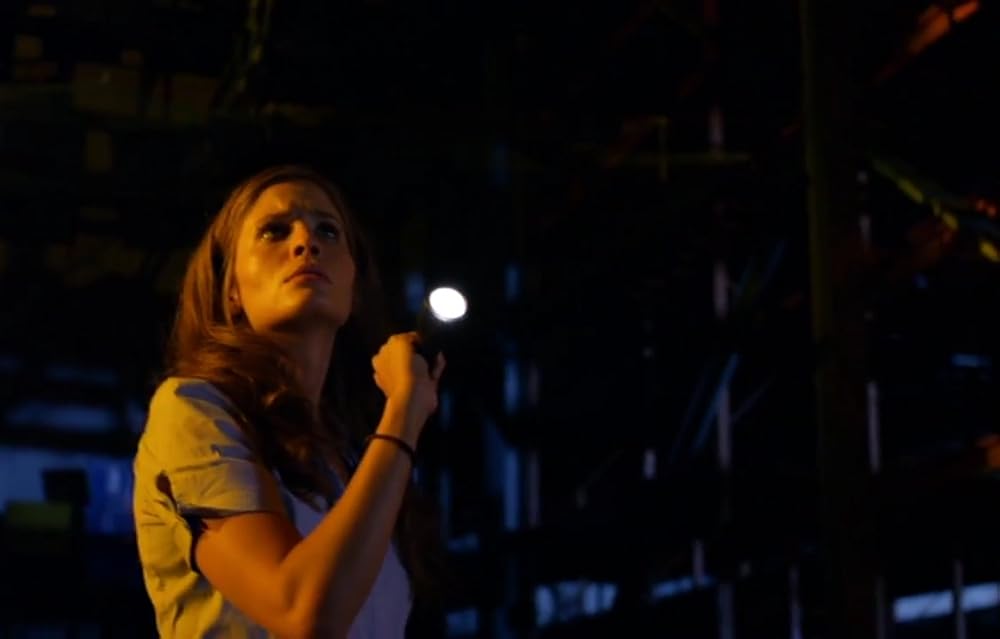
Mercedes Mason plays Jenny, the flight attendant who gradually becomes the film’s central survivor. She is initially working beside the more experienced Paula, played by Bre Blair, but the outbreak leaves Jenny responsible for an unaccompanied boy, an injured group and a situation no amount of safety training was designed to cover.
Mason gives Jenny a practical, alert quality. She is not introduced as an action heroine and does not undergo a sudden transformation into one. She keeps moving because other people need her to. She checks injuries, returns to the aircraft for medical supplies, tries to protect George and slowly learns which members of the group can be trusted.
That may sound basic, but it helps. Low-budget outbreak films often fill their casts with people who become aggressively foolish as soon as the doors are locked. Jenny occasionally makes questionable choices because the plot requires another dangerous trip through the building, but her general instinct is to reduce panic rather than manufacture it.

Mattie Liptak plays George, the unaccompanied minor placed under Jenny’s care. He initially seems designed to provide the standard child-in-danger function, but he becomes more observant than many of the adults. He notices Henry’s connection to the rats. He searches Henry’s belongings. He recognises that the apparently helpful passenger has been lying.
George also becomes surprisingly effective around airport machinery. At one point he uses the controls of a catering vehicle to crush the infected co-pilot Willsy, which is not a skill I remember appearing on the standard list of services offered to unaccompanied minors.
The relationship between Jenny and George supplies the film with what little emotional continuity it has. They are not family. They barely know each other. Her responsibility is initially professional, then gradually becomes personal because almost everyone else is disappearing.
The film does not labour the bond, which is sensible. There is no speech about found families while infected airport staff hammer on a catering truck. Jenny simply keeps trying to get George out. That makes the ending more effective than it might otherwise have been.
Henry and the Helpful Stranger Problem
Josh Cooke’s Henry is the film’s most important character after Jenny, although he initially presents himself as a mild, helpful passenger. He speaks calmly, volunteers assistance and appears protective of George. In a louder film he would be visibly suspicious from his first scene. Here he looks ordinary enough to survive scrutiny.
That ordinariness is the point. Henry brought the infected rats onto the aircraft. He is connected to the extremist group uncovered in the first Quarantine and believes humanity should be reduced through a manufactured plague. He also carries an experimental treatment, suggesting that his commitment to global cleansing does not extend quite as far as accepting his own place among the casualties.
Cooke handles the gradual reveal reasonably well. Henry does not become a cackling supervillain. He remains controlled until control is no longer useful. His ideology is thinly developed, but his hypocrisy is clear. He believes billions of strangers can be sacrificed for a cleaner world, then panics when he is bitten and immediately injects himself with the possible antidote.
The betrayal gives the film a human antagonist just as the infected threat risks becoming repetitive. It also connects the terminal outbreak directly to the first film without requiring returning characters. The apartment building was not simply the location of an accidental event. It was part of a plan, and Henry is carrying that plan into the wider world.


There is something appropriately drab about the method. No missiles. No theatrical countdown. Just a man carrying infected animals through an airport because modern systems are built on the assumption that most people are telling something close to the truth.
The trouble is that Henry’s revelation arrives during a crowded final stretch. The film has to explain his role, kill Ed, show the failure of the antidote, turn Henry into another infected attacker and move Jenny and George into the drainage tunnel. The ideas are sound, but there is little time to let the betrayal settle. Henry is both conspiracy and monster before the film has properly finished processing either.
Ed, Shilah and the People the Film Needed More Of
Ignacio Serricchio plays Ed Ramirez, the baggage handler who connects the passengers to the terminal. Ed is practical because he understands the building, the vehicles and the possible routes out. He is also understandably furious at being trapped with a group whose arrival has apparently brought military containment and rabid passengers into his working night.
Ed has the beginnings of a stronger supporting character. He knows the infrastructure in a way the travellers do not, and his scepticism helps keep the group from drifting into empty reassurance. He suggests the drainage system as a possible escape route and repeatedly uses his knowledge of the terminal to keep people moving, which is why Henry shooting him lands harder than some of the more elaborate deaths. It removes one of the few characters with a distinct relationship to the location; once Ed is gone, the airport becomes a generic maze rather than a workplace someone understands.


Noree Victoria’s Shilah is similarly valuable. She has medical knowledge, remains level-headed and recognises the probable rabies-like symptoms. She helps treat Paula and becomes one of Jenny’s more credible allies.
Shilah’s final contribution is a pair of thermal goggles and a sacrifice. After revealing she has been bitten, she draws the infected away so Jenny can continue searching for George. It is a familiar horror beat, but Victoria gives it some restraint. Shilah knows what is coming and chooses to use the remaining time rather than spend it bargaining.
Paula, meanwhile, is the film’s first painful loss. Her face is torn during Ralph’s attack, leaving Jenny trying to help a colleague who is already moving towards infection. Paula later returns as one of the infected, forcing Jenny to kill the person she had spent much of the film trying to save.
The supporting cast also includes Phillip DeVona and Julie Gribble as married couple Niall and Susan; Erin Áine Smith and Tyler Kunkle as Nicca and Hvorst; Lamar Stewart as Preston; Sandra Ellis Lafferty as cat owner Louise; and Tom Thon and Lynn Cole as elderly couple Doc and Bev. The credited cast and crew position Jenny, Henry, George, Ed, Shilah and Paula as the main dramatic group around whom the wider passenger body is arranged.

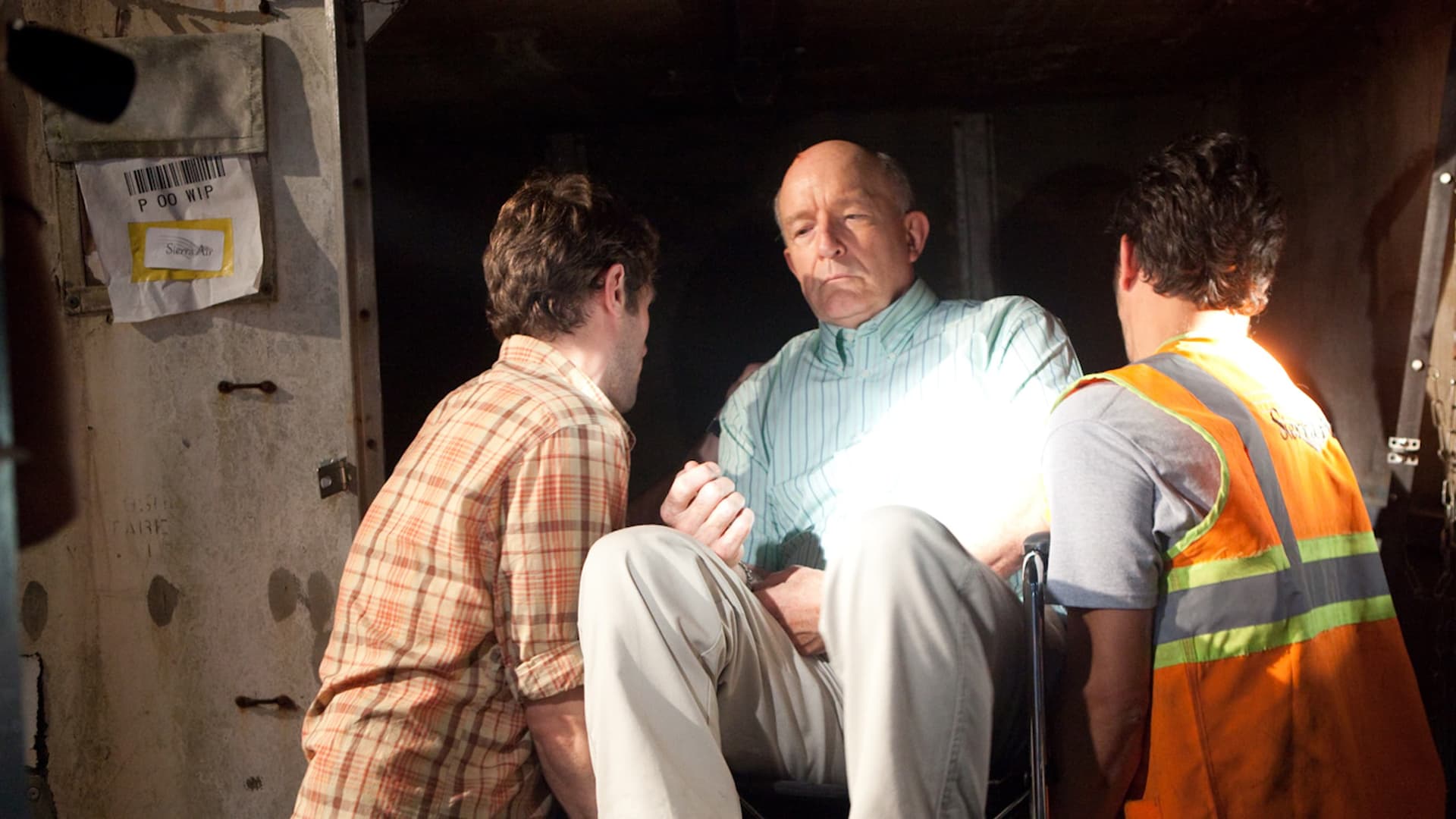
Not all of these people become fully developed characters. Some are delivery systems for bites. The film relies on quick visual types—the anxious traveller, the elderly couple, the young couple, the man with the gun—because it has eighty-six minutes and a large amount of attrition to organise.
A little more personality would have made the deaths heavier. Still, the actors generally keep the material grounded. Nobody seems to believe they are starring in a prestige infection drama. They are trying to make the panic convincing and reach the next locked door.
The Government Is Outside, Which Is Not the Same as Help
One of the franchise’s most consistent ideas is that containment is not rescue. The surviving passengers can see armed personnel outside. They hear instructions and observe activity. The presence of uniforms initially suggests that an organised response has arrived. Instead, anyone attempting to leave is shot.
A team enters wearing protective equipment and appears to offer treatment, but its members are not ordinary medical responders. A wounded officer identifies the unit as part of a domestic chemical and biological terrorism operation. The injections they carry are experimental, and the people outside are more committed to maintaining the perimeter than rescuing anyone caught within it.

The sequence in which Hvorst tries to follow the armed team out, only to be killed by gunfire from outside, is one of the film’s better moments. It removes the comforting assumption that reaching authority means reaching safety.
The soldiers may be correct from a containment perspective. The infection is highly contagious, fast-moving and almost impossible to distinguish during its early stages, and letting one exposed person through could turn an airport incident into a national outbreak. That logic does not make the image of people being shot at the perimeter any less brutal.
The film is not subtle about institutional secrecy, but it does understand the fear of being reduced to a risk category. Inside the terminal, the characters remain individuals; outside, they are contaminated units inside a sealed zone, and the distinction disappears behind the doors.
Watching the film years after pandemic restrictions inevitably changes some of this. In 2011, quarantine remained a familiar horror mechanism: locked buildings, armed perimeters, official silence. After 2020, the word carries more ordinary memories—travel forms, temperature checks, isolation notices, empty terminals and the sudden awareness that everyday systems can stop.
Quarantine 2 is far too pulpy to become accidental prophecy. Its infected are still sprinting, biting monsters. Yet the airport setting now carries a different residue. Airports are places where local events become international ones. A problem enters at one gate and can wake up on another continent.
Fast Infection, Practical Faces
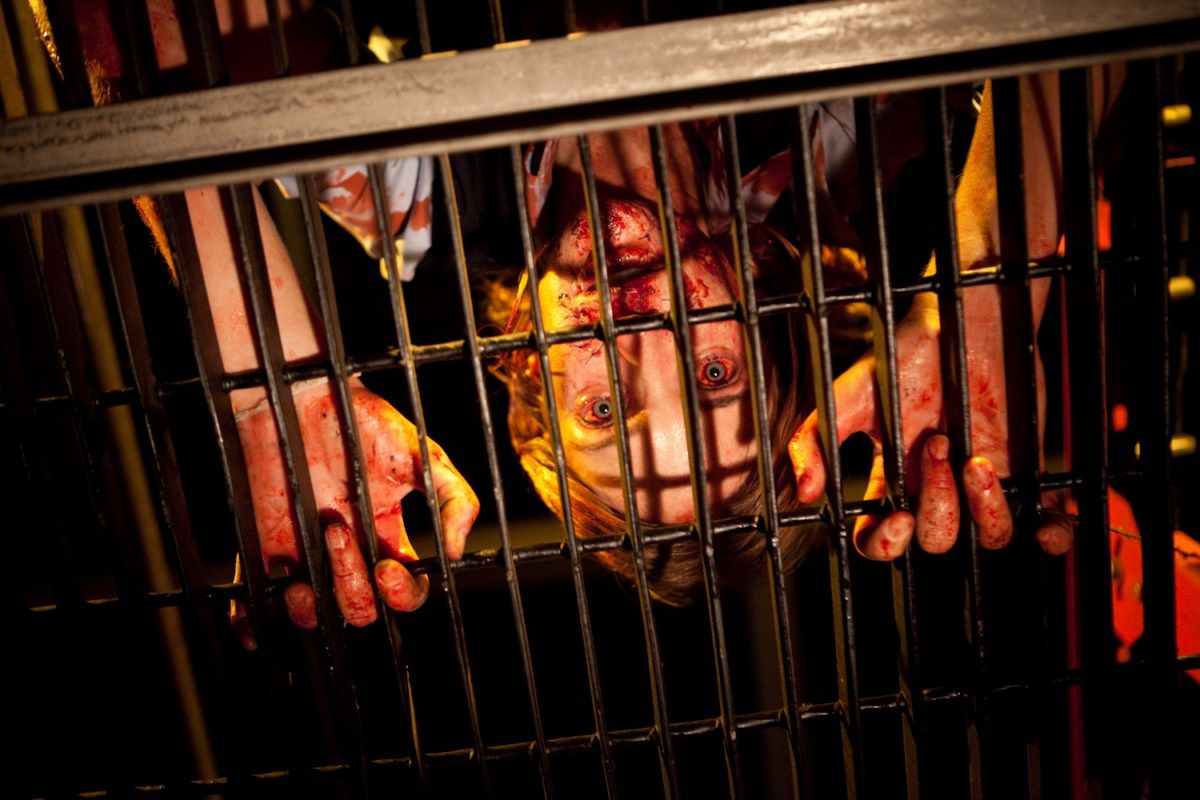
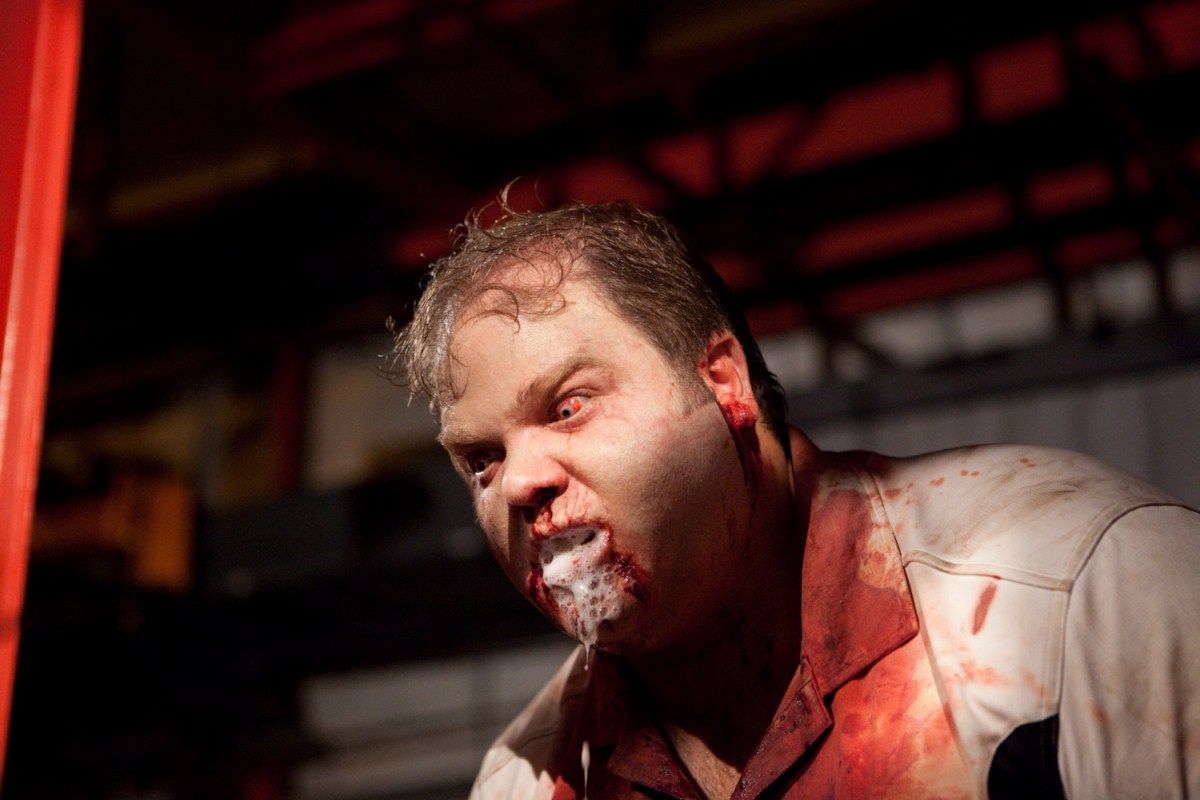
The infected in Quarantine 2 are not traditional undead. They are living human beings overwhelmed by an engineered, rabies-like disease that produces extreme aggression, heightened physicality, bloodshot eyes, drooling and a rapid collapse of recognisable behaviour.
Robert Hall and Almost Human returned after creating the infected makeup for the first Quarantine. During pre-production, Hall said the sequel would maintain continuity with the earlier designs while developing new variations, and Pogue specifically praised the realism and progression of the first film’s infection effects.
That continuity helps. The infected look diseased rather than elaborately monstrous. The makeup emphasises damaged skin, blood, saliva and physical distress. The actors do much of the remaining work through jerking movement, sudden bursts of speed and the horrible loss of social recognition.


The effects are most convincing when seen briefly in bad light. Captain Forrest attacking inside the aircraft, Willsy appearing on the roof of the catering truck, Paula returning as a threat and infected figures moving through the baggage areas all benefit from partial visibility.
The film sometimes overuses the familiar combination of shaking camera, snarling face and sudden impact. After several attacks, the rhythm becomes predictable: someone disappears, the group hears movement, an infected person enters at speed and the camera struggles to keep up.
Still, the practical texture suits the film. Digital spectacle would have exposed the modest production. These creatures need only a corridor, an actor willing to throw themselves against a wall and enough makeup to suggest that the person is already gone.
Sound Without Much of a Musical Memory
I do not remember Quarantine 2 for its music, and that is not necessarily a criticism. Cast interviews from the time specifically noted Pogue’s decision to lean on the sounds of the action rather than a conventional background score, which fits the film itself because its real soundtrack is mechanical.
Cabin announcements, ventilation, alarms, metal doors, gunfire, animal noises, infected screams and the heavy movement of baggage machinery provide most of the atmosphere. The plane sequence uses the ordinary hum of travel as a bed for Ralph’s deterioration. Once the survivors enter the terminal, the soundscape becomes emptier and more industrial. The absence of a memorable theme also keeps the film from becoming grander than it should. This is not an operatic apocalypse. It is a night shift becoming unmanageable.
The weakness is that the film sometimes lacks an additional layer of dread between attacks. A stronger musical identity might have helped smooth the slower terminal sections, where characters are searching rooms, moving between vehicles and explaining what has happened. Instead, the sound tends to wait for the next impact. It works in the moment, but very little of it lingers afterwards.

The Pacing Problem
For an eighty-six-minute film, Quarantine 2 has some surprising pacing trouble. The opening is efficient. We meet Jenny, Paula, George, Henry and the other passengers; Ralph becomes ill; the cabin descends into violence; and the plane makes its emergency landing. The film quickly establishes its central relationships and turns a routine flight into a sealed environment.

Once the group enters the terminal, the story slows and begins repeating itself. Someone needs medical supplies, so characters return to the aircraft; someone may have been exposed, so the group debates isolation; another survivor disappears; the infected attack; the survivors retreat to a new section of the building; a possible rescue arrives and proves false; they hide inside a catering vehicle and search for another route.
None of these scenes is disastrous, but the tension is distributed unevenly. The terminal is larger than the plane without being visually varied enough to make every new area feel distinct. Concrete rooms and loading spaces begin merging into one another.
The catering-truck sequence wakes the film up. Niall starts displaying symptoms just as the group is trying to climb inside. Susan attempts to pull him to safety, then finds herself being dragged back out by the man she was trying to save. The scene combines confined movement, emotional hesitation and the simple horror of not knowing when a loved one has stopped being reachable.
George crushing Willsy with the vehicle’s hydraulic mechanism is another welcome jolt, but the final section then accelerates too sharply. Henry is exposed as the carrier, the government conspiracy is explained, Ed is killed, Shilah reveals her bite, Jenny battles Preston among the conveyor belts, Henry becomes infected despite the injection, George shoots him, Jenny finishes him off, Jenny and George enter the tunnel, Jenny turns and the cat escapes. It is a great deal of incident compressed into a short stretch.
The film therefore has the odd shape of slowing when it should tighten and rushing when it should let the consequences breathe. It remains watchable because something unpleasant is usually nearby, but the structure never quite finds the ruthless forward movement promised by the plane sequence.
The Conveyor Belt and the Value of Using the Location
The best later action scene involves Jenny being pursued by the infected Preston through the baggage-handling system. This is where the airport setting finally becomes more than a backdrop. Jenny uses the moving machinery against him, drawing him into the conveyor mechanism and allowing the terminal itself to deliver the damage. It is a straightforward horror set piece, but it works because it belongs specifically to this location. The same scene could not simply be moved back to the apartment building.
The catering vehicle, jet bridge, cargo hold, thermal equipment and baggage belts all provide Terminal with its identity. Whenever the film uses them, it steps out from behind the larger shadow of Quarantine and [REC]. Whenever it returns to dark corridors and fast infected people lunging towards the camera, the franchise ancestry becomes harder to ignore.
The film needed more of the former. Airport infrastructure offers a remarkable collection of frightening machinery: luggage tunnels, cargo loaders, fuel systems, maintenance shafts, security doors and automated belts leading into unseen areas. Quarantine 2 uses enough of this to justify the setting, but not enough to exhaust it. The plane was a nice touch. The industrial terminal was a decent extension. Neither is exploited quite as fully as it could have been.
Jenny at the Grate
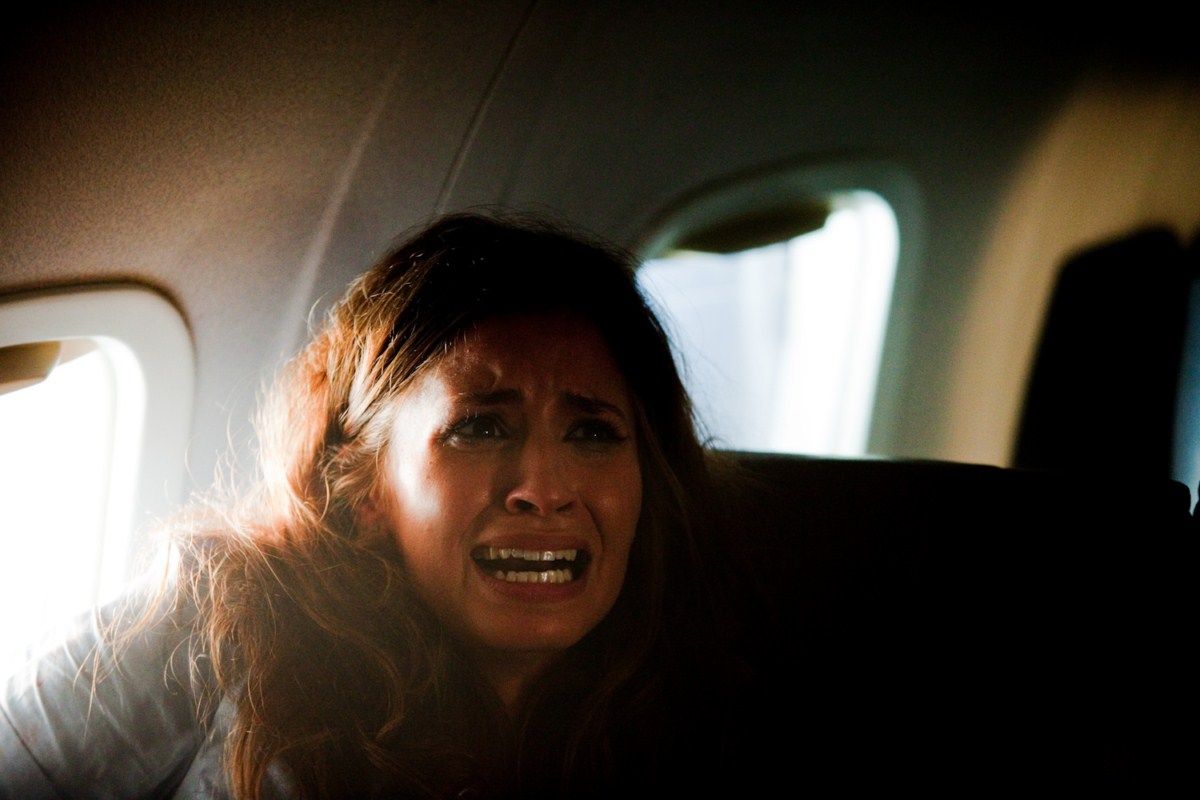
The ending is the strongest reason the film stays in my memory. Jenny and George reach the drainage tunnel after killing Henry. George uses the thermal goggles to navigate the darkness and notices that Jenny has been bitten. She knows what this means but continues moving, trying to get him to the exit before the infection takes control. At the end of the tunnel, George is small enough to squeeze through the metal bars. Jenny is not, and that simple difference in body size suddenly becomes the whole ending.
For a moment, the scene offers the familiar possibility that she will remain behind heroically while the child escapes. Then the infection takes her. She lunges towards George through the grate, reaching him but unable to follow. The person who protected him for the entire film is still physically present, but no longer there in any useful sense.


The barrier saves George from Jenny in the same way the terminal barriers failed to save everyone from the outbreak. Containment works only because of a difference in body size and a few centimetres of metal. It is mean, efficient and considerably less comforting than the film might have chosen to be, which is why the final image works as more than a last-second sequel hook.
George discards the thermal goggles. Through them we see Louise’s infected cat moving away from the containment area towards the lights of Las Vegas, with the Luxor visible in the distance. The authorities have locked doors, surrounded the terminal and killed people attempting to escape, but the virus has left inside the one creature nobody considered important enough to track properly.
It is both bleak and slightly ridiculous, which may be the correct tonal balance for this film: human beings organise a militarised quarantine, lock every door and shoot people who try to cross the perimeter, while the cat simply walks out.
A Sequel From the DVD Shelf
Quarantine 2: Terminal now feels like an artefact from a particular corner of early-2010s horror: the modest sequel that borrowed a recognised title, skipped a wide theatrical life and waited to be found on DVD, cable or a streaming menu years later.
Critical reception has always been a small-sample affair for this one, which feels appropriate for a film whose natural habitat has been casual discovery rather than serious consensus. It is the sort of sequel people tend to stumble across, not a title around which a critical canon was ever likely to form.
It does not carry much conventional nostalgia for me. I do not remember queuing for it or discussing it afterwards. There is no particular poster, cinema or physical-media ritual attached to it.
The nostalgia, if there is any, is for the viewing category. There was a time when horror shelves were full of films like this: sequels with subtitles, unfamiliar casts, competent effects and a premise that sounded just good enough for ninety minutes. Some were dreadful, some unexpectedly inventive, and most sat somewhere in the middle waiting for a quiet afternoon and lowered expectations.
Streaming has not removed that experience, but it has made it stranger. There are now too many choices and too little friction. Selecting a random film can take longer than watching the first act. Quarantine 2 is the sort of title that benefits from not being treated as a decision of great importance. It is a lazy-Sunday horror film, and I do not mean that as an insult.
Watchable, With Some Turbulence
I still think Quarantine 2: Terminal has pacing problems. The plane section promises a tighter and nastier film than the terminal section consistently delivers. Several supporting characters remain little more than names waiting to be crossed off, and the final revelations arrive with less room than they need.
It is also several steps removed from the force of [REC]. The original film had a rough immediacy that made its apartment building feel genuinely contaminated. Quarantine copied much of that machinery. Terminal copies less, but it also inherits less of the original’s fear.
What it gains is a degree of independence. John Pogue does not remake [REC]²; he follows the American film’s biological logic into a new location, drops the found-footage restriction and constructs a small outbreak thriller around aircraft cabins, service vehicles and baggage systems. The production makes practical use of its industrial spaces, Mason is a credible lead, Liptak avoids making George unbearable, Cooke gives Henry enough normality for the betrayal to function, and the ending is appropriately unforgiving.
This is not a lost horror classic and does not need to be rescued from history. It is an uneven but functional sequel with one particularly good idea: the outbreak has left the apartment building and entered the network. By the time the authorities realise the passenger list was never the whole problem, the smallest traveller is already heading towards the lights.
Affiliate Disclosure: This post contains affiliate links. If you click through and make a purchase, I may earn a small commission—at no additional cost to you. I only recommend products I personally find useful or relevant. Thank you for your support.
Leave a Reply