
Spoiler note: This review discusses the film’s central conspiracy, its antagonist and the ending.
There is a certain sort of spy thriller that knows how to look urgent. A man gets a call he should not answer, a former colleague appears with an expression reserved for national emergencies, and suddenly every room contains a classified file or a secure telephone. Jack Ryan: Ghost War has all of that, along with an appealingly familiar cast and action scenes that know their way around a camera. What it sometimes lacks is the confidence to let a scene do its own explaining.
The call that never quite ends
That is roughly where Jack Ryan: Ghost War begins emotionally, even if the plot itself has to take the scenic route through covert missions, rogue units, intelligence breaches, old loyalties, dead operatives, car bombs, server facilities, and people saying things like “we don’t have much time” while somehow still having enough time to explain the structure of a black-ops conspiracy.
I caught it when it dropped on Prime Video, and for the most part, I had a good time. The action scenes are intense, crisp, and enjoyable in the way these modern streaming thrillers can be when the machinery is properly oiled. Guns crack. Vehicles slam into things. Men run through corridors like national security depends on cardio. John Krasinski still gives Jack Ryan that familiar mix of reluctant decency and contained panic, like a man who understands the intelligence briefing but would rather be anywhere else. Wendell Pierce brings the worn gravity. Michael Kelly gives Mike November that pleasant, battered competence of someone who has probably seen every bad decision governments can make and still shows up anyway.
But I also found parts of it tedious to follow, and not because the story is unusually complex. It is more because the film keeps explaining itself in dense little packets of dialogue, as if it is afraid the audience might wander off if it does not keep naming every organization, betrayal, past connection, operational detail, and moral implication. I like a smart spy thriller. I like being asked to pay attention. But there is a difference between narrative complexity and characters speaking in pressurised exposition because the plot has been folded too tightly into the running time.
Jack Ryan: Ghost War is a feature-length continuation of the Prime Video series, bringing Krasinski back after the show ended its four-season run in 2023. Amazon describes the film as Ryan being reluctantly pulled back into espionage after an international covert mission unravels into a deadly conspiracy, forcing him to work with CIA allies Mike November and James Greer, along with MI6 officer Emma Marlowe, against a rogue black-ops unit. That is the clean version. Watching it is a little messier, as these things tend to be.
A Jack Ryan who still remembers the desk job
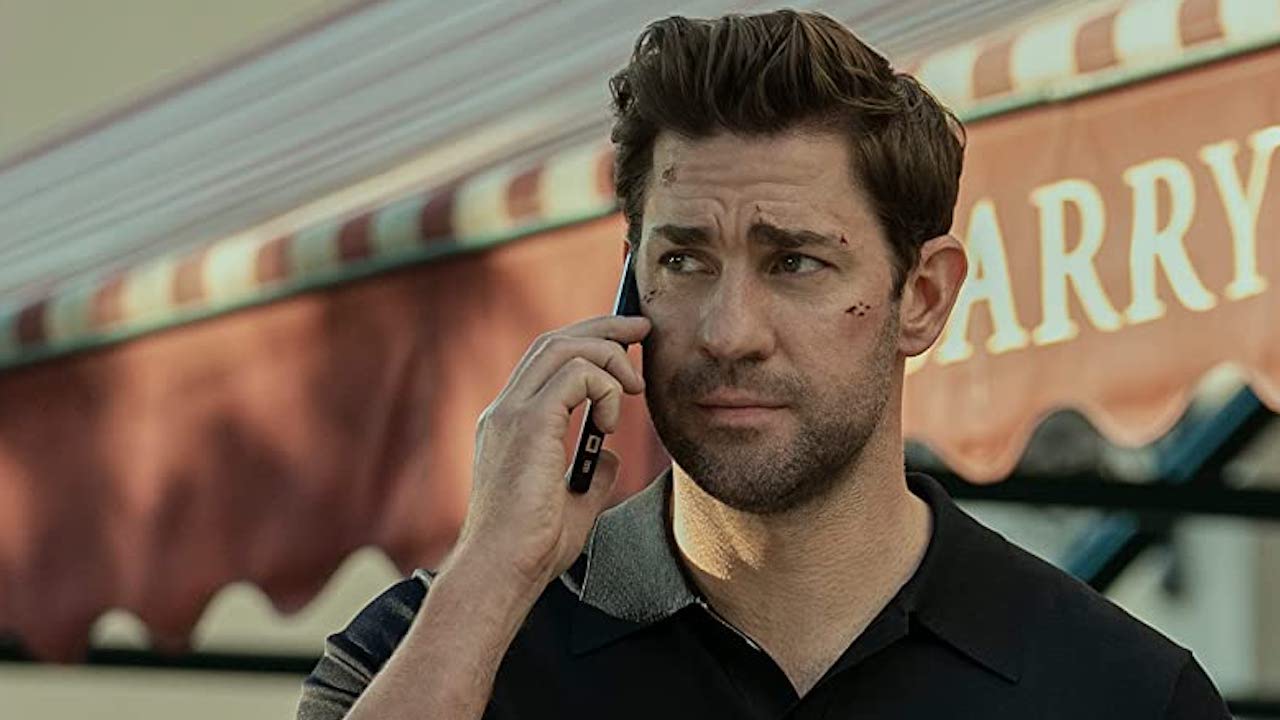
John Krasinski’s Jack Ryan has always been a bit of an odd fit, though not in a bad way. Earlier screen versions of Ryan carried different energies: Alec Baldwin had the cool young analyst thing, Harrison Ford had the weary moral adult in the room, Ben Affleck had the early-2000s reboot sheen, and Chris Pine had the franchise-starter athletic polish. Krasinski’s version is softer around the edges, at least conceptually. He does not enter a room like a super-spy. He looks like someone who still remembers being an analyst, which matters.
That is the basic hook of this iteration. Jack Ryan is not supposed to be Jason Bourne. He is not a blank weapon with amnesia and perfect cheekbones. He is supposed to be the guy who can read the pattern before everyone else does. The man who sees numbers, movements, funding trails, the gaps between the official story and what is really happening. Krasinski’s Ryan works best when the performance leans into that: alert, morally uncomfortable, a little too human to enjoy being good at this.
In Ghost War, though, the film pushes him further into action-hero territory. That was probably inevitable. A feature film needs scale. A streaming movie built out of a popular action-thriller series cannot spend two hours on Jack squinting at bank transactions, however much some of us might secretly enjoy a middle-aged Excel thriller. So Ryan runs, fights, shoots, infiltrates, survives. Krasinski handles the physical side well enough. He is believable as a man who has been trained and tested, not as an invincible killing machine. That distinction helps.
What I appreciate about his return is that he still plays Ryan as someone who has to think before becoming violent. That may sound like a small thing, but in this genre it matters. Too many modern action protagonists are built as pure capability fantasies. Jack Ryan, even here, remains slightly bothered by the machinery around him. He can do the job, but he does not seem spiritually at home in it.
The film’s premise leans into that unease. Ryan is “reluctantly pulled back” into the world of espionage, which is now practically the genre’s equivalent of saying the old band is getting back together. The reluctant return is not new, but it suits Krasinski. His face is good at showing the moment when a man realises the world has once again become stupid in a heavily armed way.

The conspiracy and its paperwork
The basic story involves an international covert mission that spirals into a larger conspiracy. Prime Video’s own synopsis frames it around a deadly unraveling that pulls Ryan back in, with James Greer, Mike November, and Emma Marlowe joining him in a fight against a rogue black-ops unit. People’s ending explainer identifies the rogue black-ops element as Starling, a former CIA/MI6-linked unit that becomes central to the film’s conspiracy, with Liam Crown positioned as the main antagonist behind its resurrection.
That setup has the right ingredients. Secret unit. Old sins. Intelligence-world accountability. A mission gone wrong. The sense that the official systems meant to protect people are quietly producing their own monsters. It is very much in the Jack Ryan lane: geopolitics filtered through individual conscience.

Where the film becomes a little tiring is in the delivery. There is a lot of dialogue devoted to explaining who knew what, which operation connects to which past decision, why this person cannot be trusted, who has leverage over whom, and what the next move means. Some of that is unavoidable in spy fiction. The genre runs on concealed information. Someone has to lift the lid eventually.
But Ghost War sometimes handles explanation like a nervous designer trying to label every element in a layout because someone in the meeting might not “get it.” The result is clean, but not always graceful. You can feel the film stopping to organise itself. And once you feel that, the illusion gets a little scratched.
The issue is not that the story is incomprehensible. It is more that the film wants the momentum of a lean action thriller while carrying the vocabulary of a serialized intelligence drama. In an eight-episode season, all the acronyms, betrayals, institutional rivalries, and character histories have room to breathe. In a 105-minute movie, those same elements arrive compressed, like a zip file that keeps asking you to extract another folder.
When the film moves, it finally breathes
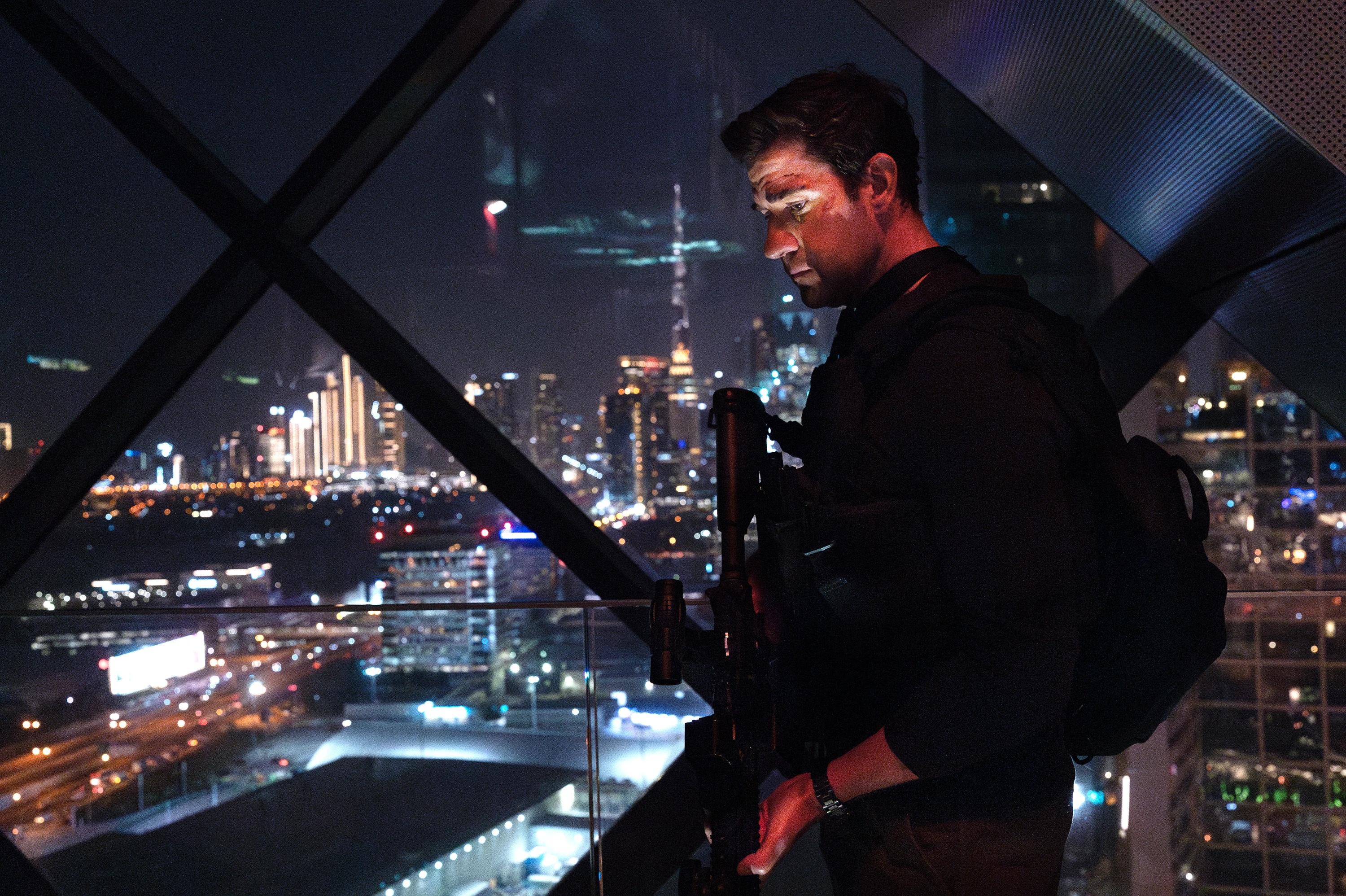
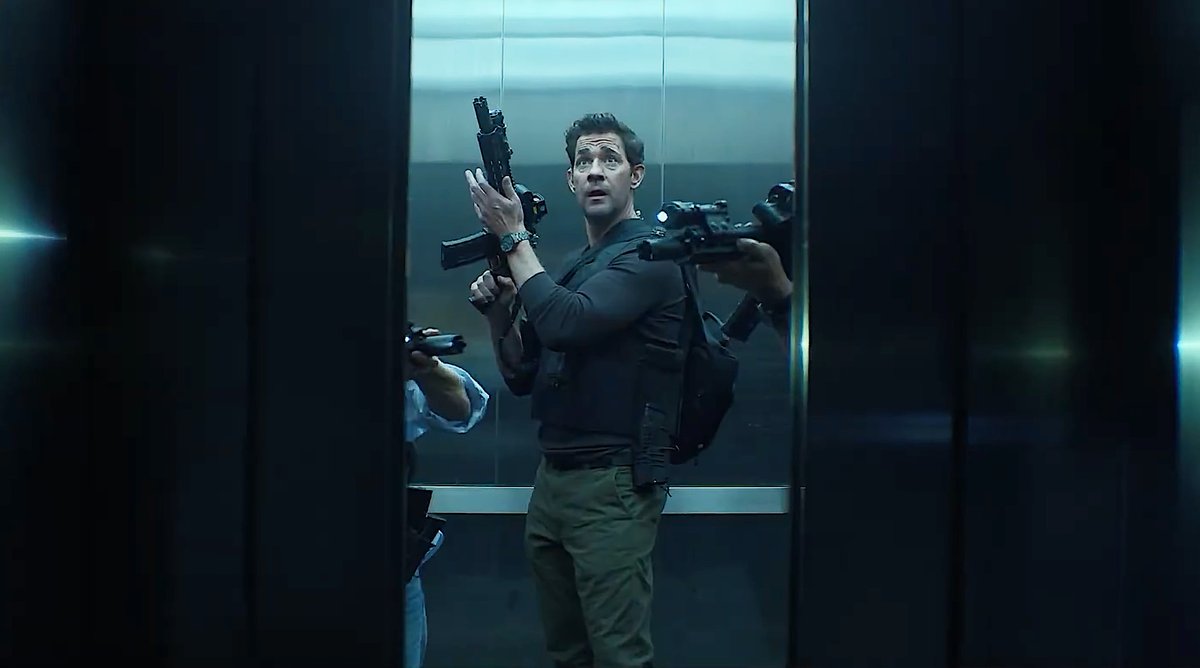
The strongest parts of Ghost War are its action sequences. That will not surprise anyone who followed the Prime Video series, which often knew how to stage violence with weight and geographical clarity. Ghost War keeps that side of the brand intact. The film has the slick, muscular look of a contemporary streaming thriller: clean photography, hard cuts, global locations, tactical movement, enough grit to avoid feeling glossy but not so much that it becomes muddy.
The action does what action is supposed to do in this kind of film. It gives the plot a pulse. It cuts through the dialogue. It reminds us that all the institutional language—covert mission, intelligence breach, rogue unit, operational compromise—eventually lands in bodies, rooms, streets, vehicles, and people making split-second choices.
That is probably why I enjoyed the film despite my frustration with the explanatory passages. Whenever Ghost War stops talking and starts moving, it becomes much more confident. There is a physical directness to those scenes. You understand who is in danger. You understand who needs to get across the room, into the vehicle, out of the building, or through the ambush. The storytelling becomes visual again.
And maybe that is where the film’s design sense is strongest. It knows how to make action readable. That should not be taken for granted. A lot of modern action is edited like someone dropped the footage down a flight of stairs. Here, the geography generally tracks. The hits have consequence. The tactical staging has enough discipline. It is not reinventing the form, but it is competent in a way that feels increasingly rare.
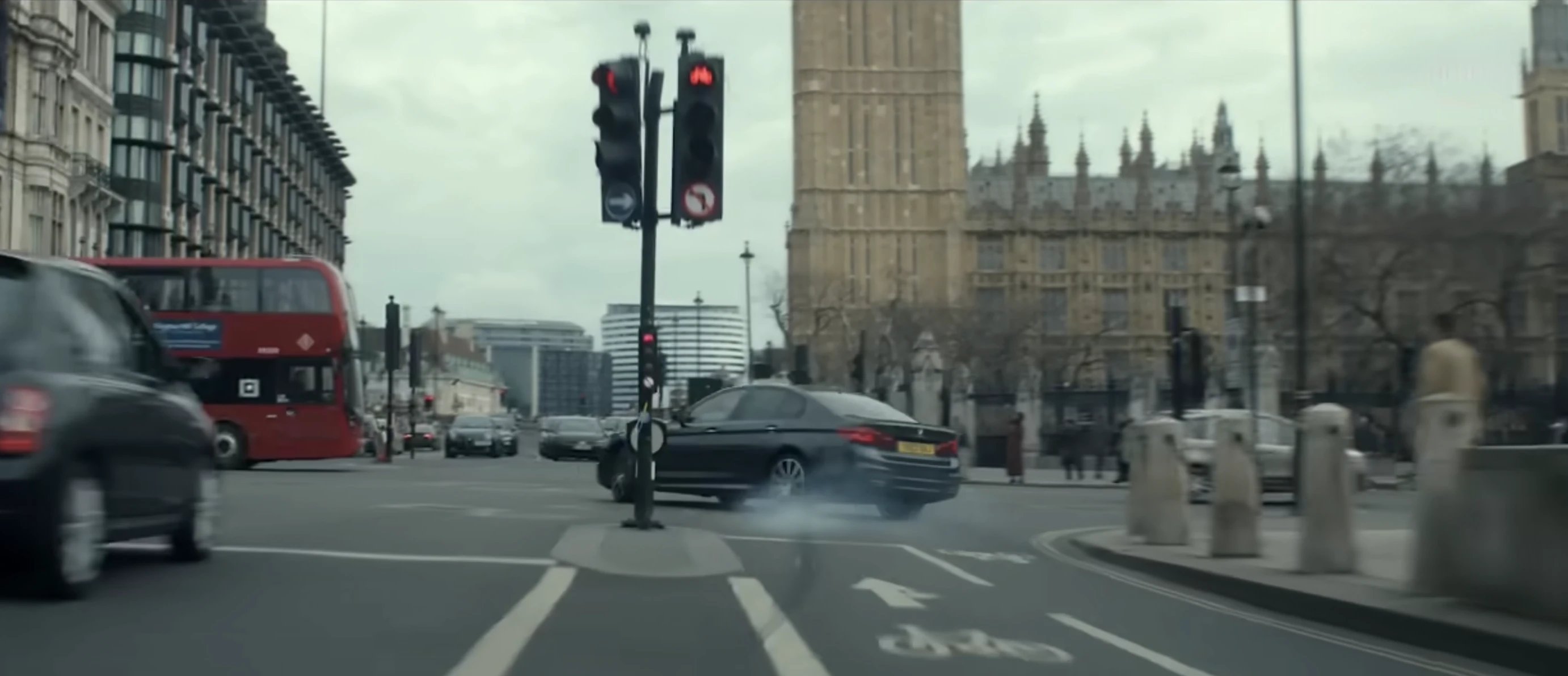
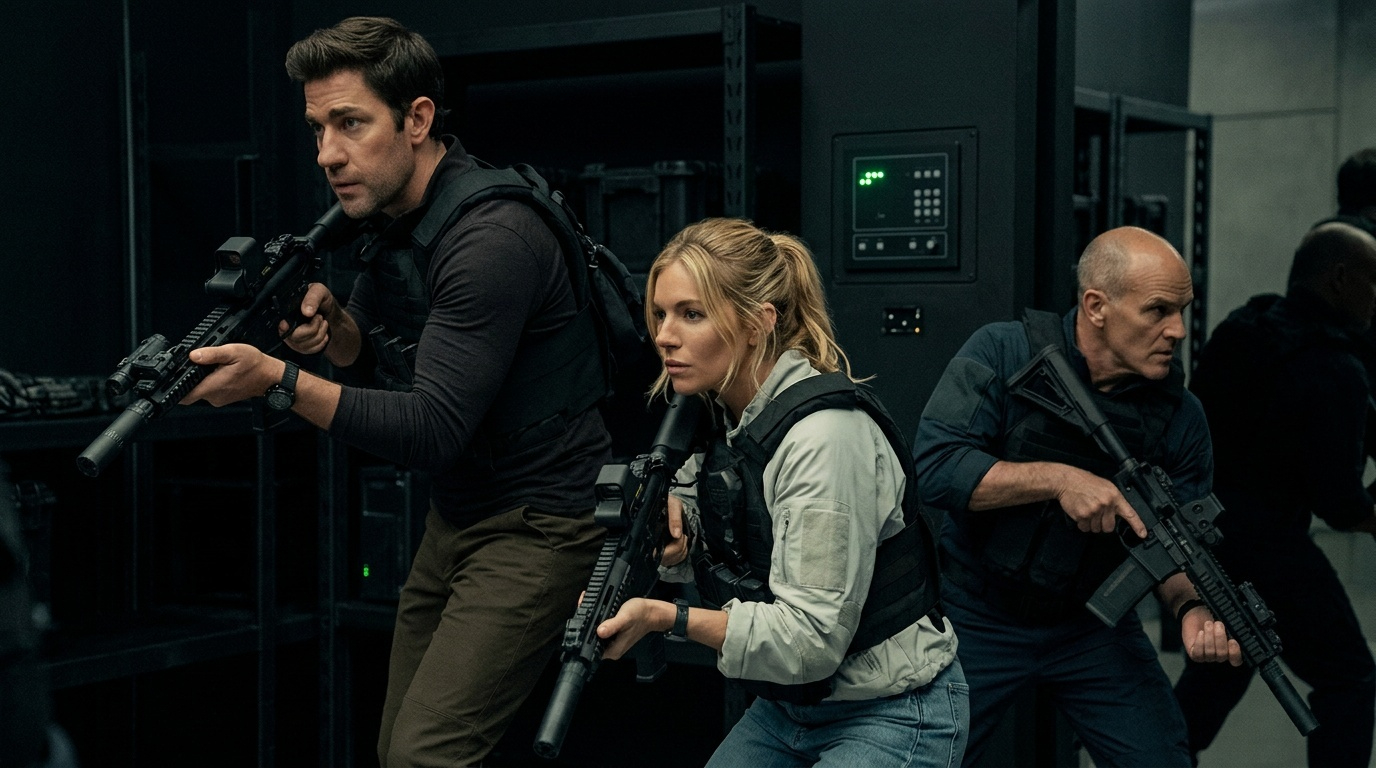
The Dubai material, the pursuit elements, and the final confrontation around Crown’s operation give the movie the scale it needs. People’s summary of the ending notes a climactic mission involving a server facility in Dubai, where the team works to expose Crown’s rogue operation. That kind of climax is exactly where this film feels most at home: physical stakes wrapped around data, secrecy, and institutional rot.

Greer, and the cost of remembering
Wendell Pierce’s James Greer remains one of the best things about this version of the Ryan universe. He brings a weathered authority that never feels theatrical. Greer is not just “the mentor” or “the boss.” He feels like a man who has absorbed too much history and knows that institutions do not become dangerous overnight. They become dangerous through small compromises, repeated often enough to look like policy.
In Ghost War, Greer’s role expands with the stakes. People’s plot summary notes that after CIA director Elizabeth Wright is killed, Greer becomes acting director and eventually becomes one of Crown’s key targets. That gives Pierce a stronger dramatic position. He is not merely advising from the side. He is directly implicated in the institutional fight the film wants to dramatize.
Greer works because he has moral weight without self-righteousness. He knows the ugliness of the job. He understands the necessity of certain decisions, or at least the arguments people make for them. But Pierce plays him as someone who still recognises the line, even if he has spent a career watching people redraw it for convenience.
That is important because Ghost War is not really about one bad guy doing bad things. It is about the recurring fantasy inside security institutions that extreme measures can be justified if the threat is frightening enough. Crown’s plan, as described in the ending coverage, involves resurrecting Starling to justify extreme counterterrorism measures. That is classic Clancy-adjacent moral terrain: the enemy outside versus the corrosion inside.
Mike November knows when to stop talking
Michael Kelly’s Mike November is the sort of supporting character these films need. He is not flashy, but he has texture. Kelly has a gift for playing men who look as if they have slept badly for professional reasons. Mike carries himself like someone who has learned to expect betrayal as a scheduling issue.
In this film, Mike’s function is partly practical. He knows people, understands systems, and can move through the intelligence world without needing to announce his usefulness every five minutes. He gives the team a lived-in quality. The reunion between Ryan, Greer, and Mike helps make Ghost War feel like a continuation rather than a totally separate franchise extension.


Amazon’s official cast information identifies Michael Kelly’s Mike November as one of the key returning figures, alongside Krasinski’s Ryan and Pierce’s Greer. That continuity matters. Without it, the film might feel like a generic streaming spy movie with a recognizable name pasted on top. With Mike and Greer present, there is at least some sense of accumulated history.
I also like that Mike does not seem overly impressed by the grand speeches of the espionage world. He has a pragmatic quality. Some characters in spy thrillers speak as though they are carving policy into stone. Mike often feels like he is thinking: yes, yes, very dramatic, but where is the exit and who has the gun?

Emma Marlowe deserves a little more room
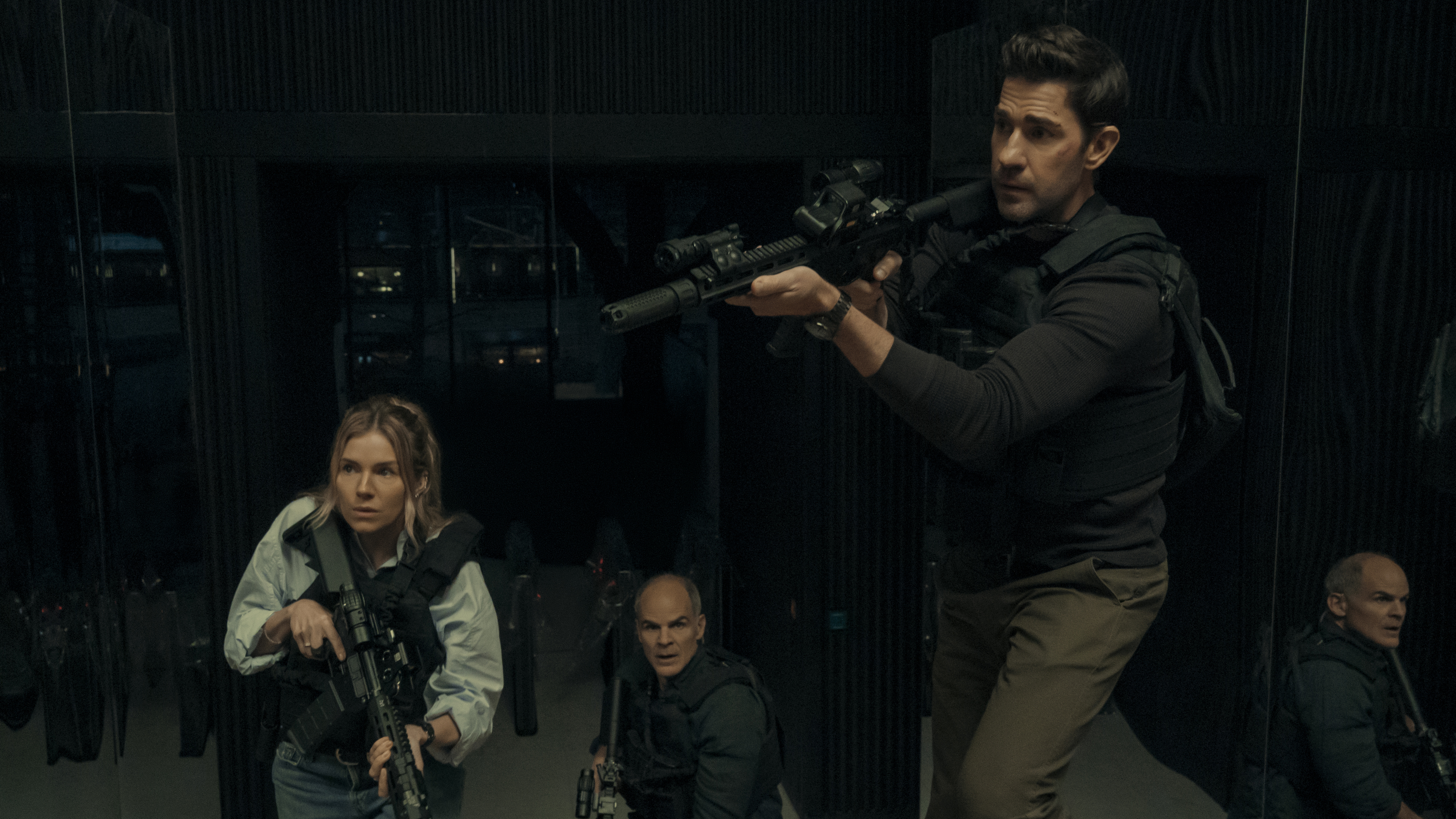
Sienna Miller joins the film as MI6 officer Emma Marlowe, described by Amazon as Ryan’s sharp new partner in the fight against the rogue black-ops unit. People’s ending explainer gives her deeper personal stakes by identifying her as the secret daughter of Nigel Cook, whose death helps set the plot in motion.
Emma is the kind of character a continuation film often needs: someone new enough to give the story fresh tension, but connected enough to the central conspiracy that she is not just an outsider with a badge. Miller brings a cool intelligence to the role. She does not overplay the emotional material, which helps. In a film already carrying a lot of plot machinery, a more melodramatic version of Emma might have tipped things into soapier territory.
Her partnership with Ryan is functional, occasionally compelling, but constrained by the film’s pacing. There are hints of a better dynamic—mutual suspicion, grief held under discipline, the difficulty of trusting someone when trust is exactly what the enemy is exploiting. But the film has so much business to handle that Emma sometimes becomes part of the plot’s delivery system rather than a fully breathing character.
That is not a failure of performance. It is a structural issue. The movie introduces her, ties her to the conspiracy, uses her as a partner, gives her personal motivation, and moves her through action beats—all within a relatively tight runtime. There is only so much room for silence, contradiction, or interior life when the next briefing scene is already waiting outside the door.


Liam Crown and the comfort of a bad justification
The villain side of Ghost War sits in familiar territory: the man who believes the system is too weak, too slow, too compromised, too soft, and therefore must be bypassed. Liam Crown, identified in People’s ending coverage as the rogue operative behind Starling’s resurrection, fits into that long tradition of thriller antagonists who do terrible things in the name of preventing worse ones.
This kind of villain can work very well when the writing gives him ideological pressure. The frightening thing about such characters is not that they are irrational. It is that they are rational in a narrowed, corrupted way. They can explain themselves. They have charts, histories, casualty projections, old wounds, and a polished argument for why normal moral constraints are luxuries.

The film gestures toward that. Crown is not merely a moustache-twirling bad guy. He represents a recurring fear in modern espionage fiction: that the people entrusted with security may begin to see democracy, transparency, and accountability as obstacles rather than safeguards. That is not exactly new, but it remains potent.
Where I wanted more was in the texture. The film gives us enough to understand Crown’s function, but not quite enough to make him linger. He is dangerous, competent, and narratively useful. But he does not fully haunt the film. For a story called Ghost War, I wanted the villain’s philosophy to feel a little more spectral, a little more unnerving, like something already inside the walls.
Starling and the trouble with secret institutions
The rogue unit Starling is the film’s big institutional ghost. According to People’s plot summary, Starling is a former CIA/MI6 black-ops unit resurrected by Crown, with the conspiracy eventually exposing deeper betrayal within the intelligence world.
As a story device, Starling is useful because it gives the film a way to externalize something that Jack Ryan stories often worry about: secrecy becoming self-justifying. A covert unit begins as a tool. Then the tool develops interests. Then the people holding the tool decide the usual rules no longer apply to them because they are the only adults in the room. It is a familiar arc, but familiar things become familiar because they keep happening in fiction and, uncomfortably often, in history.
In a better-developed version of the film, Starling might have felt like the real monster. Not Crown. Not one traitor. Not one server facility. The system itself. The hidden apparatus that survives changes in leadership, absorbs moral compromise, and waits for someone ambitious enough to turn it back on.
Ghost War gets close to that idea, but because it has to function as a mainstream action vehicle, the conspiracy eventually has to become shootable. That is the paradox of these stories. Institutional rot is hard to punch. So the movie gives us a person, a facility, evidence, betrayal, a climactic operation. That is satisfying in the moment, but it also simplifies the deeper anxiety.
A television engine in a feature-film body
One of the more interesting things about Ghost War is that it is a movie continuation of a television series, and you can feel both formats tugging at it. Amazon MGM’s press materials list it as an original movie, with Andrew Bernstein directing and a cast led by Krasinski, Pierce, Kelly, and Miller. Variety also reported that Bernstein directed the film, with Aaron Rabin and Krasinski writing from a story by Krasinski and Noah Oppenheim.
That background matters because the film inherits a television engine. The Prime Video series had time for procedural movement, supporting arcs, geopolitical context, and delayed reveals. A feature film has to compress that. It must satisfy existing viewers while remaining accessible enough for anyone who vaguely remembers “the guy from The Office became Jack Ryan and somehow it worked.”

The compression shows. Some scenes feel like they were built from the bones of a season arc. You can imagine the longer version: episode one, the Dubai incident; episode two, Nigel Cook’s history; episode three, Emma’s personal connection; episode four, Greer under pressure; episode five, the MI6 double-agent thread; episode six, the server facility; episode seven, fallout; episode eight, Ryan’s choice. In a movie, those beats are stacked tightly. That may explain the exposition problem. The film is doing the work of several episodes in less than two hours. It has to keep the audience oriented, but the orientation sometimes becomes the scene.
This is where streaming-era franchise storytelling gets strange. Movies now often behave like long episodes, while series finales behave like movie pilots, and everything feels designed to keep the machine available for future installments. Ghost War is not immune to that. The ending, which sees Ryan officially rejoining the agency as Greer rises within the CIA structure, clearly leaves room for more.

How much Tom Clancy is still in the machine?
Ghost War is based on characters from Tom Clancy’s Ryanverse rather than being a direct adaptation of a specific Clancy novel. Tom’s Guide describes it as an original screenplay by John Krasinski, Noah Oppenheim, and Aaron Rabin, rather than a book adaptation. That distinction feels important.
Tom Clancy’s name carries a certain expectation: dense procedure, military and intelligence detail, geopolitical stakes, men with titles speaking gravely in rooms, and an almost fetishistic interest in systems. The Krasinski series modernised that formula for streaming, balancing analyst thriller, action spectacle, and serialized conspiracy. Ghost War continues that version rather than returning to old-school Clancy in a purist sense.
That may bother some viewers. For me, it is not really the issue. Adaptations have to move. The world that produced the original Jack Ryan novels is not the world we live in now. Intelligence work, public trust, media ecosystems, terrorism, private contractors, cyber operations, and geopolitical anxiety have all shifted. A modern Jack Ryan story cannot simply cosplay the Cold War and call it relevance.
The more useful question is whether it preserves the core appeal: a basically decent, intelligent man trying to navigate power systems that reward moral flexibility. On that level, Ghost War mostly does. It understands that Jack Ryan should never look too comfortable inside the machinery. It understands that Greer matters because he knows where the bodies are buried, literally and institutionally. It understands that the enemy is often not just “out there.”

Why I still enjoyed the ride
Despite all that, I did enjoy watching it. That feels worth saying plainly. Sometimes a film can frustrate you in the exact areas where you are paying attention, and still work on the simpler level of “yes, I would like to see what happens next.”
The action helped. The returning characters helped. Krasinski’s version of Ryan helped. The film has enough forward motion that I was never bored, even when I was occasionally tired of people explaining why I should care about the thing I already understood enough to care about.
There is also something comforting about the Jack Ryan formula, even when it is dressed in modern paranoia. The world is unstable. Institutions are compromised. Powerful people are lying. Somewhere, a decent man with a government background and a slightly worried face is trying to stop the worst version of events. It is a fantasy, obviously. But not the worst one.
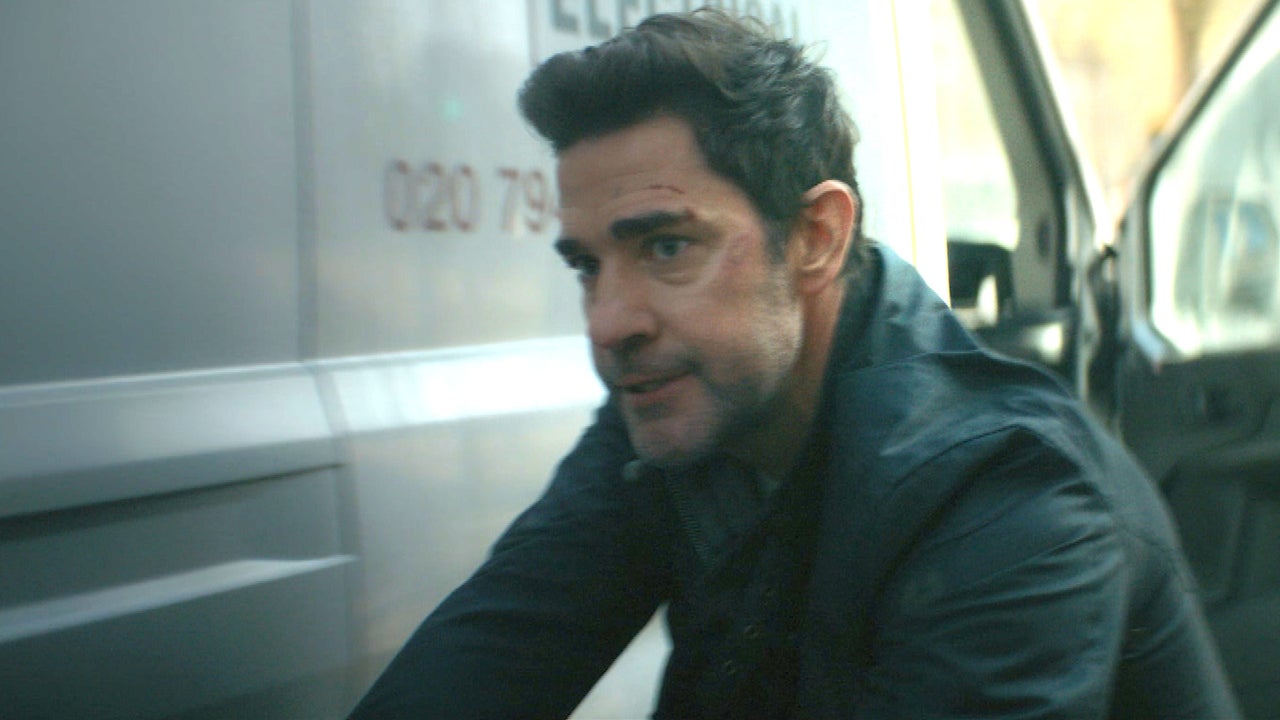
And Krasinski sells that fantasy because he does not seem thrilled to be the hero. He seems burdened by the obligation. That makes Ryan more interesting than the average action lead. He is not chasing glory. He is chasing the least catastrophic outcome.
A resolution that leaves the door open
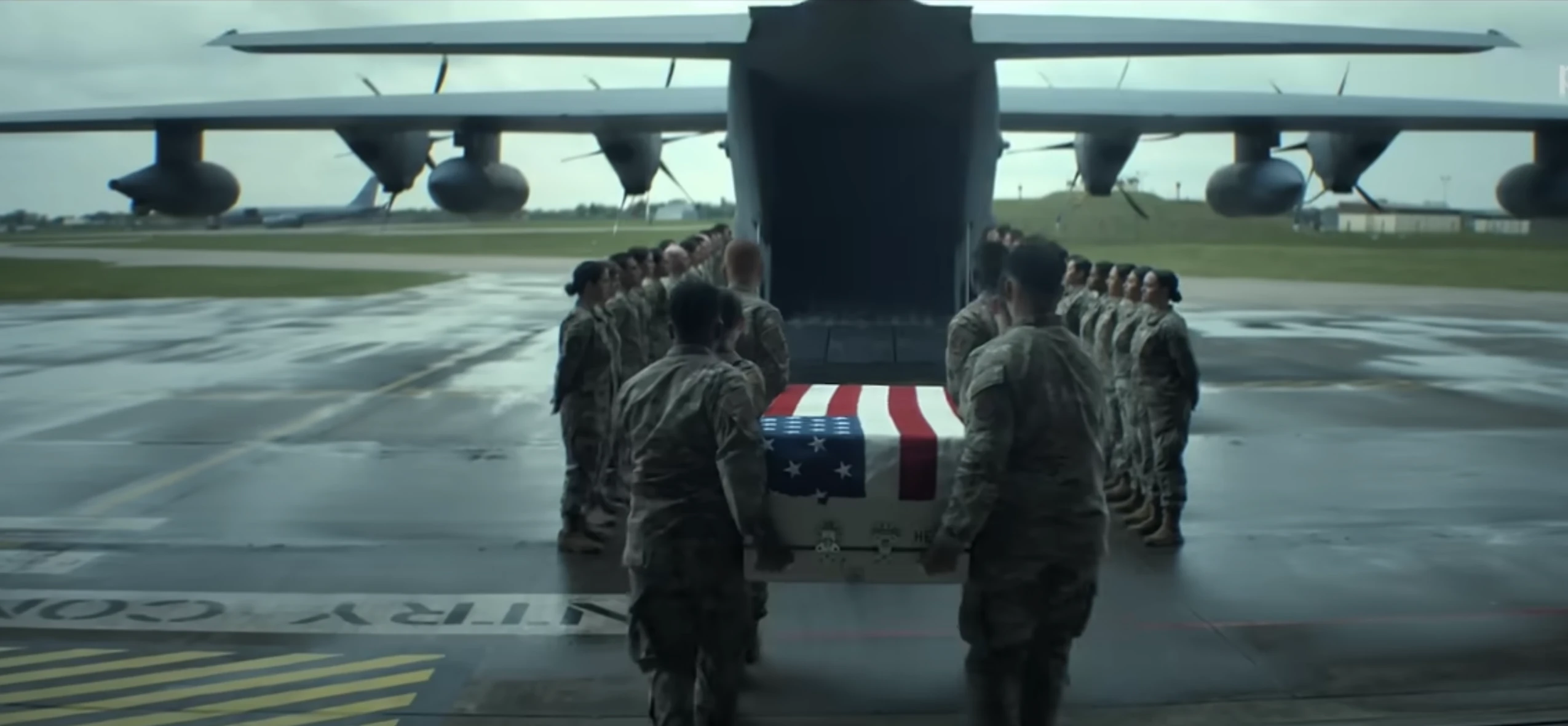
The ending positions the film as both conclusion and setup. The rogue operation is exposed, Crown is stopped, internal betrayal is revealed, and Greer becomes CIA director while Ryan is named his deputy, formally bringing him back into the agency. That is not subtle franchise architecture. The door is not just left open; someone has installed new hinges.
I am fine with that. The Ryan universe can continue. Krasinski still works in the role, and the supporting cast remains strong enough to justify another mission. The trick will be finding a story that does not just escalate, but deepens.
Bigger is not necessarily better for Jack Ryan. More locations, more explosions, more rogue units, more betrayals—these things can become noise. What makes Ryan interesting is not that he saves the world. Many fictional men save the world before lunch. What makes him useful is the way he is positioned between intelligence and conscience, between systems and individual judgment.
Good machinery, too much instruction manual
Jack Ryan: Ghost War is a solid, enjoyable action-thriller continuation that works best when it trusts movement, performance, and visual storytelling. The action scenes are intense and satisfying. The cast knows what kind of world they are in. Krasinski remains a credible modern Jack Ryan, Wendell Pierce gives the film its moral ballast, Michael Kelly brings battered practicality, and Sienna Miller adds a capable new presence with personal stakes.
The problem is not that the film is dumb. If anything, it occasionally works too hard to prove it is not. It keeps explaining the machinery when what I wanted was to feel more of the pressure inside it. The result is a movie that entertains in bursts, occasionally bogs down in its own plot language, then recovers whenever people stop briefing and start acting.
For me, it lands somewhere in the respectable middle: better than disposable, not quite memorable; a competent continuation rather than a reinvention; a film with enough craft to keep me watching and enough exposition to make me sigh at least a few times.
For the official synopsis, cast and streaming details, see Amazon’s Jack Ryan guide and the Prime Video film page.
Leave a Reply