
There are some television openings that tell you immediately what room you have entered. The Star Trek: The Next Generation theme opens like a curtain. Deep Space Nine drifts in with solemn architecture, all brass and orbit, as if the station itself has learned to breathe. Voyager glides through nebulae with the confidence of something already canonised before the episode even starts.
Then Star Trek: Enterprise arrived with archival footage, test pilots, rockets, astronauts, blue-collar optimism, and a song that sounded less like interstellar diplomacy and more like someone had wandered into a motivational corporate video after a long afternoon at a training seminar.
I remember not knowing what to do with it. The show was asking me to recognise Star Trek in a form that seemed to have misplaced several of the visual and musical cues I had learned to trust.
This was supposed to be Star Trek, but where were the clean lines, the orchestral certainty, the bright-coloured abstractions of the future? Why did everyone look as if they were one step away from filing a maintenance report at NASA? Why did the technology feel clunky, tactile, almost inconvenient? Why did the bridge feel less like a command centre for utopia and more like a submarine with better lighting? And why, after decades of majestic instrumental themes, was someone suddenly singing at me?
It felt wrong before it had even begun, and that first impression stuck harder than I expected. Enterprise was asking for patience at exactly the moment I wanted reassurance.
But sometimes the thing that feels wrong is only wrong because it has arrived before you have learned how to watch it. Enterprise had that problem. It was a Star Trek show about the time before Star Trek had become Star Trek. It was a prequel to the future, which is a more awkward job than it sounds. It had to be advanced enough to count as science fiction, primitive enough to precede Kirk, and recognisable enough to keep the audience from turning off after the first commercial break. That is a narrow corridor to walk down, and the show did not always walk it gracefully.
Still, it grew on me, which is probably why the rewatch is more interesting than simple nostalgia. The affection arrived slowly enough that I can still remember the resistance.
Not immediately. Not cleanly. Not in that revisionist way where we pretend everything misunderstood was secretly brilliant all along. Enterprise could be uneven. It could be clumsy. It could lean too hard into network-era instincts. It could forget some of its own characters for suspiciously long stretches. It had a finale that many fans still handle with tongs. But it also had a strange, durable quality. It had texture. It had a crew learning the shape of the future without a rulebook. It had an idea that became more interesting the longer it ran: what if Starfleet did not begin as a polished moral institution, but as a half-brave, half-naïve human experiment?
That, eventually, was where the show started to make sense to me: not as the future I was already comfortable with, but as the rough draft of it. Once I stopped demanding the finished Federation, the unfinished version became the more interesting thing to watch.
The Uncomfortable Business of Going Backwards
By the time Enterprise premiered in 2001, Star Trek had been on television in one form or another for a very long time. The Next Generation had turned the franchise into something not just revived but institutionally successful. Deep Space Nine had complicated its ethics, politics, religion, war, and sense of paradise. Voyager had taken the format back to the travelling starship and carried the franchise into the era of UPN. By then, there was a whole generation of viewers who did not just know Star Trek; we had grown used to its visual grammar.
The communicators. The transporters. The warp drive. The clean corridors. The replicators. The assumption that humanity had more or less worked through its worst nonsense, or at least learned to speak about it in complete sentences.

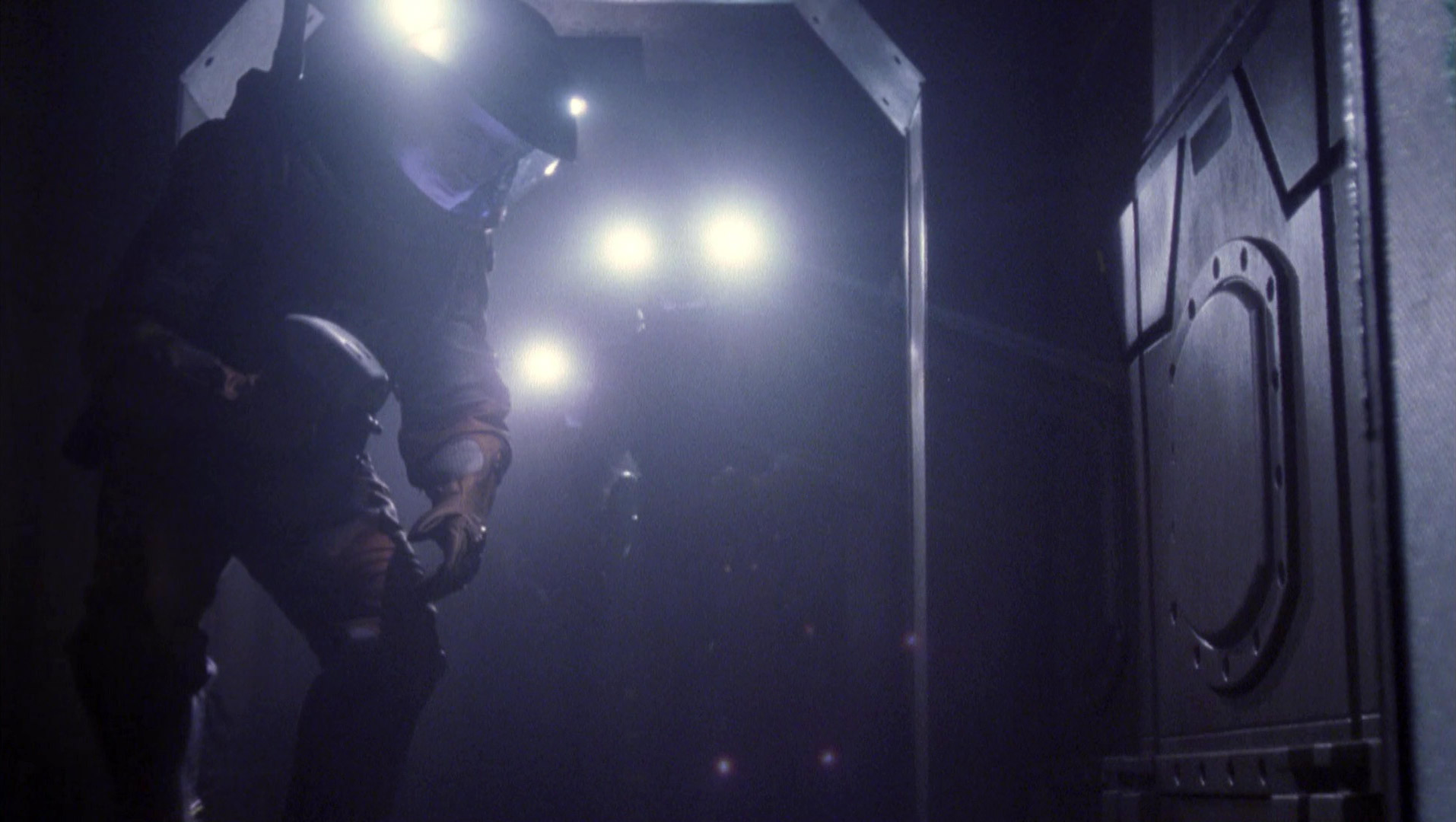
Enterprise chose to walk away from that comfort. It moved the timeline back to the twenty-second century, about a hundred years before Kirk, to the first starship Enterprise: NX-01. No Federation yet. No Prime Directive in its finished form. No vast Starfleet machine with generations of institutional wisdom behind it. Humanity had warp capability, but not the confidence that came with experience. The Vulcans were not yet the serene elder statesmen we later knew. The Klingons were out there, but not yet familiar. Space was not a well-mapped moral theatre. It was dark, unpredictable, and usually carrying paperwork humanity had not invented yet.
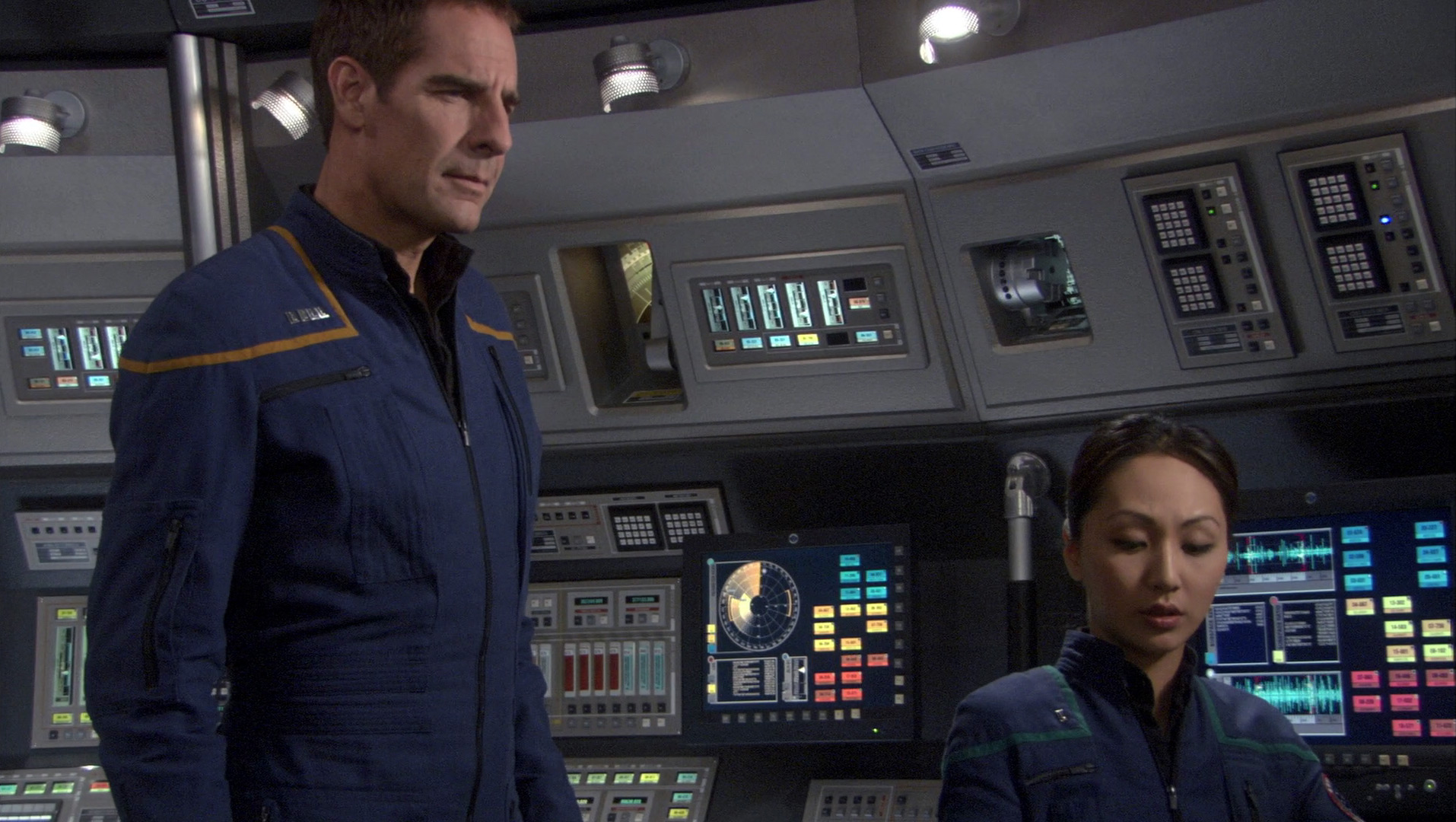
On paper, that should have been fascinating. In practice, it was also disorienting. The uniforms were the first major shock. They looked like functional flight suits, closer to NASA and naval workwear than to the sleek colour-coded abstractions of previous Trek. They had zips, pockets, patches, seams — practical things. The ship itself looked like something built by people still arguing with bolts. The technology did not feel like magic. The transporter was unreliable enough that people had reasonable doubts about using it. The ship had grapplers before tractor beams. The crew watched screens that seemed just advanced enough to impress us, but not so advanced that they felt inevitable.

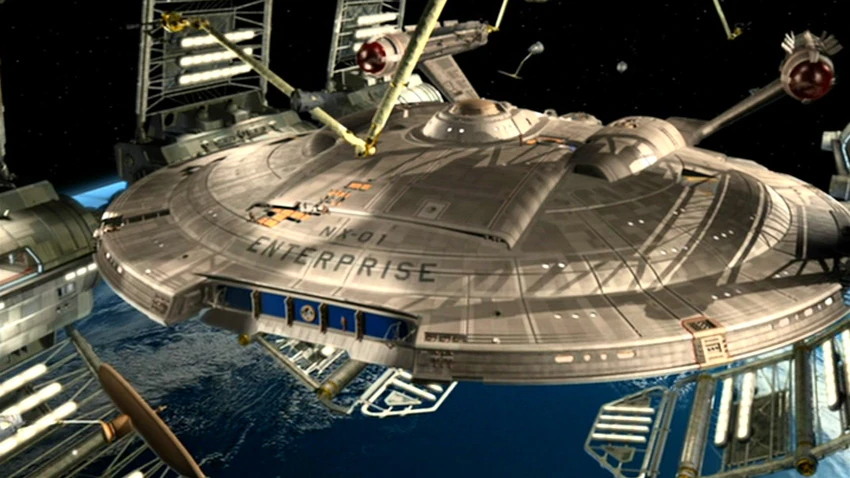
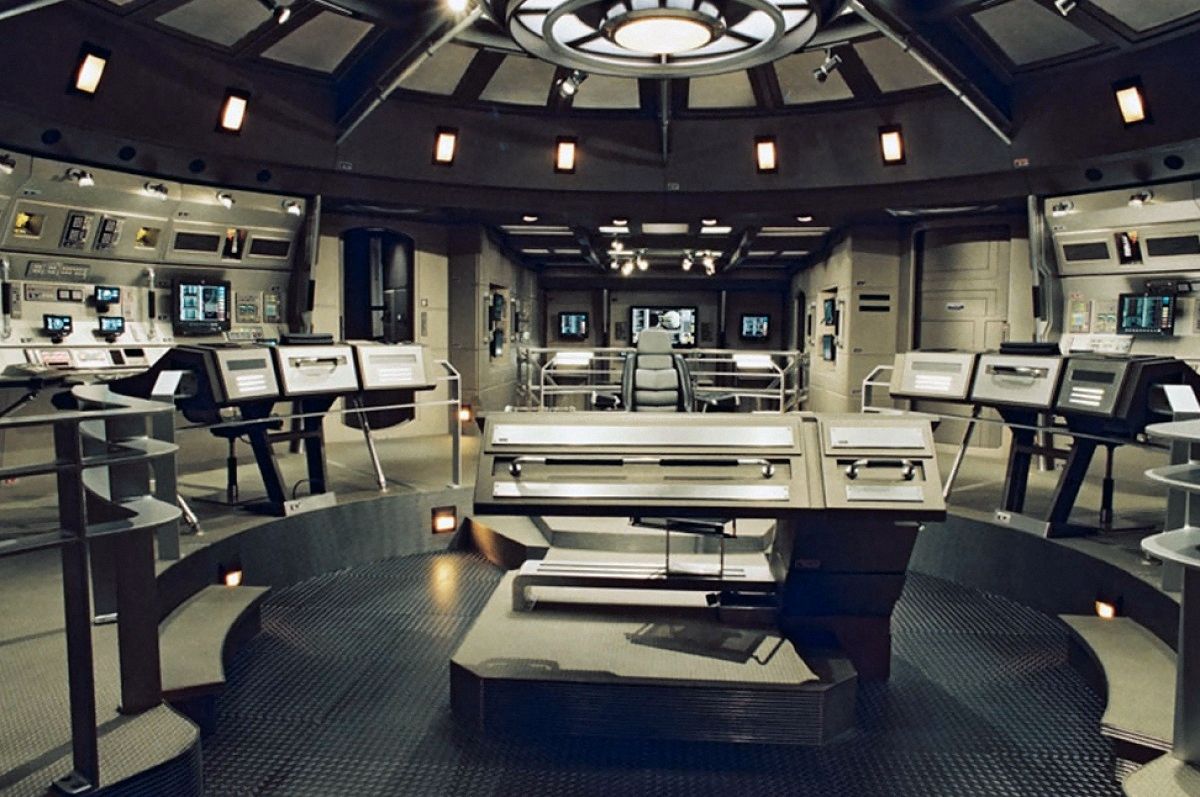
As a design choice, this was smarter than I probably gave it credit for at the time. The show needed to suggest an early stage of Starfleet without simply making everything look cheap. It needed to feel plausible, industrial, transitional. Seen now, the design language is one of the show’s strengths. The NX-01 feels like an experimental vessel, not a floating hotel. Its interiors have weight. Its corridors feel narrow. Its engine room has a sense of risk. The show did not always know what to do with its prequel premise narratively, but visually it understood that this future should still have fingerprints on it.

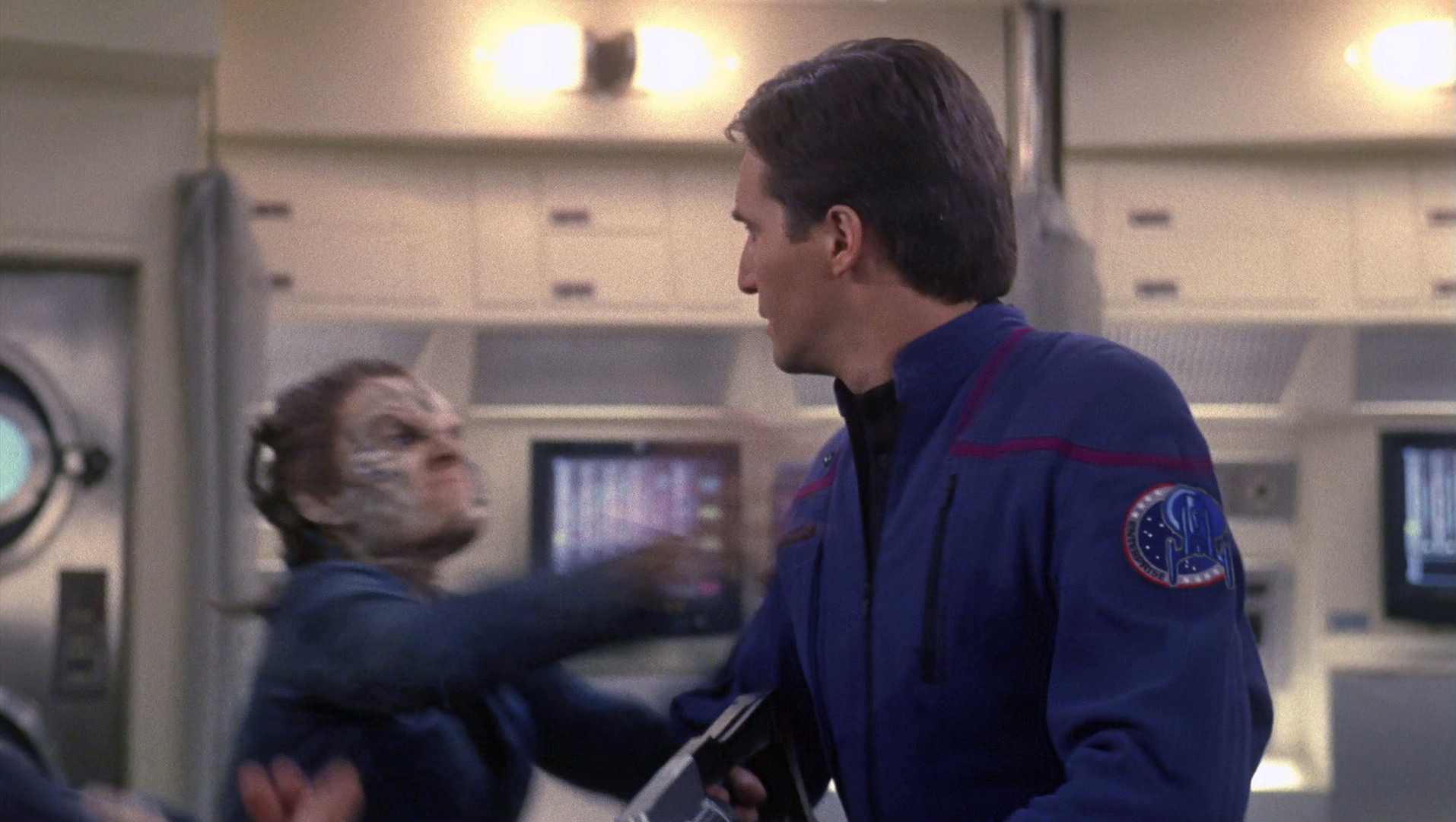

At first, though, I missed the comfort. I was used to Star Trek arriving already dressed as Star Trek, and this one came in looking like the maintenance crew had been asked to take the bridge.
That was the habit I had to unlearn. Enterprise came in with rolled-up sleeves and a different haircut, and I initially treated the difference as a deficiency rather than part of the design brief.
That Theme Song, Whether We Like It or Not
There is no honest way to write about Enterprise without talking about the opening song. I know there are defenders. I know some people have made peace with it. I know others have gone further and now love it with the stubborn affection usually reserved for difficult family members and malfunctioning appliances. I respect that. Time does strange things. Nostalgia can sand down all kinds of edges.
But when that song first arrived, it felt as if the franchise had been possessed by a soft-rock motivational seminar.
The idea, I can see now, was not random. The opening sequence itself is actually quite elegant in concept. Instead of beginning in deep space with a finished starship cruising through cosmic beauty, it traces a line through human exploration: sailing vessels, early flight, space programmes, astronauts, probes, rockets, the long climb from Earthbound curiosity to interstellar possibility. It is less about arriving in the future than earning it. That fits Enterprise perfectly. The show is about the awkward middle stretch between first contact and Federation confidence.

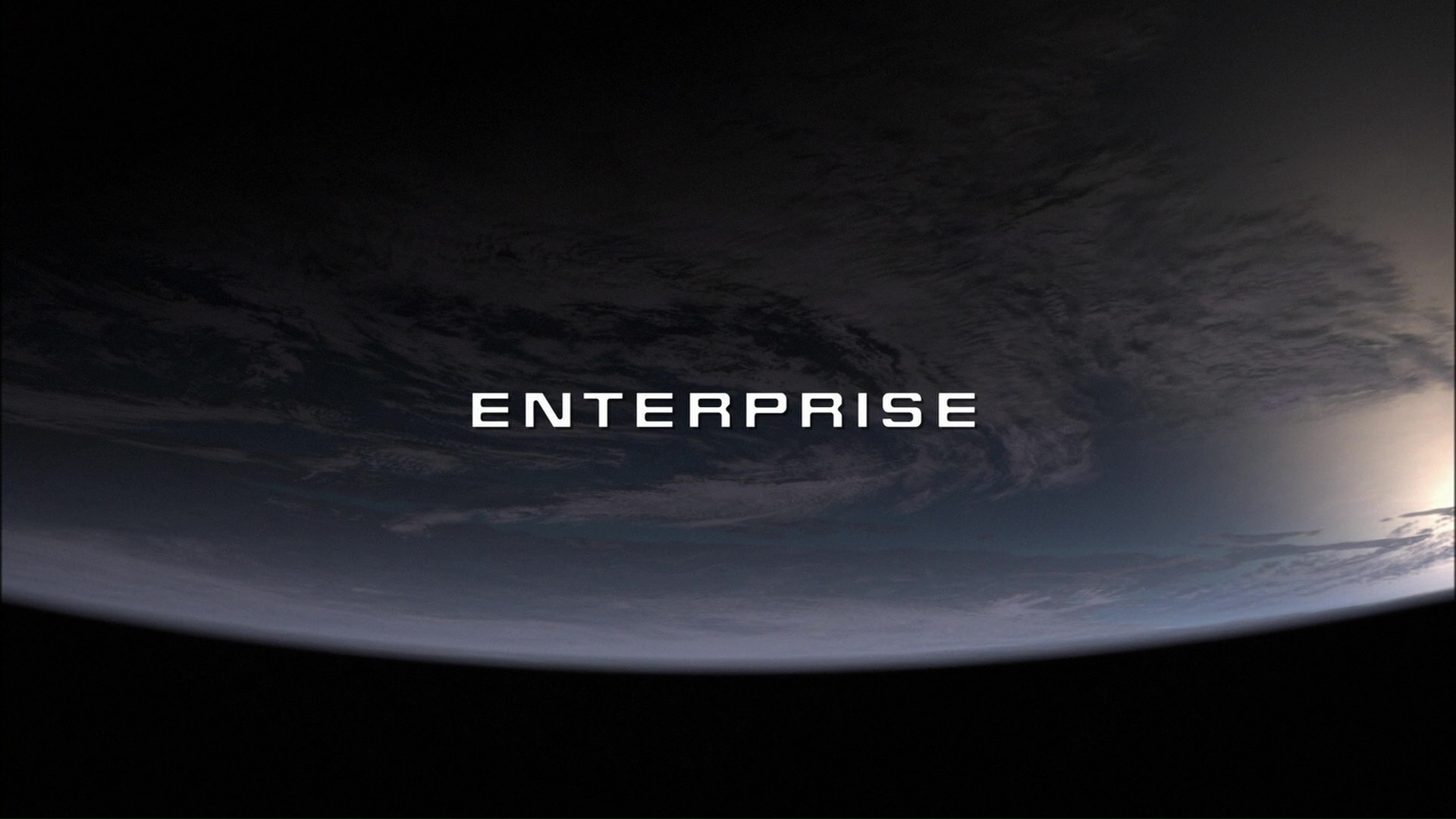
The problem was the emotional register. Earlier Trek themes felt mythic. This one felt personal, almost inspirational in a pop-radio way. It placed the franchise’s optimism not in orchestral grandeur but in individual grit. In theory, that is not a bad idea. Enterprise is about human beings before they become legendary. They are not yet the calm representatives of a mature utopia. They are the people who put on blue jumpsuits, take the dog, and go further than they probably should.
But fandom is not only about ideas. It is also about ritual. When a show has trained you for decades to expect one kind of threshold, changing that threshold can feel like someone moved the door while you were walking through it.
So yes, the theme bothered me, and for a long time that irritation coloured the whole show. It was such a small thing to object to, technically, but television rituals are built out of small things.
Then, after enough episodes, it became part of the furniture. Not good furniture, necessarily. Maybe the sort of furniture you inherited from a relative and kept because it was too much trouble to replace. But furniture all the same. Eventually, when the song started, it signalled a specific emotional frequency: earnest, unguarded, slightly embarrassing, very early-2000s. In that sense, it became the perfect theme for the show, though perhaps not in the way anyone intended.
Enterprise was never cool. It was not trying to be, and when it did try, that was usually when it stumbled. It worked best when it was earnest enough to risk looking uncool. That may be why the theme, for all its controversy, now feels inseparable from it.
Captain Jonathan Archer and the Burden of Being First
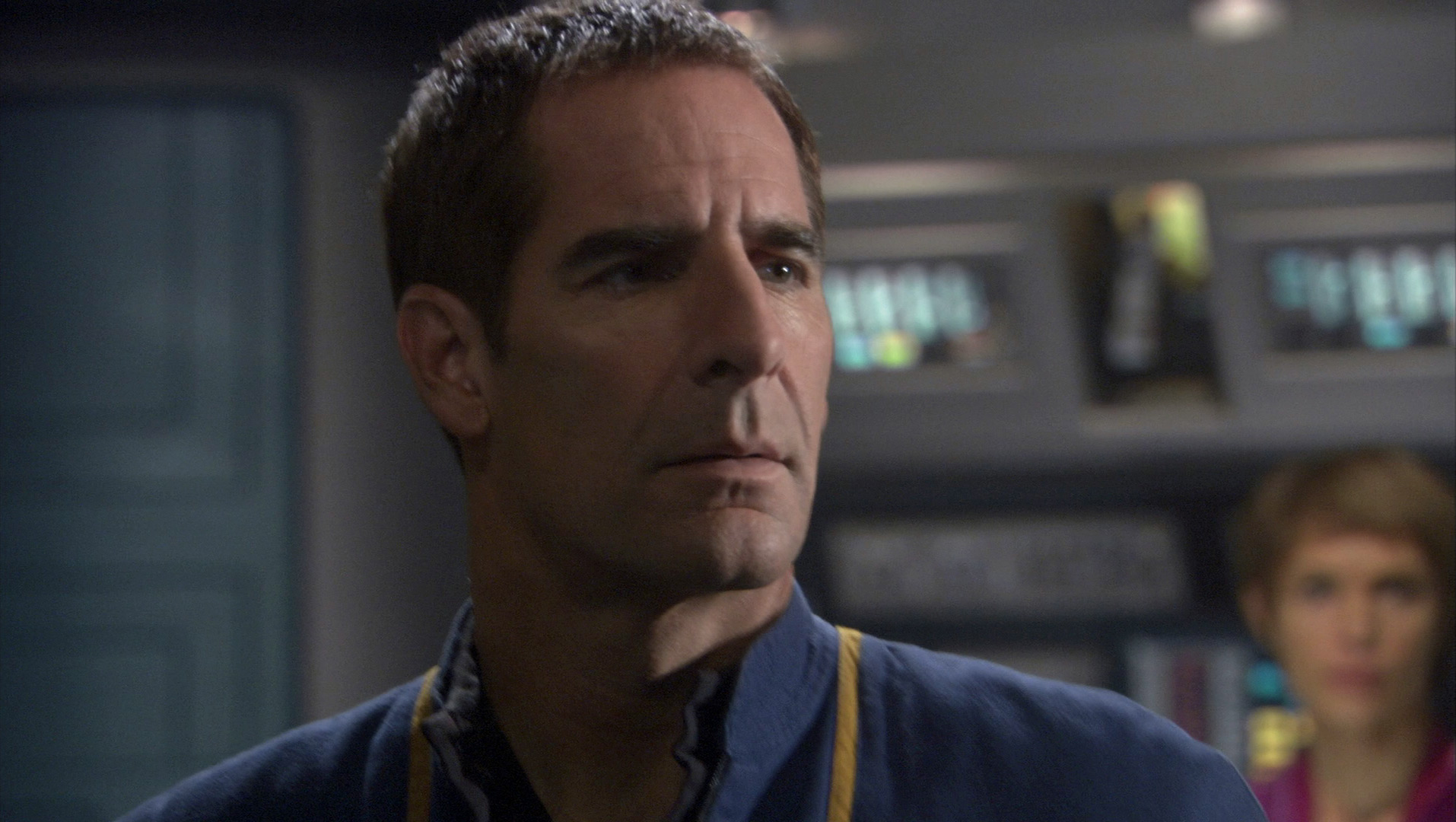
Scott Bakula’s Jonathan Archer is not Jean-Luc Picard, and the show knows it. He is not Benjamin Sisko, either, nor Kathryn Janeway, nor James T. Kirk. Archer is the captain before the captainly mould has fully hardened.

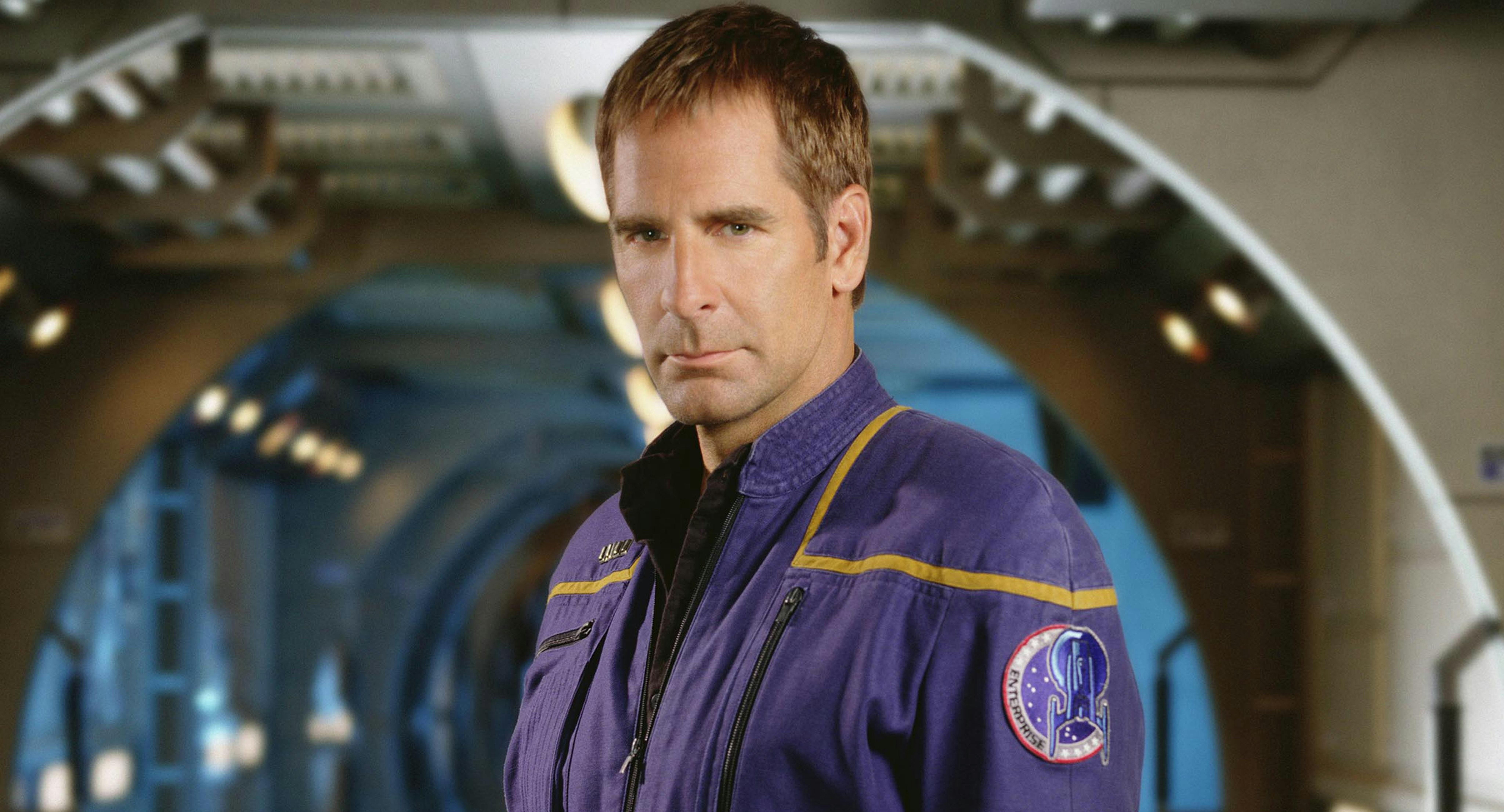
That is both the point and the difficulty. Archer begins as a man carrying a personal grievance. His father, Henry Archer, helped develop the warp-five engine, and Jonathan has inherited both pride and resentment from that legacy. He believes humanity has been held back by the Vulcans, who have acted as cautious supervisors rather than generous mentors. When he finally gets command of the NX-01, there is something almost boyish in him: excitement, impatience, curiosity, and a barely disguised desire to prove the Vulcans wrong.
This makes him interesting, but not always easy to like. Earlier Trek captains often arrived with moral authority built in. Archer has to acquire his. He makes decisions out of instinct before principle. He is suspicious of Vulcan restraint. He is impulsive. He carries the emotional looseness of a man who has not yet learned that history is watching. This is good prequel writing when it works. He should not be perfect. He should not already possess the Federation’s ethical language. The whole point of the show is that someone had to make the first mistakes so later generations could write better rules.
But there are moments when Archer’s roughness feels less like character design and more like inconsistent writing. Sometimes he is a visionary. Sometimes he is a frustrated test pilot with command authority. Sometimes he is compassionate and thoughtful. Sometimes he seems personally offended that space contains other people with their own boundaries. The show takes time to stabilise him.
His best arc is not simply that he becomes wiser. It is that he learns the future cannot be built on human enthusiasm alone. The early Archer wants to explore. The later Archer has to negotiate. He has to hold together humans, Vulcans, Andorians, Tellarites, and competing forms of paranoia. He begins as the captain of one ship and slowly becomes a prototype for something larger: not the Federation itself, but the person who can imagine it before it exists.
Bakula brings a kind of decency to him that helps. Archer can be stubborn, but he rarely feels cynical. He believes in the mission, sometimes naively, sometimes dangerously, but almost never falsely. There is a warmth in him that keeps the show from becoming merely procedural. He is at his best when the optimism looks earned rather than assumed.
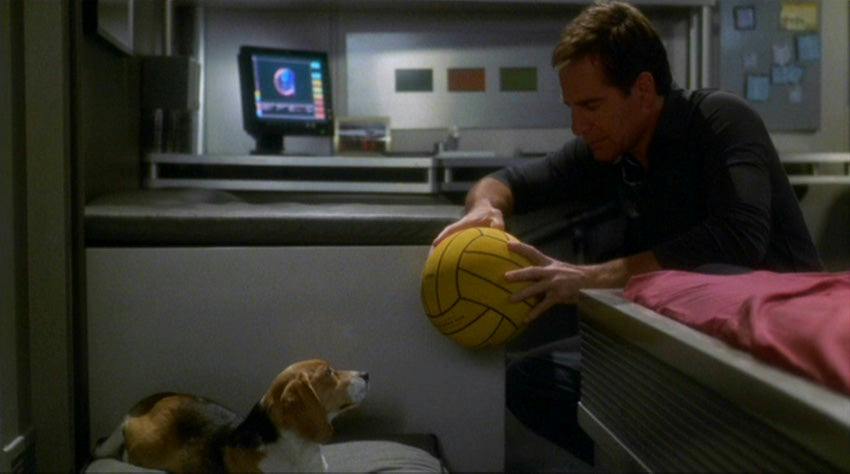
And yes, Porthos helps. A beagle on the captain’s ship sounds almost too ordinary for Star Trek, which is precisely why it works.
The dog is not a minor detail. Porthos makes Archer human in a way no speech about exploration could. It is faintly absurd and completely right that the captain of humanity’s first great starship brings his beagle along. Of course he does. This is not yet Starfleet as marble institution. This is still a man leaving home and bringing a piece of home with him.

T’Pol, or the Long Work of Becoming More Than the Sceptic
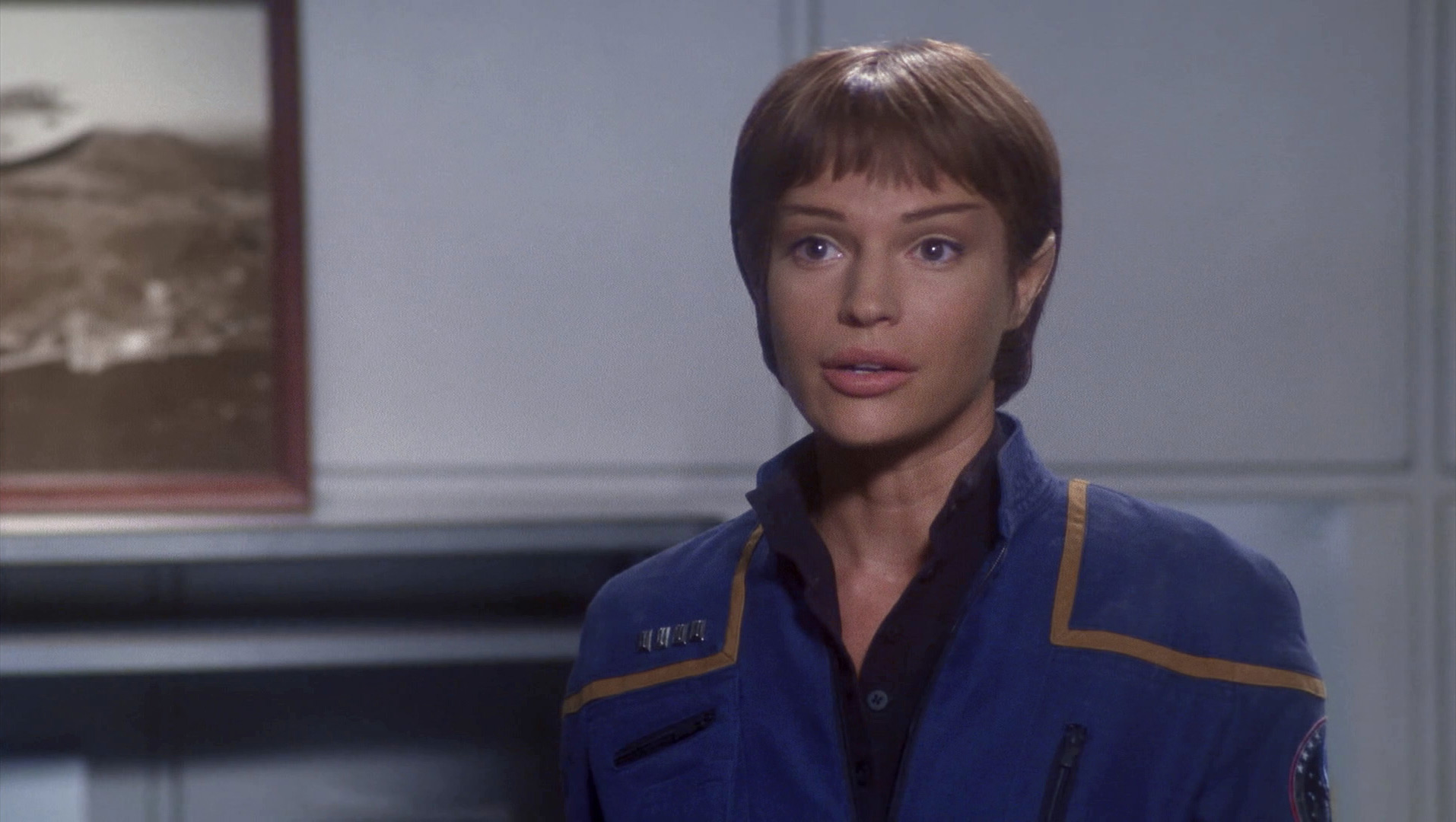
T’Pol had one of the hardest jobs on the show. She had to be the Vulcan presence on a human ship, the sceptic, the observer, the reminder that humanity was not as ready as it thought it was. She also had to exist in the shadow of Spock, Tuvok, and every other Vulcan expectation the audience carried in with them.

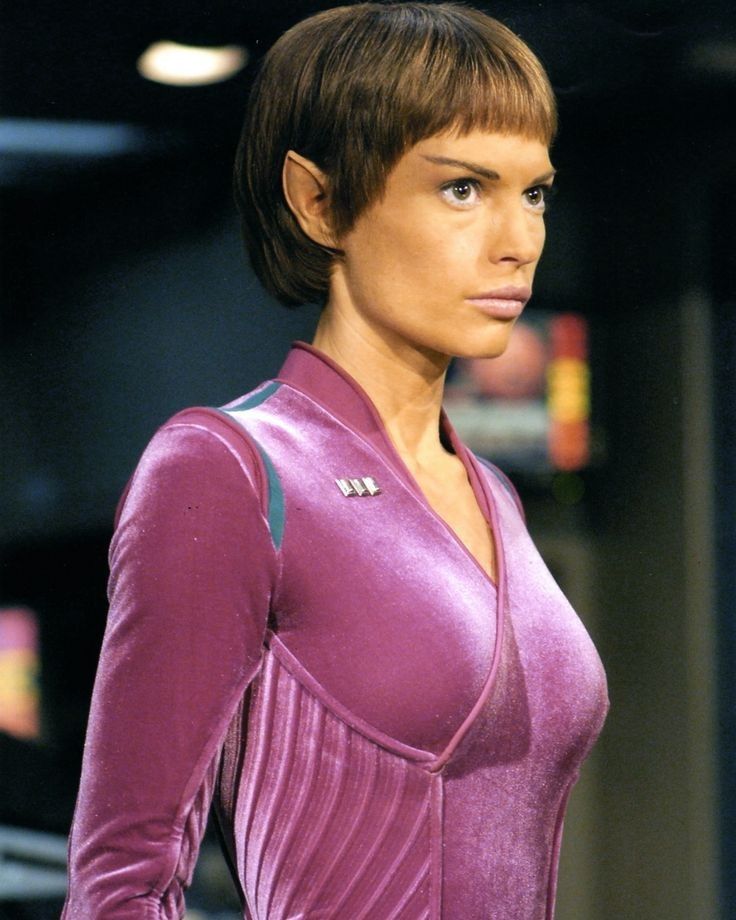
At first, she is framed as an obstacle. Not a villain, exactly, but a corrective force. She is placed aboard Enterprise partly because the Vulcans do not trust humans to go charging around deep space without adult supervision. And, to be fair, the Vulcans have a point. Archer and his crew frequently behave like people who have discovered a new button and would quite like to press it before reading the warning label.
T’Pol’s early function is to say no. To caution. To question. To look at human behaviour with the weary patience of someone trapped in a lift with enthusiastic amateurs.

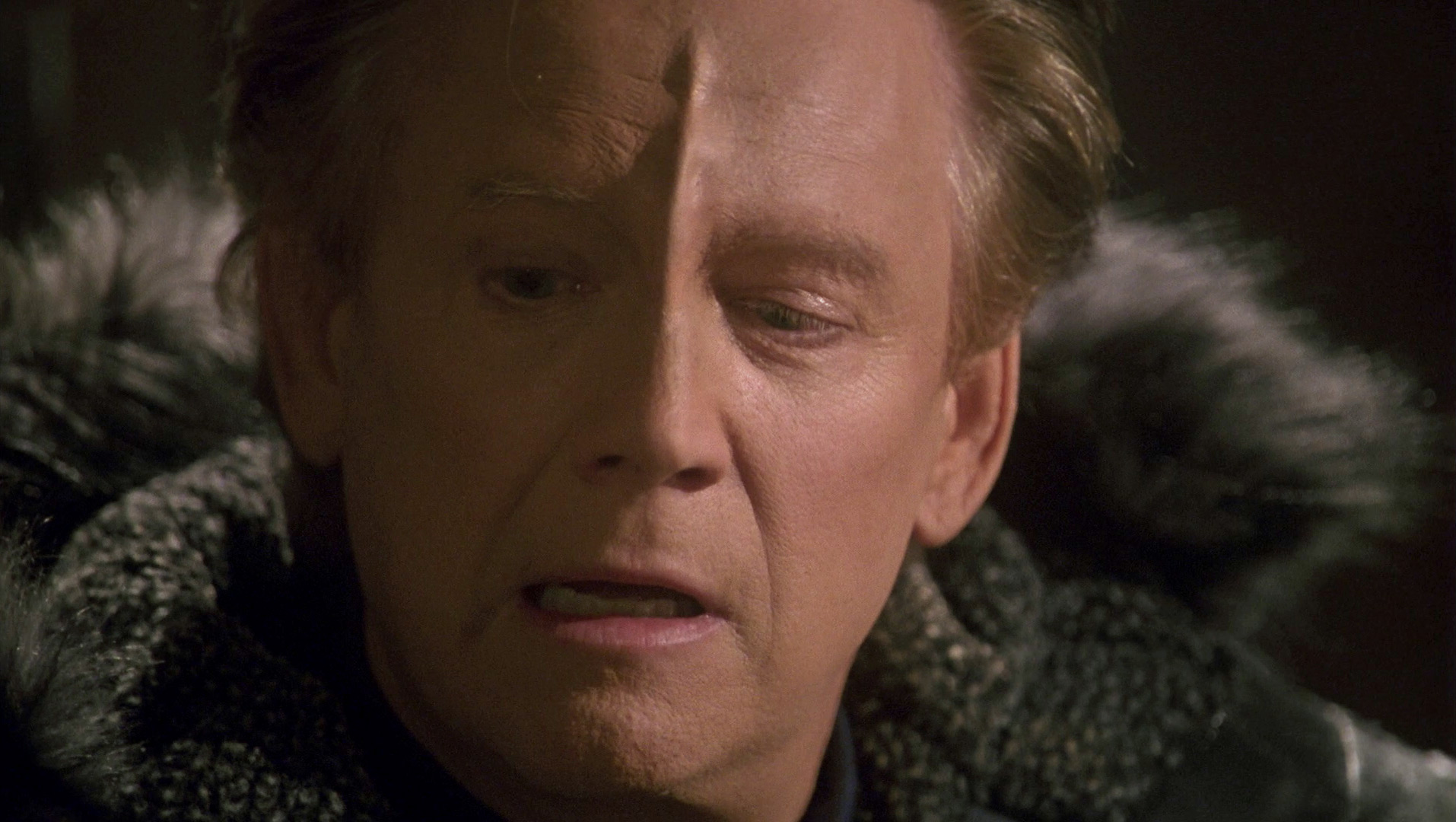
But what makes her valuable is that she changes. Her arc is not simply “cold Vulcan learns feelings”, which would have been the lazy version. It is more complicated than that. She learns that Vulcan certainty is not the same as wisdom. She sees the limitations, politics, and hypocrisy of her own people. She becomes loyal to Enterprise not because she abandons Vulcan identity, but because her experience widens it. She becomes one of the show’s most important bridges: between human impatience and Vulcan caution, between old mistrust and future alliance.
The writing does not always serve her well. There are moments where the camera treats her less as a character and more as a network note in a catsuit. That has aged poorly, and frankly it was not exactly invisible at the time either. But Jolene Blalock often plays through that limitation with more discipline than the material deserves. She gives T’Pol a reserve that is not empty. There is thought behind the silence, discomfort behind the posture, curiosity behind the raised eyebrow.
Her relationship with Trip Tucker eventually becomes one of the show’s emotional centres. It works because both characters irritate each other before they understand each other. Trip is all exposed wiring; T’Pol is insulation. He runs hot. She contains herself. The attraction is not simply romantic chemistry but cultural friction. Each reveals the other’s limits.

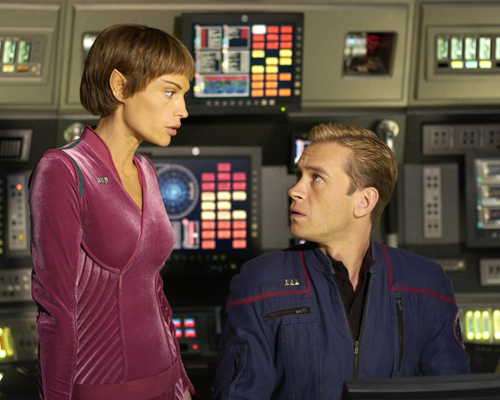
By the end, T’Pol feels less like the Vulcan assigned to watch humanity and more like someone who has made an active choice to participate in its becoming. She is not there to approve of humans. She is there to help them become worth trusting. That is a much better story.
Trip Tucker and the Heart of the Engine Room
Charles “Trip” Tucker III is one of the reasons Enterprise works better than its reputation sometimes suggests. In a series that can drift into abstractions about human progress, he brings the argument back to machinery, friendship and the small indignities of keeping a starship running when half the technology still feels experimental.

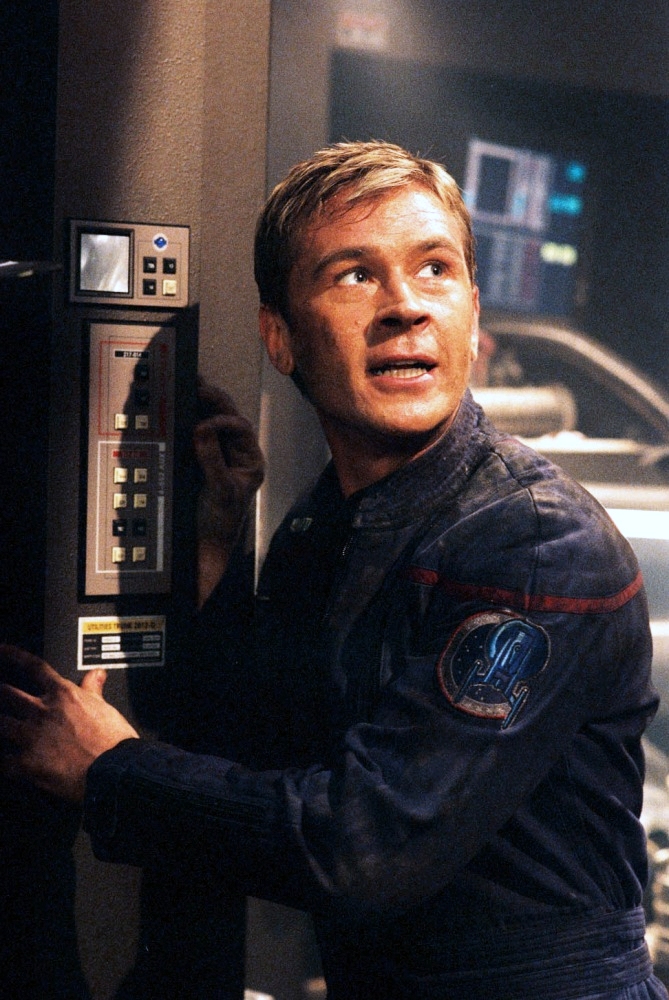
Trip is the chief engineer, but more than that, he is the show’s emotional bloodstream. He is Southern, technically brilliant, plainspoken, loyal, impulsive, occasionally thick-headed, and often more perceptive than his casual manner suggests. In a more polished version of Starfleet, someone like Trip might have been softened into competence with a charming accent. Here, he feels rougher and more lived-in. He is the man who knows the machine because he has touched every part of it.
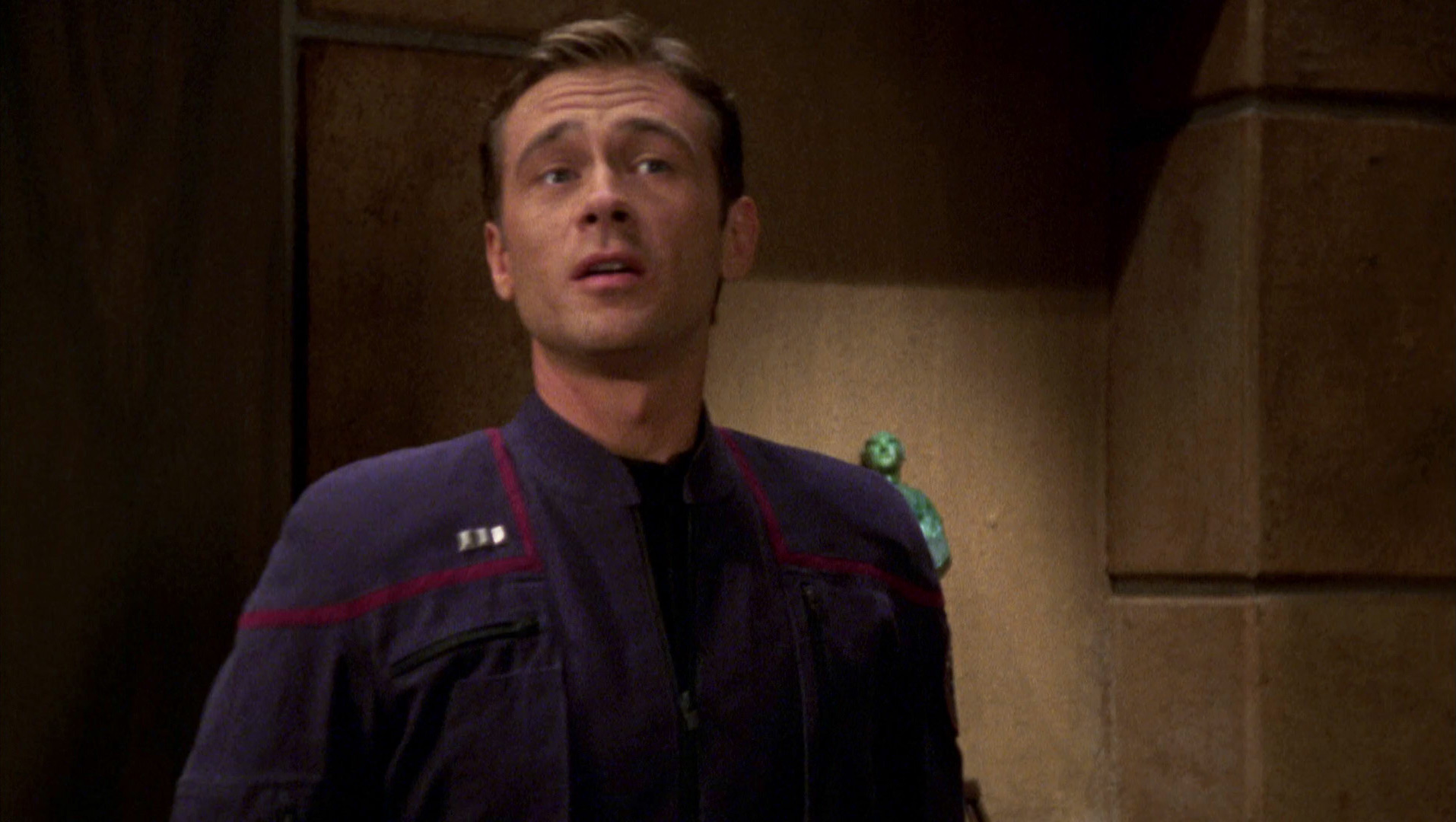
Connor Trinneer gives him warmth without making him cute. Trip can be funny, but he is not comic relief. He can be angry, but he is not merely hot-tempered. His grief after the Xindi attack gives the third season much of its emotional weight. The attack on Earth is not abstract to him. He loses his sister, and the mission becomes personal in a way that tests the show’s optimism. Suddenly exploration is no longer a bright frontier. It is fear, retaliation, exhaustion, and the temptation to become harder than the future should allow.

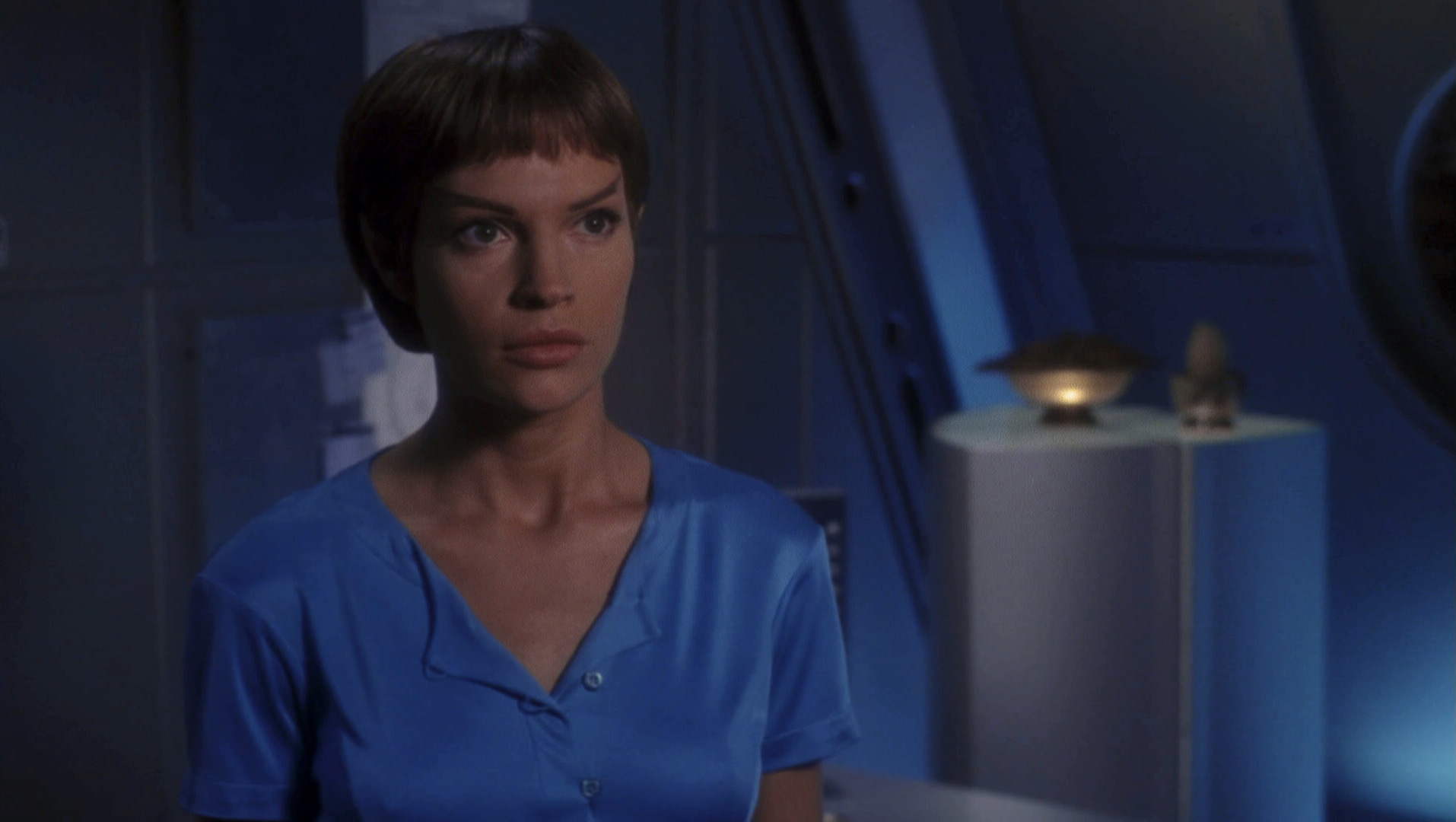

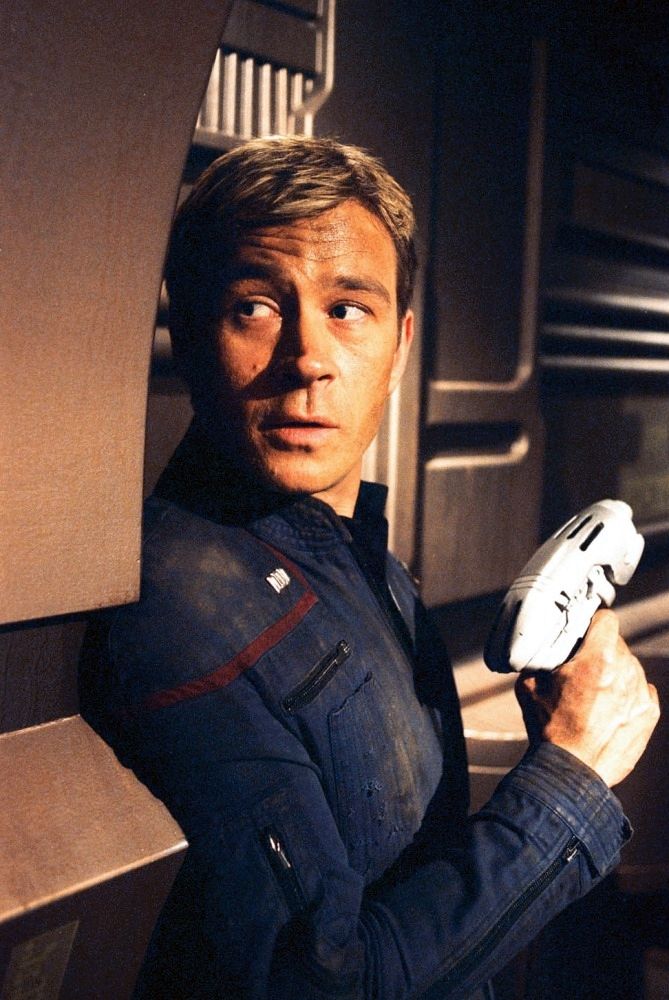
This is where Enterprise brushes against the early-2000s world outside the screen. The show premiered shortly after 9/11, and while its first season had been developed before that, its later turn into the Xindi arc absorbed some of the anxieties of that moment: surprise attack, trauma, militarisation, suspicion, the moral compromises made under existential threat. Trip carries much of that strain. He becomes the crew member whose pain could curdle into something ugly if the show lets it. Sometimes it nearly does.
What saves him is not that he forgets his grief. It is that he keeps his capacity for connection. His relationship with T’Pol gives him somewhere to place vulnerability he would otherwise turn into rage or sarcasm. His friendship with Archer gives the show an emotional shorthand — two men who have known each other long enough to argue without fully leaving each other. His work in engineering anchors the series in practicality. When Trip is dealing with warp coils, plasma injectors, hull stress, or some new disaster that nobody has a manual for, Enterprise feels exactly like what it should be: a show about people building the future while the future keeps trying to explode.
Trip’s ending remains one of the great frustrations of the series. Not because tragedy has no place in Star Trek, but because the handling feels oddly casual for a character who had become so central. It is one of those choices that still feels less like fate and more like a writer’s room running out of runway.
He deserved more space, but then again so did the whole show. Enterprise has several characters who feel one good season away from becoming much more complete.
Phlox and the Cheerful Weirdness of Early Starfleet
Doctor Phlox is quietly one of the best things in Enterprise, partly because he approaches human behaviour with an affection that never becomes flattery. He is fascinated by our habits and only occasionally convinced that any of them make sense.

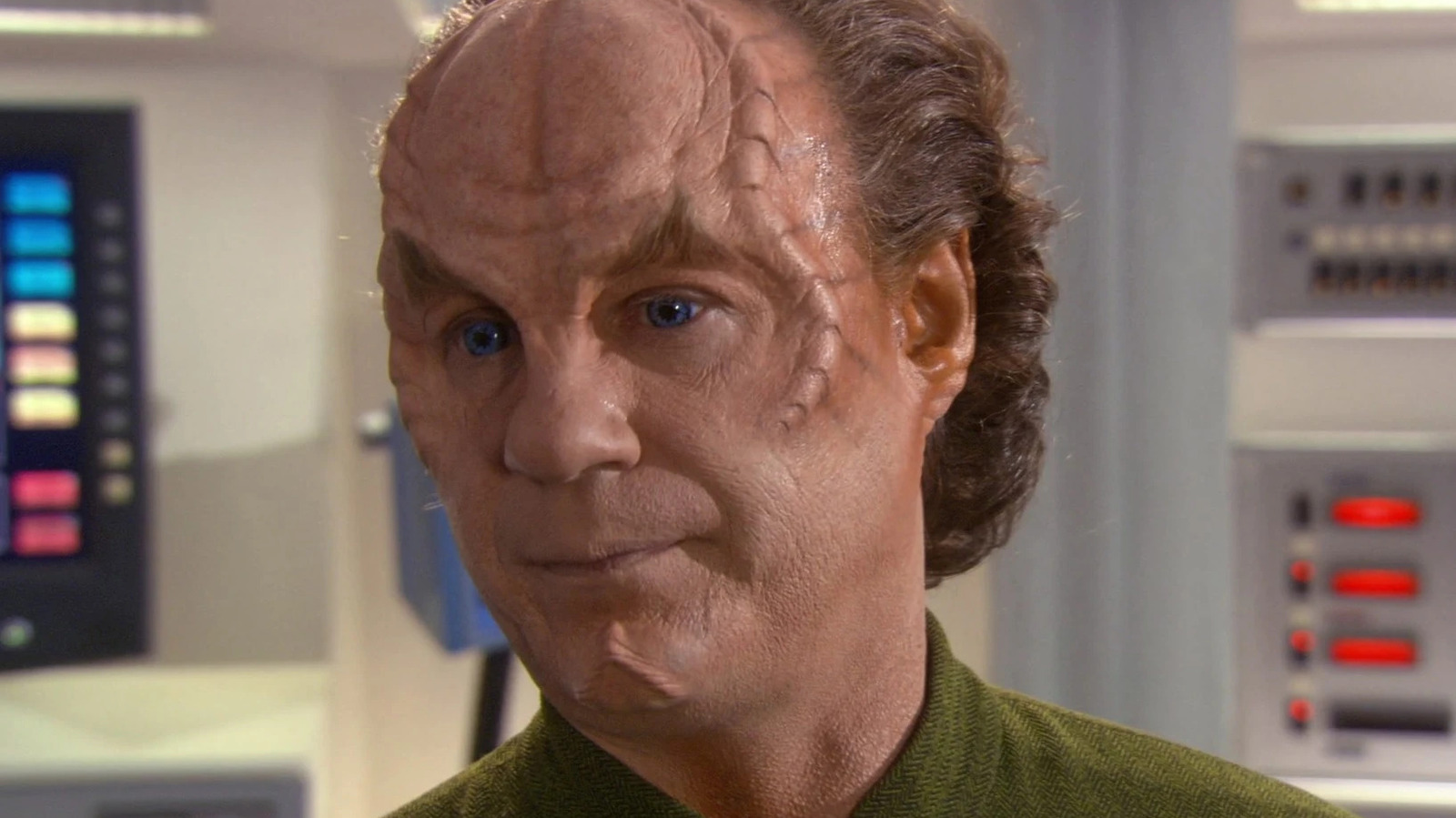
Played by John Billingsley, Phlox is Denobulan, which means he is not carrying the same weight of legacy as a Vulcan or Klingon character. He arrives without the audience already knowing the rules of his species. This gives the show room to make him strange, and thankfully it does. His sickbay feels partly like a medical facility and partly like a small, alarming zoo. He uses creatures, enzymes, unfamiliar therapies, and a bedside manner that suggests he may tell you something cheerful just before doing something medically unsettling.
Phlox represents one of the things Enterprise needed more of: the genuine alienness of early interstellar exchange. The crew is not yet living in a universe where everyone understands everyone else’s cultural basics. Human assumptions are constantly being tested. Phlox’s views on family, medicine, ethics, and emotional life do not always line up neatly with human norms. That makes him useful not just as the doctor, but as a moral irritant.

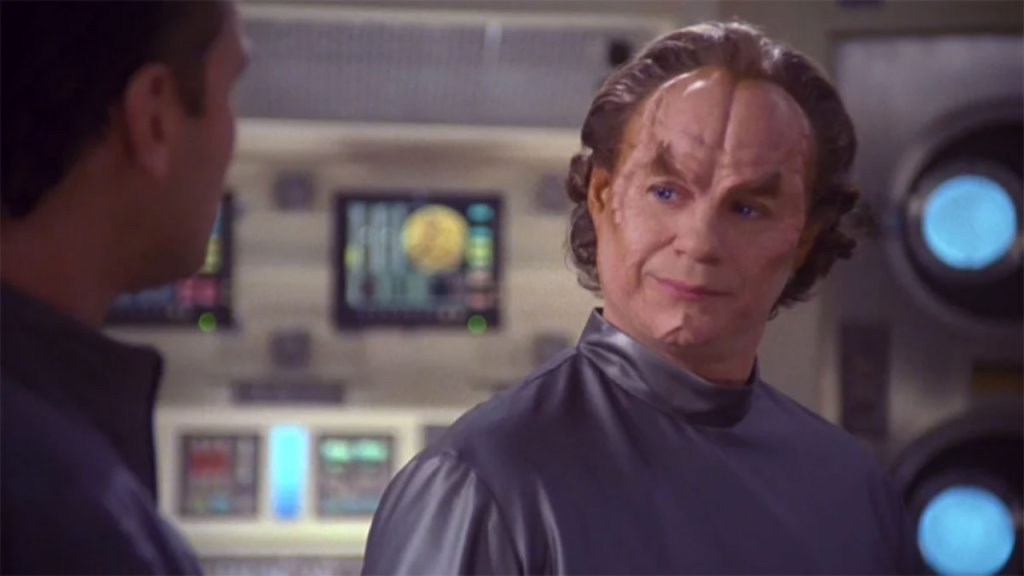
He is also funny in a way Trek doctors often are, but his humour is lighter, odder. McCoy complained. Crusher reassured. Bashir sparkled with youthful arrogance before becoming more complicated. The Doctor on Voyager performed irritation as opera. Phlox smiles as if the universe is a fascinating collection of symptoms.
The best Phlox episodes ask what compassion looks like when it is not filtered through human instinct. He can be kind without being sentimental. Curious without being reckless. Detached without being cold. In a show often built around human insecurity, Phlox gives us a different possibility: that the future may be built not only by brave humans and cautious Vulcans, but by people who are simply delighted to learn how strange everyone else is. He is, in many ways, the most Federation-minded person on the ship before the Federation exists.
Malcolm Reed and the Anxiety of Security

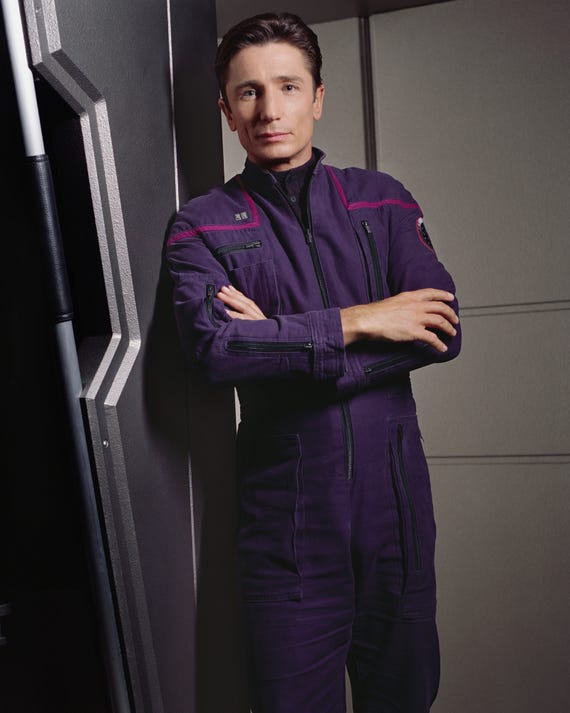
Malcolm Reed is a more restrained character, and perhaps because of that, the show sometimes struggles to know what to do with him. Dominic Keating plays him as precise, guarded, professional, slightly repressed, and very British in the way older television liked to imagine Britishness: emotionally padlocked, competent with weapons, probably haunted by a disappointing breakfast.
As tactical officer, Reed makes sense in the world of Enterprise. This is not the 24th century, where a starship often has the luxury of beginning with diplomacy. NX-01 is underpowered, underinformed, and frequently outmatched. Reed understands danger. He thinks in terms of hull plating, phase cannons, alert status, and whether the humans have wandered into another situation they cannot politely talk their way out of.

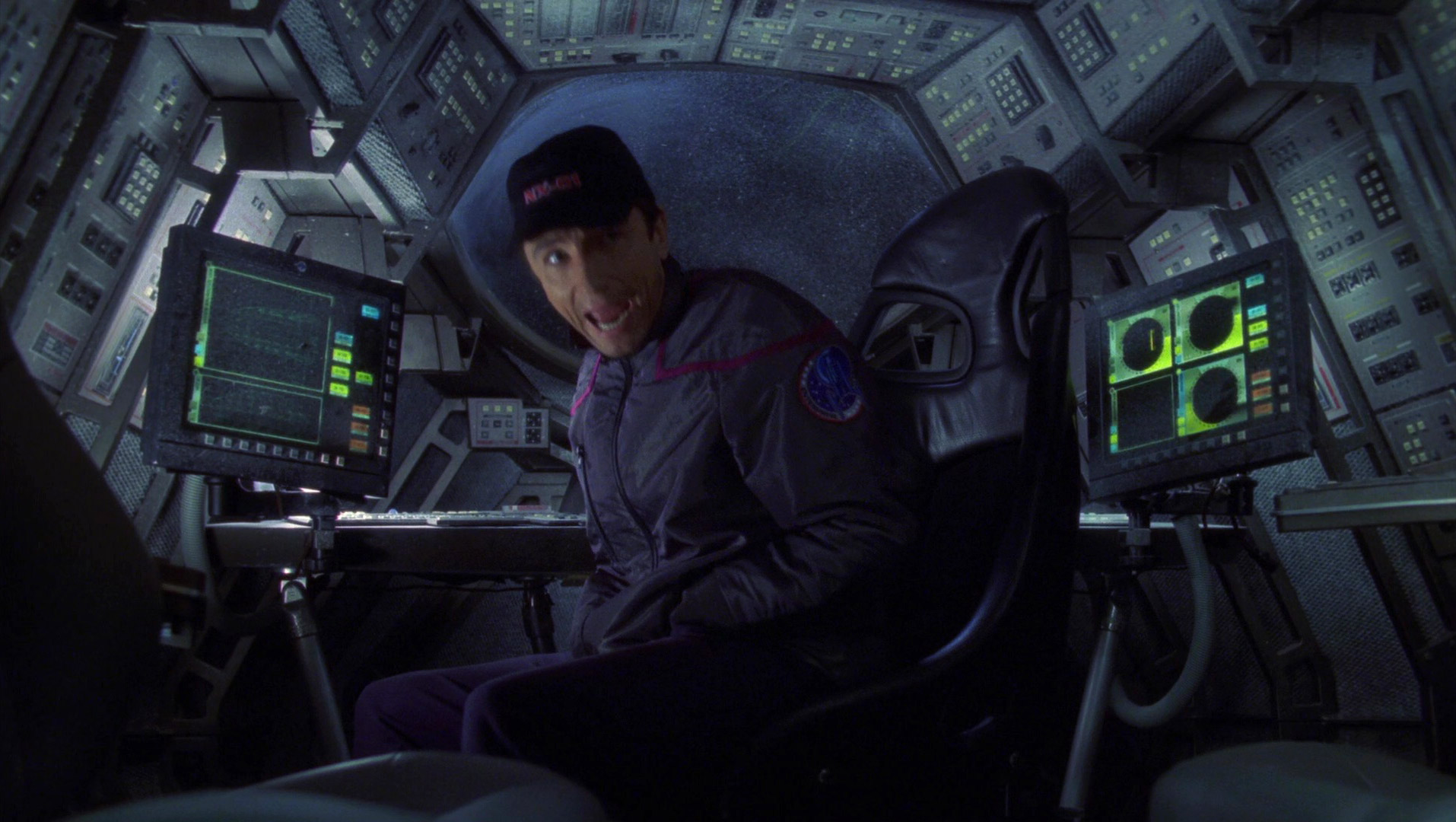
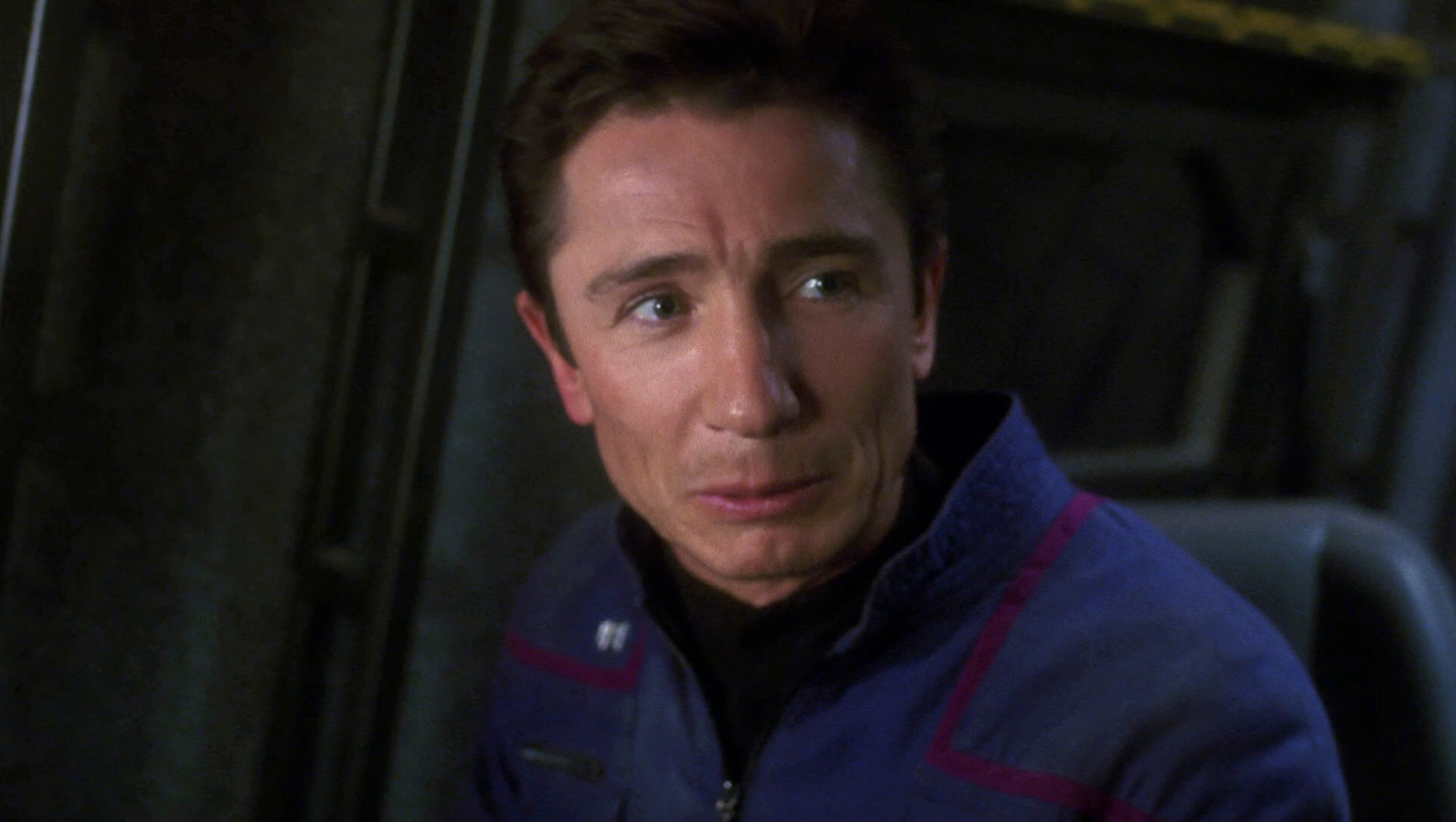
He is not always likeable, but he is necessary. His character becomes most interesting when the show uses him to explore the tension between exploration and militarisation. Starfleet at this stage is not fully military, but it is not innocent either. Reed’s instincts often push toward caution, armament, containment. The arrival of the MACOs in season three complicates his role further, placing him beside people trained more explicitly for combat. He is forced to ask what kind of security officer he is, and what kind of organisation Starfleet may become.
There is also a loneliness in Reed that the show only occasionally explores. He seems like a man who has trained himself to be useful because being known is more difficult. Some of the character’s best moments come when that reserve cracks — not dramatically, but awkwardly. He is the sort of person whose emotional life appears in small system errors.
I wish the show had done more with him. There was room there for a sharper portrait of early Starfleet discipline: the person who keeps the ship alive, but worries that survival may slowly become the mission.
Hoshi Sato and the Fear Inside the Mission

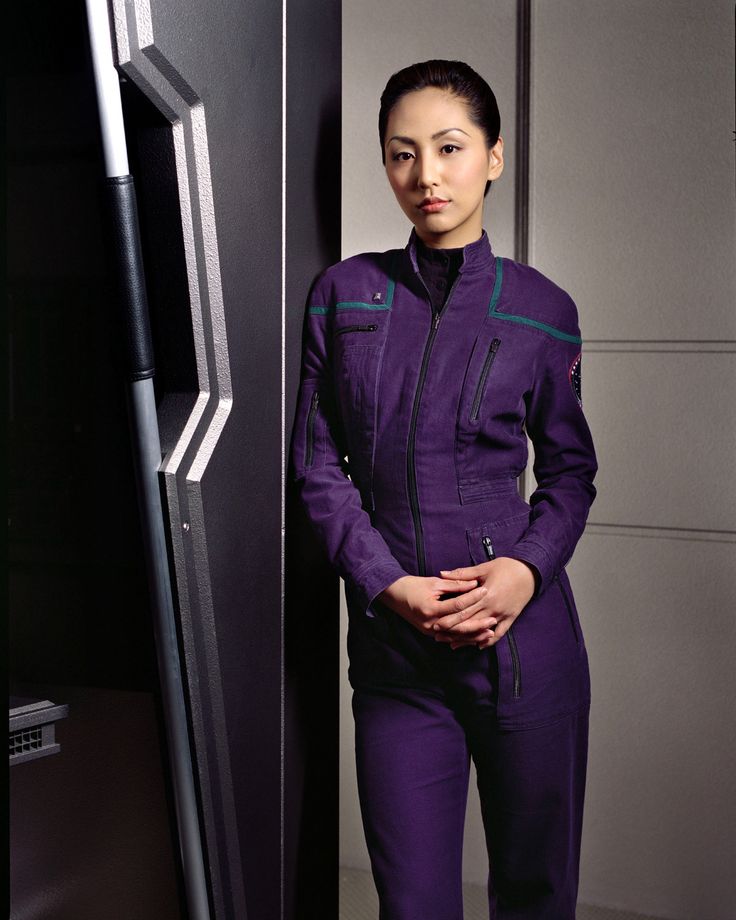
Hoshi Sato may be the most underrated idea in the main cast. A communications officer and gifted linguist, she is vital in a period before the universal translator has become the near-magical convenience we know from later Trek. This alone gives her a strong reason to exist. In Enterprise, language is still a problem. Misunderstanding has weight. Translation is labour. Meaning has to be earned.
That is a wonderful premise for a character. Hoshi is also afraid, and that matters because fear makes her competence feel earned rather than assigned by rank. She grows into the mission instead of arriving ready-made for it.

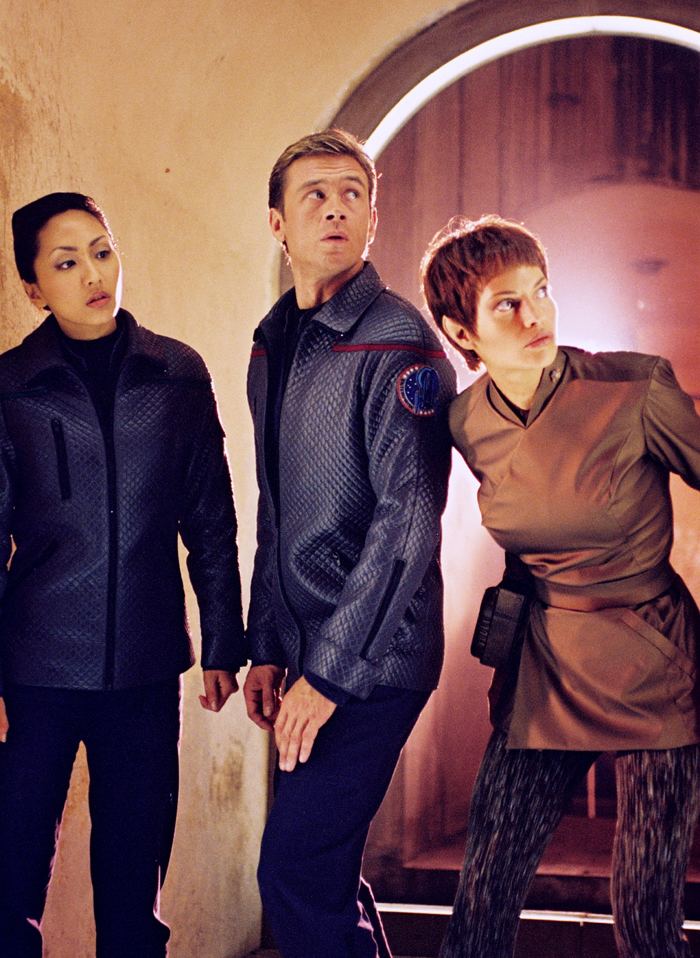
That matters. One of the best things about the early concept of Enterprise is that space should be frightening. Not everyone aboard should behave like a seasoned explorer from the 24th century. Hoshi’s anxiety makes emotional sense. She is brilliant, but she is not automatically comfortable in danger. She experiences the mission as wonder and stress at the same time, which is probably closer to how many real people would respond if asked to sit in a metal shell while unknown forces took an interest in them.
Linda Park gives Hoshi a grounded intelligence. She is not timid in a simplistic way. She is someone whose skills are essential but whose confidence has to catch up with her circumstances. That could have been a major arc: a linguist helping invent the diplomatic future by slowly learning to trust her own voice.
The show only partly follows through. Hoshi gets strong moments, but not enough of them. Like Travis Mayweather, she suffers from the series’ tendency to orbit Archer, T’Pol, and Trip. This is a shame because Hoshi represents one of the show’s most Star Trek ideas: before there can be peace, someone has to understand what the other person is saying. Not metaphorically. Literally. Word by word. In a pre-Federation show, that should have been central.
Travis Mayweather, the Boomer Who Should Have Mattered More

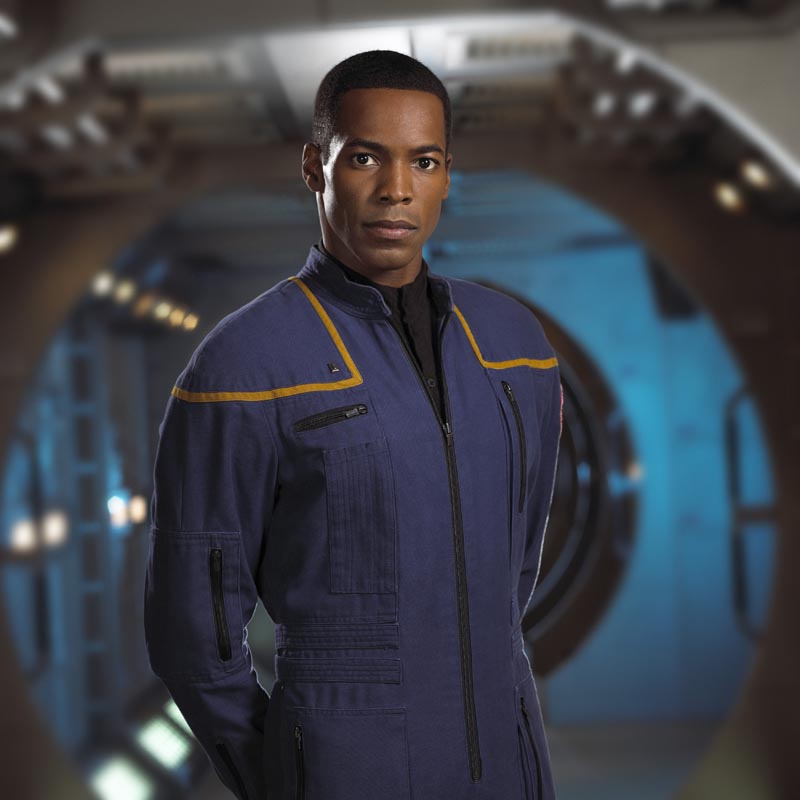
Travis Mayweather is the great missed opportunity of Enterprise. As a “boomer”, someone raised on cargo ships, he has more practical deep-space experience than almost anyone else aboard. That should make him fascinating. He is young, but he has lived in space. He understands the culture of long-haul freight families, the rhythms of ships that are not glamorous, the difference between Starfleet’s official dreams and the practical realities of people already working between worlds.
In another version of the show, Travis might have been the character who complicates Archer’s sense of pioneering. Humanity is not simply stepping into space for the first time. Some humans have already been out there, not as heroic explorers but as working people. Cargo crews, traders, mechanics, families growing up between ports. Travis could have brought class, labour, and lived experience into the show’s version of exploration.
Instead, he is too often left at the helm with very little to do. Anthony Montgomery gives him an easy charm, and when the show lets Travis speak from his background, he becomes more interesting immediately. But those moments are too rare. The series never fully cashes the cheque it writes with his backstory. For a show so invested in the early infrastructure of humanity’s expansion, neglecting the one main character raised inside that infrastructure feels like a genuine mistake.
Still, Travis matters as a reminder of what Enterprise could have explored further. The Federation will one day look clean and inevitable, but before that there are people hauling cargo, repairing engines, negotiating routes, building habits, making compromises. The future is not only built by captains. It is built by workers. A show about the origins of Starfleet should have known that more often.
The Vulcans Were Not Yet Our Vulcans

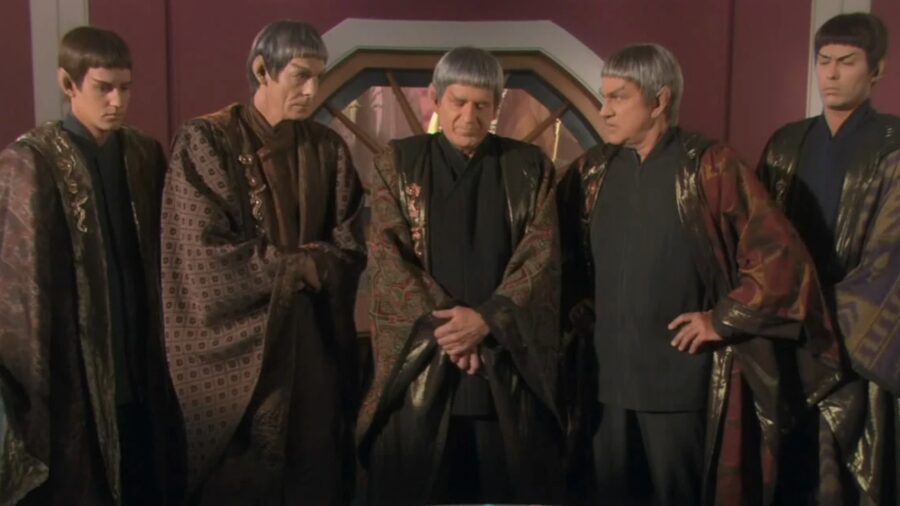
One of the most debated choices in Enterprise is its portrayal of the Vulcans. These are not quite the Vulcans we expect. They are more political, more controlling, more suspicious, less serene. They withhold information. They treat humans with condescension. They appear less like enlightened partners and more like a civilisation that has mistaken caution for superiority.
At first, this annoyed many viewers, and understandably so. Vulcans had long functioned as one of Trek’s great aspirational species: disciplined, logical, morally serious, emotionally contained, and occasionally insufferable in a way that still felt earned. Enterprise makes them less admirable.

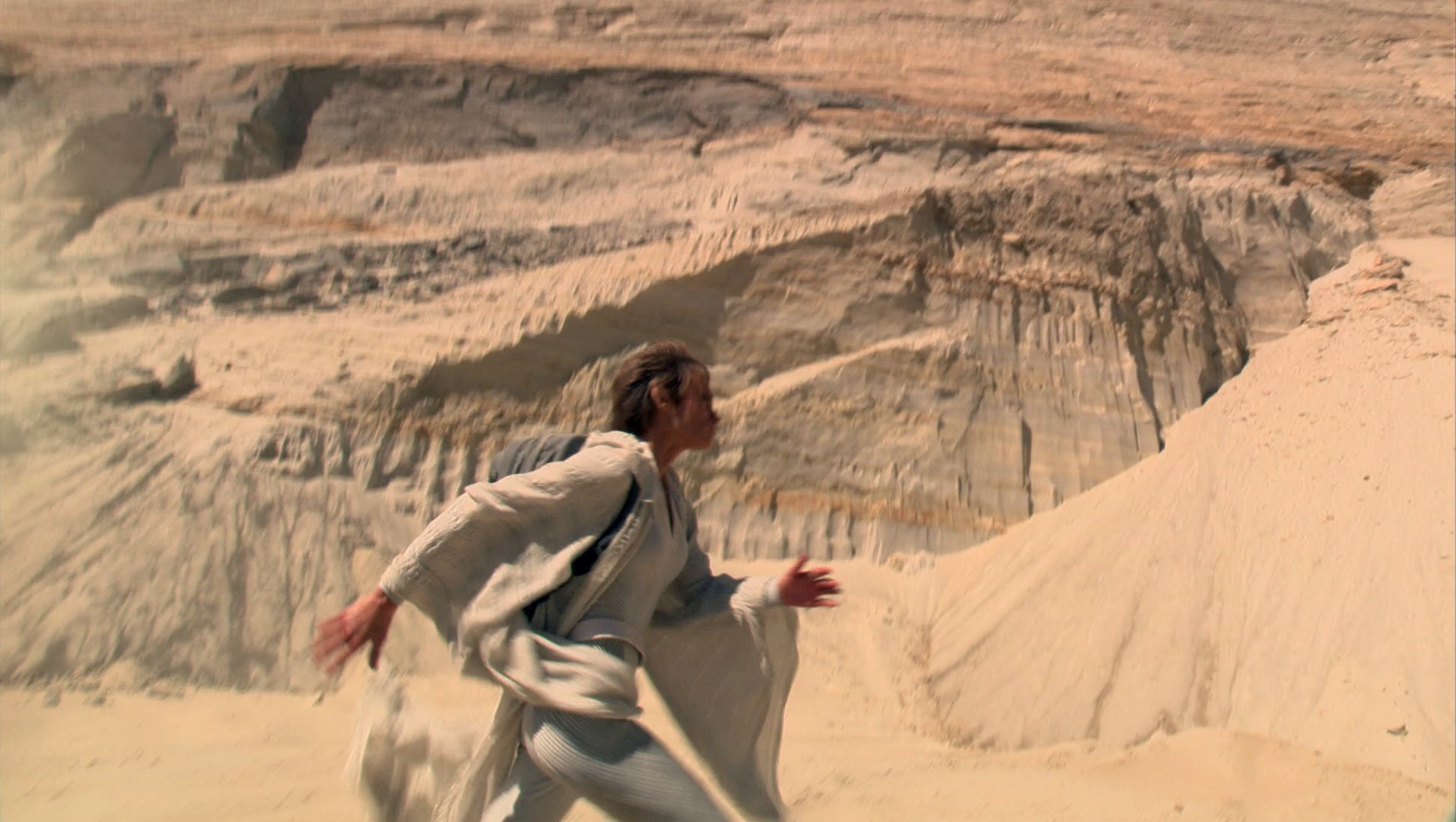
But as a prequel idea, I think it works. The show’s Vulcans are not the finished version either. They too are in transition. Their society has institutional problems. Their relationship to Surak’s teachings has become rigid, politicised, perhaps even corrupted. The later season-four Vulcan arc is one of the series’ best uses of continuity because it does not merely explain a discrepancy; it turns that discrepancy into drama. It asks how a culture becomes the version of itself history remembers.

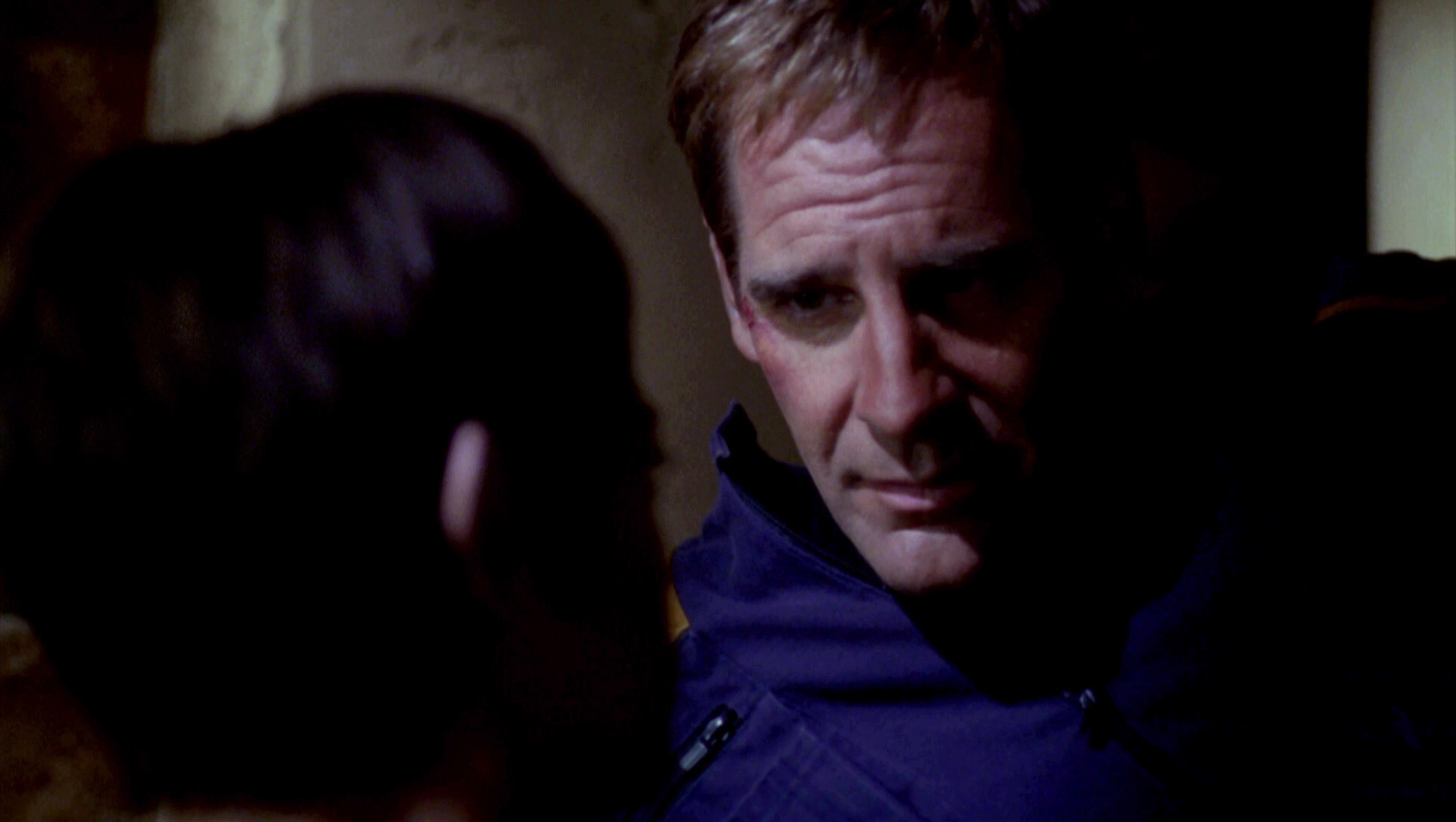
That is exactly what prequels are supposed to do. The Vulcans’ distrust of humans also makes a certain sense. From their perspective, humans are emotionally volatile, technologically ambitious, recently post-war, and far too eager to touch the stove. We, as viewers, are inclined to side with Archer because Trek has trained us to believe in humanity’s future. But the Vulcans do not have that benefit. They only see a species that might become great or might become dangerous.

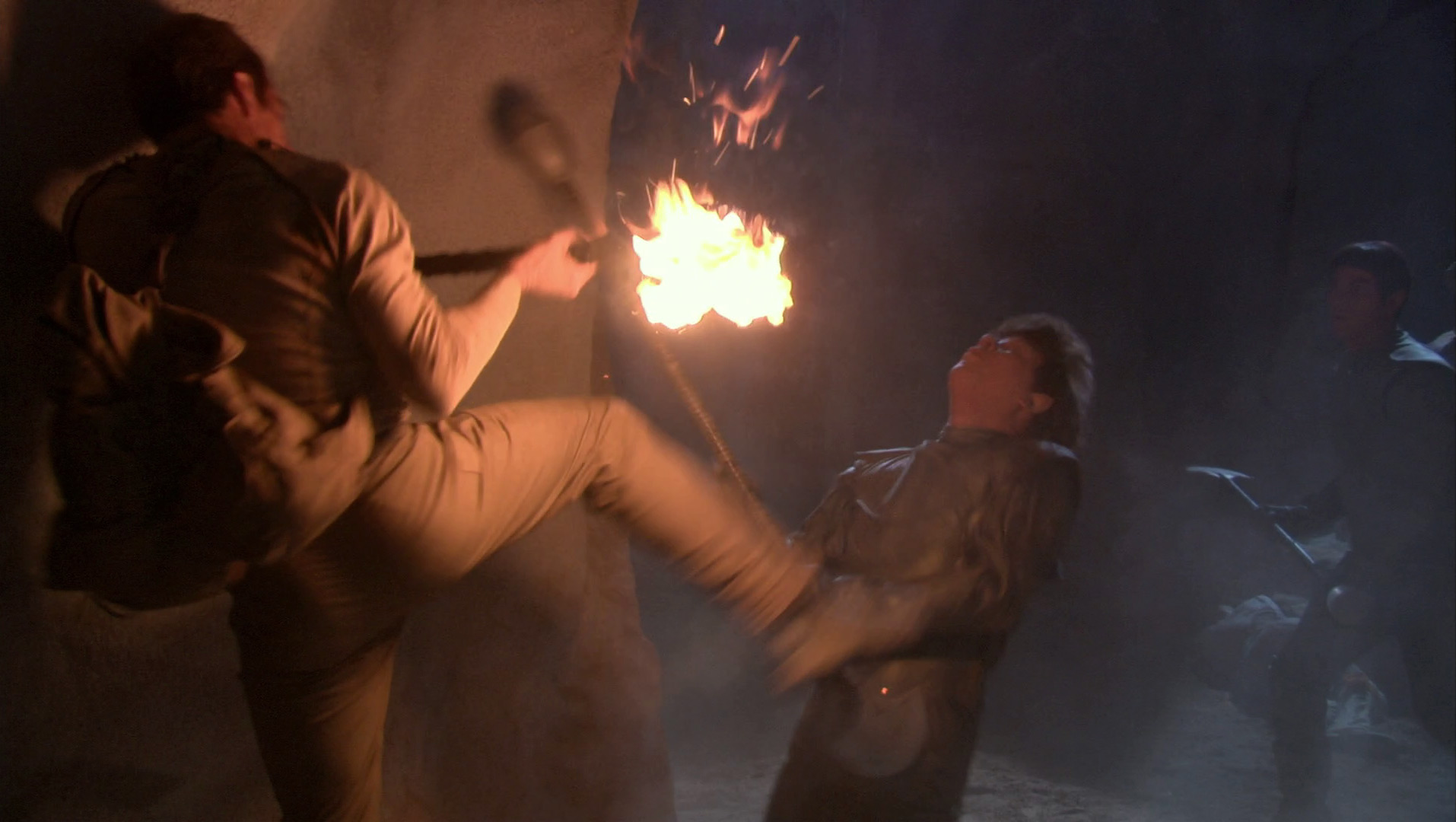
The eventual movement toward alliance means more because it is not immediate. Trust has to be built. The Federation is not founded because everyone naturally likes each other. It is founded because mutual suspicion becomes less useful than cooperation. That feels grown-up in a way the show did not always get credit for.
Andorians, Tellarites, and the Joy of Jeffrey Combs
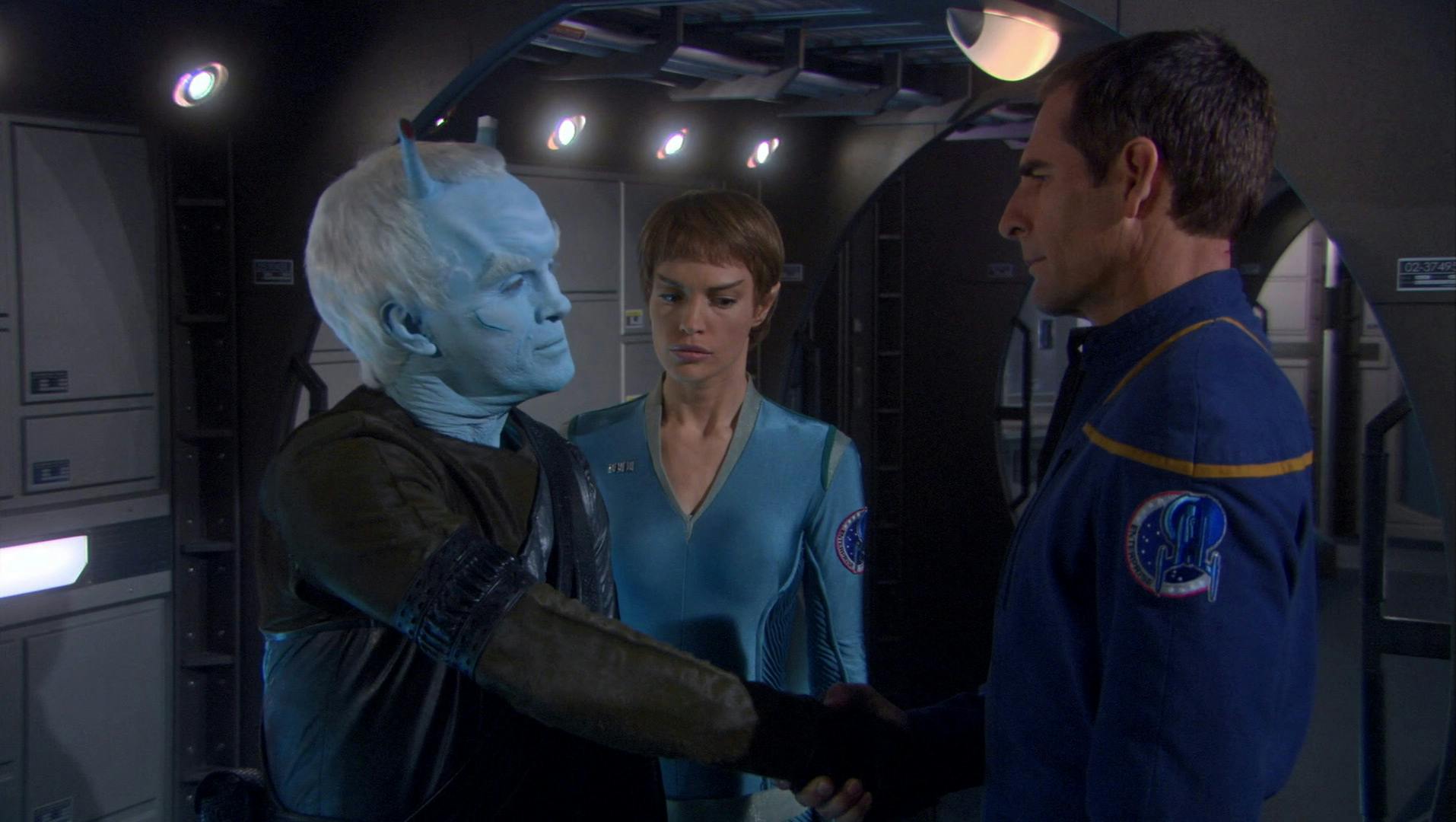
If Enterprise did nothing else, it gave us Shran. That would not excuse every false turn over four seasons, but Jeffrey Combs makes the Andorian commander the sort of prickly, indispensable foil this prequel needed: somebody who makes cooperation feel like work rather than destiny.

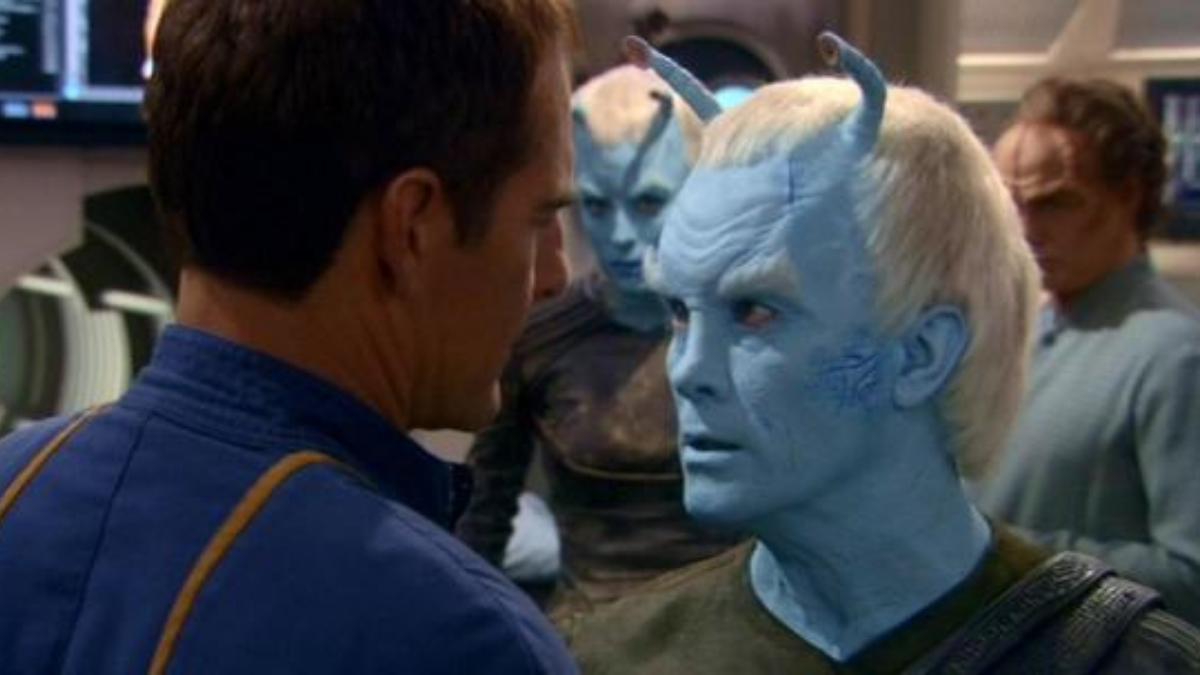
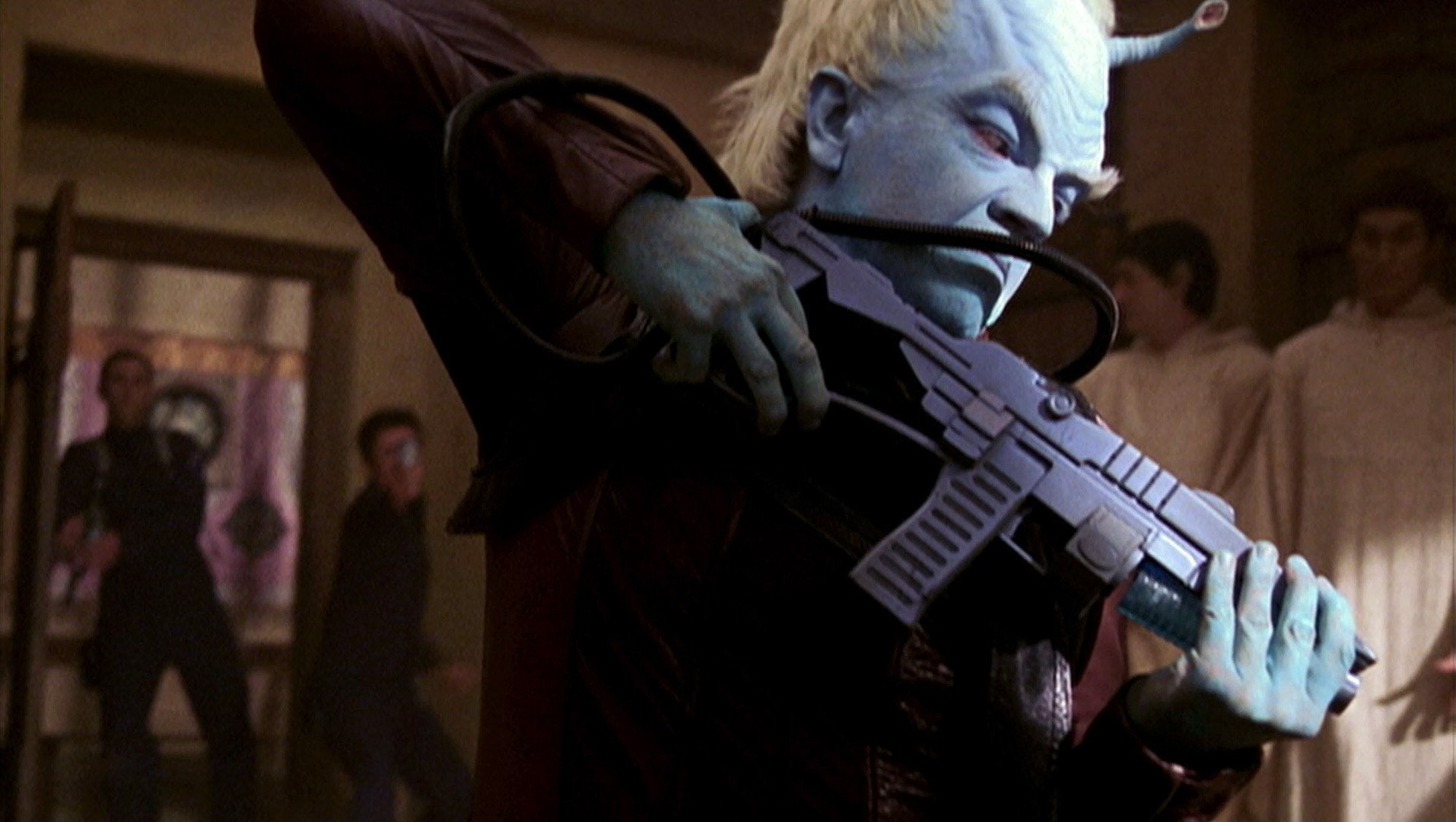
Jeffrey Combs had already become one of Trek’s great recurring secret weapons, but as the Andorian commander Thy’lek Shran, he gives Enterprise a jolt of energy every time he appears. Shran is suspicious, proud, funny, dangerous, honourable when it suits him, and gloriously irritated by almost everyone. He begins as a potential adversary and gradually becomes one of Archer’s most important allies.

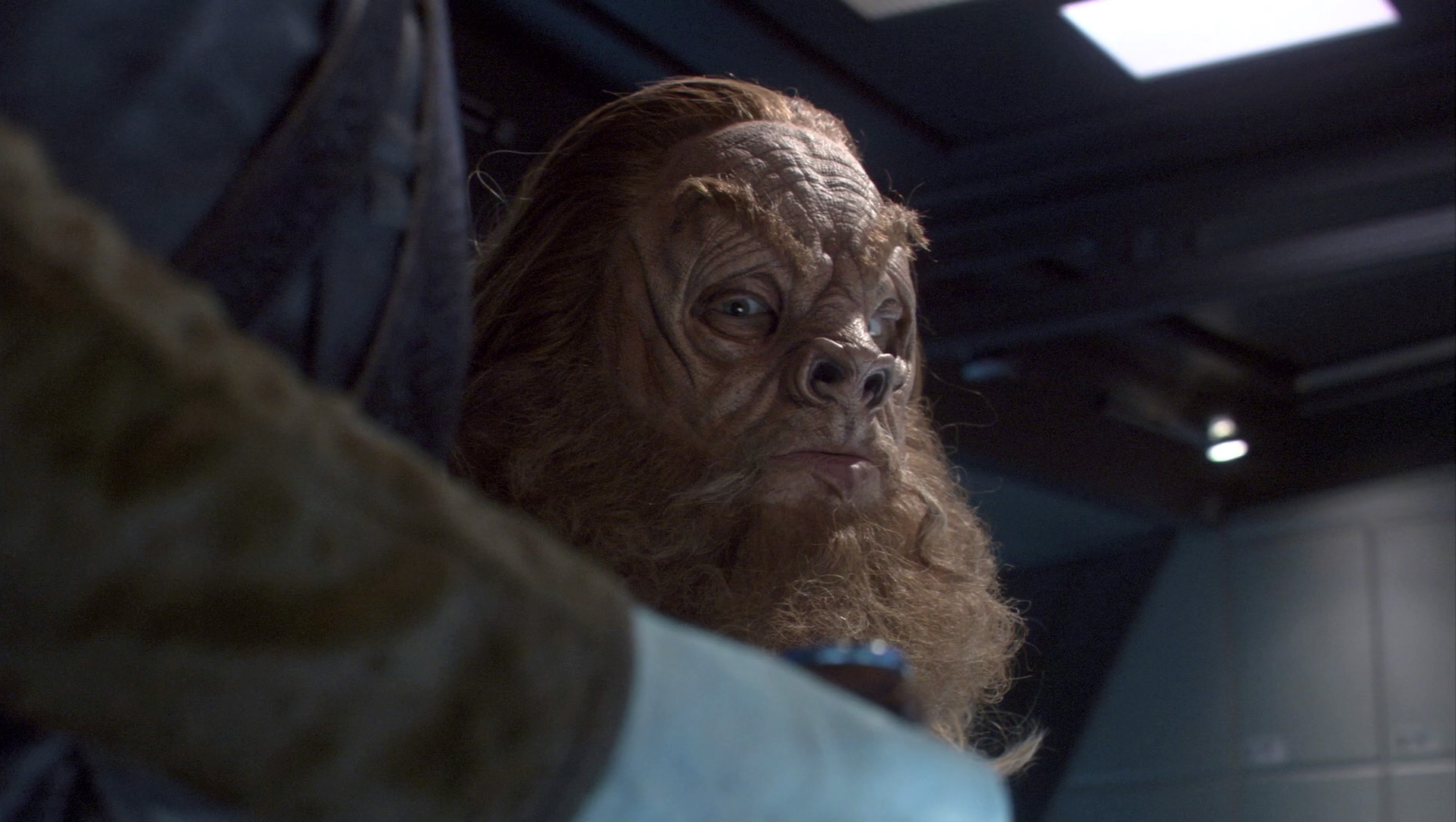

The Andorians are exactly the kind of species Enterprise needed: familiar from older Trek, but not overdeveloped enough to trap the writers. The show gets to build them out: their militarism, pride, grievances against the Vulcans, and capacity for loyalty. Through Shran, Archer learns that diplomacy does not always begin with polite conversation. Sometimes it begins with shared enemies, reluctant respect, and the discovery that the person shouting at you may still keep his word.
The Tellarites, too, are used well in season four. They bring a different texture: argumentative, blunt, resistant to smooth Federation niceness. Together with humans, Vulcans, and Andorians, they help Enterprise finally move towards its most compelling destination: the idea that the Federation was not born from harmony, but from the difficult management of difference.

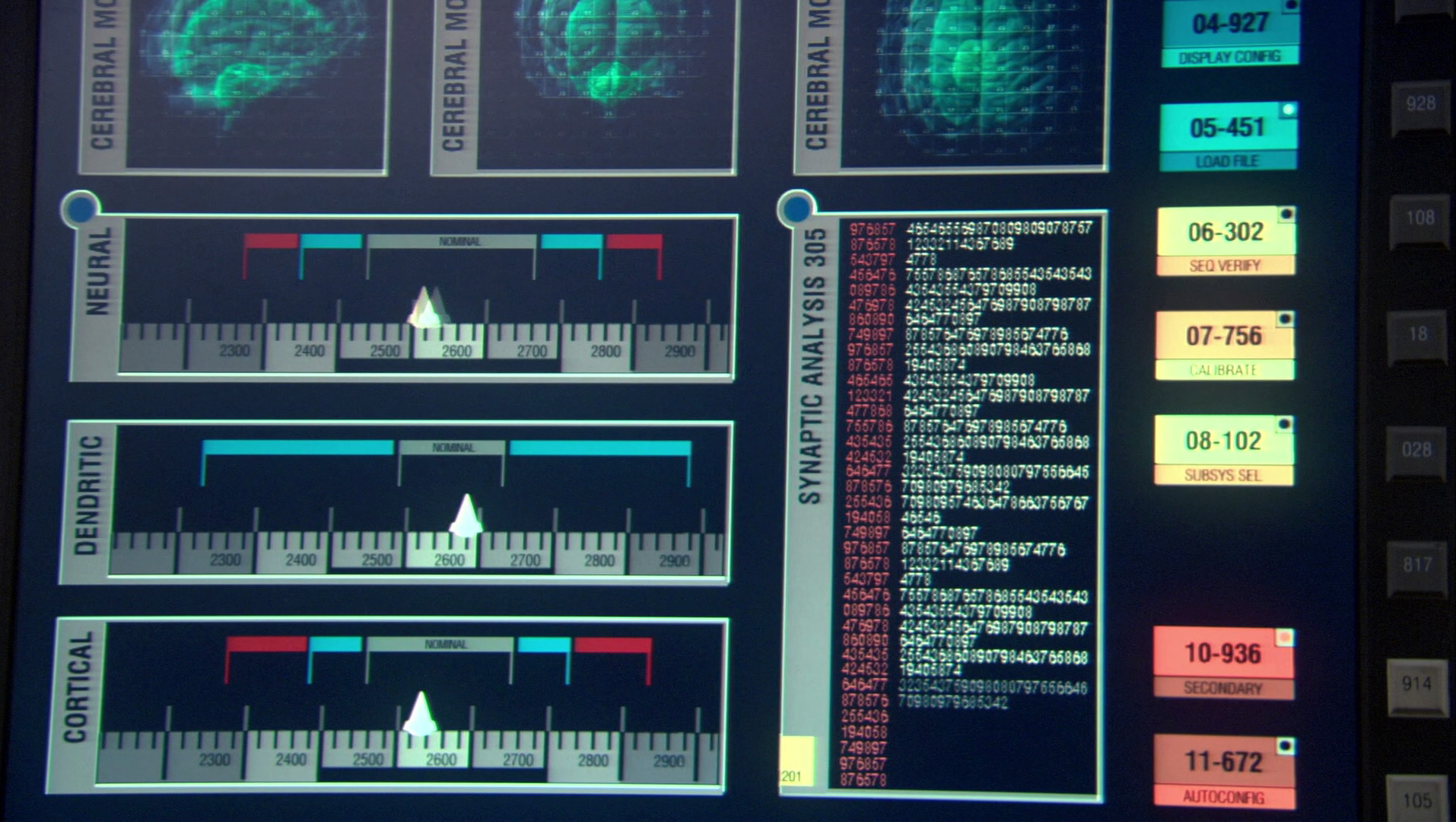

That is important. Utopia, in Star Trek, can sometimes look too clean from a distance. Enterprise had the chance to show the scaffolding. The arguments. The mistrust. The people who had to sit in rooms together before the noble emblem could exist. Season four understood that. It is one reason fans often look back on that final season with frustration as much as affection. The show was finally becoming the thing it probably should have been earlier.

Then it ended, just as that larger political story was beginning to feel like the show’s natural destination. The cancellation freezes Enterprise at the point where its prequel premise was finally paying dividends.

The Temporal Cold War: Interesting Idea, Awkward Spine

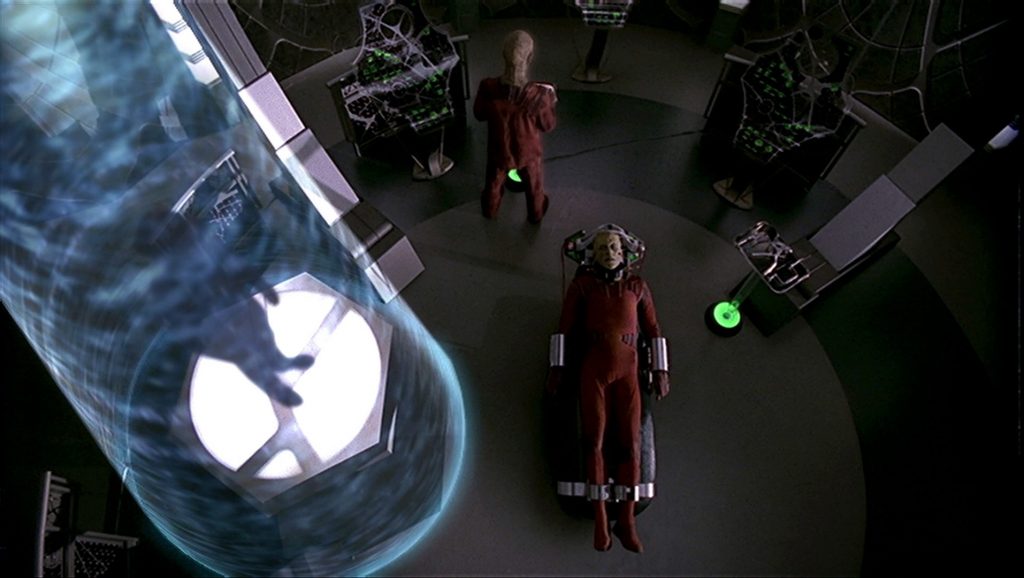
The Temporal Cold War was one of those early-2000s television ideas that sounds stronger in a pitch meeting than it sometimes plays across seasons.
You can see the appeal. A prequel has an obvious problem: the audience knows, broadly, where history is supposed to go. If the show is set before Kirk, then certain things must eventually happen. The Federation must be founded. Earth must survive. Vulcans, Andorians, Tellarites, Romulans, Klingons — all of them must move towards known positions in the franchise’s larger map. Time travel introduces instability. Suddenly, the past can be attacked. History can be manipulated. The prequel can have suspense because the timeline itself is under threat.

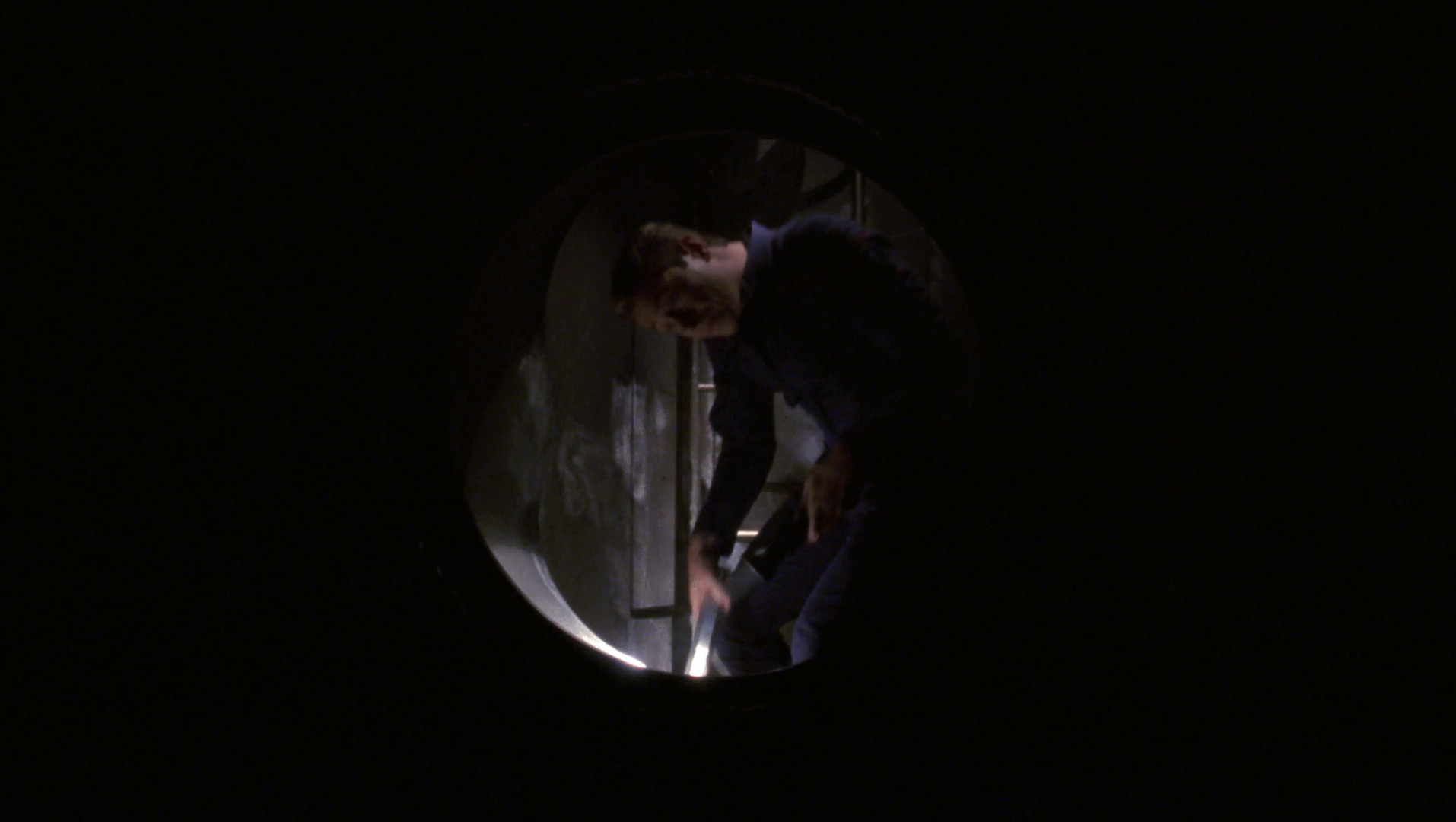
That is the theory. In practice, the Temporal Cold War often feels like a mystery box the show was not fully prepared to unpack. The Suliban are visually memorable and sometimes effective, but the larger conspiracy remains vague for too long. “Future Guy” becomes less a character than a placeholder. Daniels appears with urgent information from centuries ahead, and Archer is pulled into conflicts whose rules are not always dramatically satisfying.
The problem is not that the idea is bad. The problem is that it sometimes distracts from the more interesting prequel material directly in front of the show. I did not need Enterprise to keep glancing at the far future. I wanted it to stay in the messy, uncertain present of the twenty-second century. The birth of Starfleet ethics, the first real interspecies alliances, the awkward origins of institutions we later take for granted — all of that was richer than another shadowy temporal manipulation.

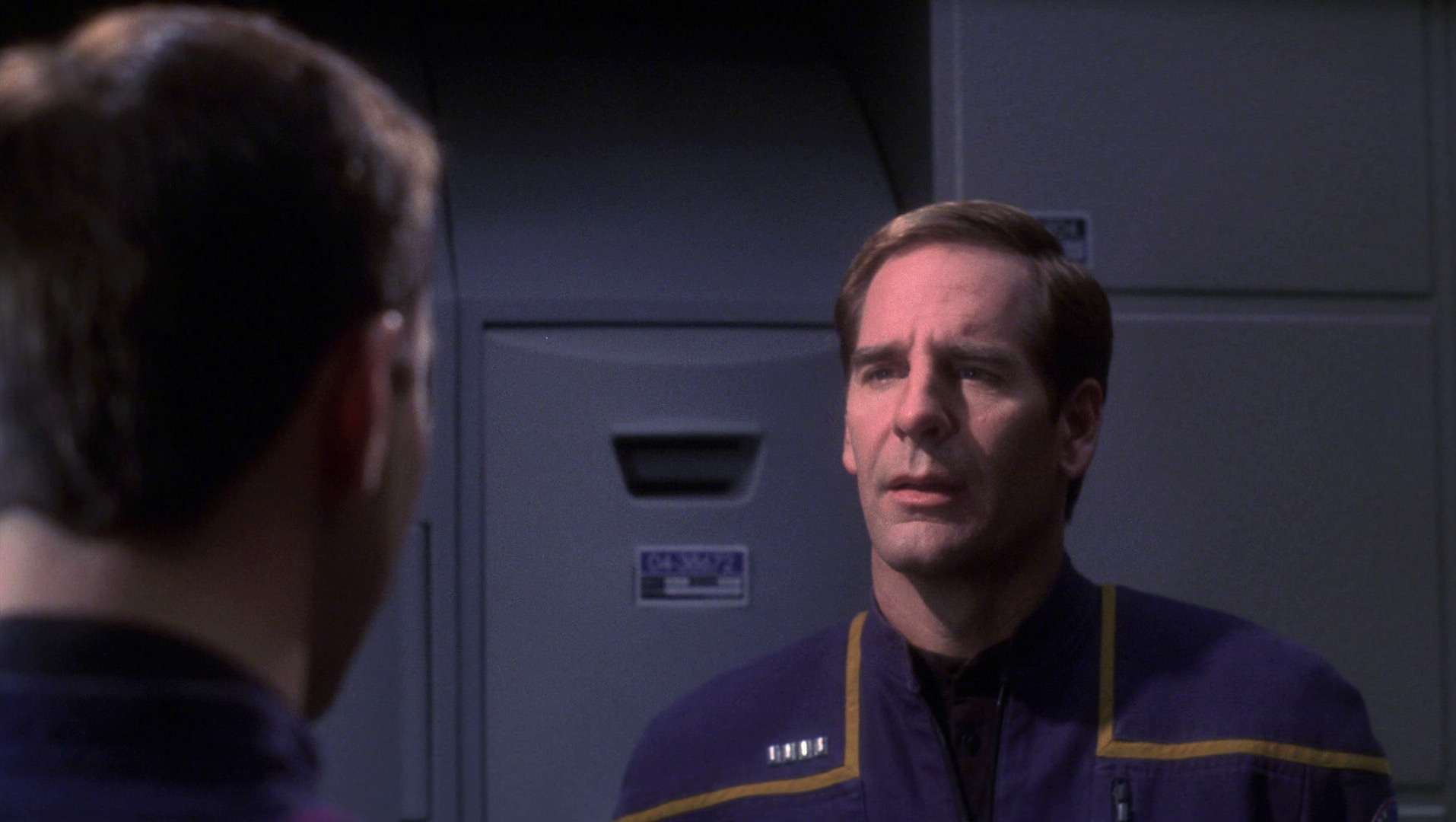
There are good Temporal Cold War episodes. The premise gives the series some scale and danger. But it also feels like a sign that the producers did not fully trust the prequel concept on its own. As if a show about the beginnings of the Federation needed a futuristic gimmick to reassure the network that it was not too old-fashioned.
The irony is that Enterprise became more interesting when it stopped apologising for being a prequel and started acting like one.

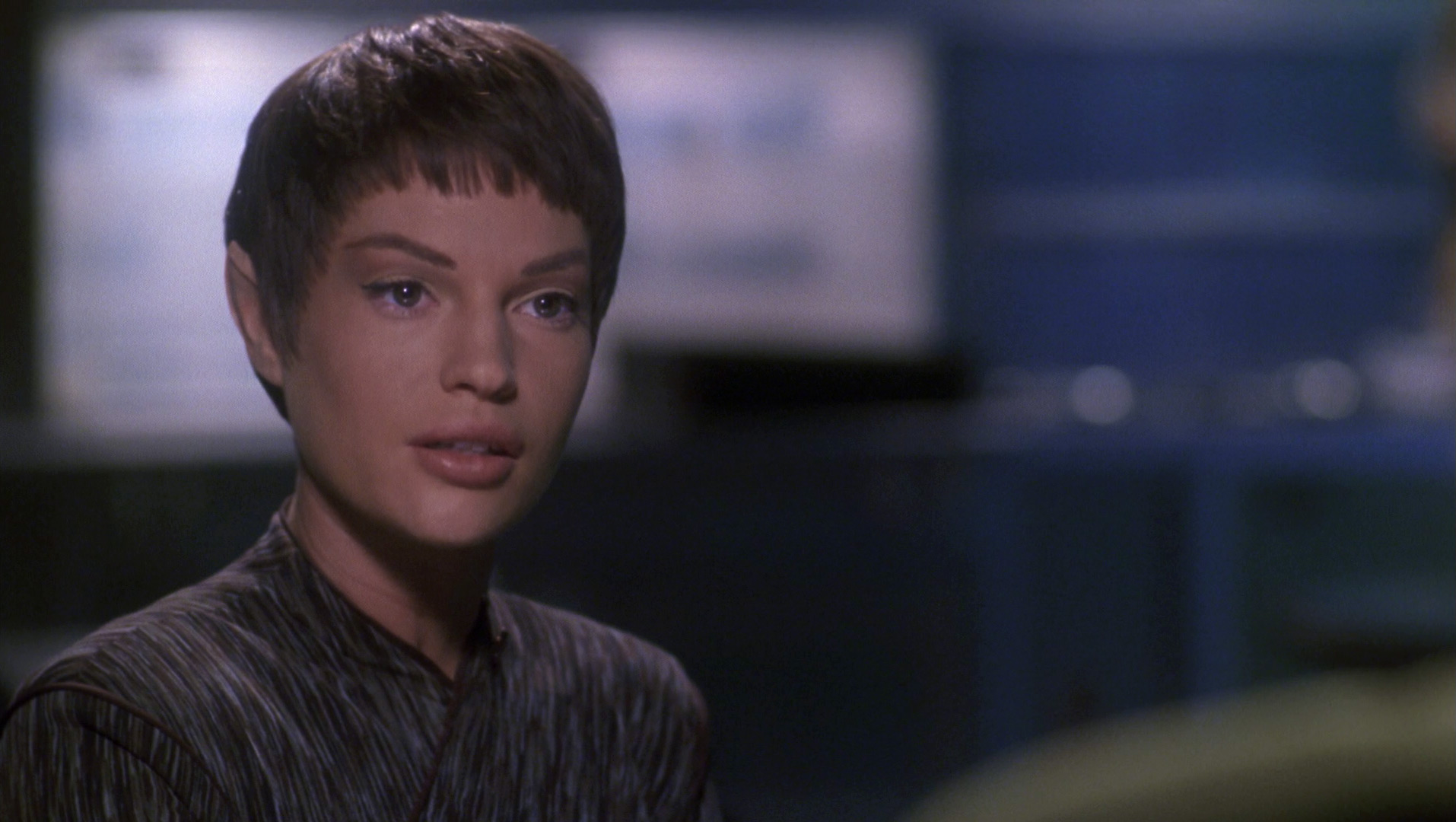
The Xindi Arc and the Post-9/11 Shadow


Season three is where Enterprise becomes a different animal. The Xindi attack on Earth gives the show a season-long mission: enter the Delphic Expanse, find the people responsible, and prevent a larger weapon from destroying the planet. It is darker, more serialised, more militarised. The NX-01 is no longer simply exploring. It is hunting through dangerous territory under pressure, with grief and fear warping the crew’s moral compass.

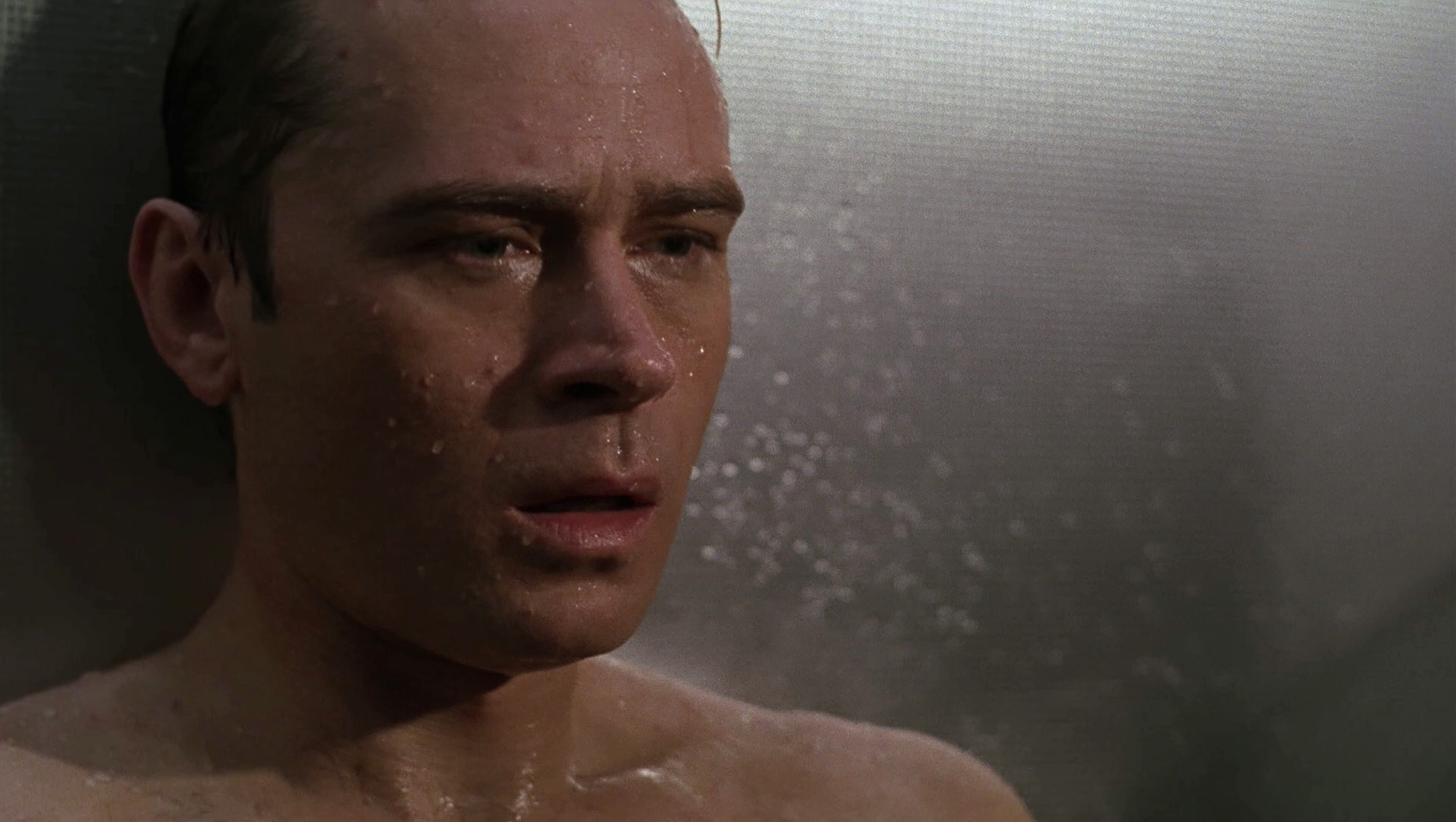

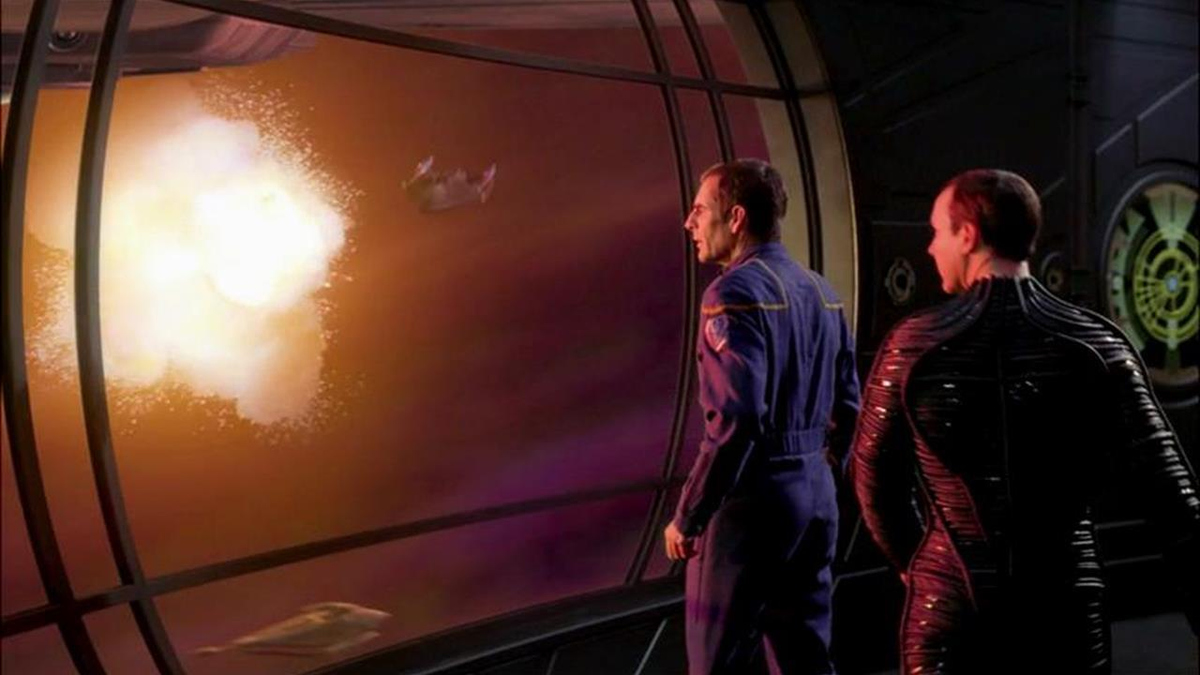
This is the season where Enterprise most clearly reflects its historical moment. Watching it now, the post-9/11 atmosphere is difficult to miss: the shock of an attack on home soil, the language of pre-emptive action, the anxiety of unseen enemies, the willingness to compromise ideals under threat, the introduction of military personnel aboard a vessel originally defined by exploration. Sometimes the allegory is blunt. Sometimes it is effective. Sometimes it makes the show feel more dated than earlier Trek, which often filtered contemporary anxieties through cleaner metaphor.

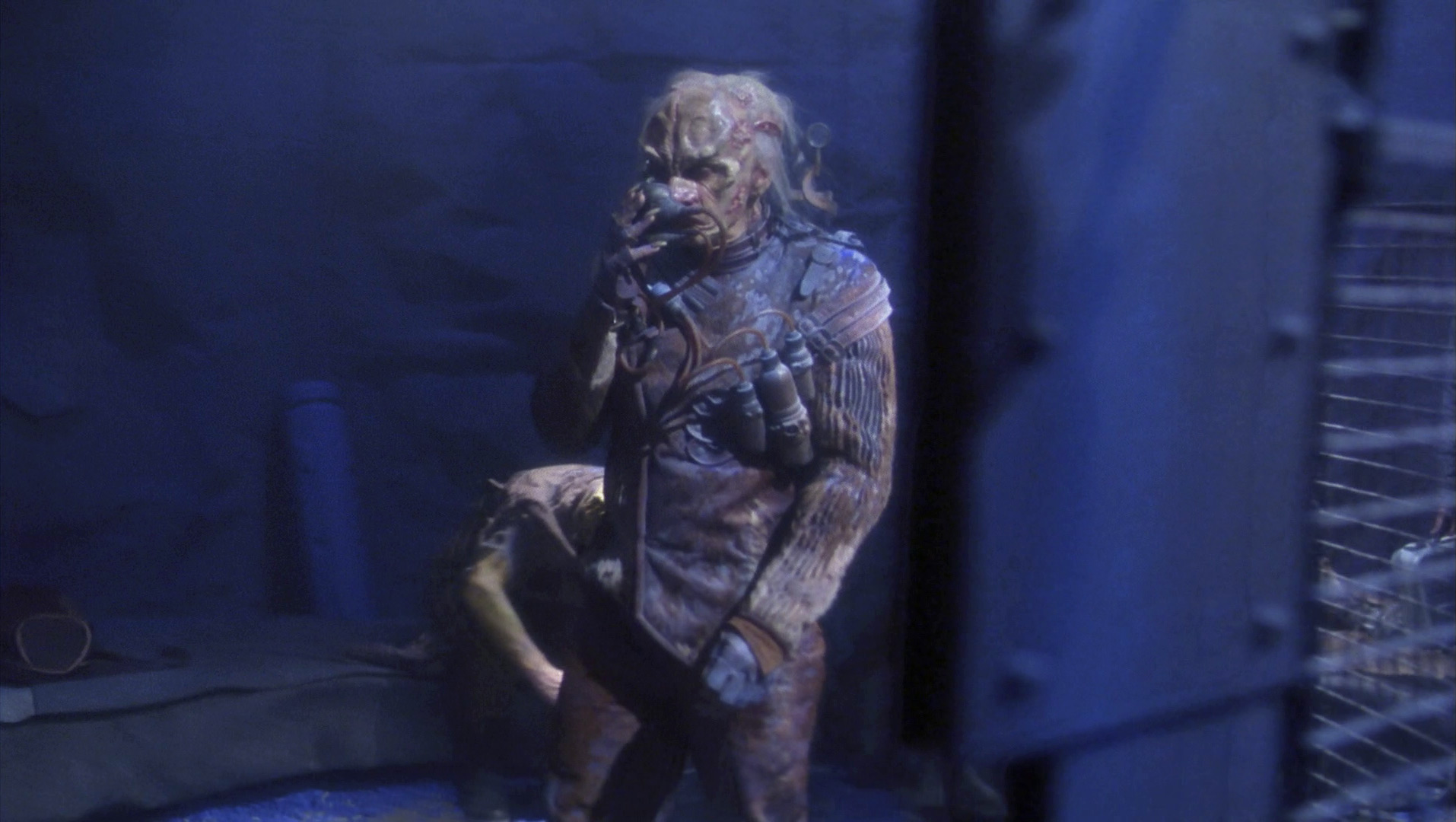

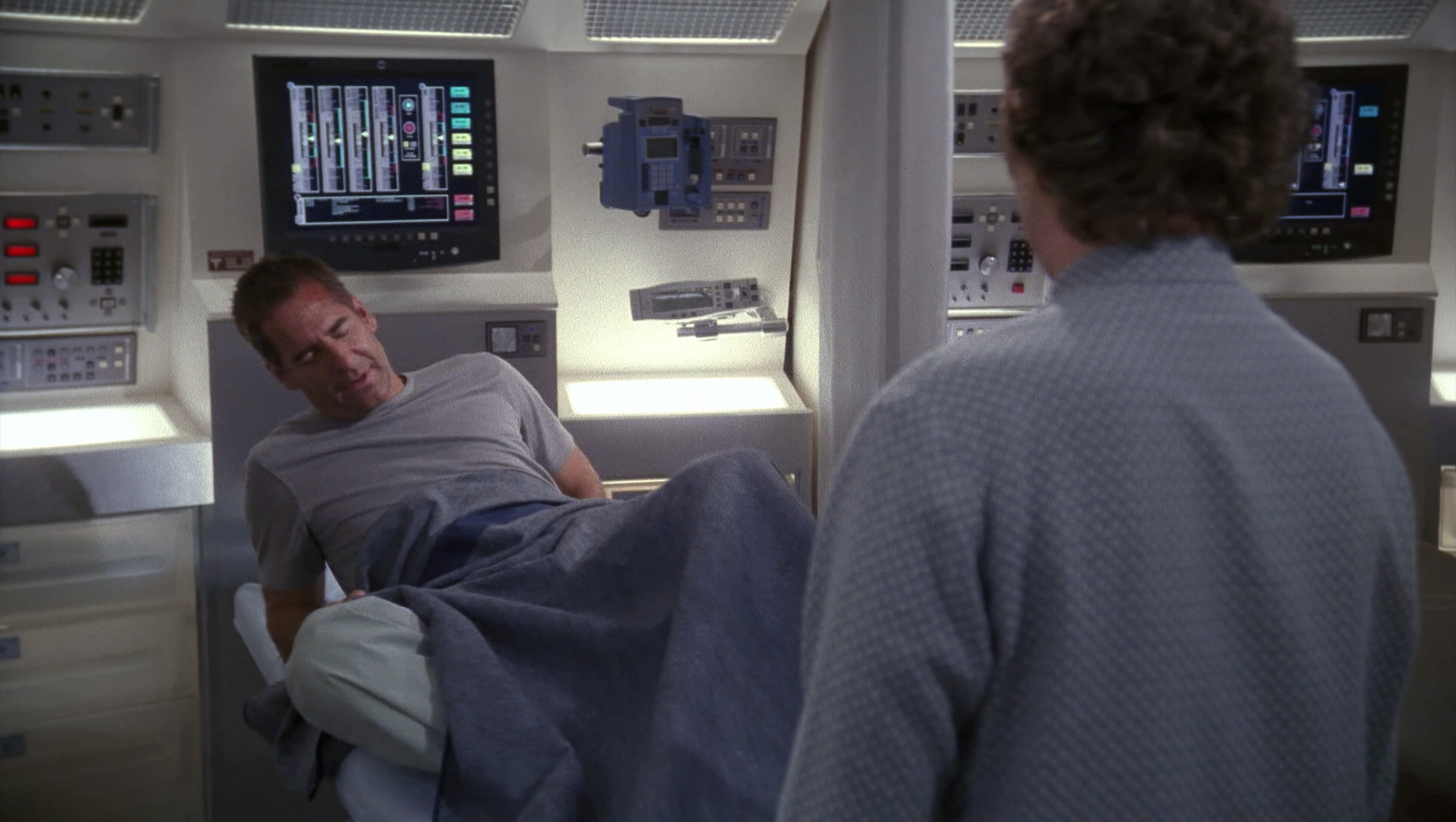
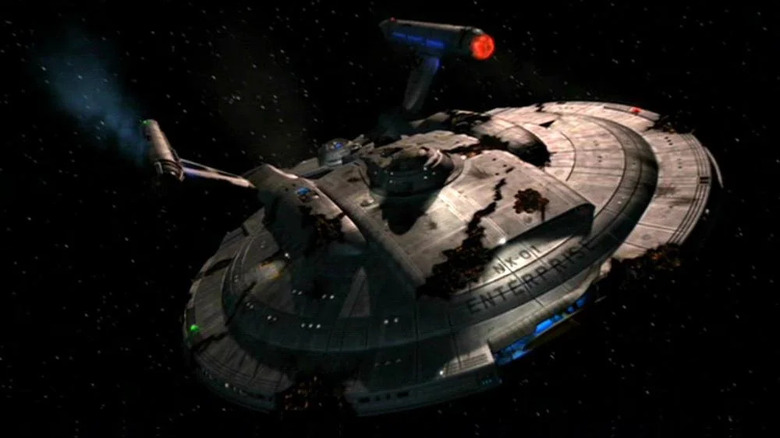
But the Xindi arc also gives the series urgency. It forces Archer into morally compromised territory. It gives Trip grief. It tests T’Pol’s loyalty and stability. It makes the ship feel damaged, tired, finite. The NX-01 stops feeling like a shiny new project and starts feeling like a machine being held together by discipline and denial.


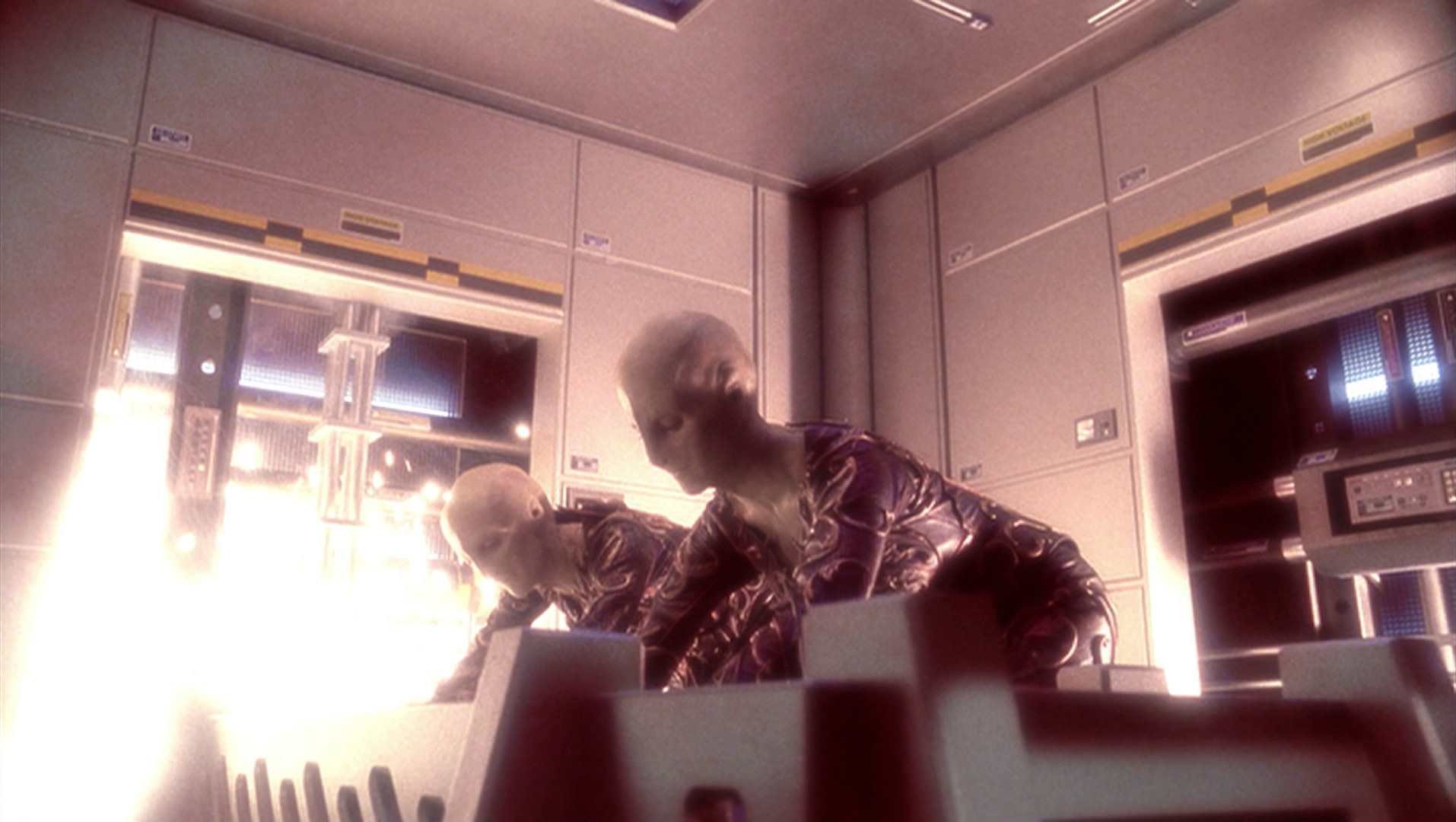
The Xindi themselves are a mixed but interesting creation. The idea of multiple related species — primates, arboreals, aquatics, insectoids, reptilians — gives the conflict internal politics. They are not a single-minded enemy. Some are manipulated. Some are afraid. Some are cruel. Some are reachable. That matters because Star Trek is rarely at its best when enemies remain faceless. The arc improves when the crew begins to understand that the Xindi are not simply monsters but people trapped inside their own fear.

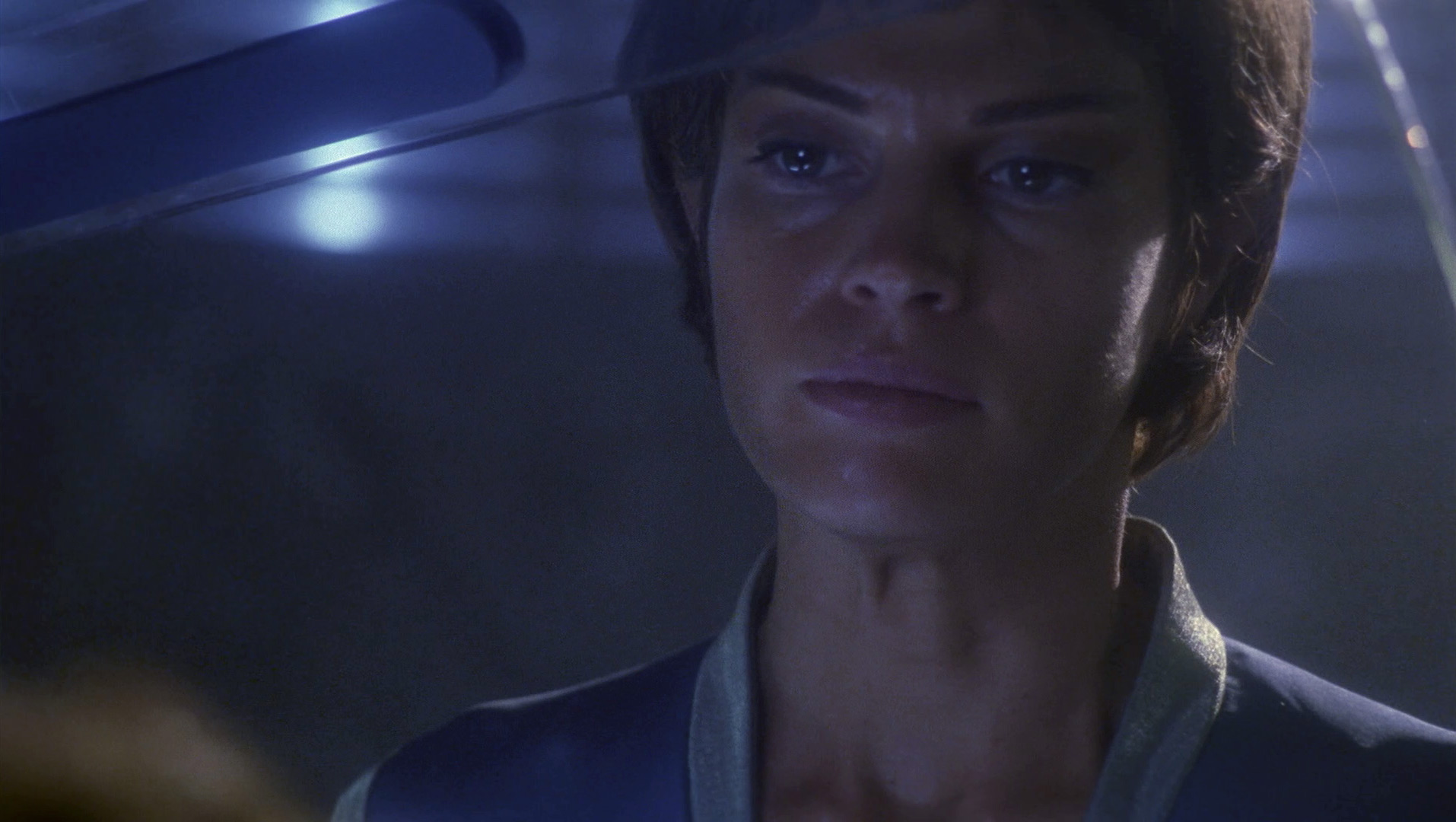

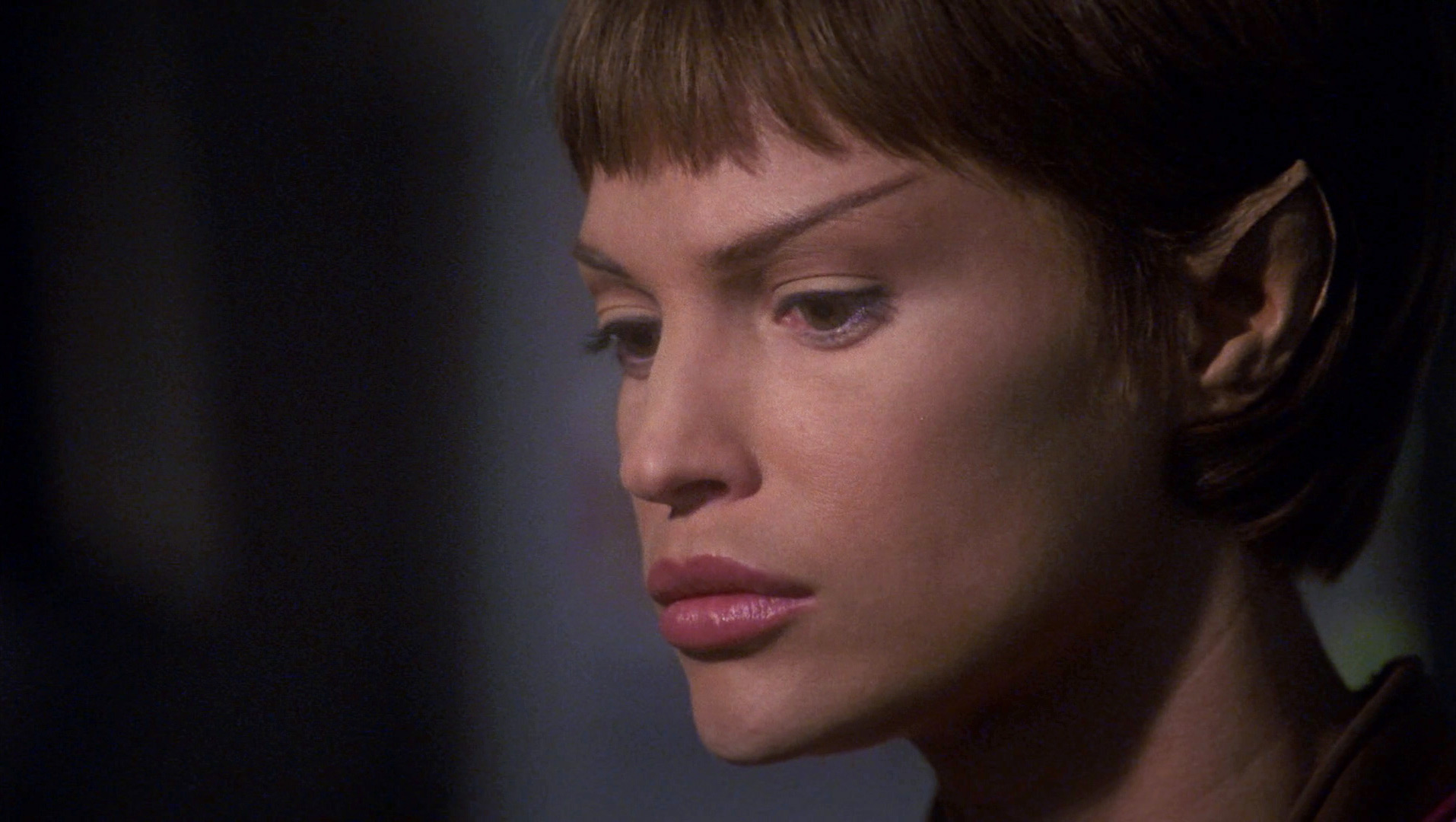
Still, season three can be heavy going. It narrows the show’s sense of wonder. Exploration gives way to pursuit. The moral air gets thinner. But perhaps that is part of the point. The future is not built by people who never face terror. It is built by people who face terror and then have to decide whether they will become smaller because of it. That is a very Star Trek question, even if the season does not always answer it elegantly.

Season Four and the Show It Almost Became

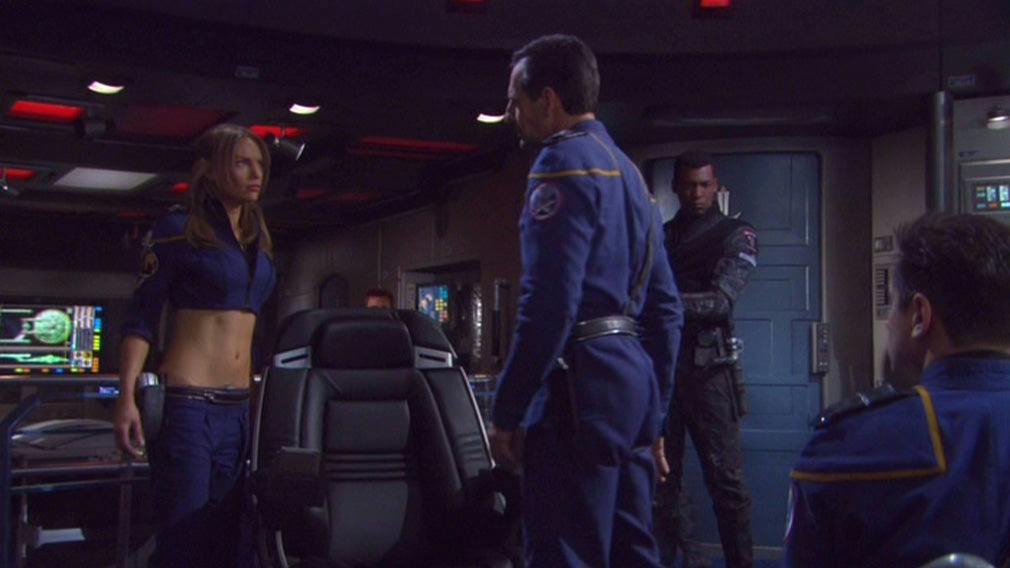
Season four is where Enterprise finally seems to understand itself. The shift is almost immediately noticeable. The storytelling becomes more purposeful. Instead of long vague arcs or scattered standalone episodes, the season uses shorter multi-part stories to connect directly with Trek history: the Vulcan Reformation, the Augments and the shadow of the Eugenics Wars, the explanation for the smooth-headed Klingons of the original series, the Andorian/Tellarite/Vulcan/Human tensions, the early Coalition of Planets, the xenophobic Terra Prime movement, and the first visible steps toward the Federation.
This is the show many viewers wanted from the beginning. Not because it is stuffed with continuity for its own sake, although there is certainly plenty of continuity. It works because the references have dramatic purpose. They are not just winks. They are structural beams. Season four treats Trek history as a set of unresolved political and cultural processes. How do Vulcans become the Vulcans we know? How do humans earn trust? How do old enemies sit at the same table? How does fear of the alien become a moral obstacle humanity has to overcome before it can credibly help build the Federation?

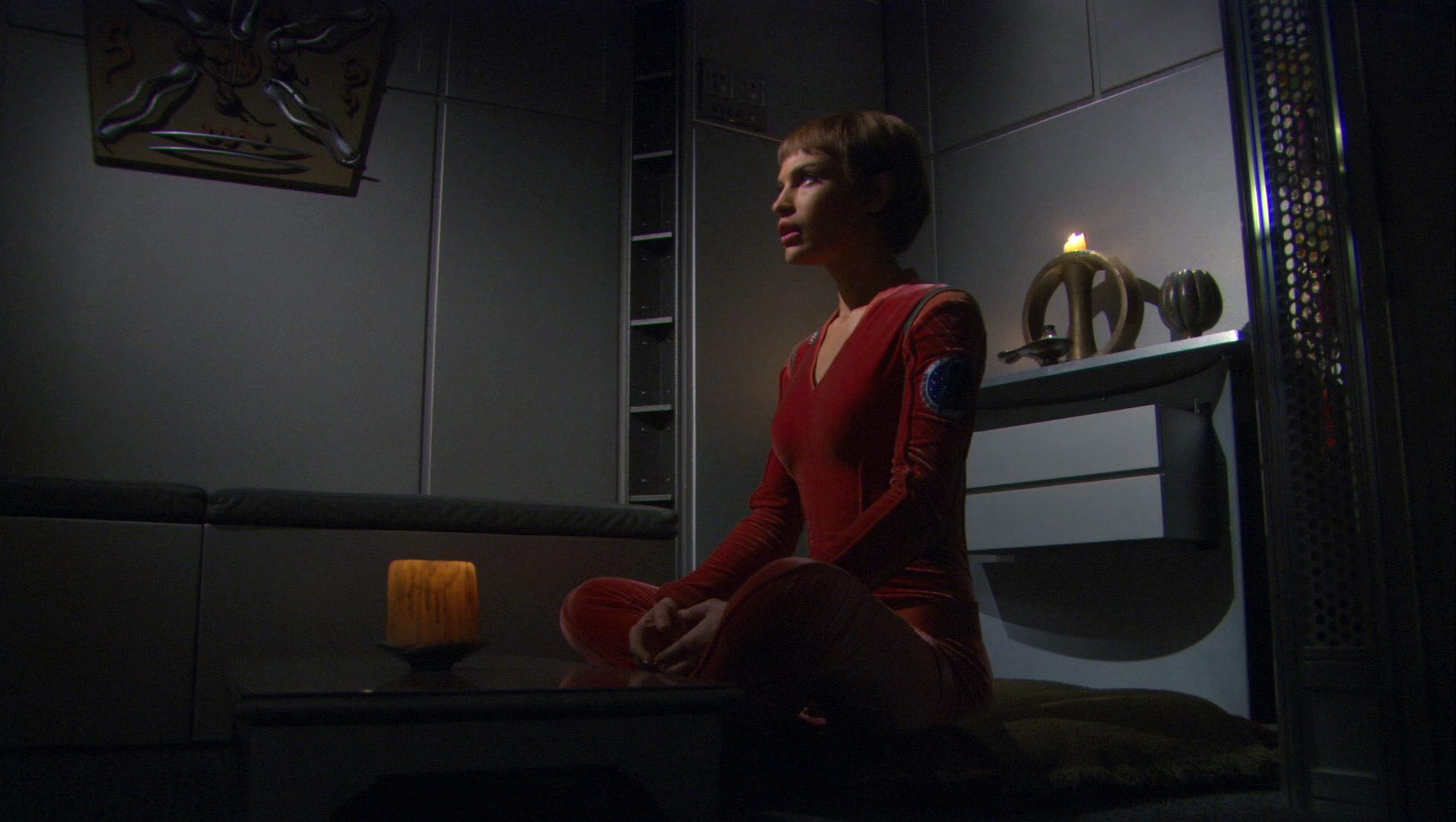
That last question gives the Terra Prime arc real bite. Peter Weller’s John Frederick Paxton represents something ugly and familiar: the desire to retreat into purity, to define humanity by exclusion, to treat coexistence as contamination. It is not subtle, but it does not need to be. For the Federation to be born, humanity must reject not only external enemies but its own inward-looking paranoia.

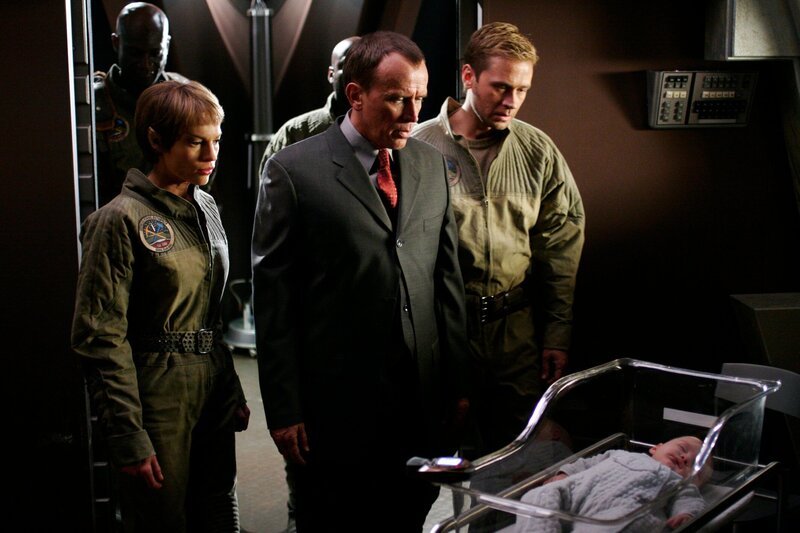
Season four also uses Archer better. He is no longer just the eager captain pushing past Vulcan caution. He becomes a mediator, a reluctant statesman, someone learning that exploration alone is not enough. The future needs institutions. It needs trust. It needs people willing to absorb insult long enough to prevent war.

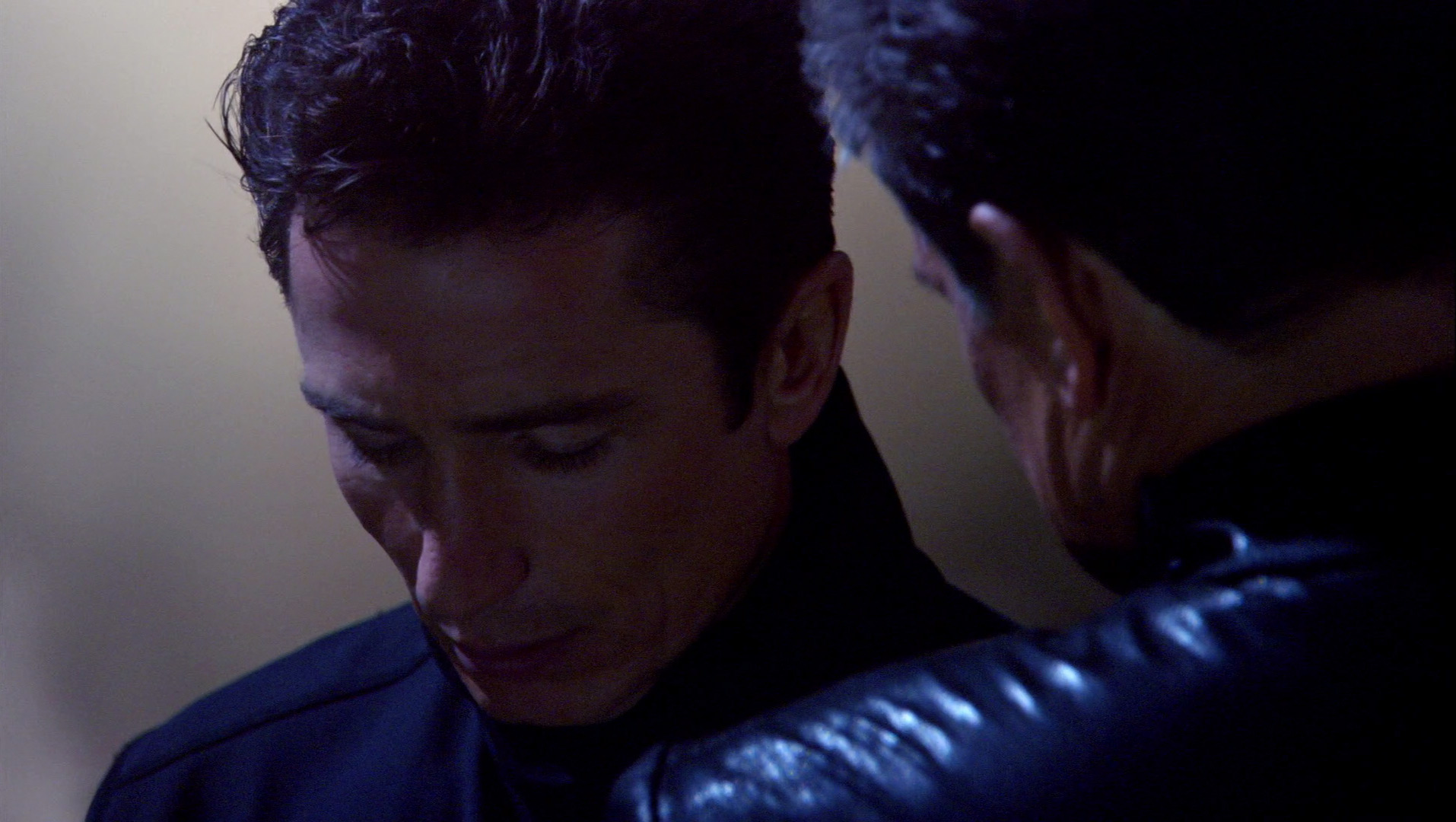
This is where Enterprise earns its place in the franchise. It is also where the cancellation hurts most. The show ended just as it found the road. There were obvious stories left: the Earth-Romulan War, the founding of the Federation in more detail, deeper arcs for T’Pol and Trip, more Shran, more Travis if anyone had finally remembered the poor man was sitting right there. Instead, the series was cut off at four seasons, making it the first live-action Trek successor after the original to fall short of the seven-season pattern set by The Next Generation, Deep Space Nine, and Voyager.

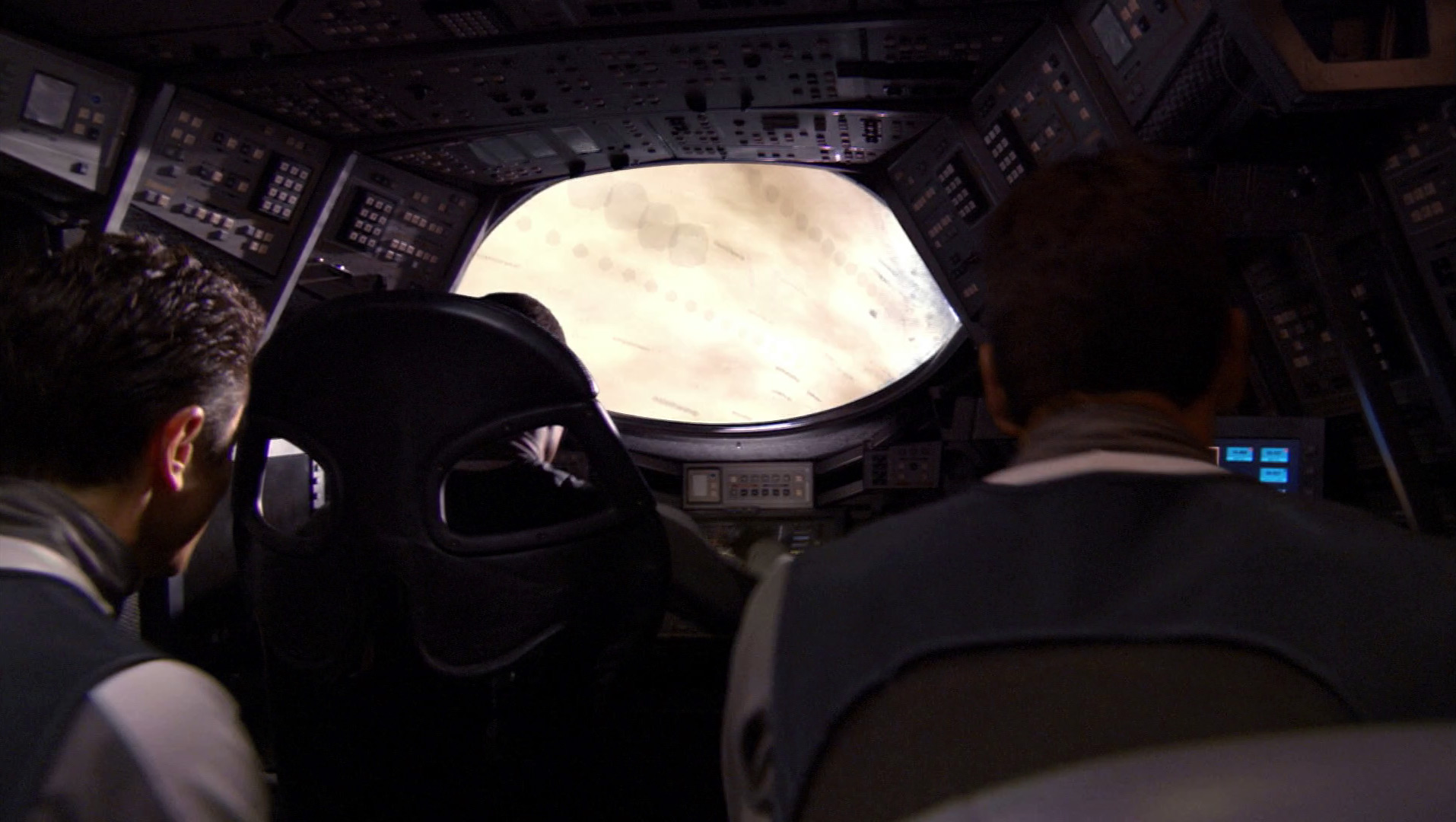
The tragedy of Enterprise is not that it was secretly perfect. It is that it became most promising when it was almost over.

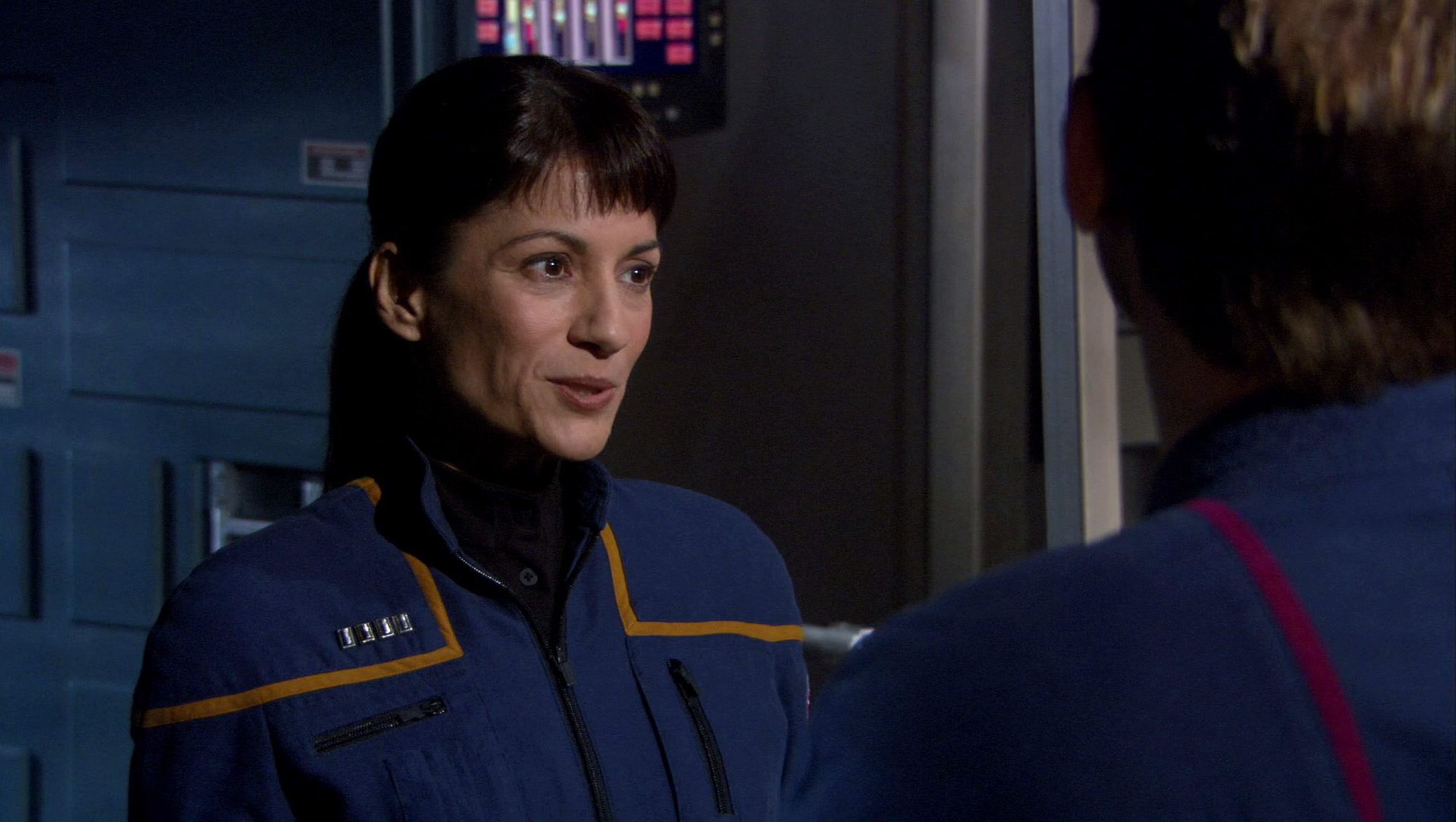
“These Are the Voyages…” and the Problem of Being Remembered by Someone Else

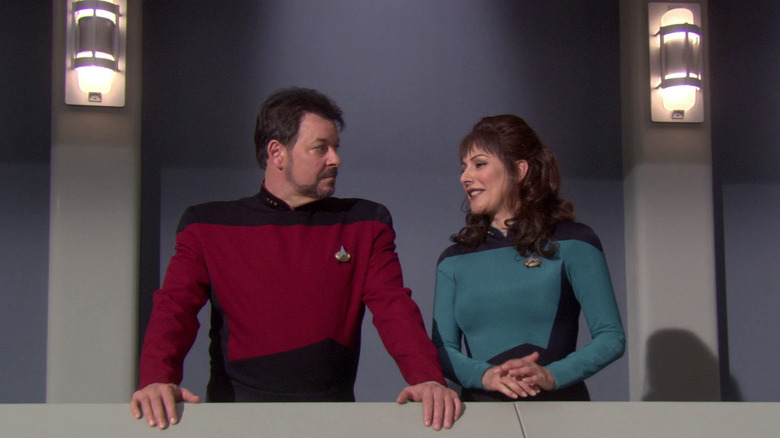
The finale remains a problem, not because its central idea is impossible but because the framing makes the NX-01 crew feel like material in somebody else’s story. After four seasons, that is an oddly distancing way to say goodbye.
“These Are the Voyages…” frames the final Enterprise story through a holodeck programme used by Riker during the events of The Next Generation. Conceptually, one can understand the intention. The episode tries to position Archer’s crew as historical figures whose actions echo into the later Federation. It wants to make the whole franchise feel connected.
But emotionally, it misjudges the room. After four seasons with this crew, the final episode should belong to them. Instead, it partially hands the emotional frame to beloved characters from another show. I like Riker. I like Troi. That is not the issue. The issue is that their presence turns the NX-01 crew into supporting material for someone else’s reflection. It makes Enterprise feel like an exhibit rather than a lived story.
Trip’s death, especially, feels mishandled. It should land like a major wound. Instead, the framing distance blunts it. We are not fully with him. We are watching someone else watch a version of him. That is a strange way to say goodbye to one of the show’s strongest characters.
The finale’s defenders sometimes argue that it celebrates the broader legacy of the Enterprise name. I can see that. But the cost is too high. A show that spent years trying to establish its own identity deserved a final hour that trusted that identity. It did not need to borrow grandeur from The Next Generation. It had earned its own.
In a way, the finale repeats the show’s original anxiety. Enterprise often worried about whether it was sufficiently Star Trek. By the end, it had become Star Trek precisely because it had stopped trying so hard. The finale should have known that.
Why It Felt Wrong, and Why That Was the Point
Looking back, I think my first reaction to Enterprise was not entirely unfair. It did feel different. It did look too contemporary in places. The uniforms really did have that NASA-adjacent practicality. The technology did feel clunkier. The theme song was a choice, and I am using the word “choice” in the diplomatic way one uses it when a friend buys an alarming sofa.
But all of those things were also part of the show’s argument. This was not the Federation yet. This was not the clean future. This was humanity before the myth had been polished. The ship should feel less advanced. The uniforms should feel practical. The people should be more flawed. The aliens should not all align neatly with later expectations. The moral language should still be forming.
The difficulty is that Star Trek fans, myself included, often want the comfort of the future while asking for stories about how that future came to be. Enterprise tried to show the awkward adolescence of utopia. Adolescence is rarely elegant. It has bad hair, questionable music, and a tendency to make declarations it will later revise.

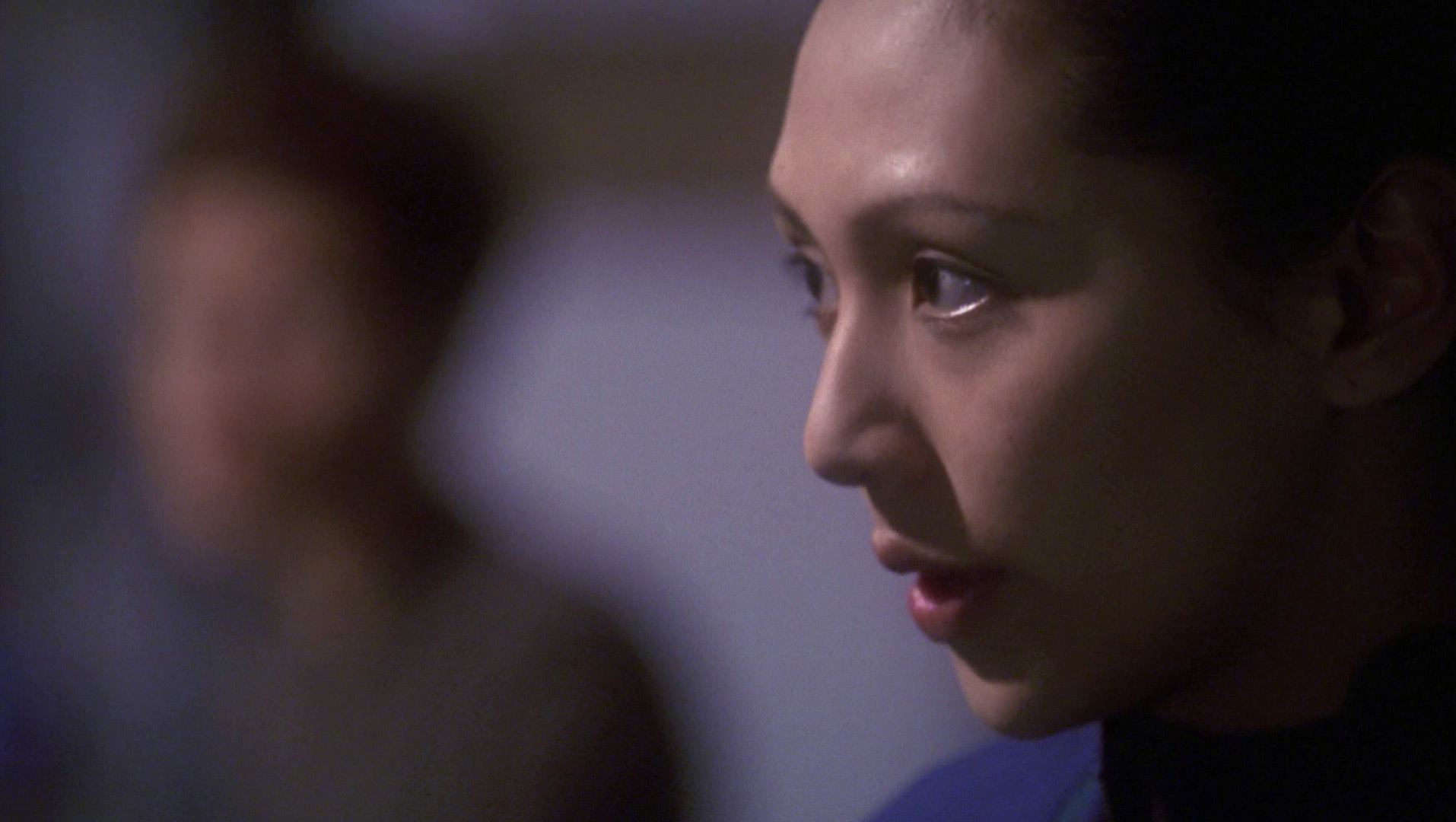
That may be why the show has aged in a more interesting way than expected. At the time, it arrived during franchise fatigue. Now, in the streaming age, when Trek has splintered into multiple tones, formats, timelines, and visual languages, Enterprise seems less like a betrayal and more like an early experiment in variation. It asked a question that later Trek would keep asking in different ways: how far can you bend the franchise before fans stop recognising it?
The answer, apparently, is complicated. Because I did recognise it eventually. Not at first glance. Not in the song. Not always in the early episodes. But in the deeper structure, yes. The optimism was there, but younger. The curiosity was there, but less disciplined. The moral ambition was there, but not fully articulated. It was Trek before the speech was written.
The Cast as the First Draft of a Family

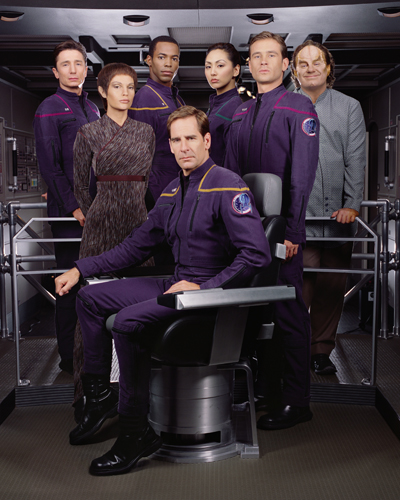
One thing I have come to appreciate more is the cast’s chemistry. It is not the grand, immediately iconic chemistry of The Next Generation, where everyone eventually feels like part of a functioning moral machine. It is not the prickly, layered ensemble energy of Deep Space Nine, where people are trapped together long enough to become history. It is not Voyager’s stranded-family dynamic, forged by isolation.
The Enterprise crew feels more like a group of people assigned to a dangerous prototype who slowly realise that policy is lagging behind experience.
That is its own kind of family. Archer and Trip have the easy shorthand of old trust. Archer and T’Pol have the friction of two worldviews becoming less certain of themselves. Trip and T’Pol carry the show’s most charged emotional evolution. Phlox watches humanity with affectionate curiosity. Reed tries to protect everyone while pretending not to need anyone. Hoshi turns fear into competence. Travis, underwritten as he is, suggests a broader human spacefaring culture beyond Starfleet’s official story.
They are not always evenly served. That is one of the show’s lasting flaws. But when the ensemble works, it gives the NX-01 a texture unlike any other Trek ship. These are not the best of a mature institution. They are the people who show up before the institution knows what it is.
There is something moving about that. As a viewer from the Philippines, with American shows arriving through irregular programming and strange scheduling gaps, I think I have always had a slightly patchwork relationship with these franchises. You catch what you can. You reconstruct continuity from reruns, stray episodes, magazine scraps, conversations, later streaming, memory, and whatever the local channels decided to air that week. Star Trek itself often reached me that way: not as a perfectly ordered archive, but as fragments that accumulated into affection.
Maybe that is why Enterprise eventually found a place in my head. It is also a patchwork thing. A little awkward. A little incomplete. Better in hindsight than in first impression. Full of parts that do not always align but somehow suggest the shape of something larger. That feels familiar.
The First Enterprise as a Design Object

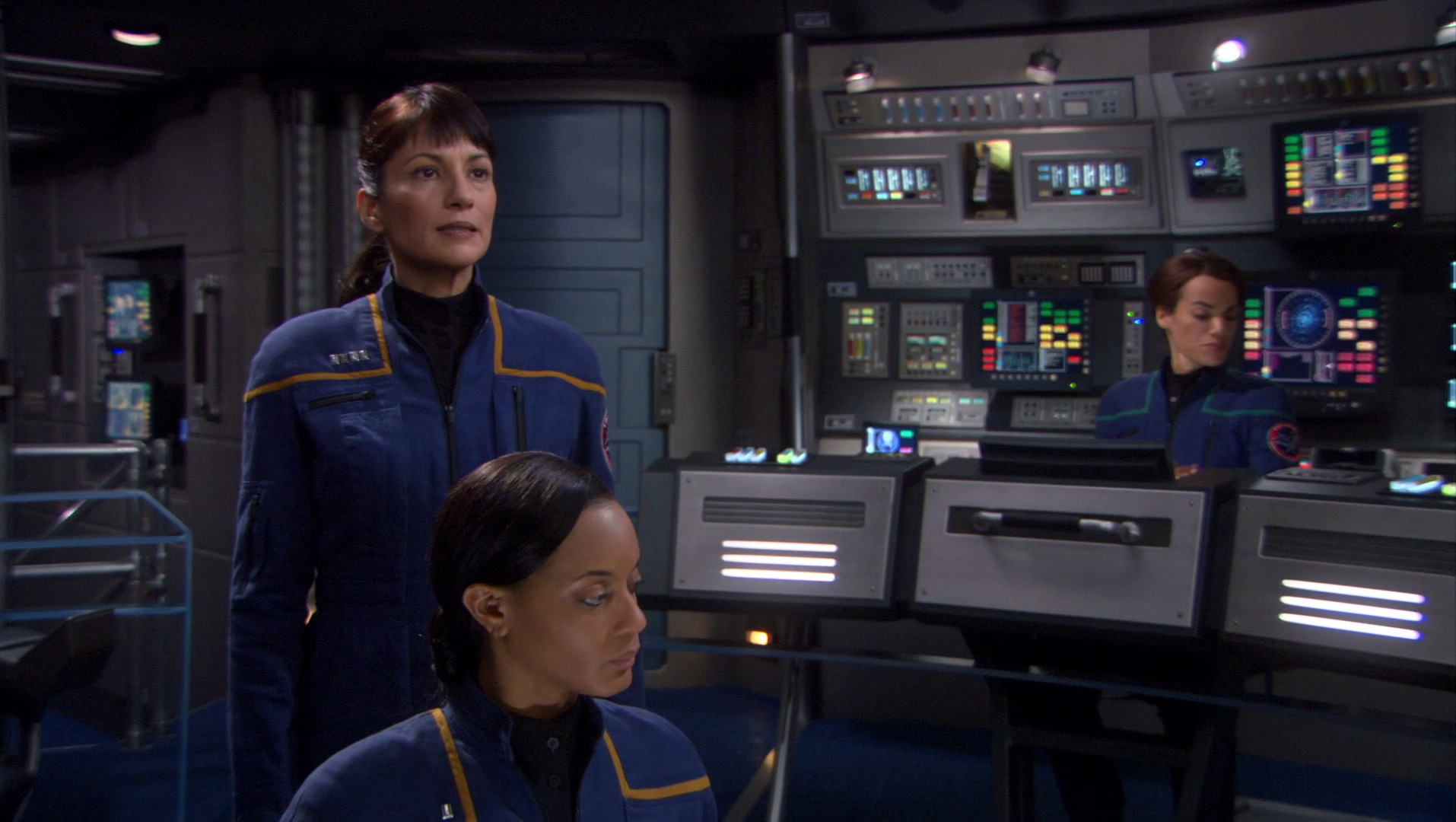
From a design point of view, Enterprise is more interesting now than I found it then. The NX-01 had a difficult brief. It had to look older than Kirk’s Enterprise while being produced decades later for audiences with more sophisticated expectations. If it looked too primitive, it would seem silly. If it looked too advanced, it would break the timeline. The final design sits somewhere between naval compactness and familiar saucer-section iconography. It is recognisably an Enterprise, but not yet the Enterprise as cathedral.
The interiors follow the same logic. They are functional, metallic, cramped, and practical. The bridge does not have the spacious theatricality of the Enterprise-D. It feels like a workplace where every surface was specified by someone who expected turbulence. The engine room has a muscular quality. Sickbay feels experimental. The situation room, corridors, launch bay, and crew quarters all suggest a ship where comfort is secondary to proving that the thing can survive.
The props also matter. Communicators flip open. Phase pistols look transitional. Displays are advanced but not omnipotent. The transporter retains a sense of risk. These details make the show feel more grounded, even when the scripts wander.

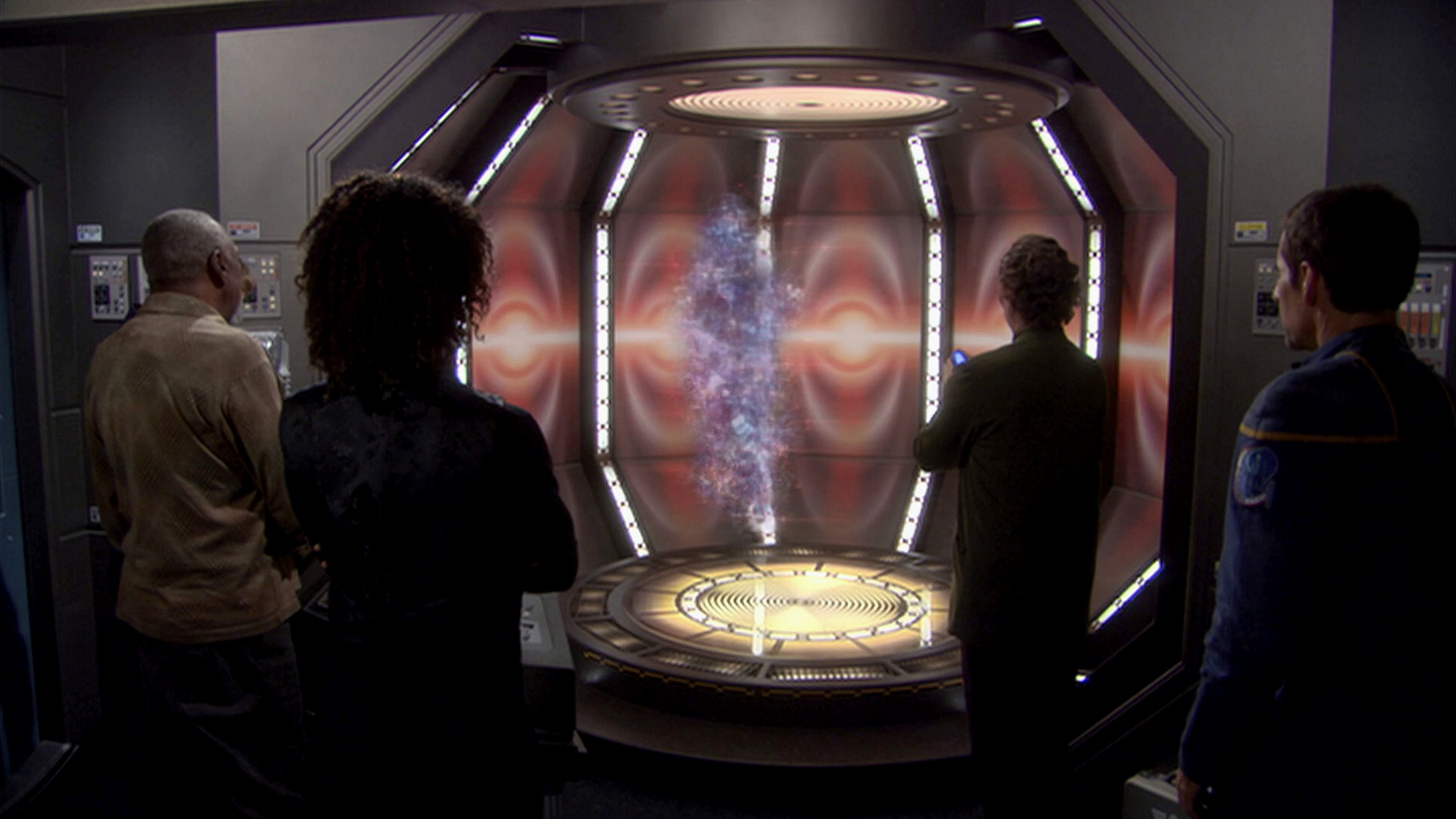
I did not fully appreciate that at first because I was measuring the design against later Trek. That was the wrong metric. Enterprise is not trying to show us the future fully assembled. It is showing us the prototype stage. As any designer knows, prototypes are revealing. They carry intention and uncertainty at the same time. They show you not just what something is, but what its makers think it might become.
The NX-01 is a prototype for Starfleet’s soul. That sounds grand, but visually, the show earns it. The ship is beautiful because it is not fully elegant. It is beautiful because it still looks like work.
The Franchise Fatigue Problem
It is worth being fair to the show’s original reception. By 2001, there had been a lot of Star Trek. That is a strange complaint for fans to make, but it is real. The franchise had become a permanent fixture. New episodes, films, merchandise, tie-in novels, technical manuals, conventions, debates, continuity arguments — Trek was not merely a show but an ecosystem. For some viewers, Enterprise arrived not as a fresh beginning but as another product from a machine that had been running for years.
That matters. If Enterprise had premiered after a long absence, its prequel concept might have seemed bolder. Instead, it arrived immediately after Voyager, carrying the weight of expectations from three consecutive modern Trek series. It was supposed to refresh the brand without alienating the audience, court new viewers without losing old ones, honour continuity while escaping continuity, and look both older and newer at the same time.

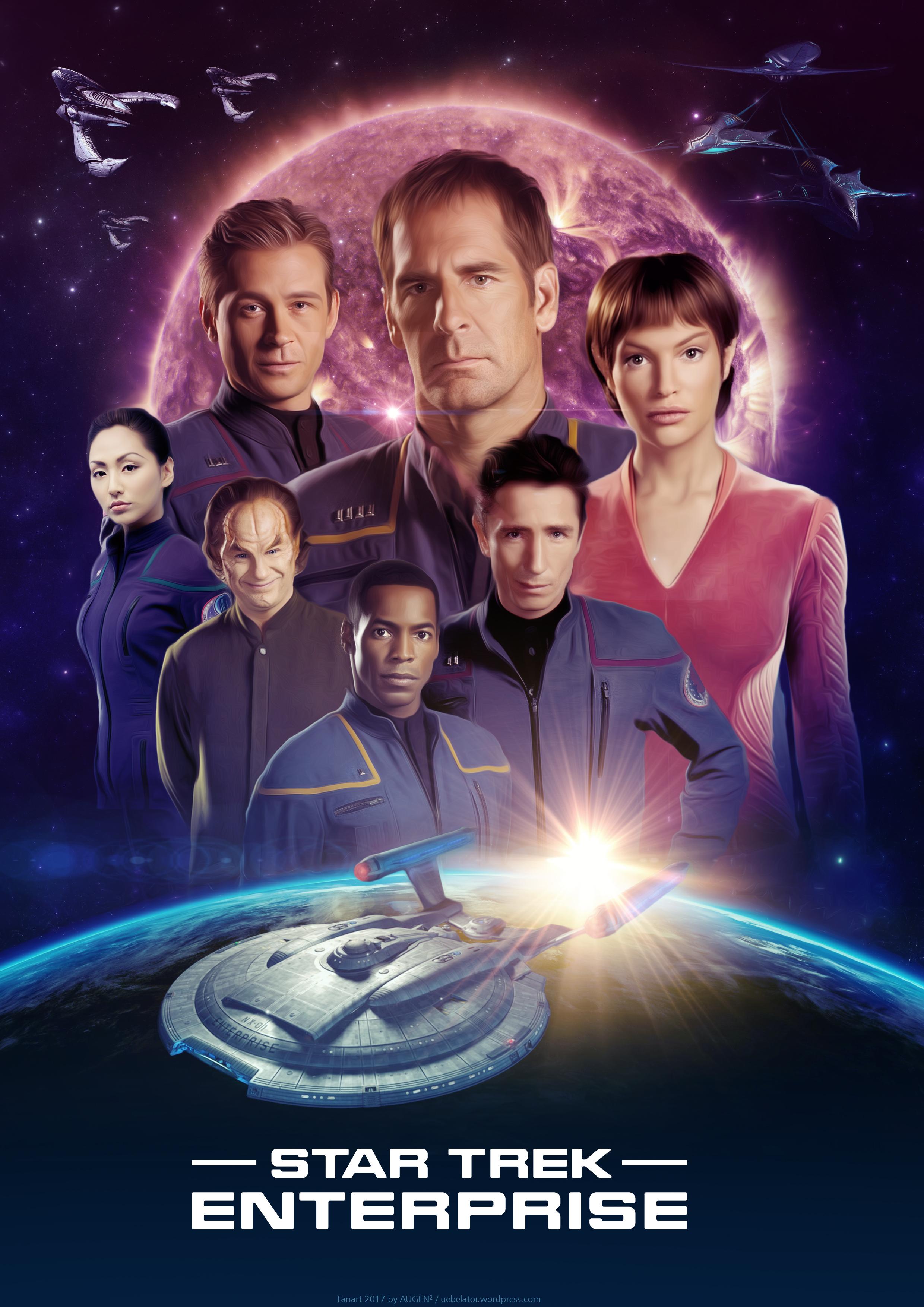
That is a brutal assignment. The early seasons sometimes show the strain. There are episodes that feel like standard Trek plots with the serial numbers filed down. There are attempts at sex appeal that feel forced. There is a recurring uncertainty about whether the show should be a prequel, a mystery arc, a network action drama, or a traditional planet-of-the-week adventure. The result can feel uneven.
But fatigue can obscure qualities. When viewers are tired, even decent work can feel like more of the same. When a franchise has become too familiar, any deviation feels either insufficient or offensive. Enterprise suffered from both reactions: too different for some, not different enough for others.
Time has been kinder because time removed the pressure of the weekly argument. Streaming lets the show exist as a complete object, not as a referendum on the future of the franchise every Wednesday night. You can watch it now and see the shape more clearly: rough start, uncertain middle, stronger third-season push, genuinely promising fourth season, abrupt end. It is not a perfect shape. But it is a shape.
The Optimism Was Always There
For all its roughness, Enterprise is still optimistic. Not in the polished speechmaking way, though it has some of that. Its optimism is more mechanical. People keep repairing things. They keep translating. They keep showing up in rooms with species they do not trust. They keep discovering that the first explanation is not always the right one. They keep learning that fear is useful for survival but disastrous as a philosophy.
That is the show’s deepest connection to Star Trek. The Federation is often presented as a finished moral achievement in later series. Enterprise reminds us that it had to be chosen before it could be inherited. Someone had to decide that humans, Vulcans, Andorians, and Tellarites could do more together than apart. Someone had to imagine an institution that did not yet exist. Someone had to make the case for cooperation in a room full of people with excellent reasons to distrust each other.


That is not naïve optimism. That is difficult optimism. And perhaps that is why the show stays with me. I am old enough now to distrust easy hope. I prefer the kind with dents. The kind that has had to sit through bad meetings. The kind that has watched systems fail and still thinks repair is worth attempting. Enterprise is full of that. Its hope is not sleek. It has exposed wiring. Which may be why I find it more moving now than I did when it first aired.

The Long Road Looks Different Now
When I first saw Enterprise, I could not reconcile it with my idea of Star Trek. It seemed too close to us. Too clunky. Too earthbound. Too eager to make the franchise accessible by stripping away some of the grandeur I had come to expect. I wanted the future, and the show kept giving me the people who had not reached it yet.
Now I think that was the point, or at least the part of the show I understand better with distance. It was never meant to give me the Federation fully assembled.
The show is about the discomfort of beginnings. It is about humanity before it learns the manners of its better self. It is about a starship that does not glide through history so much as bump into it, dent it, apologise, and try again. It is about the awkward fact that every noble institution begins as an argument, a risk, a compromise, and a handful of people who are not quite ready.
Enterprise only ran four seasons. It never got the long maturation that saved or deepened other Trek series. It ended just as it was finding its strongest voice. But maybe that unfinished quality is part of its identity now. It remains the Trek show that feels like a beginning because it never fully got to become an ending.

That used to frustrate me more. It still does, a little. But there is something appropriate about it too. The NX-01 was never meant to be the final form. It was the first attempt. The rough draft. The thing that proved the journey could be made.
And that theme song, yes, still walks into the room wearing the wrong jacket. But after all these years, I understand it better. It was a long road. Embarrassingly earnest, occasionally bumpy, often uneven, sometimes better than we admitted. A road from the familiar future back to the messy beginning. And somewhere along that road, Enterprise became Star Trek after all.
Affiliate Disclosure: This post contains affiliate links. If you click through and make a purchase, I may earn a small commission—at no additional cost to you. I only recommend products I personally find useful or relevant. Thank you for your support.
Leave a Reply