
There was a time when The Walking Dead felt less like a television show and more like an appointment with dread. Not dread in the cheap sense, although the show had plenty of split skulls, torn throats, wet pavement, burnt farms, and the kind of practical gore that made you reconsider eating dinner in front of the screen. I mean the slower sort of dread. The feeling that came from watching a small group of people stand in the ruins of the old world and slowly realise the worst thing that had happened to them was not the dead getting back up. It was that the living had been left unsupervised.
I remember the first half of The Walking Dead as one of those rare pop culture moments where the premise, the timing, and the audience all seemed to lock into place. Zombie fans had already been living on a diet of Romero, Fulci, remakes, DVD bargain-bin discoveries, video games, and the occasional clever reinvention. We knew the rules. We knew the bite. We knew the headshot. We knew someone would hide an infection for too long. We knew no one should ever back into a dark corridor unless they wanted to become a lesson in peripheral vision.

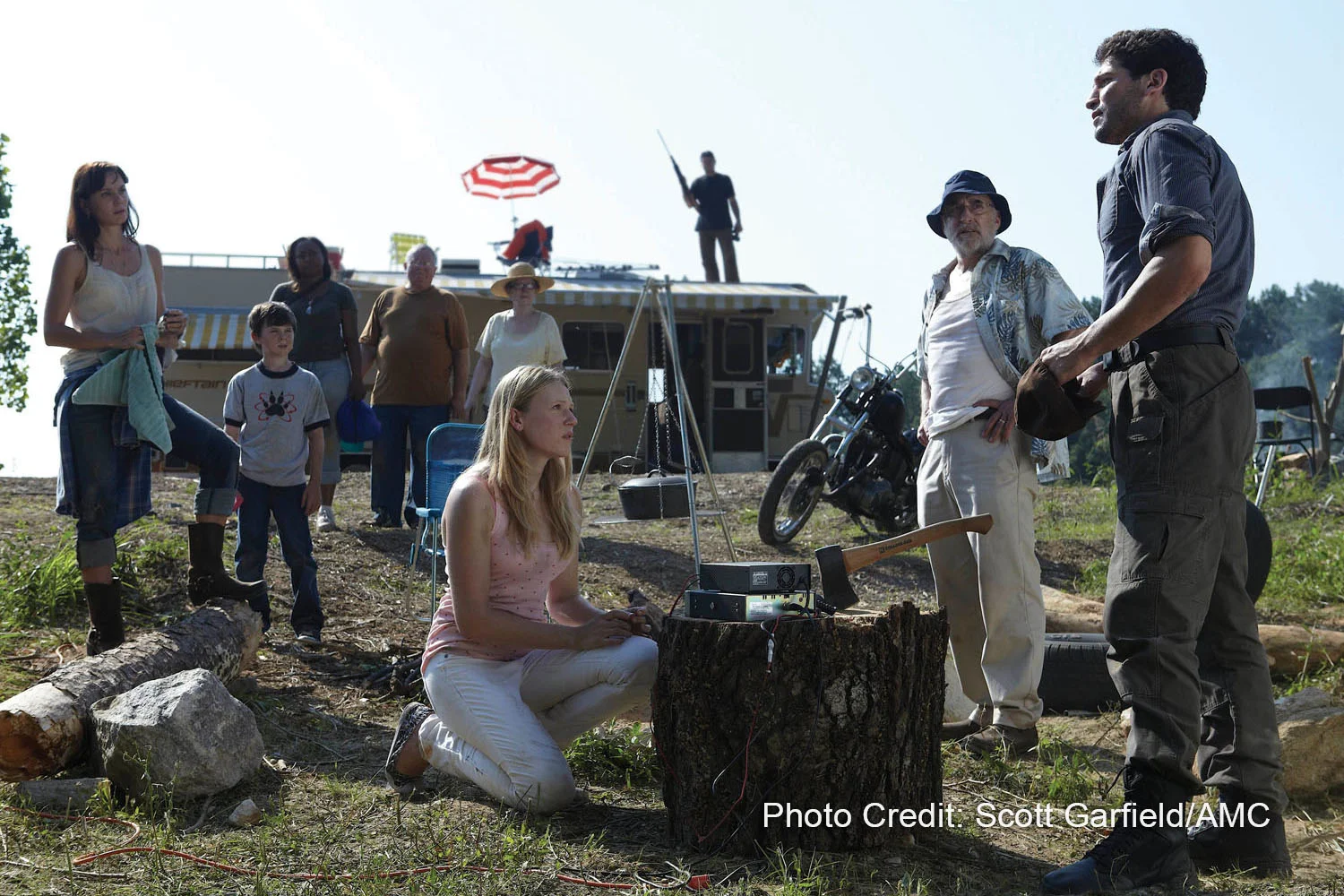
But The Walking Dead did something else. It slowed the whole thing down. It did not just ask what would happen during the first chaotic weekend of the apocalypse. It asked what happens after the petrol runs out, after the emergency broadcasts die, after the supermarkets rot, after the last polite version of civilisation is revealed to have been mostly packaging. That was the hook for me. Not just zombies. Not just survival. The long collapse. And for a while, especially in those early seasons, it was magnificent.
The Hospital Door Opens

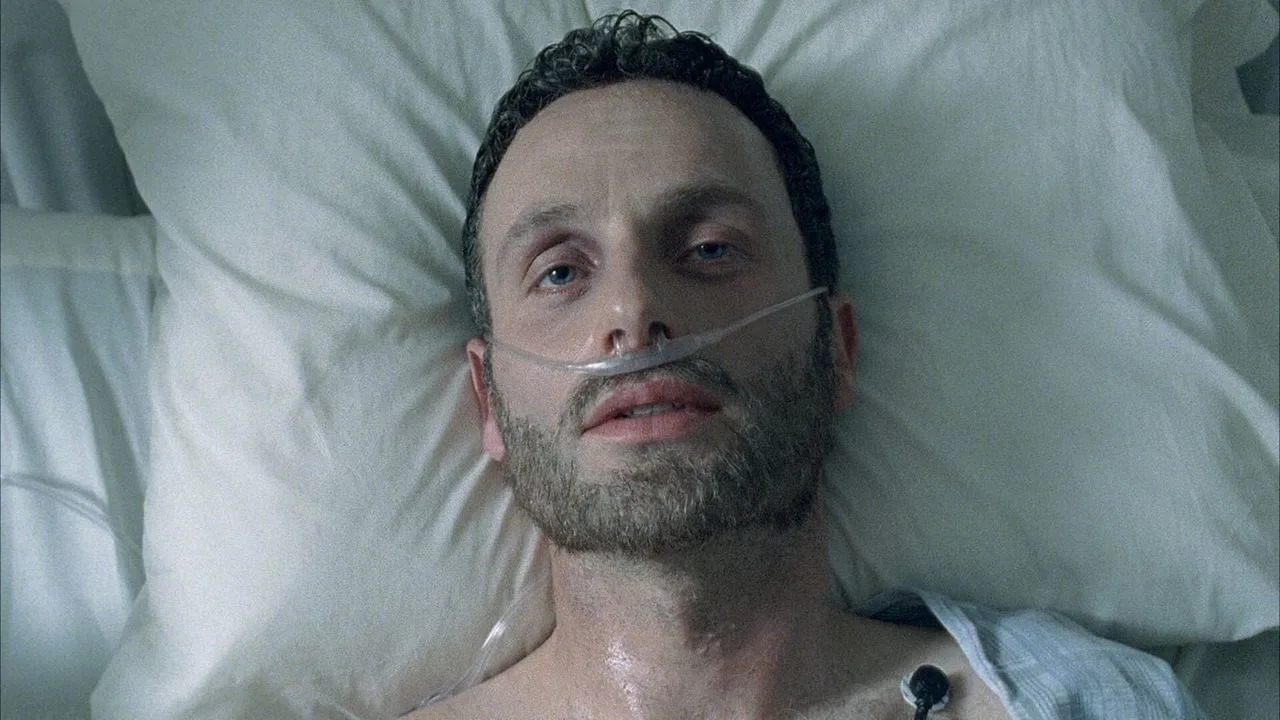
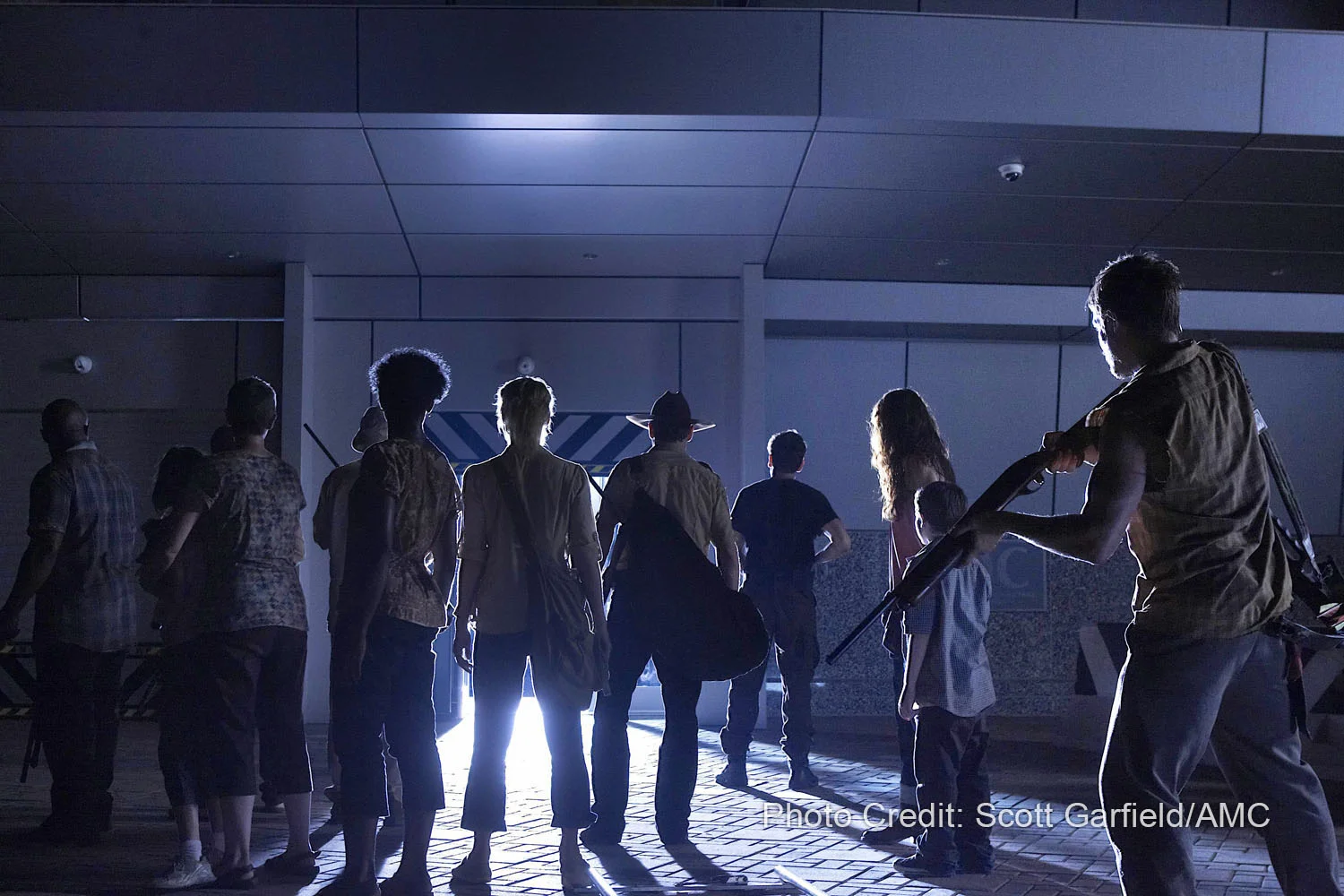
The first episode, “Days Gone Bye”, remains one of the great television openings of its era. Rick Grimes waking up in an abandoned hospital is not an original image if you are already steeped in post-apocalyptic fiction. A man wakes from unconsciousness and discovers the world has ended. It is clean, efficient, mythic. Still, the execution was so strong that it felt fresh anyway.
Frank Darabont brought a patient, cinematic eye to the pilot. The empty corridors, the half-seen corpses, the dried flowers beside a dead world, the locked cafeteria doors chained shut with the words “DON’T OPEN DEAD INSIDE” painted across them in a desperate scrawl. It was pulp, yes, but it was pulp treated with weight. The show trusted silence. It let Rick’s confusion breathe. It understood that horror is often most effective before anyone explains anything.

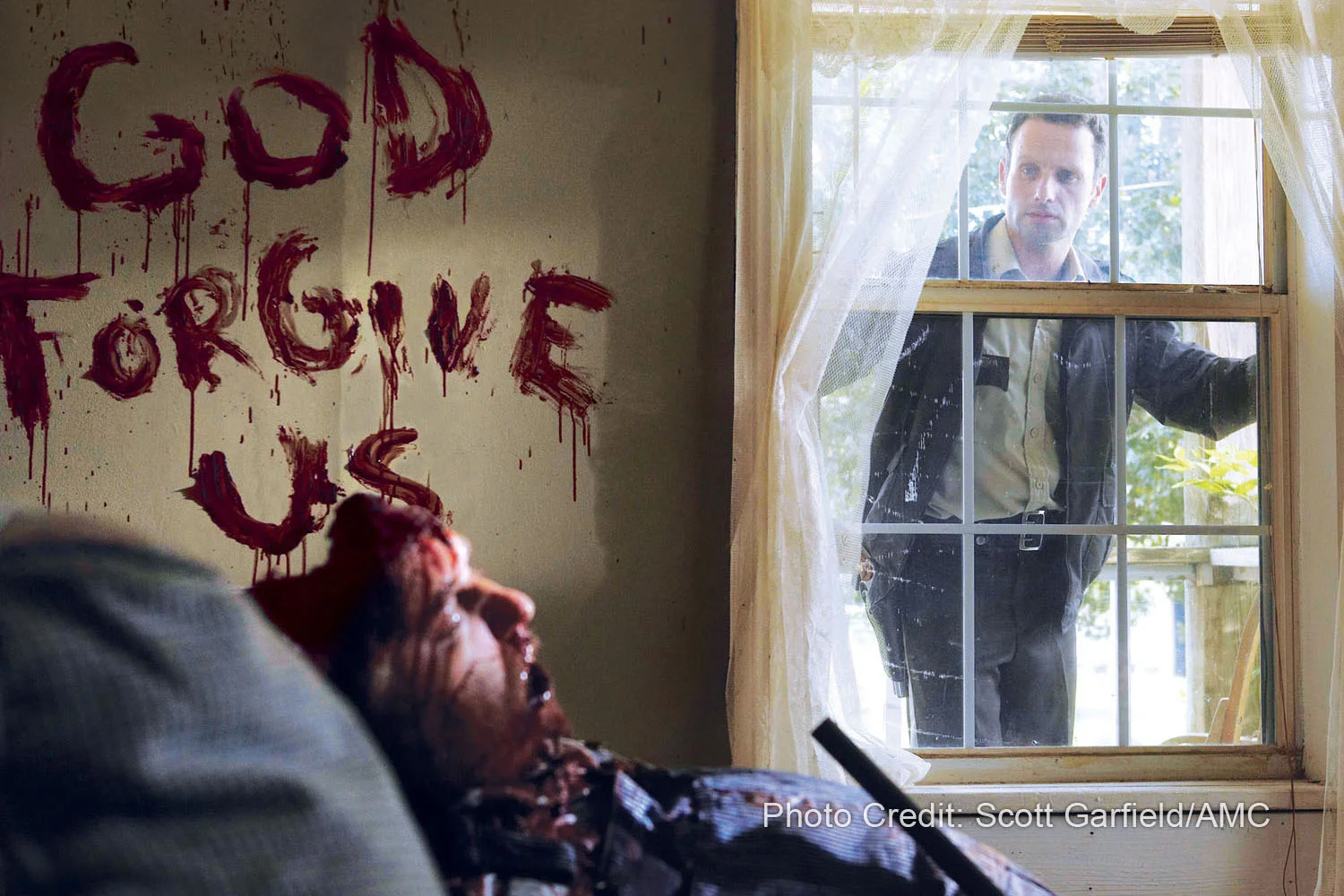
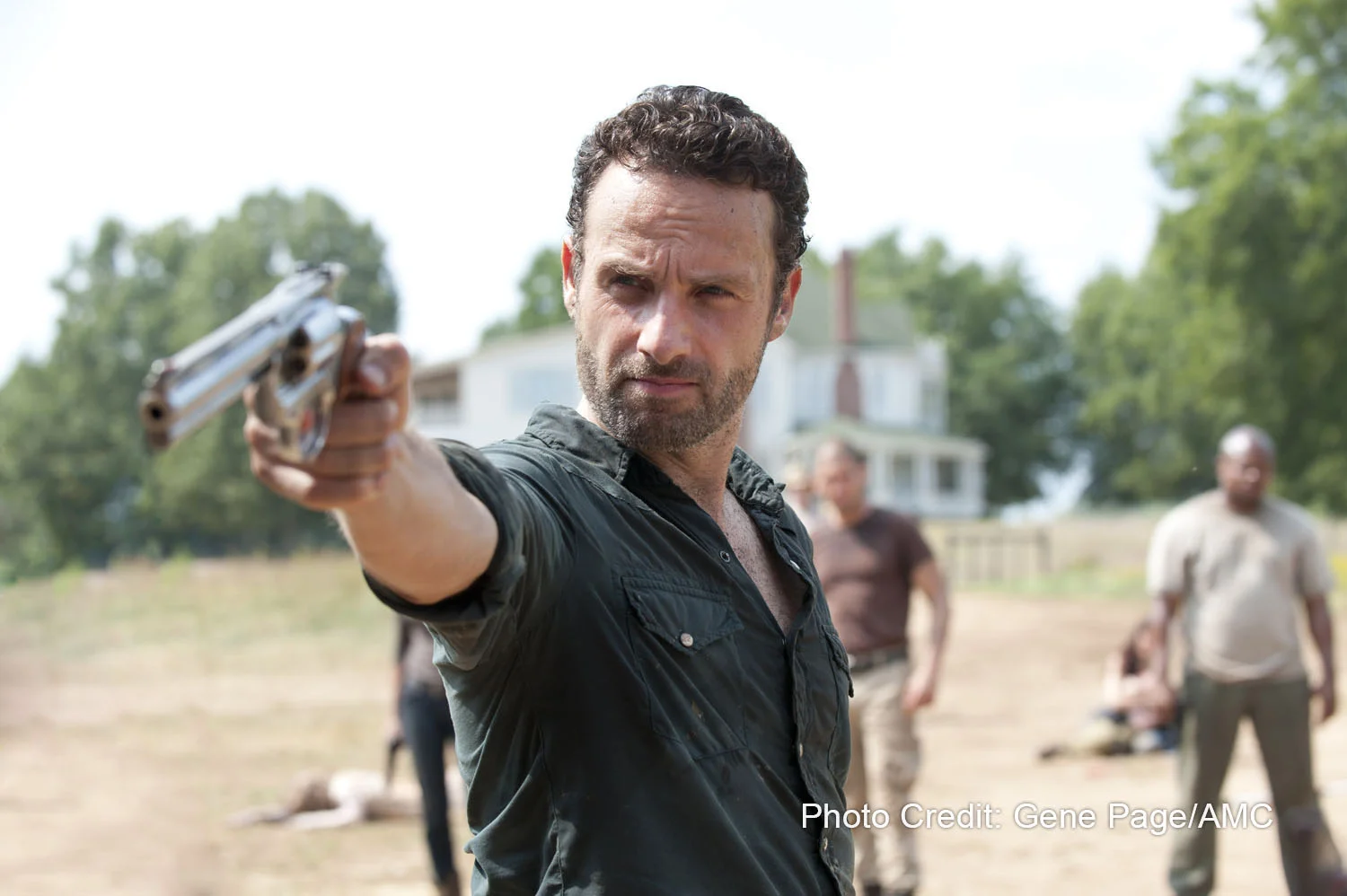
Andrew Lincoln’s Rick was crucial to that. He did not enter the story as an action hero. He was a wounded sheriff’s deputy in a hospital gown, stumbling into a world that had moved on without him. His old morality had not yet caught up to the new weather. He still believed in uniforms, duty, marriage, law, family, radios, road signs, and human beings making sense if you gave them enough time. That belief would become both his strength and his disease.

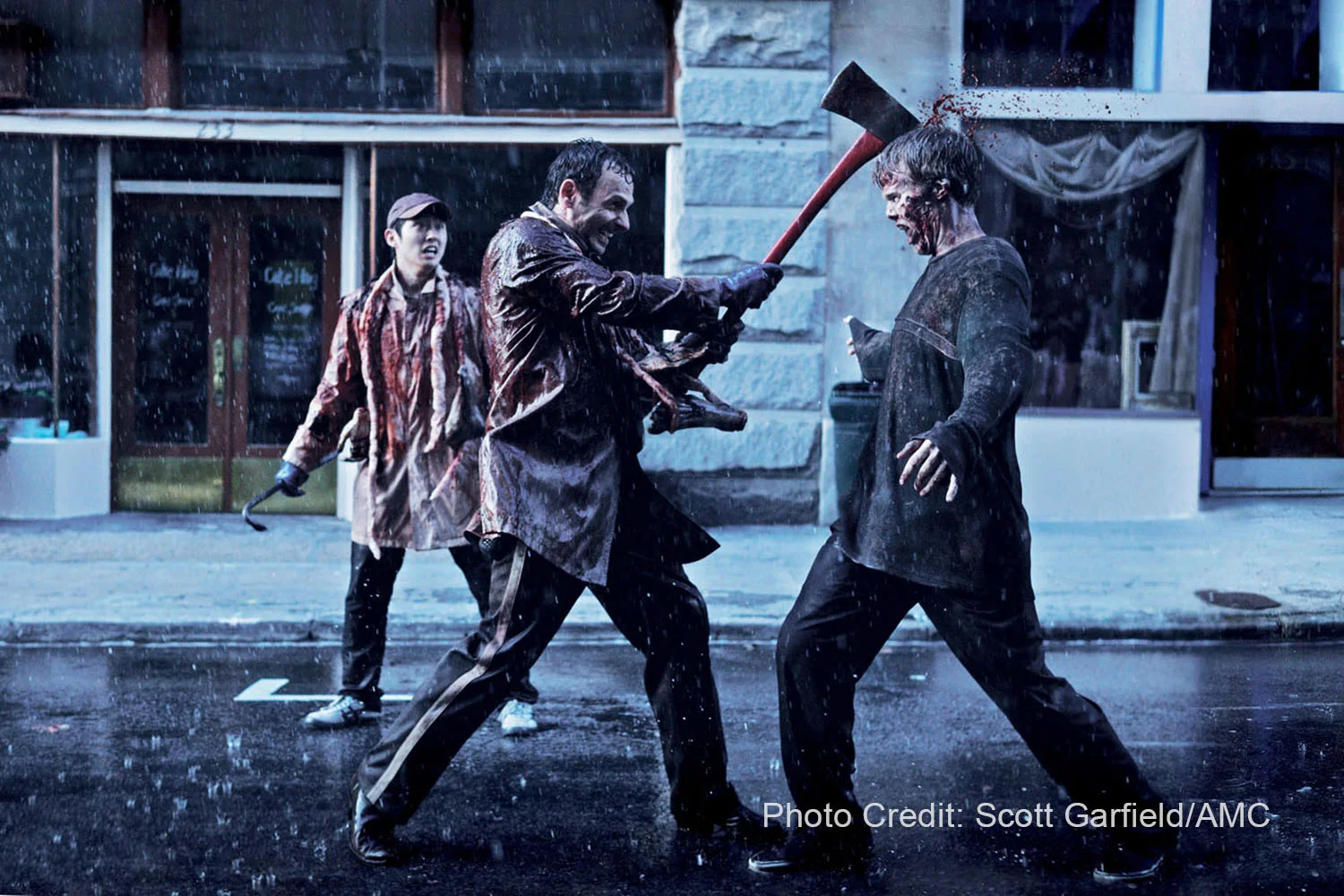
The first season had the compactness of a good survival film but the emotional architecture of something larger. Rick searches for Lori and Carl. He meets Morgan and Duane, who teach him the new grammar of the world. Walkers are slow but relentless. Bites are death sentences. Noise is dangerous. The dead are not monsters in the old gothic sense. They are the people you used to know, returned as appetite.
That idea still has force. The best zombie stories are not really about the undead. They are about how the dead continue to occupy space. In our homes. In our habits. In our guilt. In all the things we did not say before everything went bad.

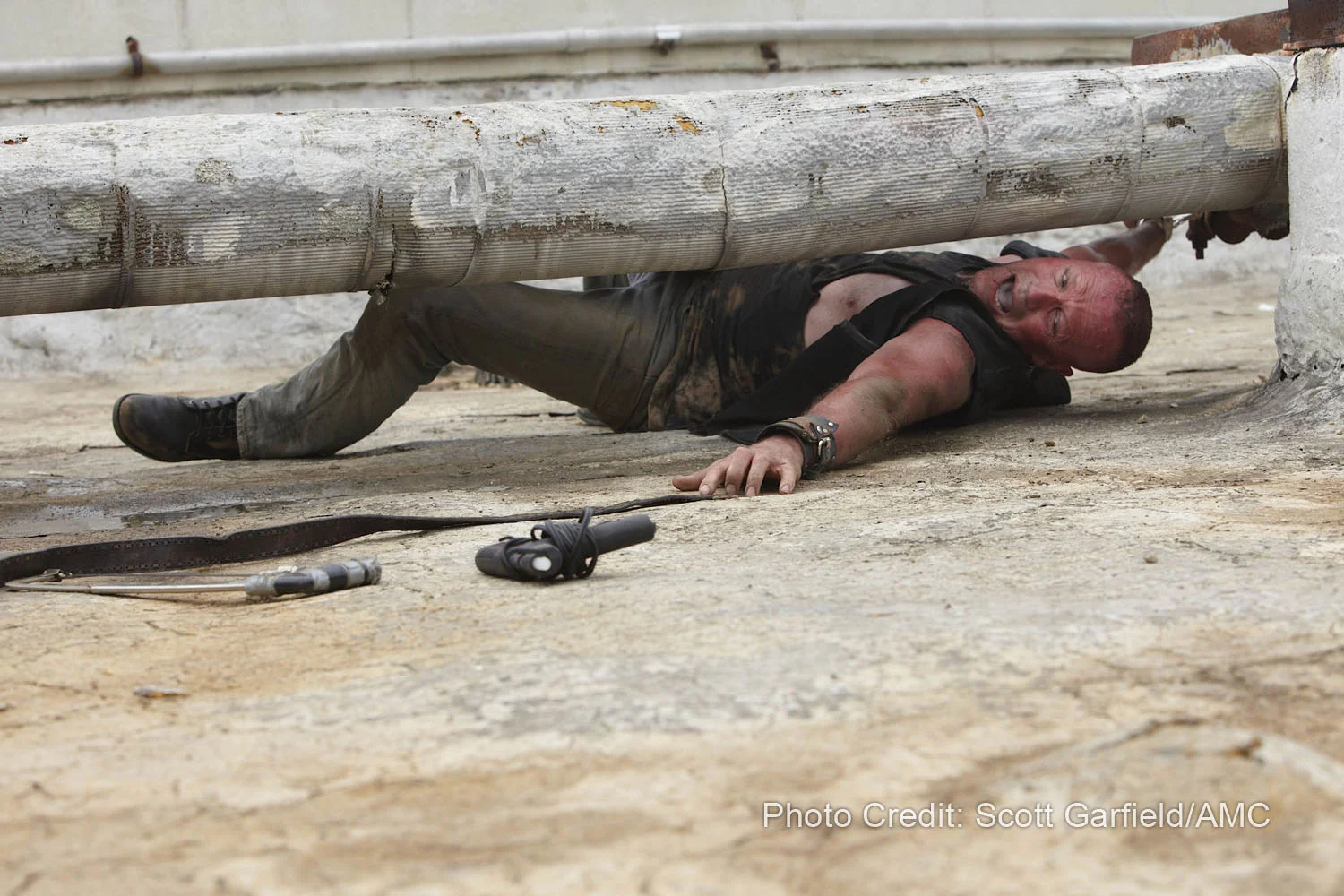
Morgan trying and failing to shoot his zombified wife through a rifle scope remains one of the show’s early emotional punches. It is not just that he cannot kill her. It is that some part of him is still waiting for the old rules to come back. For the person to reappear inside the body. For love to be stronger than biology. That kind of hope is beautiful. It is also a liability. The Walking Dead would spend years testing that exact problem.
A Zombie Movie That Refused to End


Part of what made the show work in the beginning was that it came from a comic designed to keep going past the usual closing credits. Robert Kirkman’s central pitch was basically the zombie story after the zombie film. Most zombie films end at the point where the characters escape, die, or stare into an uncertain dawn. Kirkman wanted to stay with them after that. What happens in month six? Year two? What kind of person do you become when there is no government, no hospital system, no electricity, no school calendar, no Monday morning traffic to hate as proof that normality still exists?
That is a grimly practical question. It is also why television suited the material so well. A film has to choose its victims and survivors quickly. A series can let people become unrecognisable one decision at a time.


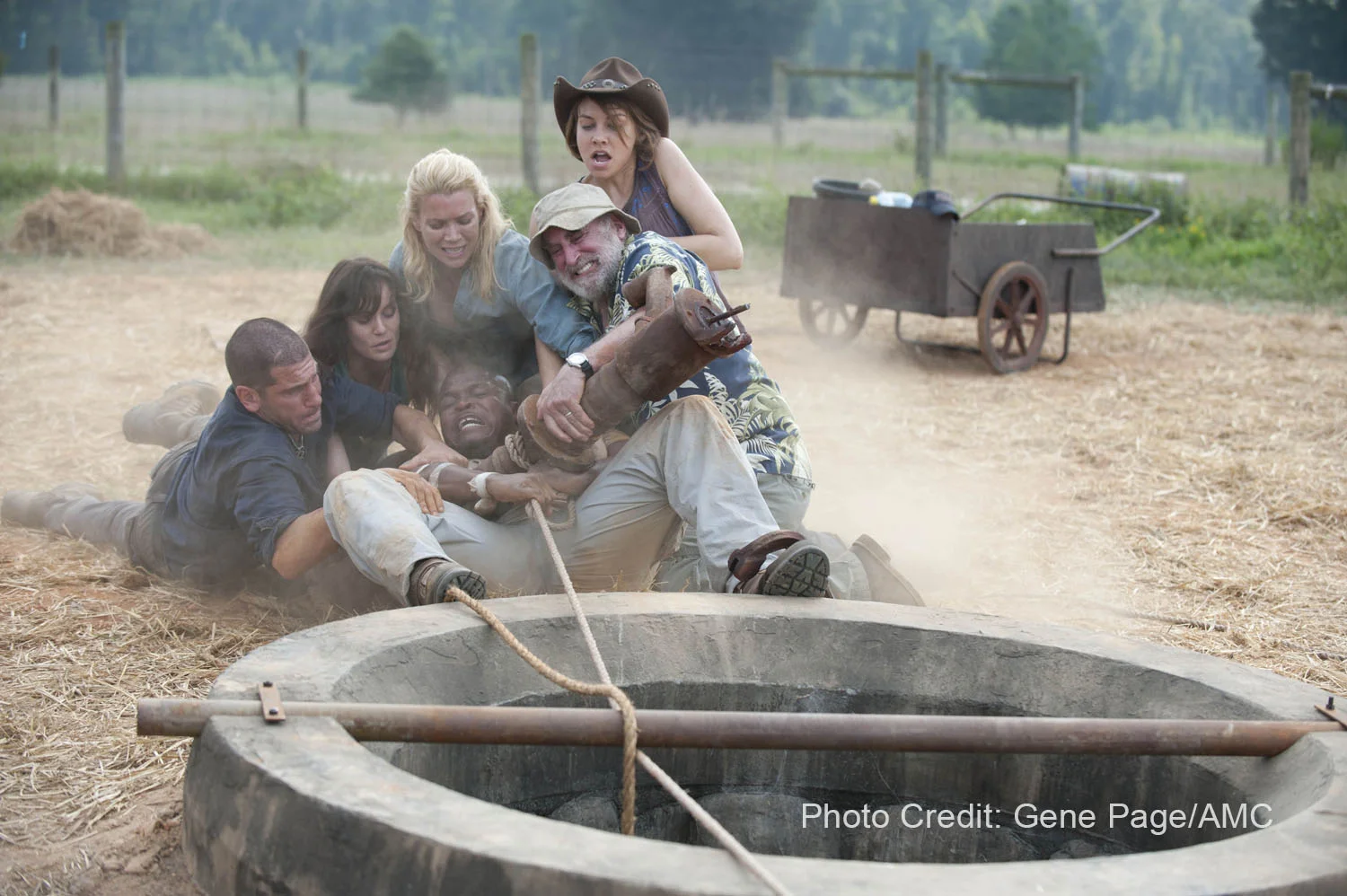
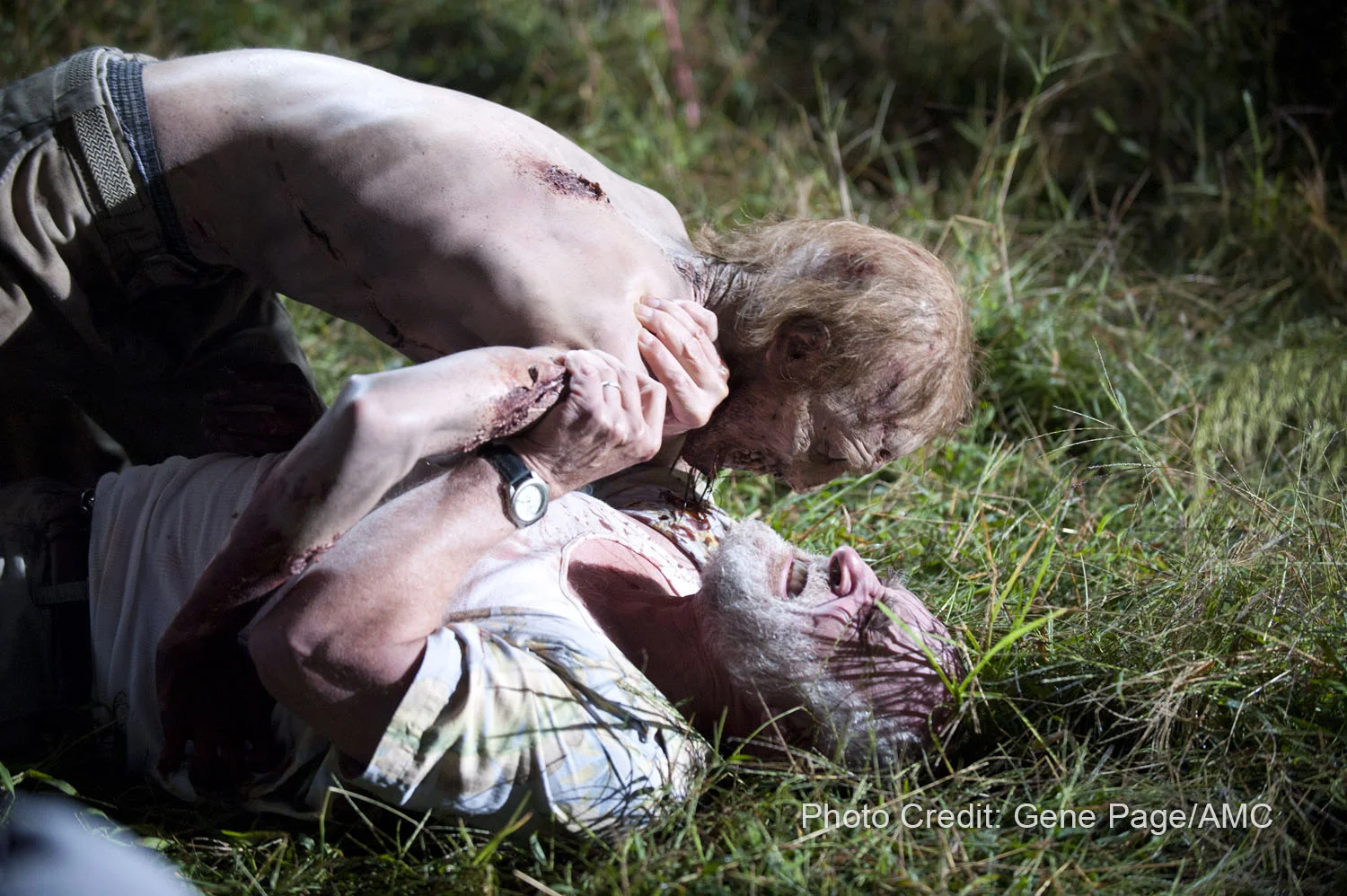
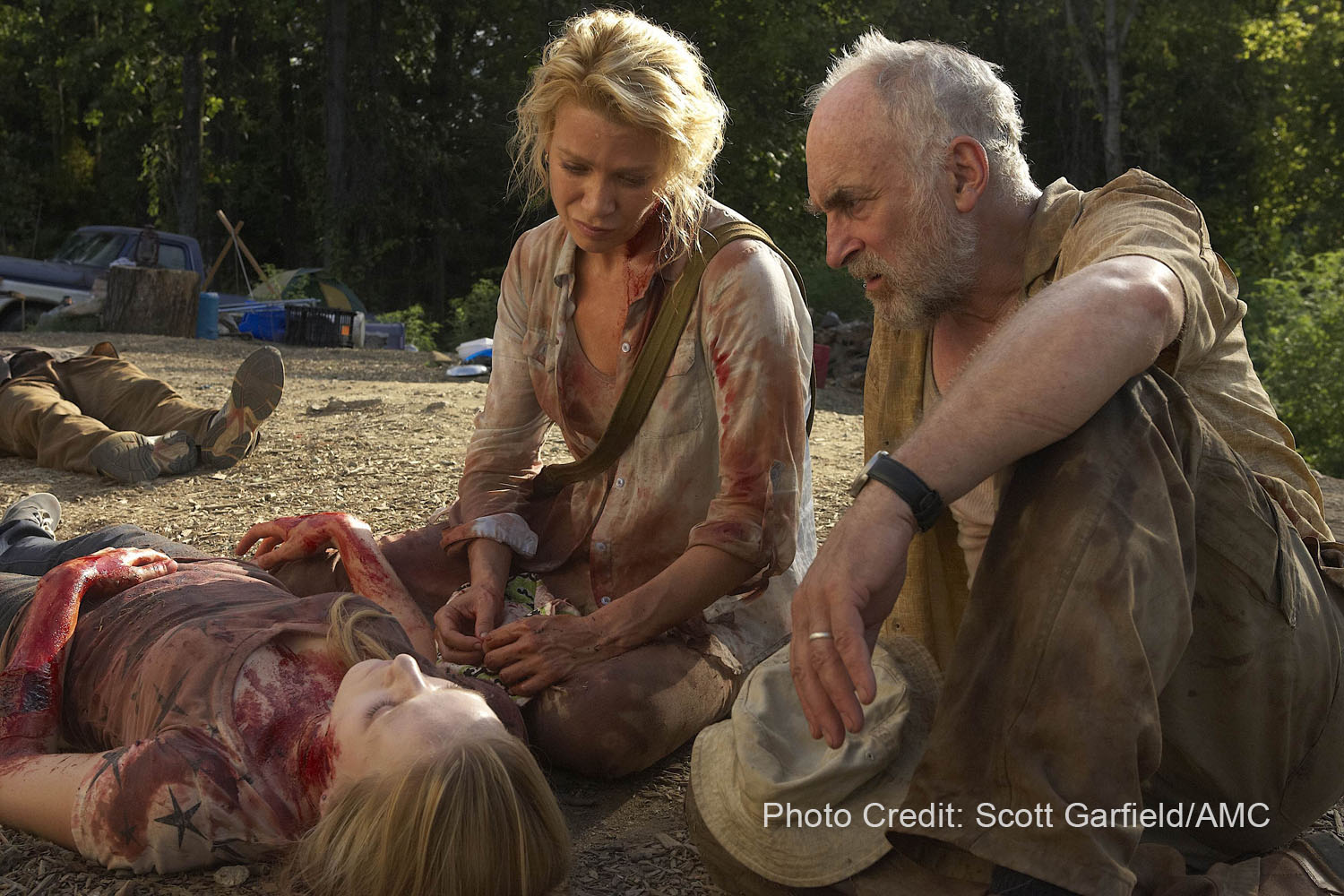
The early seasons understood this. They were not always perfectly paced. Some viewers found the farm in season two too slow, and I understand that complaint. There was a lot of standing around, arguing, searching for Sophia, and looking mournfully across fields. But the older I get, the more forgiving I am of that stretch. The farm is where the show properly studies denial. Hershel Greene still believes his undead family are sick people who might somehow be cured. Rick still believes compromise can hold a group together. Lori still believes private life can remain private at the end of the world. Shane has already seen enough to know that the old morality is dead, but not enough to become anything useful. That season is not just about whether they find Sophia. It is about the cost of waiting too long to admit the world has changed.

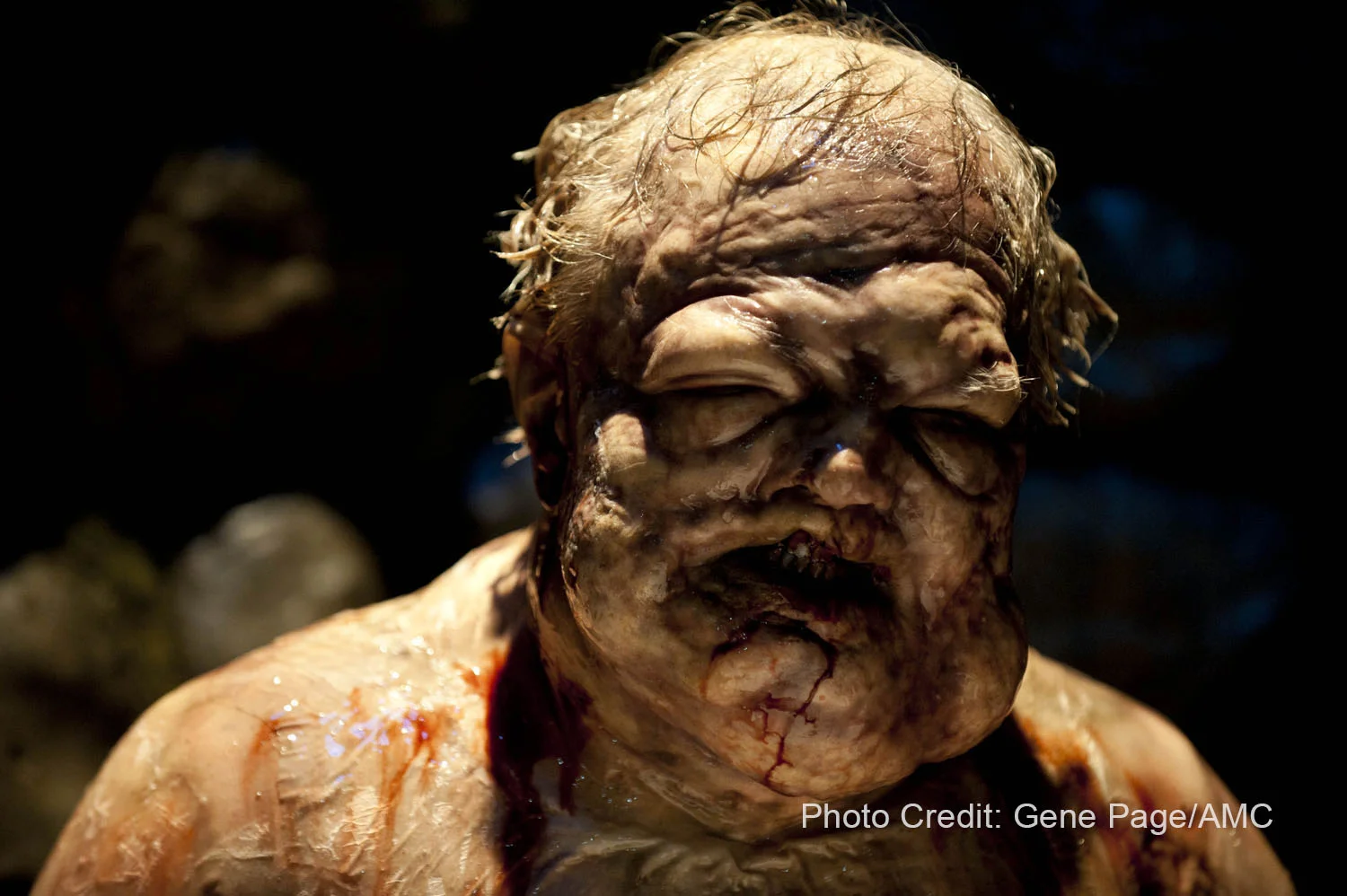
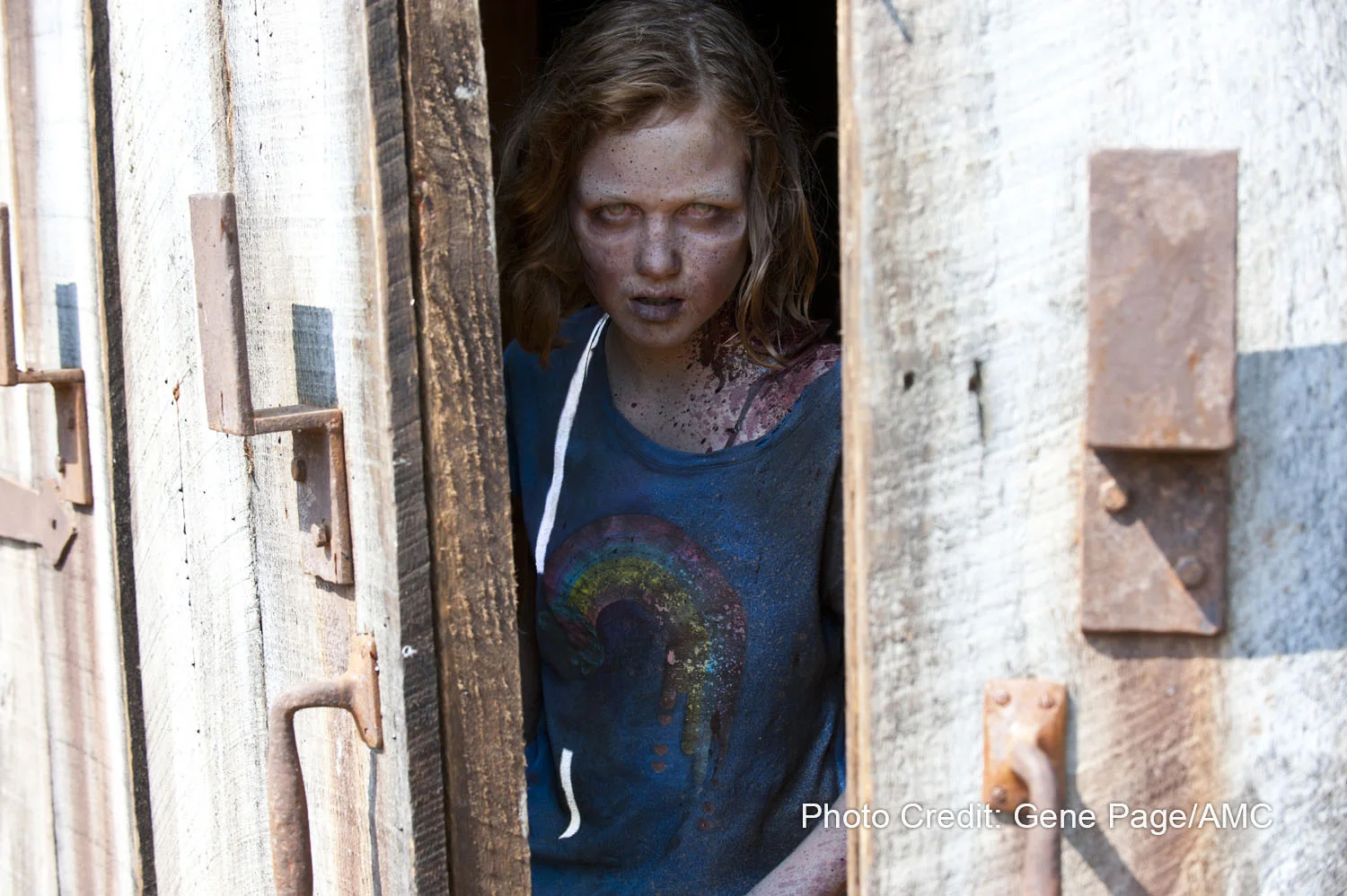
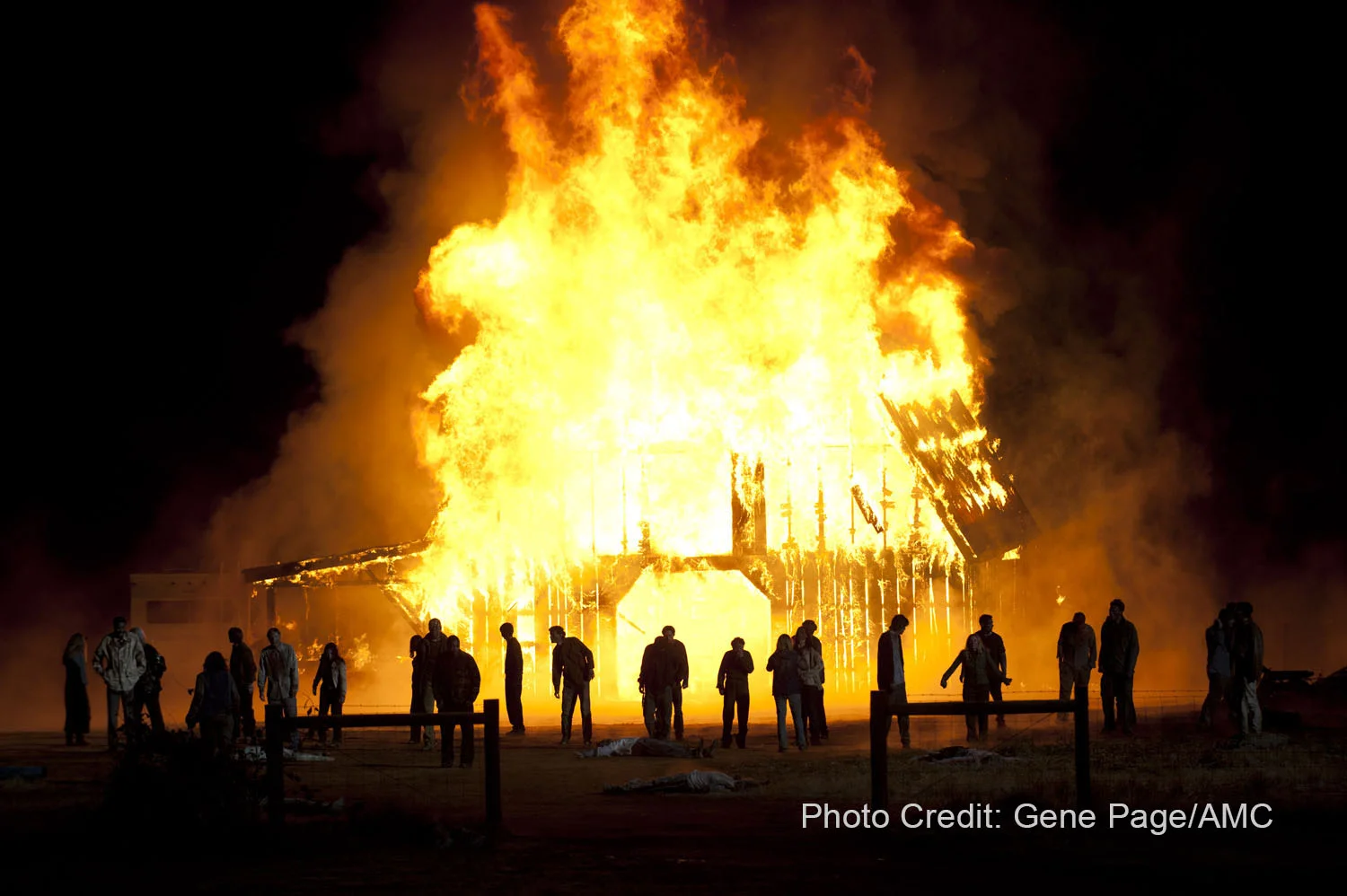
When the barn doors open and Sophia walks out among the dead, the show snaps into focus. It is brutal because it collapses hope and horror into the same small body. The search was not pointless, exactly. It was worse. It had been meaningful, but meaning could not save anyone. That was The Walking Dead at its best: not subtle, not gentle, but emotionally exact.
Rick, Shane, and the First Civil War

The Rick and Shane conflict remains one of the show’s strongest early engines because it is not simply good man versus bad man. Shane Walsh is dangerous, jealous, unstable, and increasingly monstrous, but he is not always wrong about the apocalypse. That is what makes him uncomfortable. He adapts faster than Rick. He sees that hesitation can kill. He understands that violence is no longer an exception but a resource. The problem is that Shane enjoys the clarity too much.

Jon Bernthal played him like a man whose skin no longer fit. His gestures became twitchy, physical, almost animal. Shane does not just want Lori back. He wants reality to validate him. He wants the world to prove that he was the honest one all along, the one brave enough to become ugly while everyone else was still pretending.
Rick’s tragedy is subtler. He begins as the man who believes civilisation can be carried inside one decent person. Then he learns, again and again, that decency without force is just a nice speech before someone takes your supplies.

Their confrontation is not merely a love triangle with zombies in the background. It is the first philosophical fracture in the group. How much of yourself can you amputate and still call it survival? How much softness can you keep before someone else uses it against you? At what point does protecting your family become indistinguishable from becoming the threat? Rick killing Shane is the show’s first real moral crossing. Carl shooting the reanimated Shane afterwards is the next generation inheriting the bill.

By the end of season two, Rick is no longer asking for consensus. He says it plainly. This is no longer a democracy. That line felt like a turning point at the time. It still does.
The Prison Years: When the Show Found Its Shape

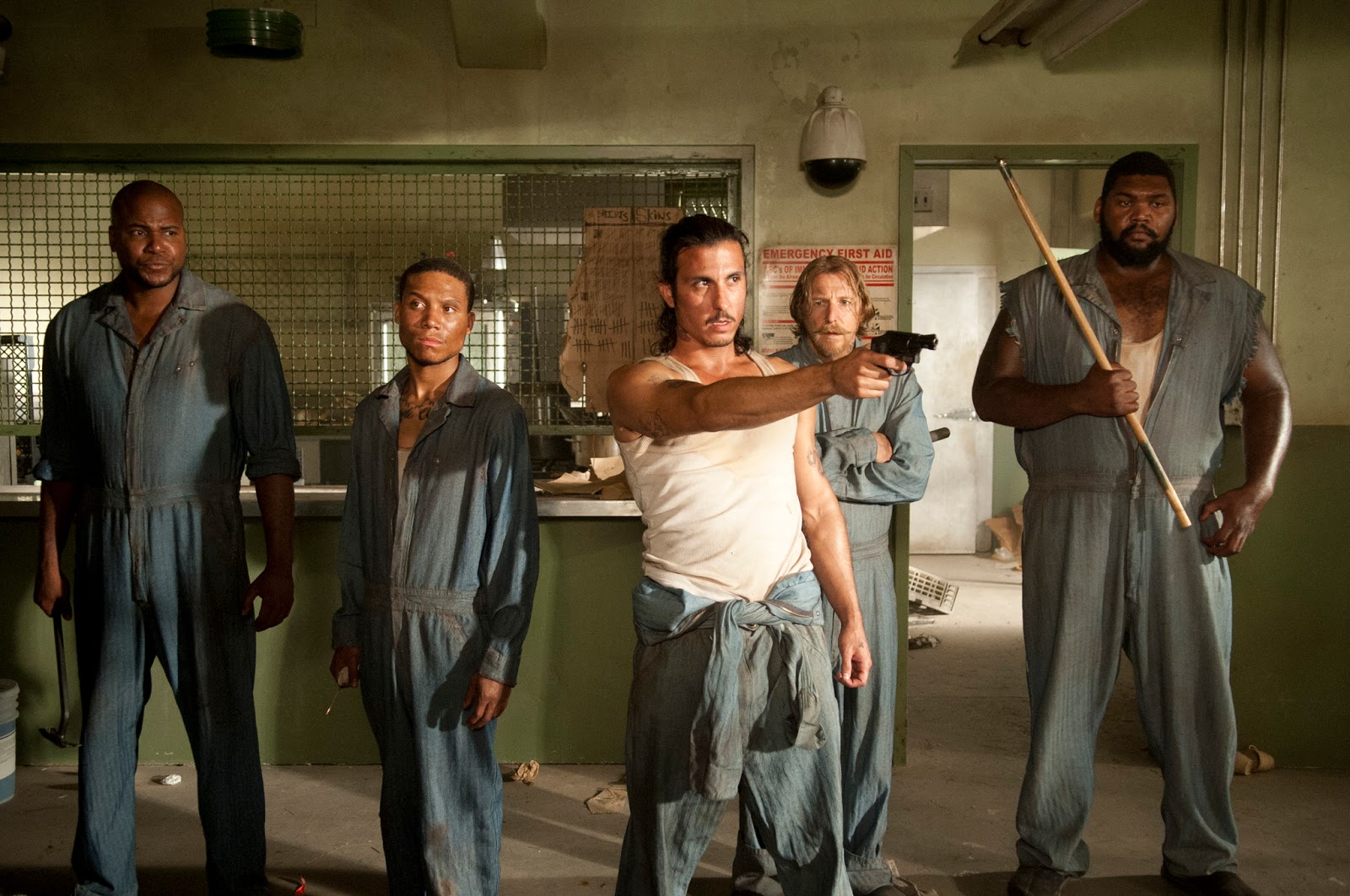
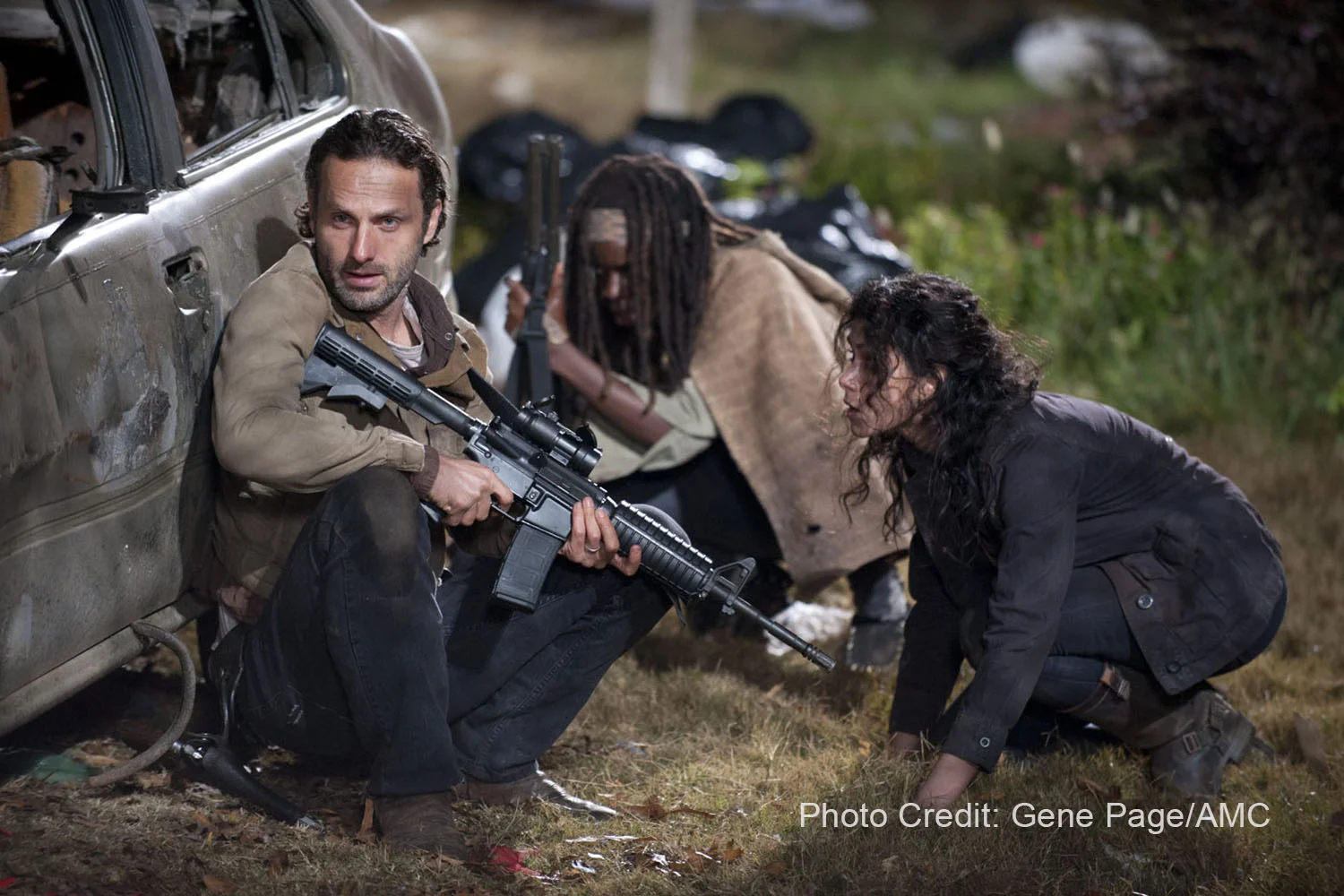
For me, the prison era was where The Walking Dead became fully itself. The show widened its canvas without losing the intimacy of survival. The prison was a brilliant setting because it inverted the meaning of safety. Before the fall, it was a place of punishment. After the fall, it became shelter. Bars became protection. Watchtowers became comfort. A place built to keep people inside became the closest thing to a home. That is the kind of post-apocalyptic irony the show often handled well.

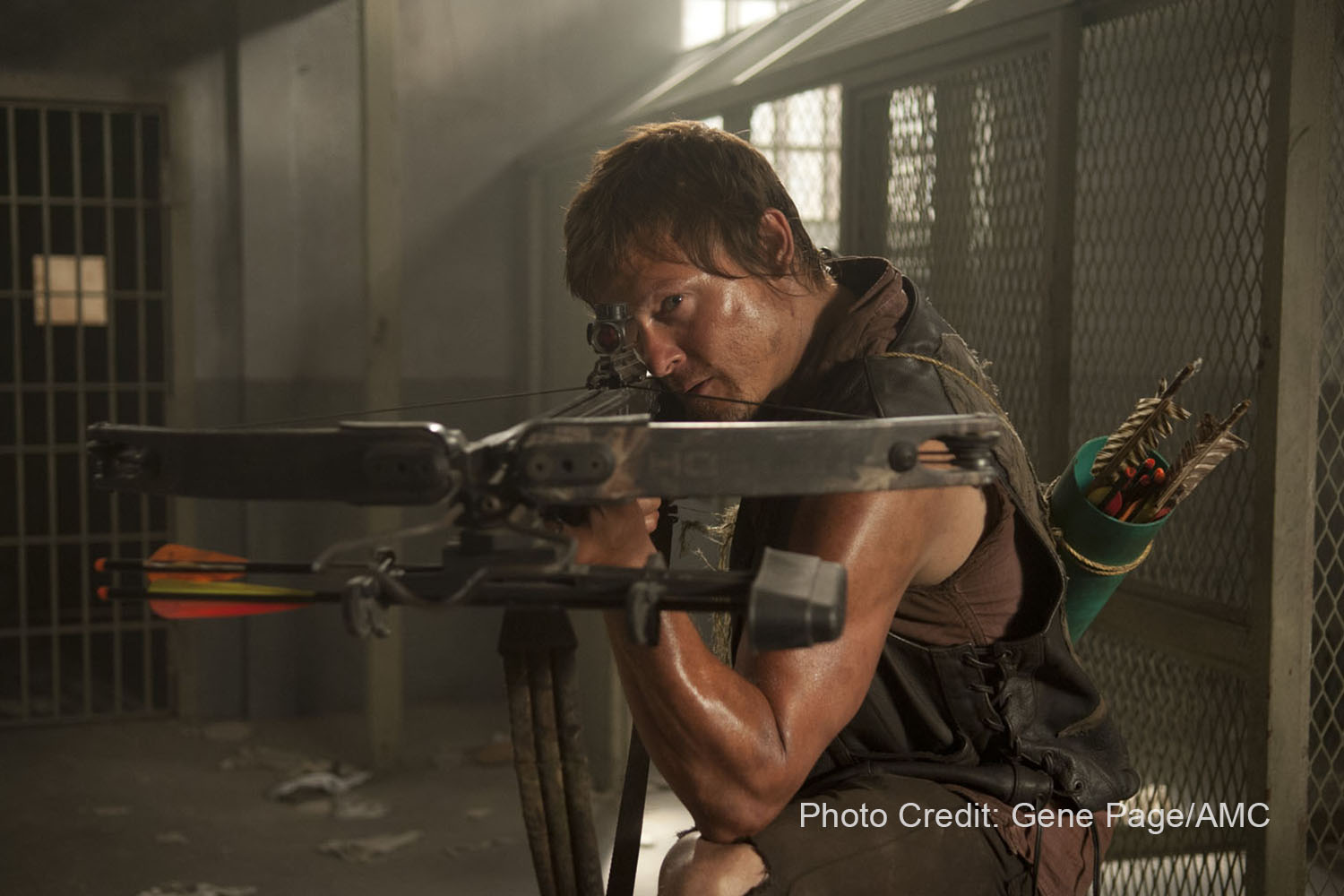
The prison also gave the ensemble room to evolve. Daryl Dixon, originally not from the comics, became the show’s great accidental gift. In lesser hands, he could have remained a crossbow gimmick with a bad childhood and a leather vest. Norman Reedus turned him into something more interesting: a feral, watchful man slowly embarrassed by his own capacity for tenderness.

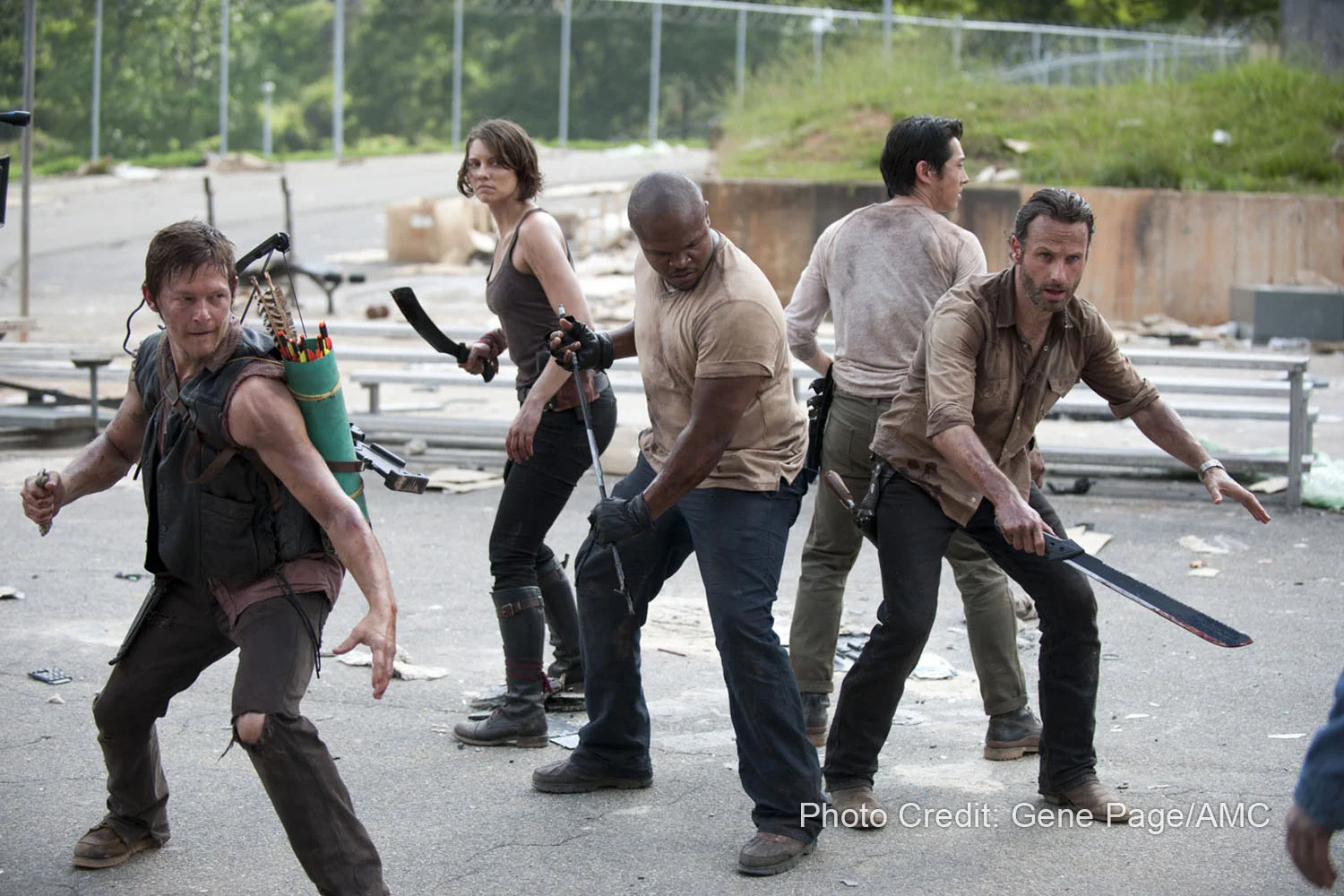
Daryl’s arc worked because it did not arrive as a neat redemption speech. He became loyal almost against his will. He did practical kindness badly, gruffly, awkwardly. He searched. He tracked. He stood guard. He carried Judith. He absorbed grief without making a performance of it. If Rick was the collapsing idea of leadership, Daryl was competence with a bruise under it.
Carol Peletier’s transformation was even more impressive. She began as an abused wife, someone the group might instinctively protect but not necessarily listen to. Over time, she became one of the show’s most frightening survivors because her hardness was learned, not innate. Melissa McBride gave Carol a quietness that never felt empty. You could see the calculations forming behind her eyes. She did not become strong by turning into an action figure. She became strong by understanding what weakness had cost her.

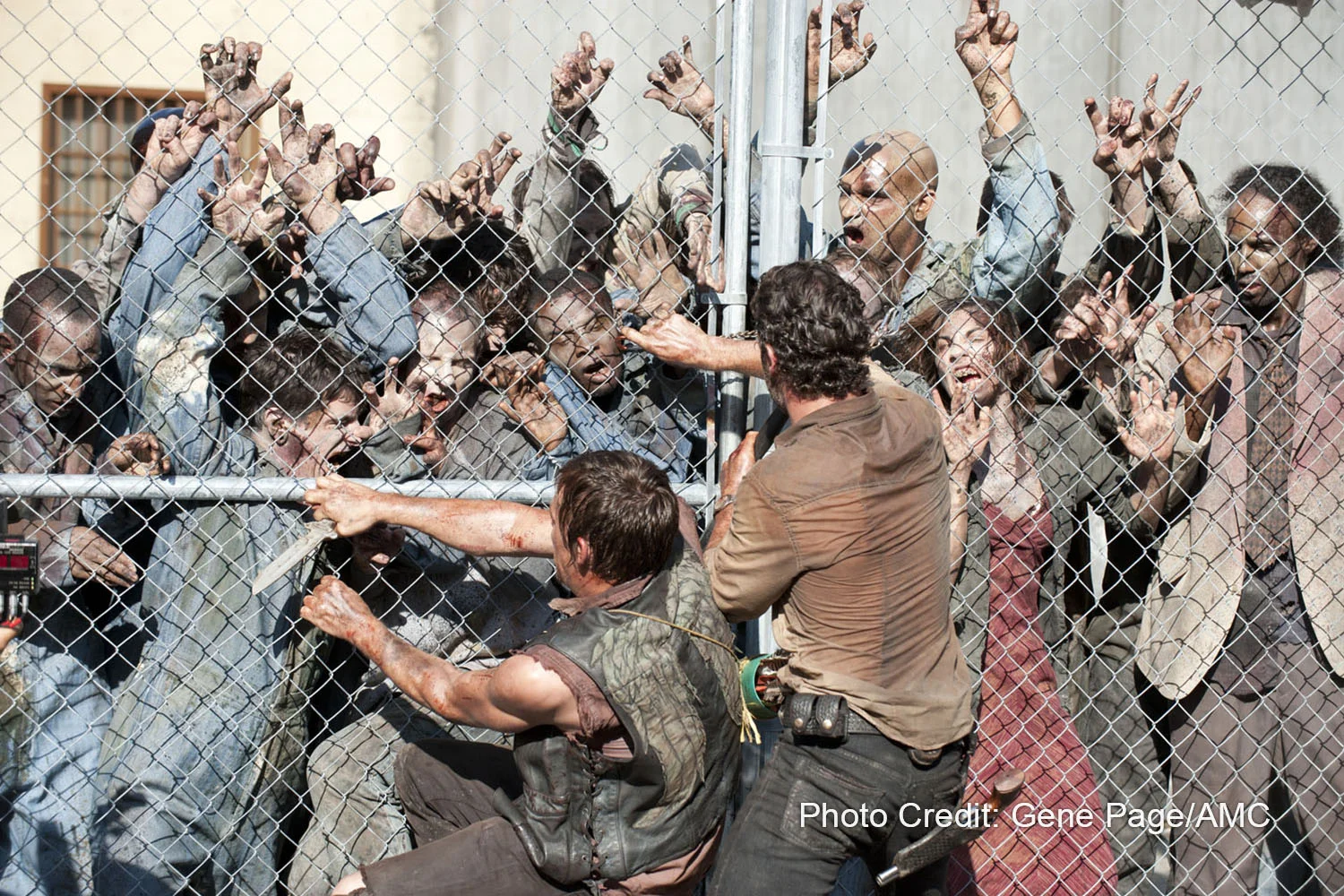
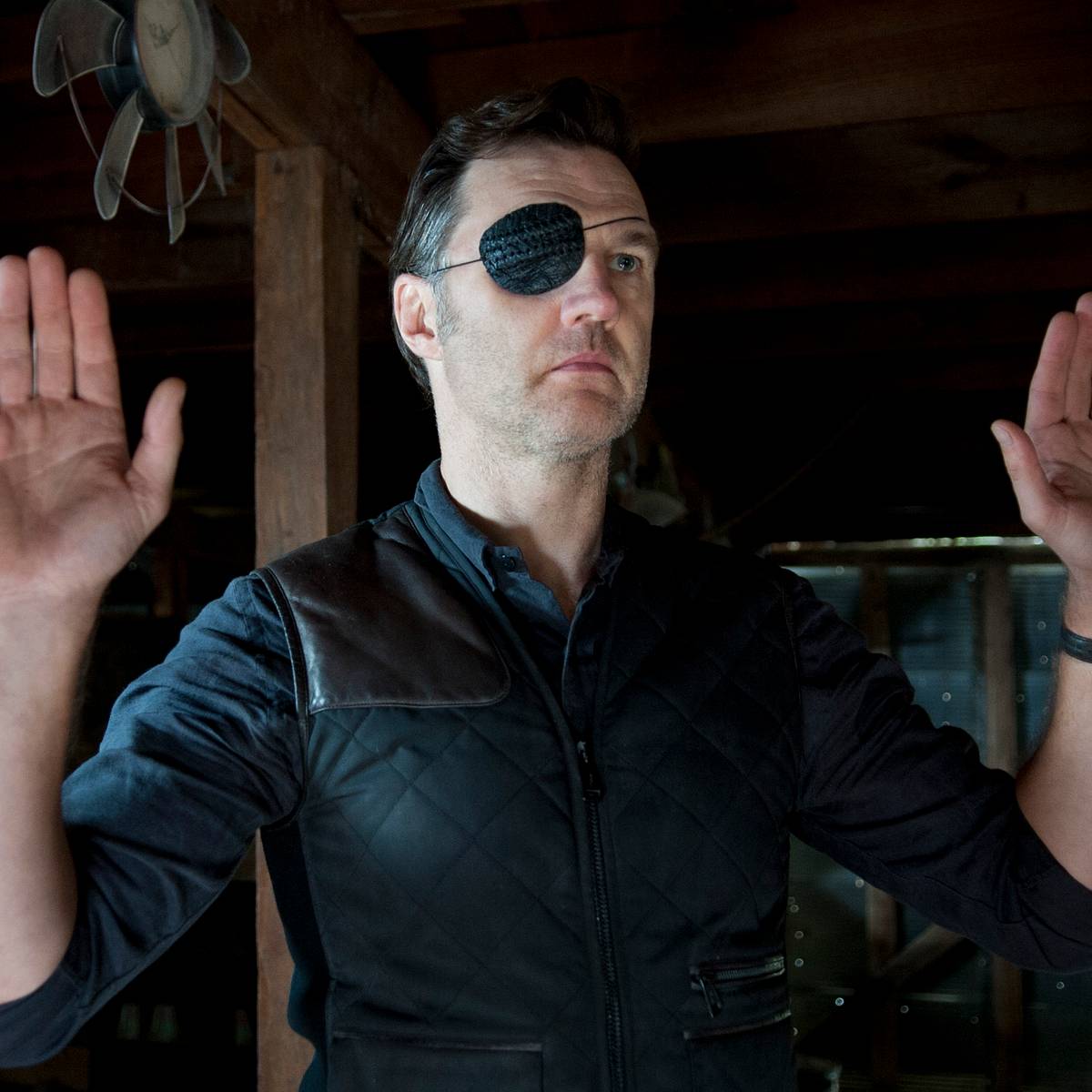
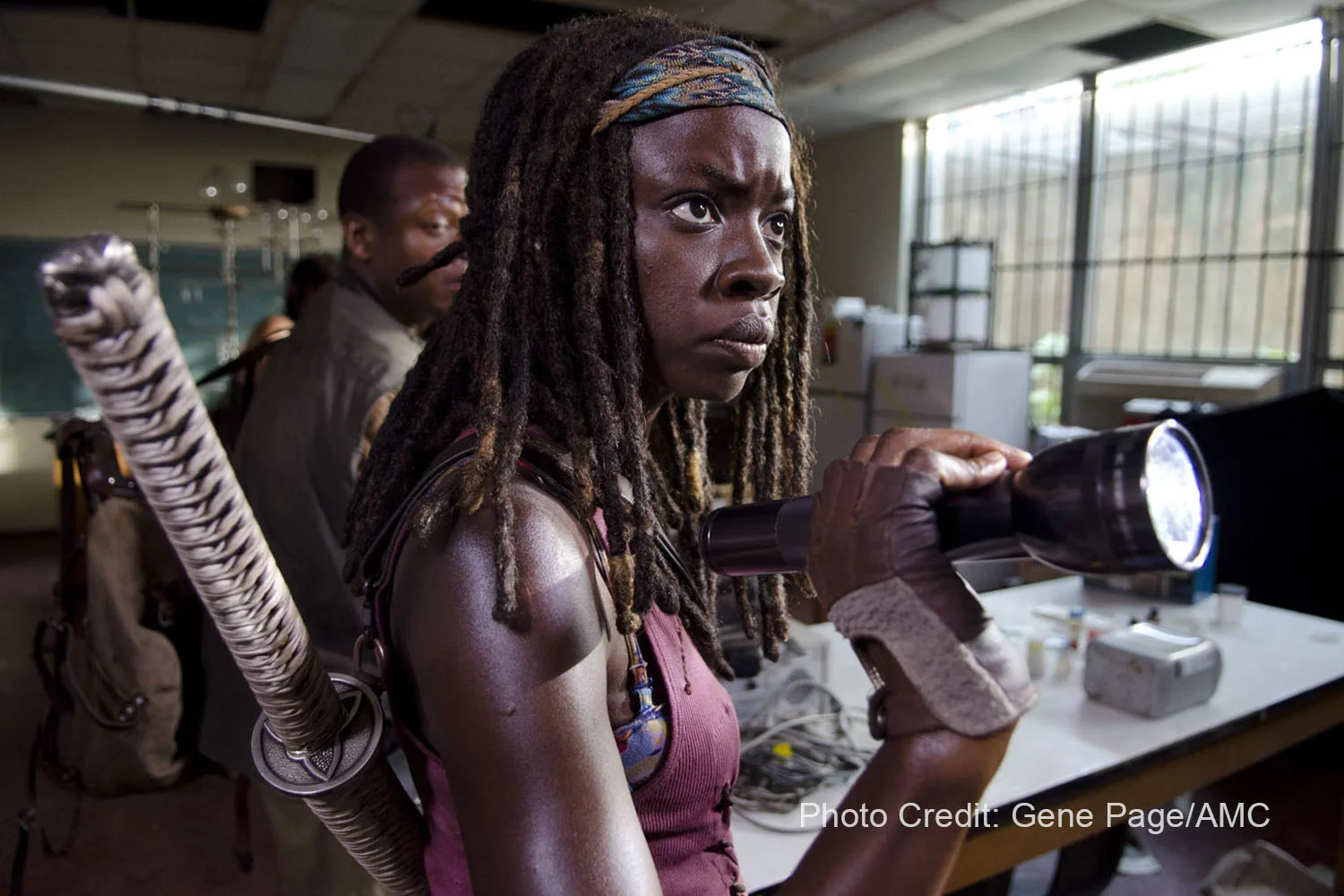
The prison years also brought us Michonne, sword in hand, guarded by silence, entering the show as an image so instantly iconic it almost risked becoming a poster before she became a person. Danai Gurira gave her the necessary interior life. Michonne could have been reduced to coolness. Instead, she became one of the show’s moral anchors, not because she was gentle, but because she understood grief without letting it swallow every room she entered. Then there was the Governor.

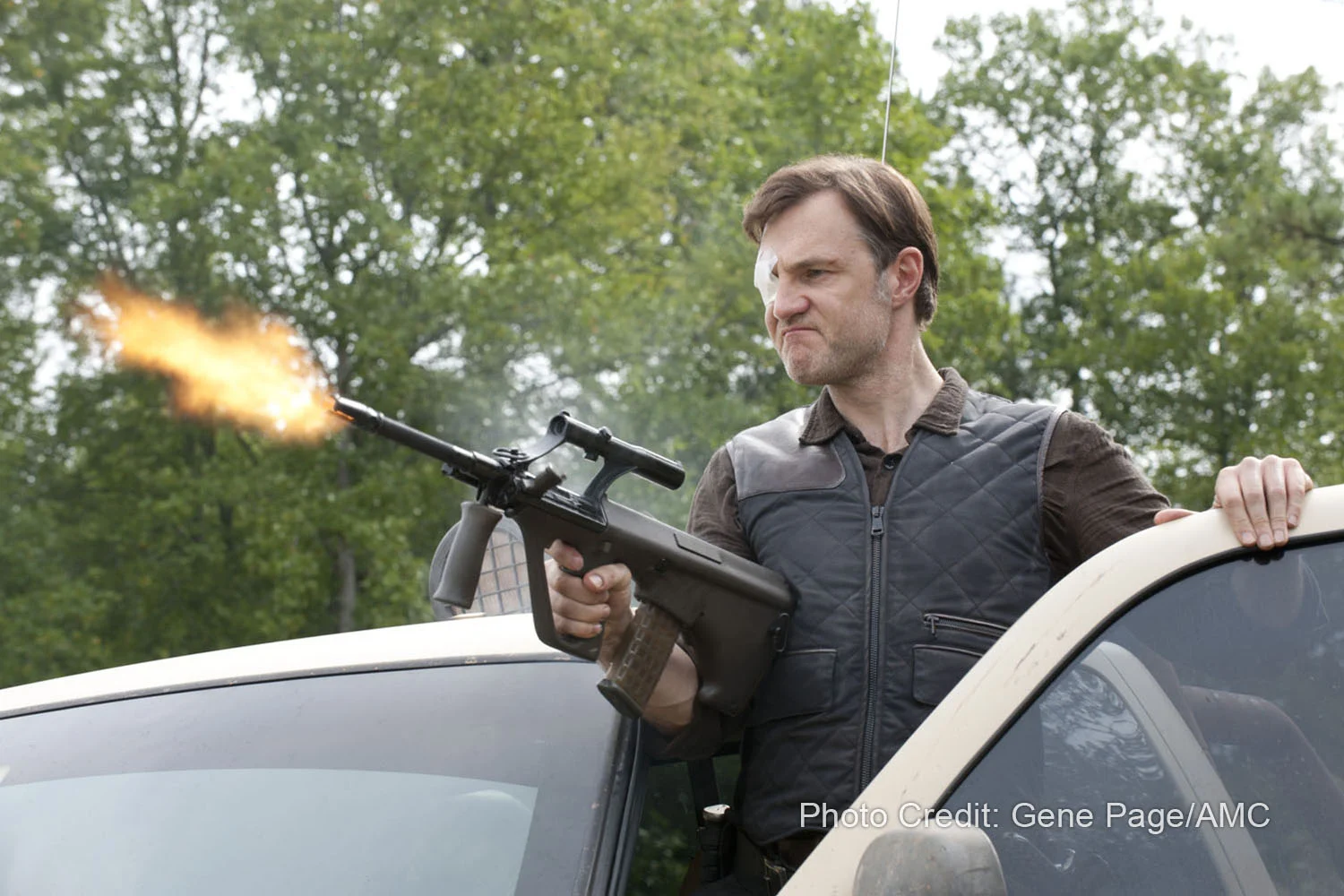
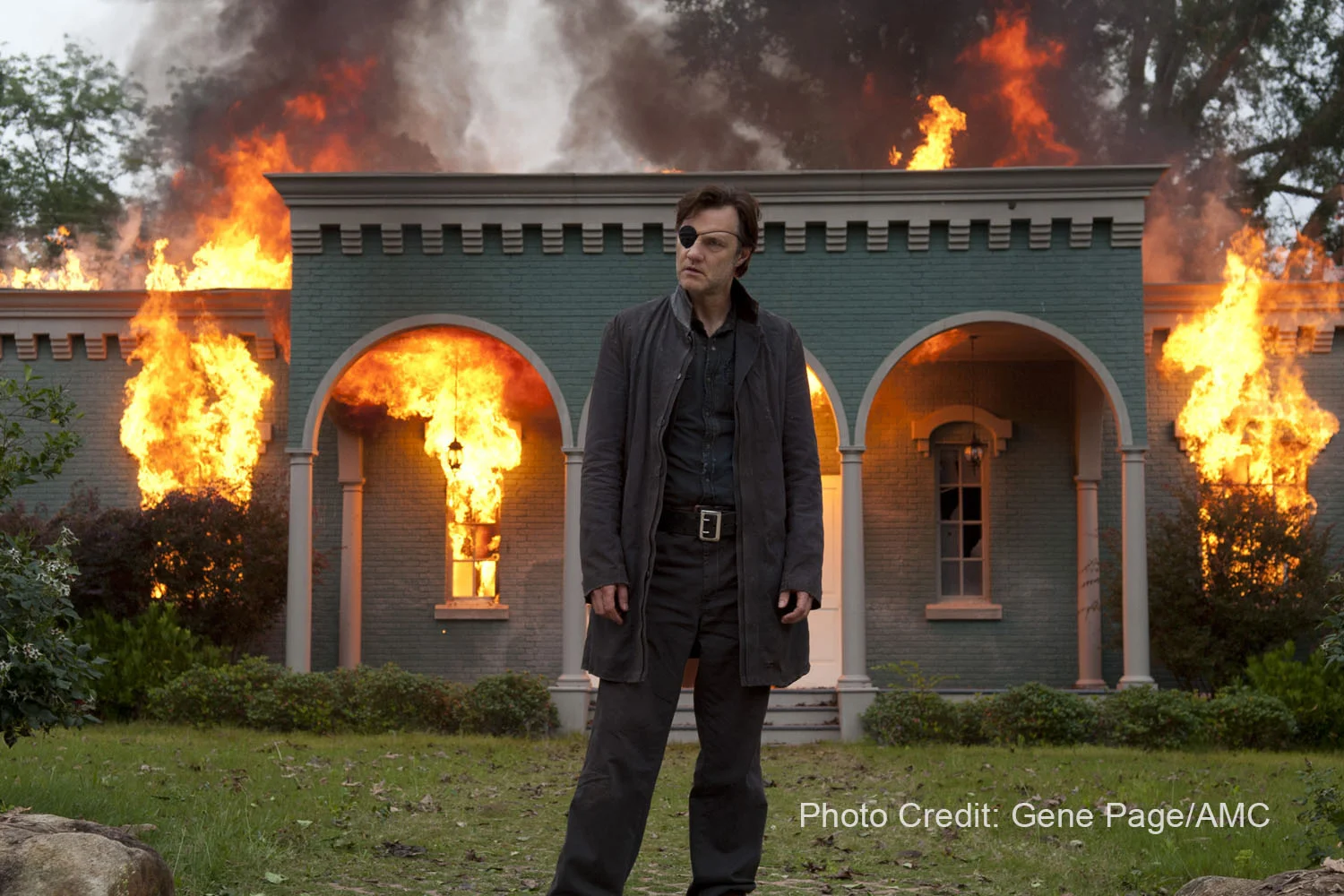
The Governor worked because he represented the apocalypse with good lighting. Woodbury was comfortable enough to be suspicious. Clean streets, walls, hot meals, public order, staged normality. He understood something Rick had not fully mastered yet: people do not just need safety. They need a story about why they are safe. They need rituals, entertainment, hierarchy, denial. They need someone to tell them the horror outside the walls has been organised into meaning.

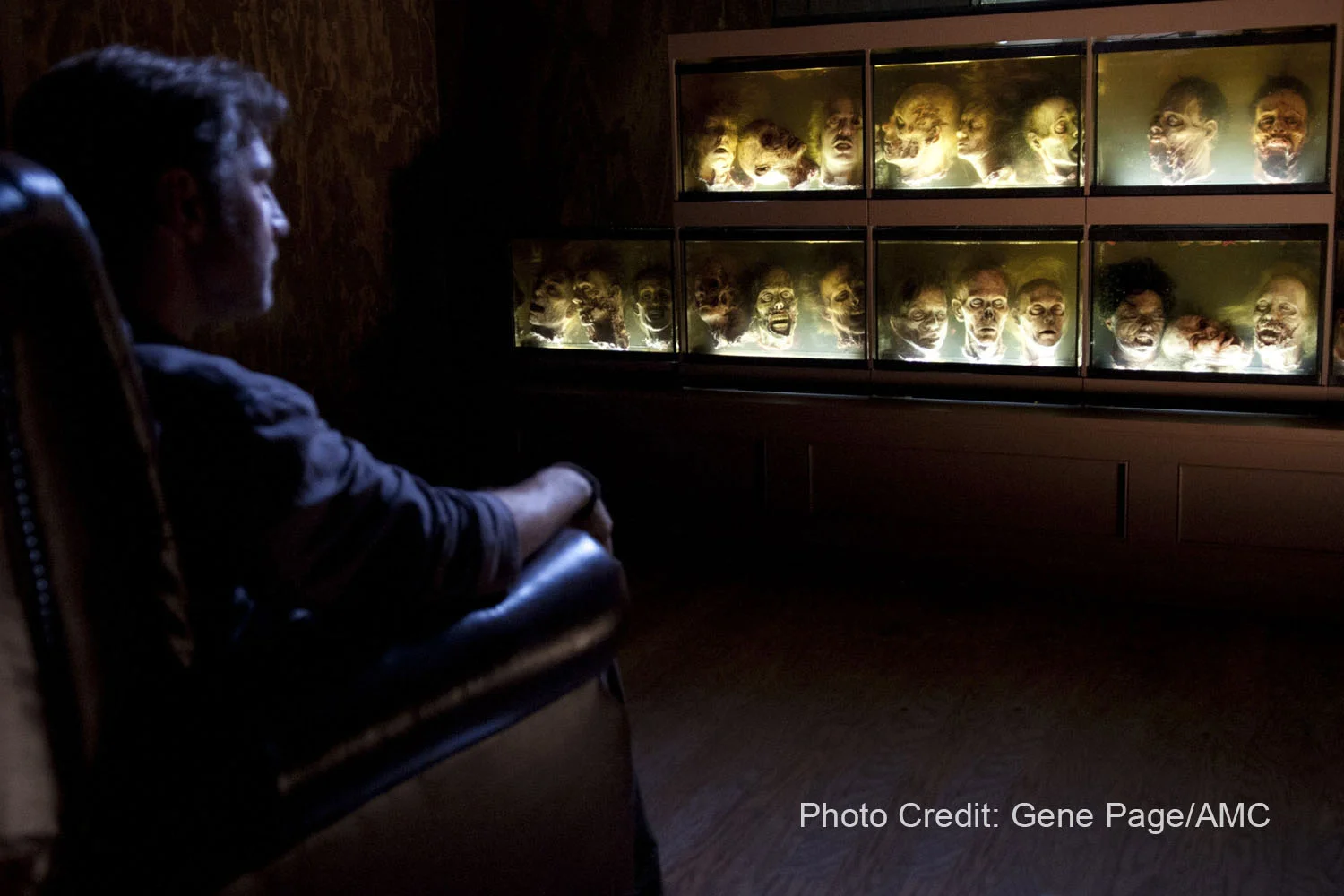
David Morrissey played him with that unnerving politeness common to men who have already justified everything to themselves. The Governor was not terrifying because he was openly chaotic. He was terrifying because he could host a meeting.


The conflict between the prison and Woodbury gave the show one of its strongest thematic contrasts: survival as community versus survival as control. Both sides had guns. Both sides had walls. Only one side was trying, however imperfectly, to remain human without turning humanity into a slogan.
Hershel and the Last Good Chair in the Room

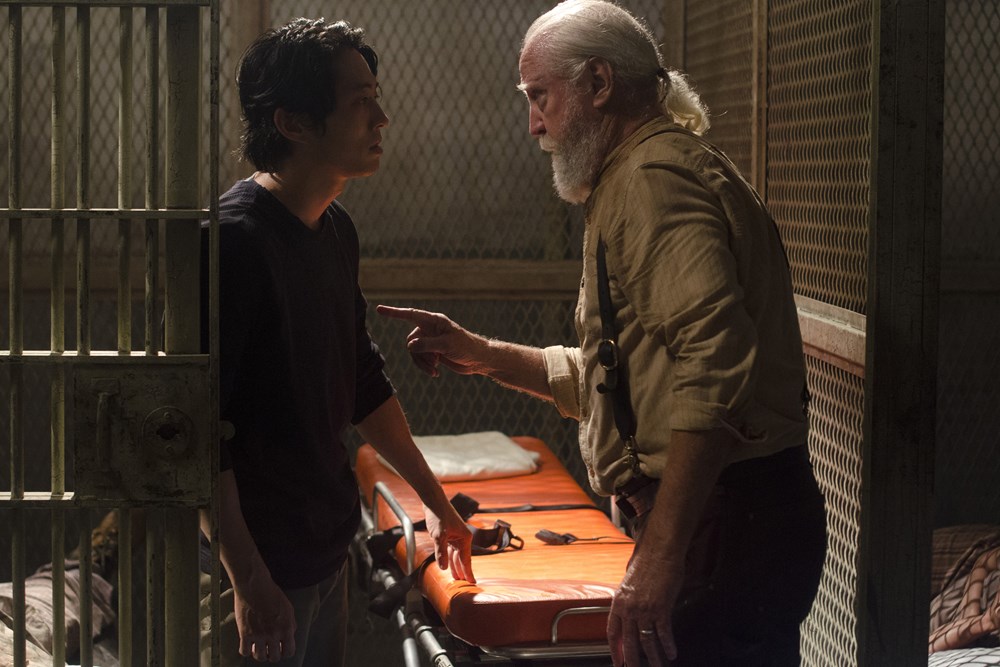
Hershel Greene became one of the show’s most important characters because he represented a form of moral adulthood the apocalypse kept trying to erase. He was not naive by the end. He had seen the barn. He had lost people. He had changed. But he still believed that the group had to be more than a pack.

Scott Wilson gave Hershel a weathered grace. He seemed carved from patience. In a show full of people becoming sharper, Hershel became steadier. That mattered. Not because the show needed a saint, but because it needed someone who could remind Rick that leadership was not just making the hard call. Sometimes it was refusing to let the hard call become your whole personality.


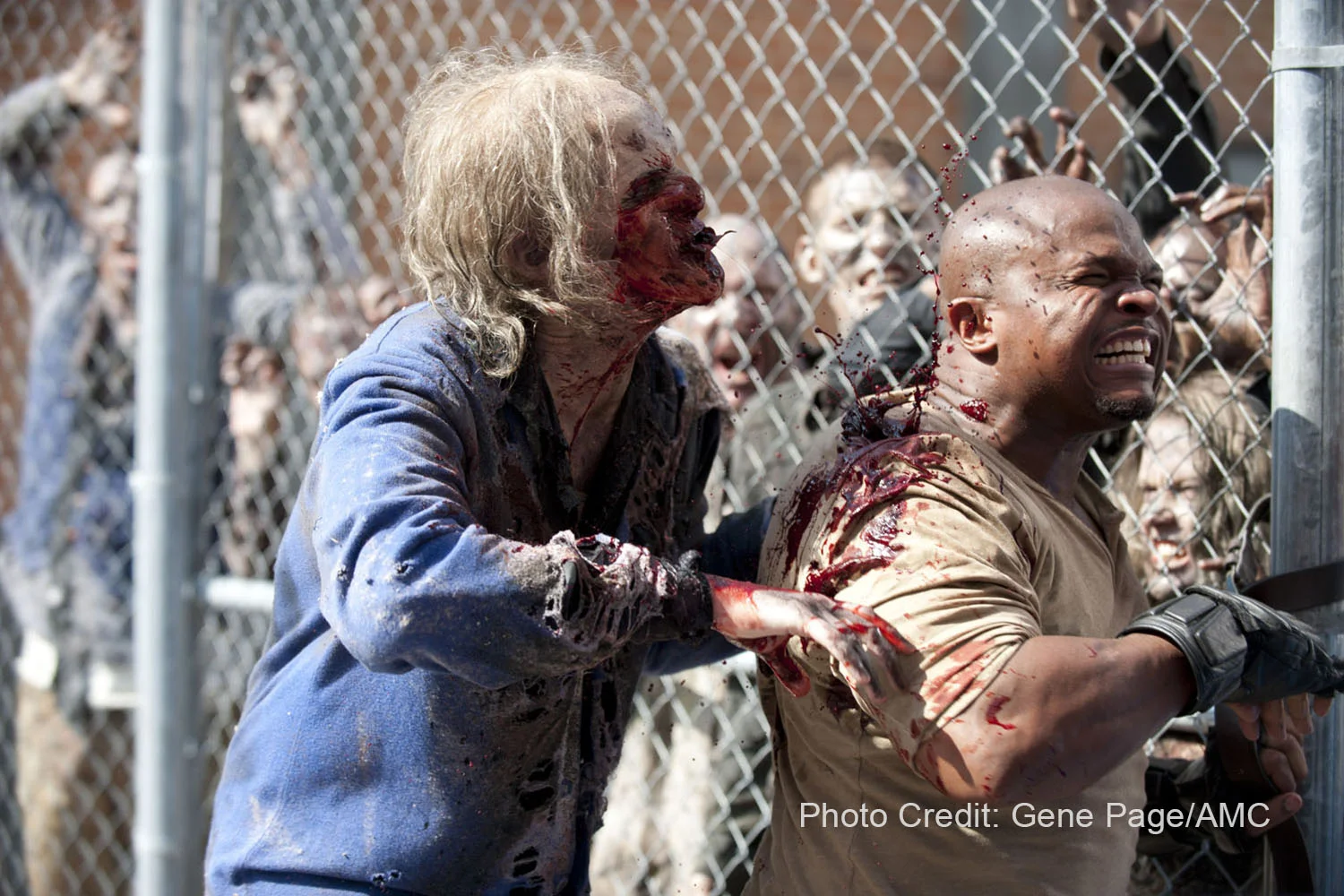
His death at the hands of the Governor is still one of the series’ great wounds. The beheading is grotesque, yes, but the deeper violence is symbolic. The Governor does not just kill Hershel. He murders the argument for mercy in front of everyone. That was the point where the prison, and maybe the first great era of the show, truly ended.

After that, everyone scattered. The show became fragments: railway tracks, small groups, separate griefs, the long road to Terminus. It was uneven, but it still had momentum because the characters had earned our concern. We were invested by then. Not casually. Properly.
Terminus and the Butcher’s Logic
Terminus was one of those arcs that reminded me why the show could still be viciously effective. The signs promised sanctuary. The reality was an organised slaughterhouse. It was not the most complex villainous community in the series, but it had a nasty elegance. Their moral collapse had a backstory. They had been victims before they became predators. They had learned the wrong lesson from suffering. That became one of the show’s recurring ideas: trauma does not automatically ennoble anyone. Sometimes it just gives people better excuses.

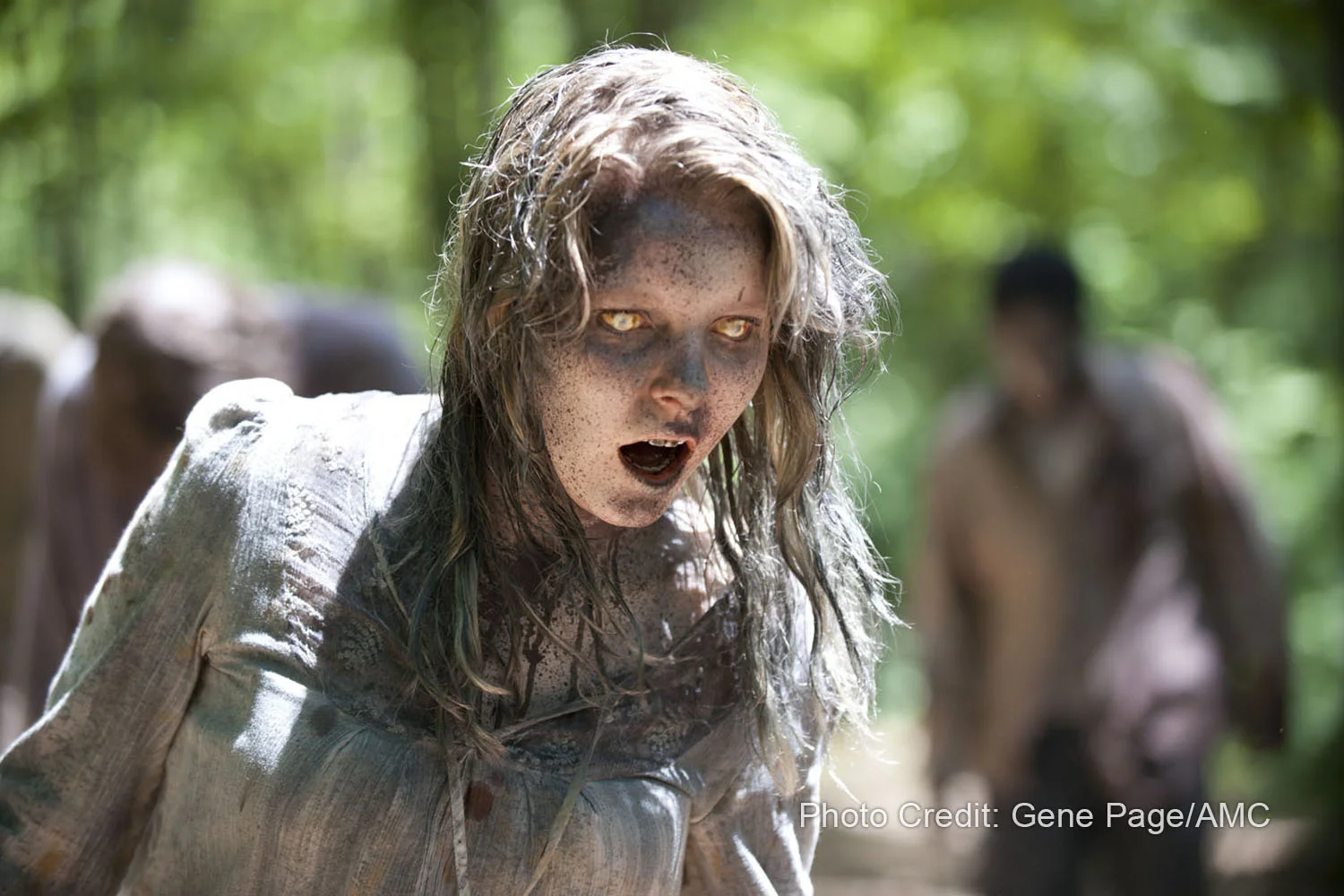
The trough scene at Terminus remains hideous in the right way. It is procedural. Men kneel. Heads are positioned. Throats are cut. Bodies are drained. The horror comes from routine. Nobody is cackling. It is just work.

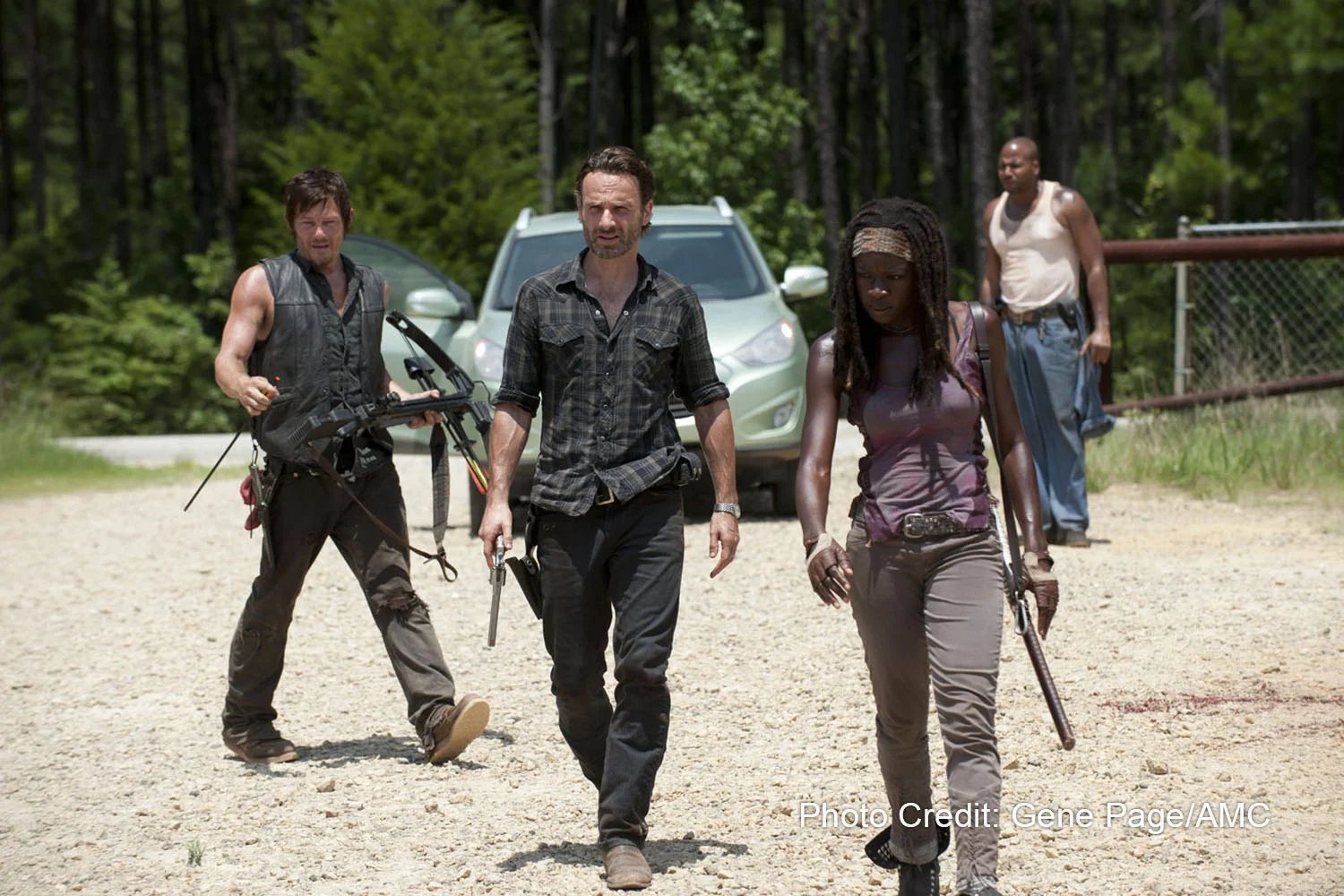
Carol’s rescue of the group is one of her defining moments. Covered in walker gore, moving through smoke and chaos, she becomes the thing the apocalypse made and the thing that saves everyone from it. It is one of the show’s cleanest payoffs: Carol, once dismissed and endangered, returns as the person you hope is nearby when civilisation takes the day off.
The post-Terminus period also gave us one of the show’s most devastating losses in Beth. Her death was divisive, but the grief around it, particularly Daryl’s, landed because the show had built enough tenderness between them to make the loss feel personal rather than mechanical.

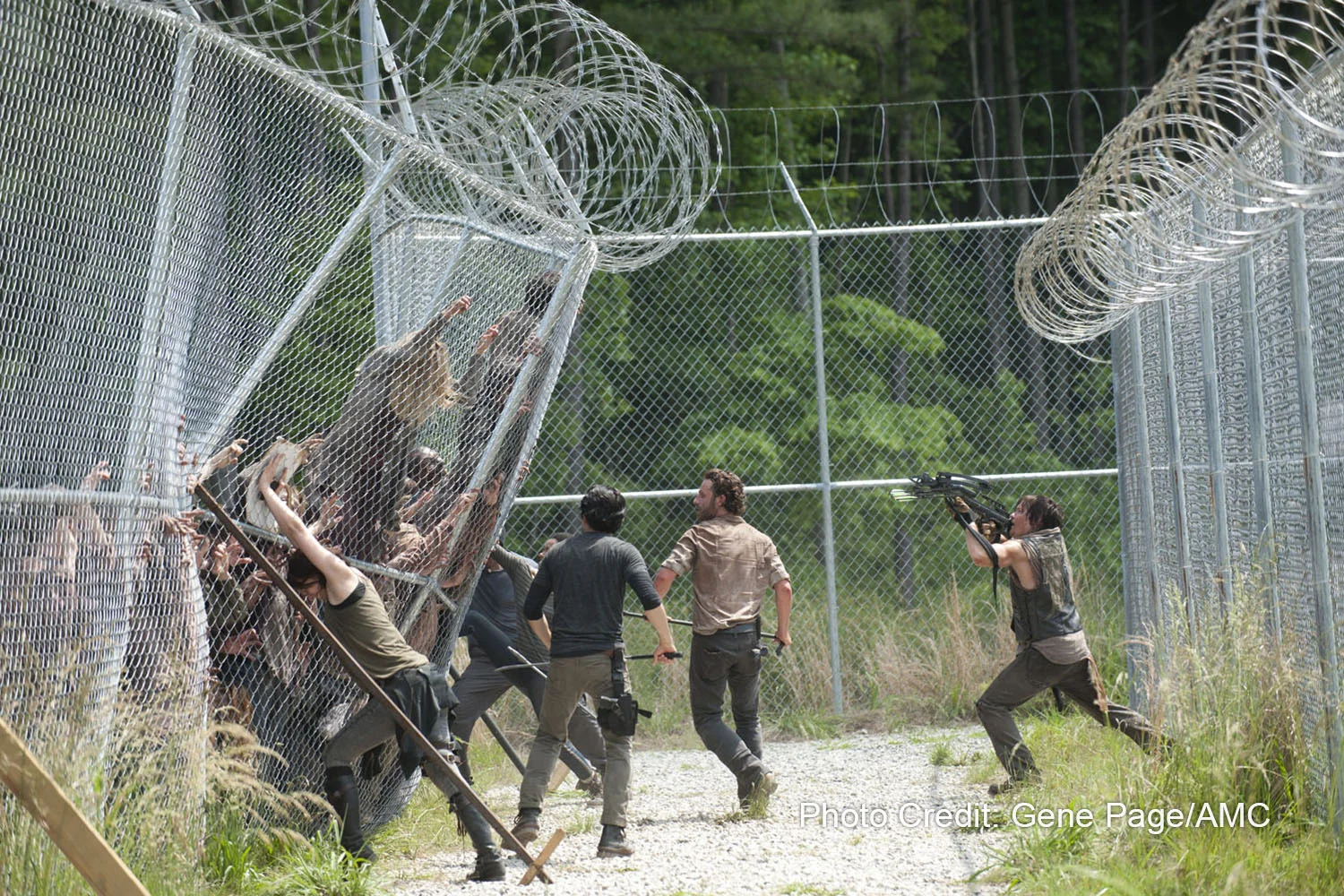
That was the dangerous line The Walking Dead always walked. Kill too few characters and the world loses threat. Kill too many, or kill them with too obvious a hand, and grief becomes formatting. For a long time, the show mostly stayed on the right side of that line.
Alexandria and the Seduction of Clean Walls

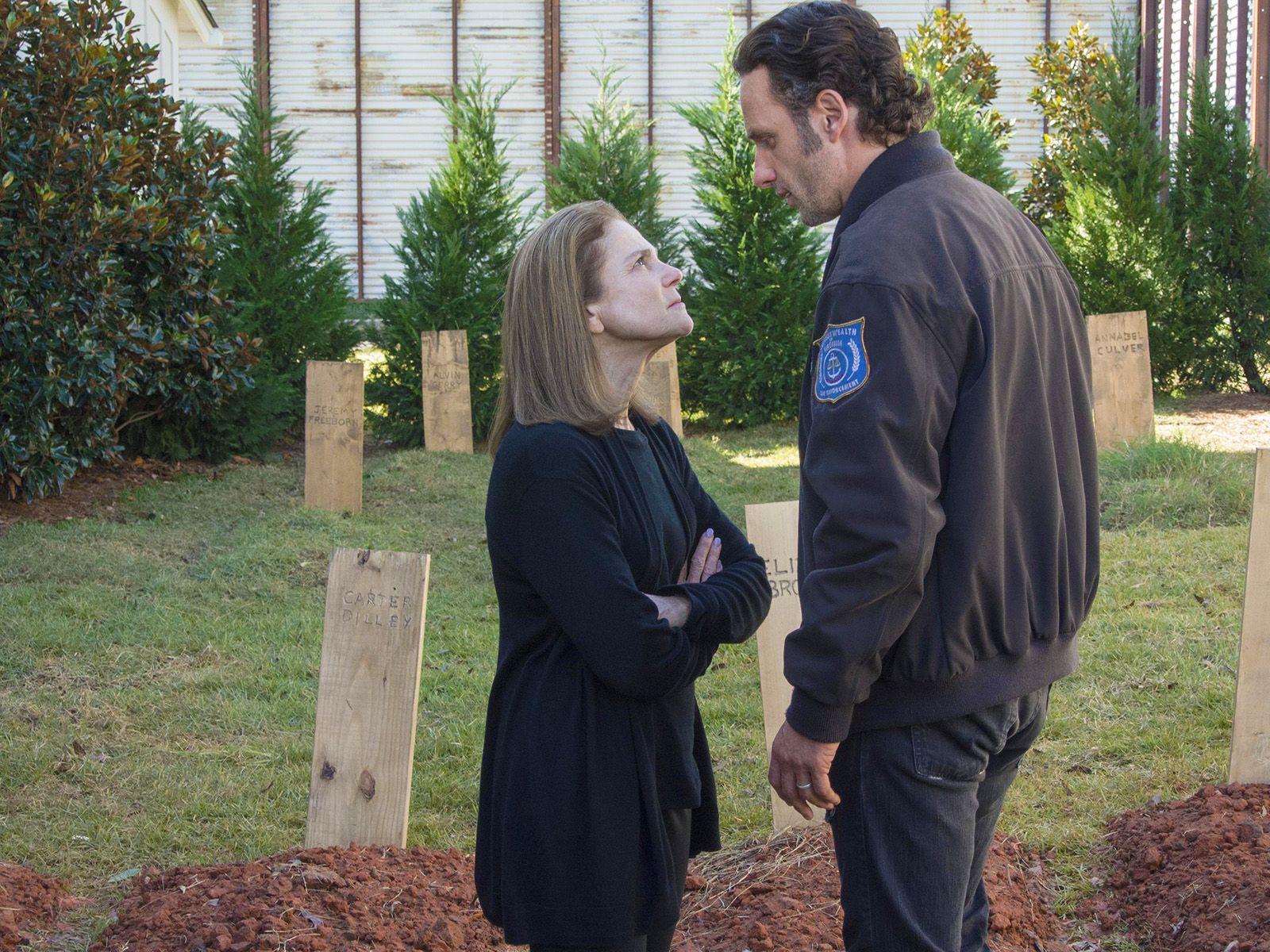
Alexandria was another smart setting because it placed the group inside comfort and made comfort feel alien. By then Rick and his people had spent so long surviving that normality looked suspicious. Clean houses. Running water. Video interviews. Children playing. People worrying about pasta makers. It all felt obscene.

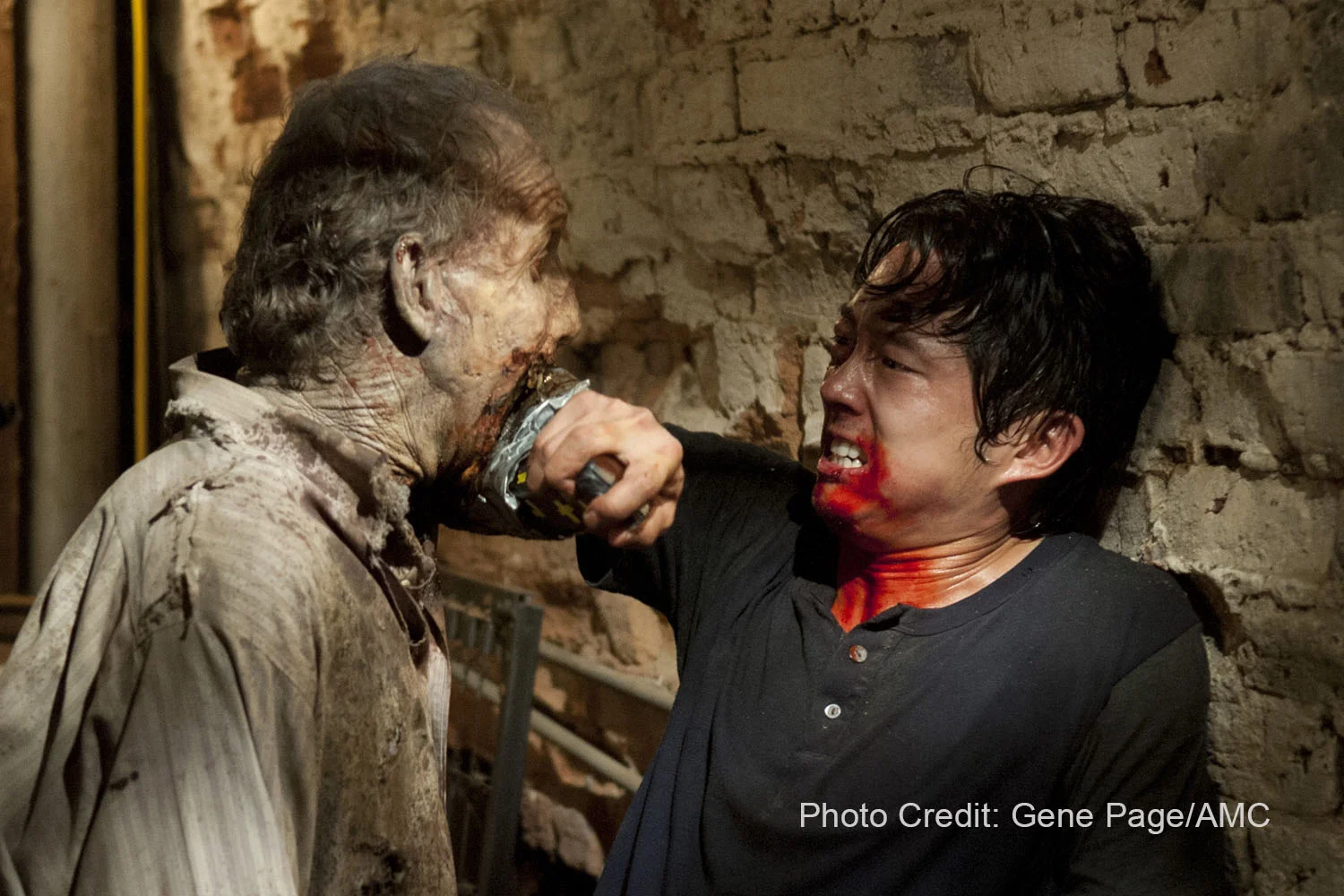
That was good television. Not because Alexandria was secretly evil in the obvious way, but because it showed how far Rick’s group had drifted from ordinary life. They entered as survivors and looked, to the residents, like invaders with better instincts. Rick’s beard during that period deserved its own supporting actor nomination. It was practically a field report.


The Alexandria arc worked when it examined the psychological mismatch between sheltered people and traumatised people. Deanna Monroe had intelligence and civic imagination, but she did not fully understand what was coming. Rick understood danger but did not always understand how to live without becoming its ambassador. Michonne, again, often stood in the more interesting middle space. She wanted safety, but not delusion. She wanted a home, but not at the cost of vigilance.

This was also where the show began building towards a larger world: Alexandria, Hilltop, the Kingdom, the Saviours. The apocalypse was no longer just scattered camps and temporary shelters. Society was re-forming, badly, unevenly, with trade, tribute, agriculture, theatre, punishment, and men with names like Negan turning extortion into governance. That expansion made sense. It was the natural direction for a long-form apocalypse story. First survival. Then settlement. Then politics. The problem was that politics moves differently from terror. And this is where, for me, The Walking Dead began to show signs of strain.
Glenn, Maggie, and the Point Where Pain Became a Brand
Glenn Rhee was one of the show’s great emotional through-lines. He began as the voice on the radio helping Rick inside the tank, then became the group’s runner, conscience, husband, and one of the few characters who seemed to retain decency without appearing foolish. Steven Yeun gave Glenn a warmth that never felt soft-headed. He was brave, but not in the chest-thumping way. He was brave because he kept choosing people.


His relationship with Maggie gave the show something it badly needed: love that felt ordinary enough to matter. Not grand, not mythic at first. Just two people finding each other in a world that had reduced the future to a rumour. That is why Glenn’s death was such a rupture.
The season six cliffhanger and season seven premiere remain among the most infamous decisions in the show’s run. Negan’s arrival was always going to be brutal. In the comic, it was brutal. The show had prepared us for brutality for years. But something changed in the way the series staged that moment. Abraham’s death was already savage. Glenn’s death pushed the scene into another register: prolonged, graphic, almost punitive. The audience was not just witnessing horror. We were being held in it.

I understand the dramatic argument. Negan had to arrive as a force that broke Rick completely. The Saviours had to feel impossible to defeat. The show needed to demonstrate that our hardened survivors had finally met someone more organised, more sadistic, and more theatrically committed to violence than they were. But I also understand why many viewers never quite came back emotionally.

For me, it was not only Glenn dying. In a world like The Walking Dead, everyone is eventually borrowing time. It was the feeling that the show had started to confuse trauma with momentum. Pain had always been part of the bargain. But by this point, pain began to feel like the product itself.
Jeffrey Dean Morgan’s Negan was undeniably charismatic. Too charismatic, sometimes. He entered with a lean, smiling, vaudevillian cruelty, all leather jacket swagger and barbed-wire bat branding. He was horrible, but he knew how to hold a room. The trouble was that the show also knew it. And once The Walking Dead discovered how much energy Negan generated, it seemed to rearrange gravity around him. That may have been good for scenes. It was not always good for the larger story.
Negan, the Saviours, and the Long Middle
The Saviours arc had strong ingredients: forced tribute, broken communities, compromised collaborators, revolutionary planning, Ezekiel’s theatrical kingdom, Shiva the tiger, Dwight’s divided loyalties, Eugene’s cowardice and usefulness, Sasha’s final act of resistance. On paper, this should have been one of the show’s great political war stories. In practice, it often felt stretched.
This was where my interest began to wane. Not disappear. I still watched. I still cared enough. But the old urgency had weakened. The show began to feel like it was moving pieces across a board I had already studied for too long. Characters were separated for extended stretches. Episodes narrowed around single locations or groups. The tension sometimes became less “what happens next?” and more “how long until the next actual turn?” That distinction matters.
There were still excellent moments. The Kingdom gave the show a strange, almost comic-book theatricality that I appreciated more than I expected. King Ezekiel could have been ridiculous in the wrong way, but Khary Payton played him with enough warmth and self-awareness to make the performance within the performance meaningful. Ezekiel understood that leadership sometimes requires costume. People need bread, walls, and medicine, yes, but they also need myth. He gave them a king because a king was easier to believe in than another traumatised man with a weapon.

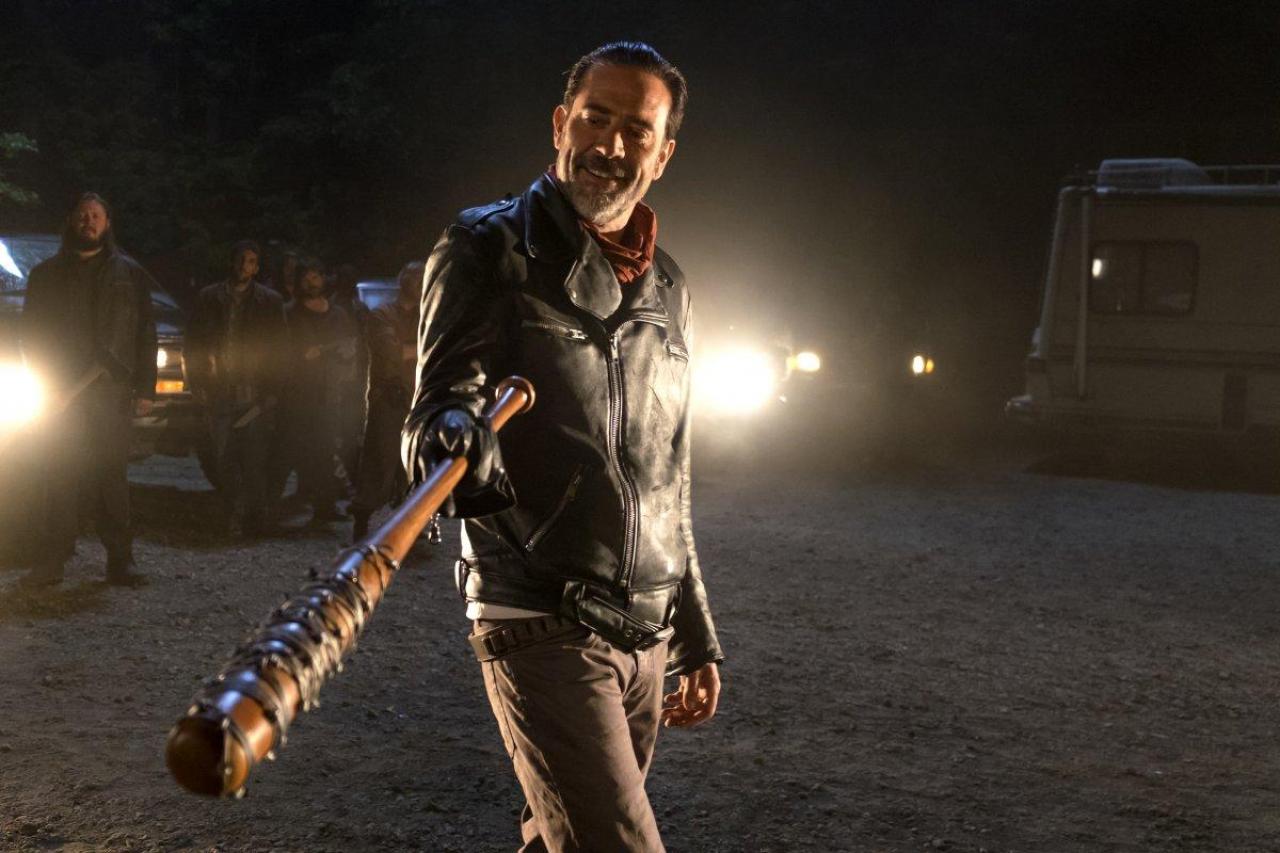
Still, the war against the Saviours tested my patience. Some episodes felt padded. Some speeches circled the same moral questions without sharpening them. Rick’s group had been brutal before, but the show kept asking whether they were becoming monsters as if this were a fresh memo. At a certain point, even moral ambiguity needs new furniture.
The infamous fake-outs did not help. Glenn under the dumpster was one thing. Repeated cliffhanger mechanics were another. The show that once made death feel like a dreadful fact of the environment sometimes made it feel like a ratings lever.
That is when fatigue sets in. Not because you stop liking the characters. Sometimes it is the opposite. You are tired because you liked them enough to notice when the machinery around them became louder than their inner lives.
Carl and the Wound That Did Not Heal Properly
Carl Grimes was always a difficult character because he had to grow up inside the apocalypse and inside the audience’s impatience. Child characters in genre shows often get treated unfairly by viewers. They behave like children, and audiences punish them for not having adult genre instincts. Carl made mistakes. He wandered. He acted out. He hardened. He wore that sheriff’s hat like a boy trying to inherit a world no one should have left him.

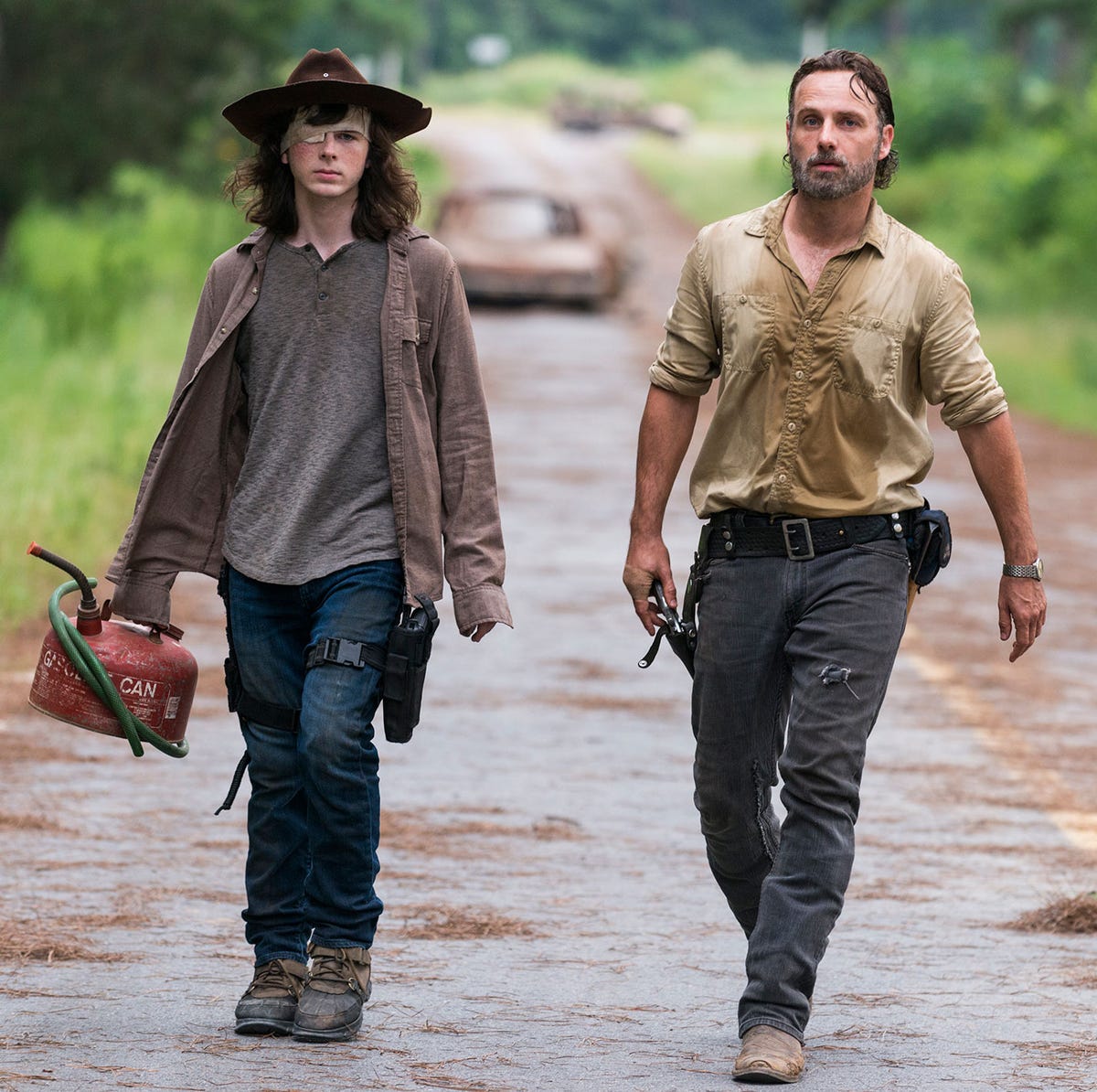
Over time, though, Carl became important not just as Rick’s son but as Rick’s possible future. If Rick was losing himself to survival, Carl represented the question of what all this survival was for. A child raised among walkers and warlords might become worse than the adults, or he might become the reason they try to be better.

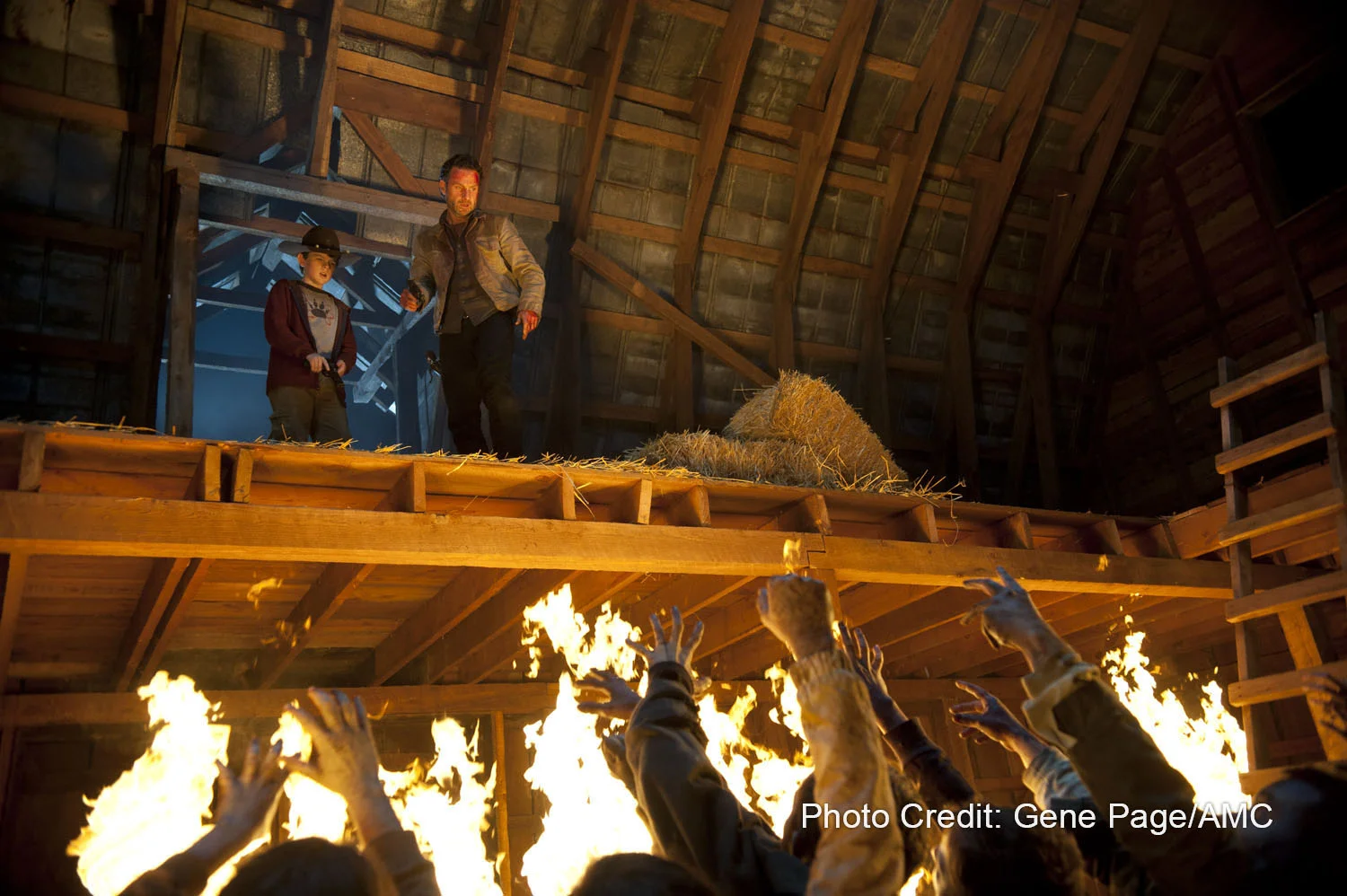
His death remains one of the show’s most questionable turns for me. It gave Rick a reason to spare Negan and pursue a different future, but it also removed one of the story’s central generational threads. In the comic, Carl matters enormously to the long arc of the world after Rick. In the show, losing him felt less like inevitable tragedy and more like the series cutting away one of its own load-bearing beams.
The episode itself had emotional force. Chandler Riggs handled Carl’s farewell with sincerity, and Andrew Lincoln’s grief was raw. But dramatically, I never fully shook the feeling that the show had spent years building a bridge and then decided to burn it because it needed heat. Not every shocking death is a strong story choice. Sometimes it is just a door closing.
The Whisperers and the Late-Season Reanimation
To be fair, The Walking Dead did find new energy later. Angela Kang’s period as showrunner brought a certain leaner, moodier texture back to the series, especially with the Whisperers. After the heavily structured Saviours war, Alpha and her people felt genuinely uncanny. They were not just another armed settlement with a strongman in charge. They were a cult of dehumanisation wearing the dead as camouflage.
The Whisperers worked because they made the walkers frightening again. Not merely as background hazard, but as atmosphere. The idea of humans moving among the dead, whispering, wearing skins, erasing the line between person and corpse, brought back a primal unease the show had sometimes lost. Samantha Morton’s Alpha was excellent: soft-voiced, severe, maternal in the most poisoned way. Ryan Hurst’s Beta felt like grief fossilised into muscle.


The pike scene was another major wound. It recalled the show’s earlier ability to make violence feel ceremonial and horrifying. The deaths were not all equal in audience impact, but the image worked: a border marked by heads, civilisation reduced to warning signage.
Still, by then my relationship with the show had changed. I admired parts of it more than I was compelled by the whole. That is a strange viewing state. You can recognise good performances, effective sequences, and smart adaptation choices while also feeling that some private engine has gone quiet.
Maybe that is just what happens with very long-running shows. They become less like stories you watch and more like relatives you check on. You may not be thrilled every week, but you have history. You remember who they were. You remember what they survived. You keep visiting.
Rick Leaves, Michonne Leaves, and the Centre Moves
Andrew Lincoln leaving the series changed the gravitational field. Rick Grimes was not always my favourite character, and there were long stretches where I wanted someone to confiscate his decision-making privileges. But he was the spine of the show. His contradictions gave the series its shape: lawman and killer, father and commander, believer and butcher, farmer and warlord.
When Rick disappeared in season nine, the show had to become something else. In some ways, that helped. The time jump refreshed relationships. Judith became a surprisingly effective presence. Daryl, Carol, Michonne, Maggie, Negan, Gabriel, Aaron, Ezekiel, Eugene, Rosita, and others had more room to define the world without Rick as the centre. But absence is still absence.

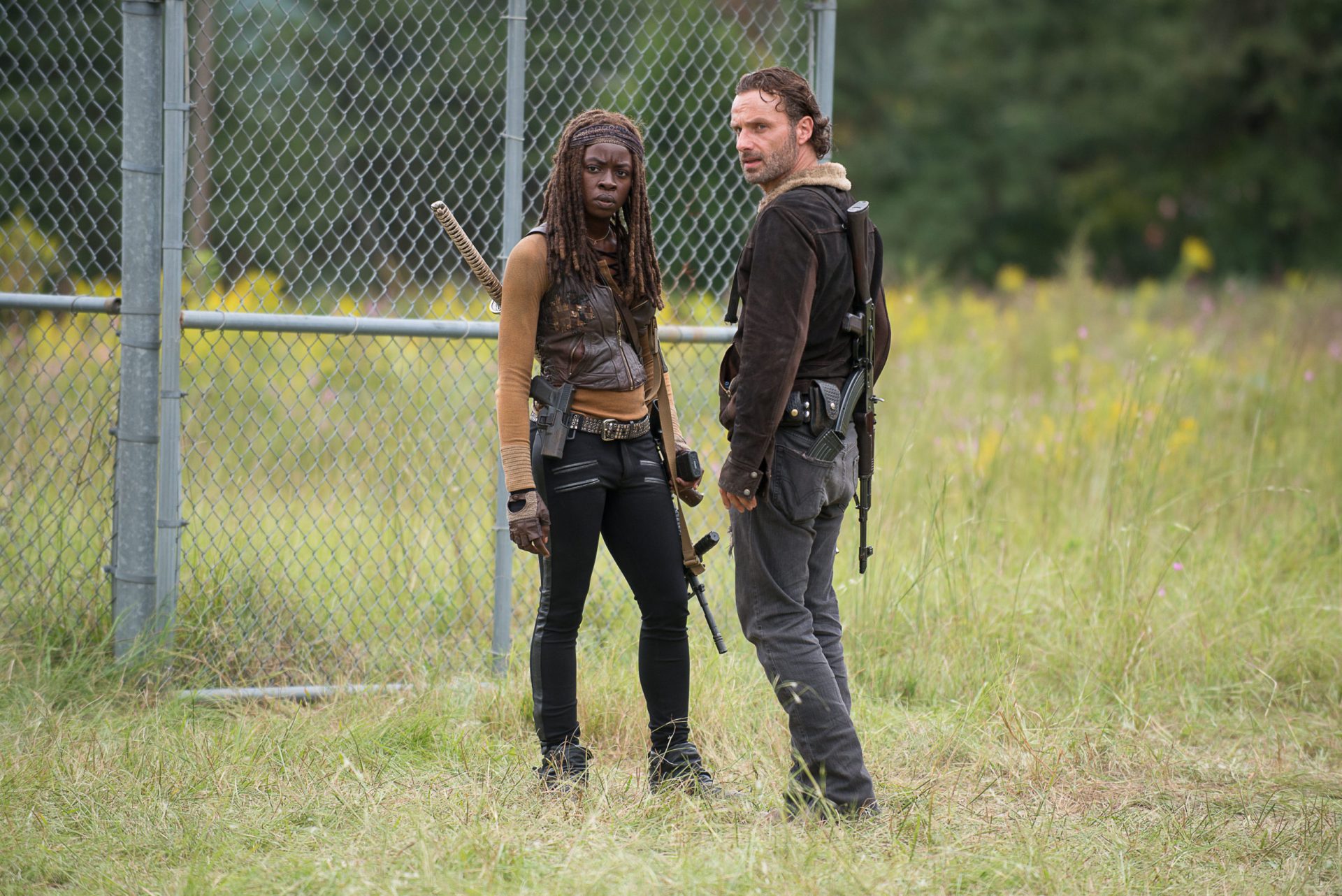
Michonne’s later departure deepened that feeling. She had become one of the show’s strongest moral and emotional presences. Her leaving to search for Rick made sense on paper, especially once the franchise had future plans for them. But in the main series, it added to the sense that the flagship show was slowly becoming both conclusion and transit lounge. Characters were not simply reaching endings. They were being redirected into other products.
That sounds harsher than I mean it, maybe. Television is an industry. Franchises franchise. Popular characters continue because studios know recognition is the closest thing to insurance. But as a viewer, you feel the difference between a story ending because it has completed its argument and a story ending while keeping several doors deliberately ajar. By the final season, I was not watching with the same hunger. I was watching because I had come this far. There is a difference.
The Commonwealth and the Problem of Returning Society
The Commonwealth arc had an interesting idea at its centre. After years of farms, prisons, suburbs, dumps, kingdoms, and militia compounds, here was a large-scale community attempting to recreate pre-apocalypse society. Not just safety, but class. Jobs. Bureaucracy. Ice cream. Soldiers. Political theatre. Inequality with a cleaner shirt.
That should have been a perfect late-stage concern for The Walking Dead. Once survival becomes manageable, old human systems return. Not always because people consciously want oppression back, but because hierarchy is one of humanity’s most durable bad habits. The dead can destroy the world, but give the living enough time and someone will reinvent status anxiety.
The Commonwealth let the show ask whether civilisation itself was worth restoring if it meant restoring the same rot. Pamela Milton and Lance Hornsby represented different flavours of institutional decay. Mercer represented the soldier trapped between order and conscience. Eugene’s storyline, with all its awkward longing and legal peril, gave the arc some human nervousness. I liked parts of it. I really did.

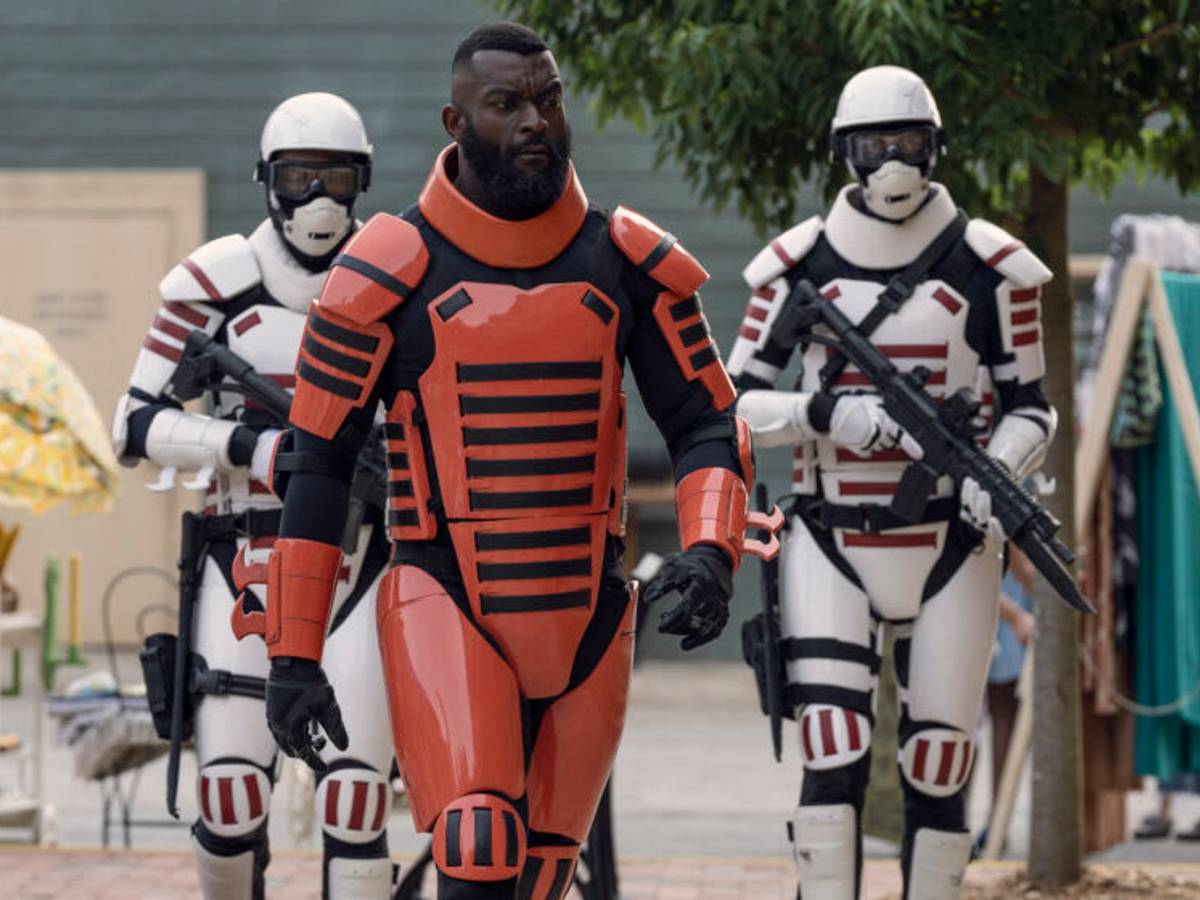
But I also felt the fatigue of scale. By season eleven, the show had so many characters, histories, grievances, redemptions, and unresolved emotional tabs that even a 24-episode final season had to juggle rather than pierce. Some characters who had once felt vivid became part of the furniture. Others arrived too late to matter as much as the show needed them to. The Commonwealth was thematically right but dramatically uneven.
The final season was not without feeling. Rosita’s death hurt because Christian Serratos gave her farewell a restrained, maternal bravery. Eugene naming his daughter after her was the kind of small emotional echo the show could still do well. Negan’s apology to Maggie was necessary, and Lauren Cohan’s response was one of the more honest things the show allowed itself to say: she could accept that he was trying, but she could not simply forgive him in a way that made her pain convenient.
That mattered. Redemption stories often become lazy when they ask the victim to complete the villain’s emotional paperwork. Maggie refusing to let Negan’s remorse erase Glenn was one of the finale’s strongest choices. Still, the ending felt less like a full stop than a roundabout.
The Finale: Closure With Several Exit Signs
By the time The Walking Dead reached “Rest in Peace”, I wanted closure more than shock. I did not need the show to kill half the cast to prove it still had teeth. I wanted emotional accounting. I wanted to know what all those years of suffering had built, if anything.
The finale gave us some of that. It let the core survivors fight together. It gave Rosita a heroic and heartbreaking exit. It gave the Commonwealth a change of leadership. It gave Daryl and Carol a goodbye that felt tender without over-explaining itself. It gave Judith and RJ a future. It gave the surviving communities a sense, however fragile, that the world might be more than a sequence of sieges. And then Rick and Michonne appeared.


I understand why. Of course I do. Rick and Michonne were too central to leave entirely outside the final emotional gesture. Their return, even in separate scenes, gave the finale a mythic echo. The line “we’re the ones who live” pulled the whole series back towards memory, towards all the faces lost along the way. It was moving in the way reunions with old fictional ghosts are almost always moving. But it also reminded me that the ending was not purely an ending. It was a hand-off.
By then, The Walking Dead had become too large to die neatly. The flagship series ended, but the universe did not. Maggie and Negan went to Manhattan. Daryl went to France and then farther across Europe. Rick and Michonne finally received their long-delayed continuation. Fear the Walking Dead had already spent years wandering its own uneven road, while World Beyond expanded the Civic Republic mythology and Tales tried anthology form. The dead kept walking because, commercially, they had learned to do so.
As a zombie fan, I cannot really be offended by that. This is a genre built on things refusing to stay buried. Still, there is a particular kind of exhaustion that comes from realising that even the apocalypse now has spin-off management.
The Spin-Off Question
Coming back to this in 2026, the spin-offs are no longer hypothetical extensions waiting somewhere beyond the finale. The Ones Who Live aired in 2024 and finally dealt directly with Rick and Michonne’s missing years. Dead City has now reached a third season, still tying Maggie and Negan together through the wound the main series could never quite close. Daryl Dixon reached its third season in 2025, taking Daryl and Carol farther across Europe, and AMC has already announced that its fourth and final season, now scheduled for February 2027, will close the series.
None of that makes me want to retrofit an enthusiasm I did not have when the flagship ended. My problem was never that these characters had no stories left in them. It was that I no longer felt the old urgency to follow every branch of the family tree simply because it carried The Walking Dead name. There is a point where a fictional world stops feeling expansive and starts feeling administratively large, with every goodbye quietly leaving a forwarding address.
The Ones Who Live at least makes emotional sense as a continuation because Rick and Michonne were too central to leave suspended forever. Their relationship had accumulated enough history that resolving Rick’s disappearance was more than franchise housekeeping. Even so, I am more interested in what that continuation means for the ending of the original series than in pretending the spin-off automatically restores the fever I had during the early years.


Dead City remains the stranger proposition for me. Maggie and Negan are dramatically bound by one of the show’s most irreparable acts, and the franchise clearly still sees value in putting that tension under pressure. I can understand the appeal without forgetting the ethical weight of it. Glenn’s murder cannot become merely useful backstory because Negan turned out to be charismatic television; Maggie’s refusal to make his remorse convenient was one of the main series’ better late choices.
Daryl Dixon makes the most instinctive sense on paper because Daryl was always a wanderer, and Carol’s return to his orbit restores one of the franchise’s strongest relationships. Their bond has never needed romance to justify itself. It is built out of recognition, damage, loyalty, silence, and the sort of friendship that would rather fix your bike than discuss its feelings under flattering studio lighting. Moving them through France, Spain and the rest of Europe at least changes the visual weather, which matters in a franchise that spent years driving the same cracked roads through Georgia.
What has changed since the original finale is not my basic reaction so much as the evidence around it. The universe really did keep walking. Some branches lasted longer than others, some closed, and some are still being extended. I can respect the persistence without feeling obliged to treat completion as a civic duty. The franchise still contains characters I care about; it also has a lot of mileage behind it, and by now the mileage is part of the story.
The Main Characters as a Damaged Family Album
Looking back, the reason The Walking Dead stayed with me was never just the mythology. It was the people, at least when the writing remembered to treat them as people rather than pressure points.
Rick Grimes is the obvious centre: a man trying to preserve law until he becomes lawless, then trying to recover something like mercy after discovering what he is capable of. His arc is messy because leadership is messy. He is inspiring, infuriating, brave, hypocritical, loving, violent, and sometimes exactly the wrong man for the job until the job changes shape around him.
Lori Grimes is often remembered harshly, sometimes unfairly. She was not written with the same generosity as some later characters, but she embodied the impossible domestic tensions of the early apocalypse. Marriage, motherhood, guilt, pregnancy, and survival all collapsed onto her at once. The show did not always know what to do with her, but Sarah Wayne Callies gave her fear and exhaustion a human edge.

Carl Grimes was the child forced to grow faster than the world could justify. His arc was uneven, but conceptually vital. He represented the question every apocalypse story eventually has to ask: what kind of children does this world produce? Shane Walsh was the first warning that adaptation without conscience is just another form of infection. He was not wrong about everything. That was the horror.
Daryl Dixon became the soul of the show almost accidentally. He had no grand ideology. He had loyalty, suspicion, pain, and a crossbow. In a series full of speeches about civilisation, Daryl often made more sense because he spoke least.
Carol Peletier had one of the best transformations in modern genre television. From abused spouse to strategist, from grieving mother to ruthless protector, from invisible woman to one of the most dangerous people in any room. Her arc was not empowerment-poster simple. It was jagged, costly, and morally stained.
Michonne brought steel, grief, intelligence, and eventually warmth. She was introduced as an icon but endured because she became a person. Her relationship with Rick worked because it felt built out of mutual recognition rather than plot convenience.

Glenn Rhee was the show’s decency under pressure. He was proof that kindness did not have to mean weakness. His death hurt because he had carried so much of the show’s humane centre.
Maggie Greene began as Hershel’s daughter and became a leader hardened by loss. Her grief over Glenn remained one of the show’s essential moral facts. She could rebuild, command, negotiate, and survive, but the wound did not vanish because the plot found Negan interesting. Hershel Greene was the old world’s conscience adapted for the new one. Not perfect, not untouched by denial, but necessary.
Morgan Jones became a study in trauma’s circular logic: mercy, madness, discipline, relapse, philosophy, violence. At times his writing became repetitive, but Lennie James always gave him gravity. Eugene Porter was cowardice slowly reshaped into usefulness, then courage. He annoyed me, then surprised me, which is probably the intended path.

Rosita Espinosa deserved more centrality than the show always gave her, but she became increasingly important in the later seasons: capable, pragmatic, loving, and finally heroic without fuss.
Gabriel Stokes began as a coward hiding behind religion and became one of the show’s more interesting late moral figures. His faith was not clean. That made it more believable.
Aaron, Ezekiel, Jerry, Connie, Yumiko, Judith, Lydia, Mercer, and many others filled out the later world with varying degrees of success. Some were beautifully drawn. Some were underserved. That is inevitable in a cast that large, but it also explains why the later seasons sometimes felt crowded without feeling full. And Negan. Always Negan.
Negan is one of the franchise’s most compelling problems. Jeffrey Dean Morgan made him entertaining, funny, dangerous, and eventually regretful. But the character’s charisma created an ethical drag. The show wanted to explore whether a monster could become something else. Fair enough. That is a valid story. But it also had to keep remembering that redemption is not the same as popularity. Maggie’s inability to forgive him completely was not bitterness. It was sanity.
Why the First Half Hit Harder
When I say the earlier seasons of The Walking Dead worked so well, I do not mean it was flawless. It had clunky dialogue, uneven pacing, questionable decisions, and stretches where characters seemed to wander into danger because the episode needed a pulse. But the early show had discovery. Every new location felt like a test of the world. Every moral choice felt like it was carving the rules from scratch. The camp outside Atlanta. The CDC. Hershel’s farm. The prison. Woodbury. Terminus. Alexandria. Each place asked a different question. Can family survive collapse? Can denial? Can democracy? Can faith? Can safety? Can civilisation? Can kindness?
Later, the questions became larger but sometimes less sharp. The show had built a world so big that it had to keep servicing the world. The mythology expanded. Communities multiplied. Villains arrived with systems. The dead became less threat than weather. The living became the main event, which was always the point, but even human evil can become repetitive if it enters with a new costume every season.

That was my problem in the later years. Not that the show had nothing left to say. It still did, in flashes. It was that I no longer felt the same need to hear it immediately.
The early seasons made me feel like missing an episode meant being left behind in the dark. The later seasons made me feel like I could catch up after doing the laundry. That is not nothing. Laundry is very persuasive.
The Cultural Moment
It is worth remembering how massive The Walking Dead became. For a while, it was not just a genre hit. It was one of television’s central shows. People who were not horror fans watched it. People who could not name a Romero film debated whether Rick was right, whether Shane had a point, whether the Governor was worse than Negan, whether Carol had gone too far, whether Glenn’s death was the breaking point.
That kind of mainstream genre dominance is not easy. The show brought practical zombie horror into Sunday-night appointment television and made it feel oddly respectable without sanding off all the viscera. It helped turn AMC, already prestige-branded through shows like Mad Men and Breaking Bad, into a home for a very different kind of cultural event: bloody, populist, grim, and weirdly communal.

There was also something about its timing. The 2010s were not short on anxiety. Economic unease, political fracture, institutional distrust, disaster imagery, internet argument, survivalist fantasy, and the growing sense that the old systems were less sturdy than advertised. The Walking Dead did not cause any of that, obviously. It just found a genre shape for it.
Zombie stories are useful because they literalise collapse. They take all the things we suspect are fragile — supply chains, public order, neighbourliness, medical access, polite behaviour — and knock them over in one weekend. Then they ask who still knows how to build a fire.
That is probably why I kept watching even after my enthusiasm cooled. The show’s world remained a grim thought experiment I understood. What would I do? How long would I last? Would I be useful? Would I be the guy insisting we go back for the cat? Would I die because I forgot to look under a table? These are important questions for men of a certain age who own too many cables and think a Swiss Army knife counts as preparation.
The Craft: Rot, Dust, and Human Texture

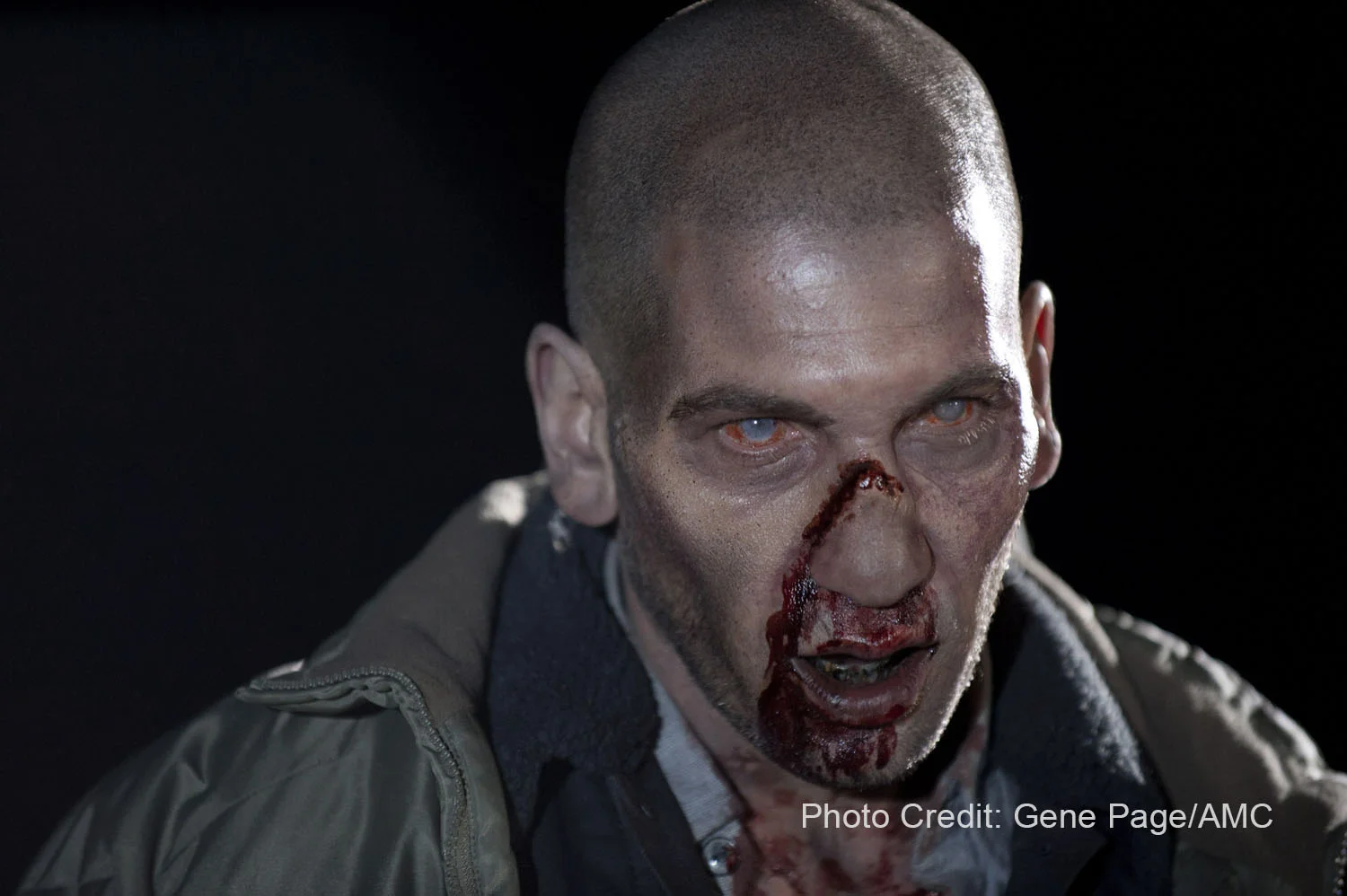
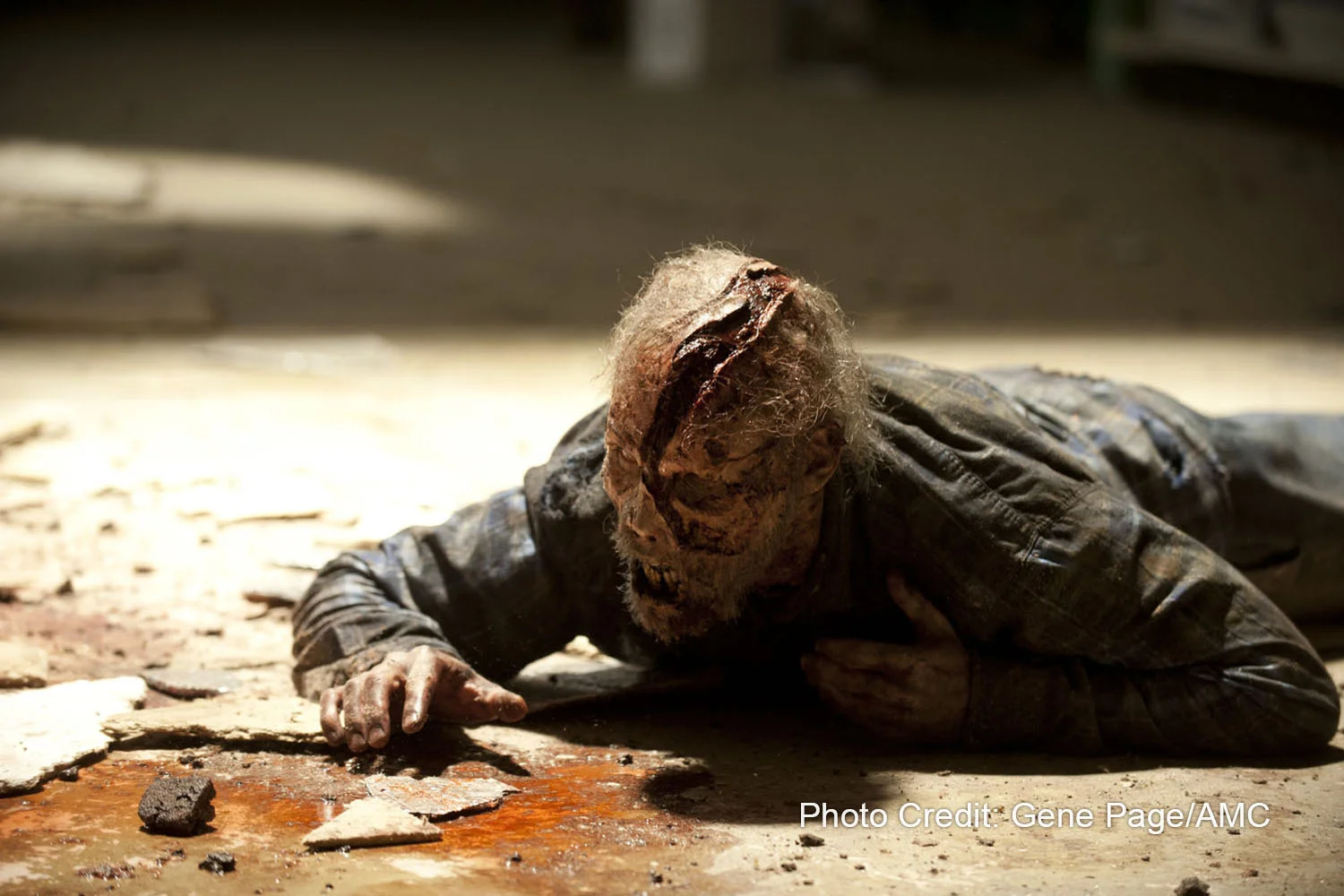
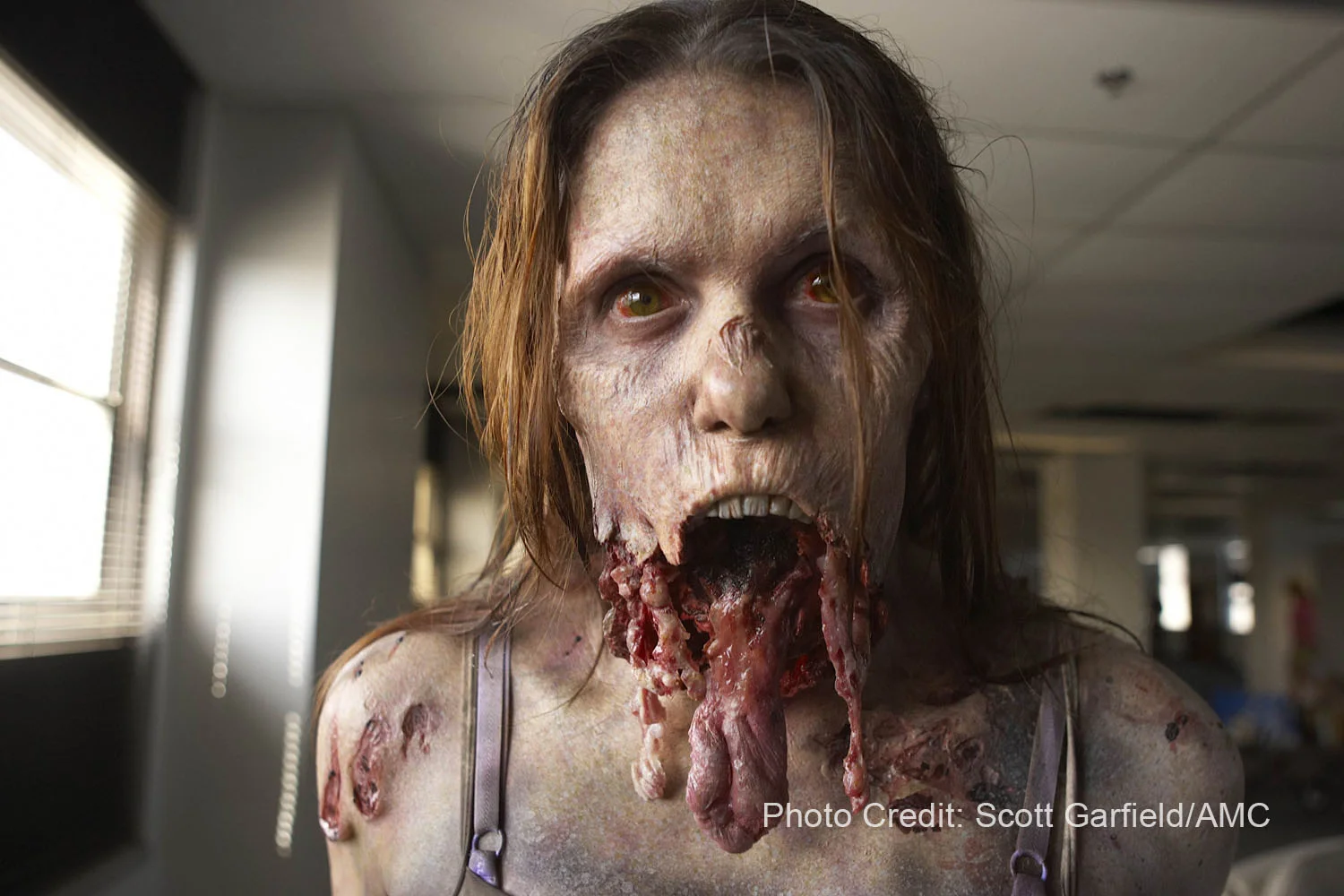
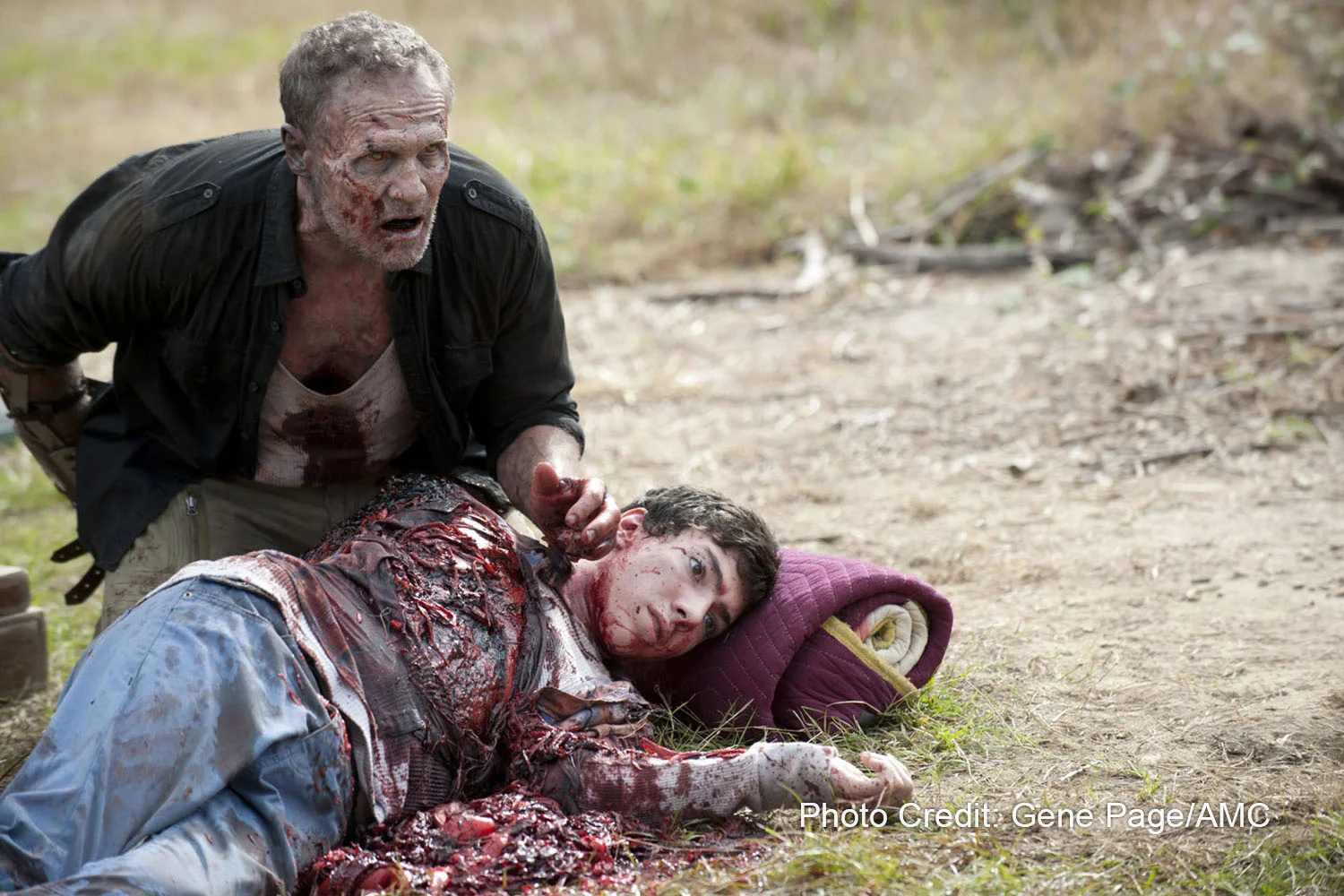
Visually, The Walking Dead deserves credit for making decay feel tactile. The walkers were not abstract monsters. They were designed with loving disgust: bloated, sunken, waterlogged, burnt, mossy, skeletal, swollen, split, and sometimes almost beautiful in their ruin. Greg Nicotero’s effects work gave the show a physical credibility that CGI alone could never have carried.
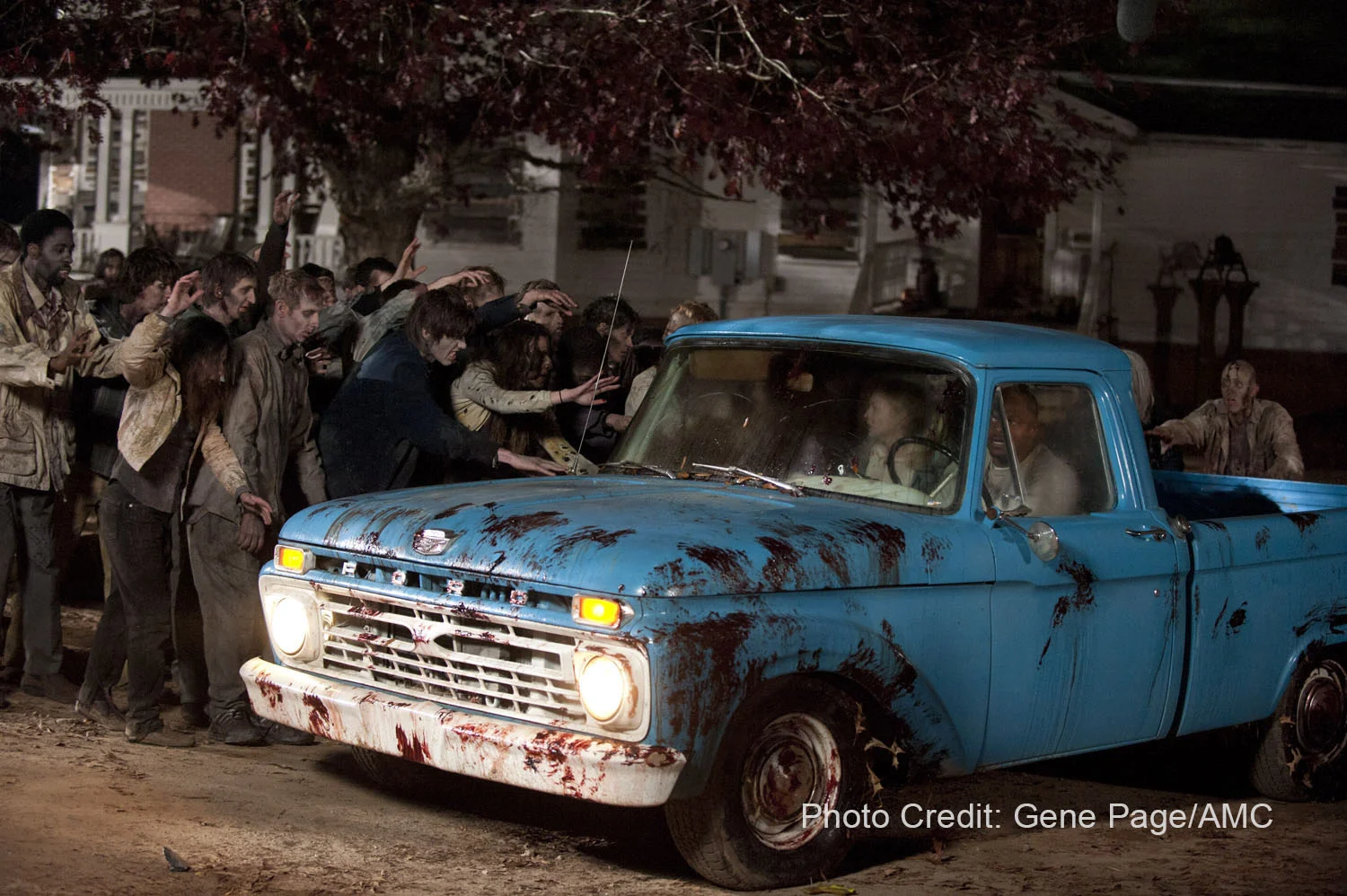
The environments mattered too. Atlanta’s empty roads. The rural heat of the farm. The prison’s concrete gloom. The suburban eeriness of Alexandria. The junkyard surrealism of the Scavengers. The Commonwealth’s unnerving cleanliness. The show understood that apocalypse is a production design problem as much as a narrative one. What does a world look like when maintenance stops? What happens to signage, uniforms, kitchens, wallpaper, lawns, churches, shopping trolleys, family photos?

As someone who tends to notice design, texture, and visual systems, I always appreciated that. The best post-apocalyptic settings are not just ruined. They are repurposed. A prison becomes a home. A baseball bat becomes a sceptre. A sheriff’s hat becomes inheritance. A katana becomes identity. A dinner table becomes a council chamber. A wall becomes a border. A pike becomes a message. Objects in The Walking Dead often outlived their original meanings. That is one of the things the show understood very well.
What Remains
So where do I land on The Walking Dead now? Somewhere between admiration and exhaustion. The first half remains, for me, essential zombie television. Not perfect. Essential. It took a genre I already loved and gave it room to sprawl, bruise, contradict itself, and occasionally surprise me. It gave us characters who became part of the pop culture furniture without feeling designed only for merchandise. It gave us a world where every sanctuary came with a question mark. It gave us grief with dirt under its nails.
The later seasons are harder to defend with the same enthusiasm. They have strong arcs, good performances, and moments that still cut. But they also carry the weight of franchise thinking, stretched conflicts, crowded plotting, and the natural fatigue that comes when a story about survival survives long enough to become a scheduling ecosystem.
By the final season, I was no longer watching because I needed to know what happened next. I was watching because I needed to see how they would close the coffin. And then, because this is The Walking Dead, the coffin opened several smaller coffins.
Maybe that is appropriate. The franchise itself has become one of its own walkers: damaged, persistent, recognisable from a distance, still moving even after you assumed the main body had dropped. I say that with affection, or at least with the kind of weary respect you give something that has lasted this long without completely falling apart.

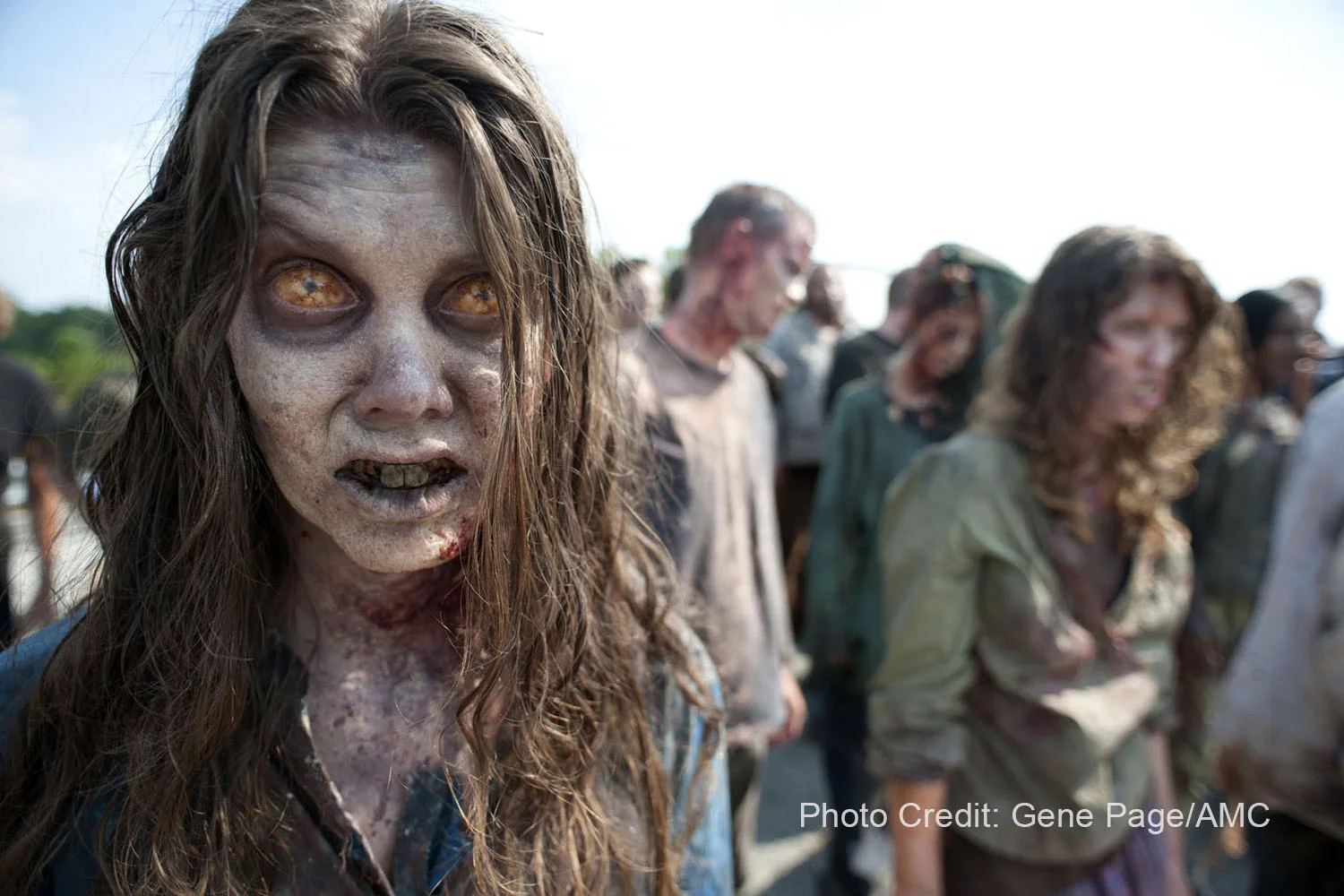
Would I rewatch it? The early seasons, definitely. The pilot through the prison era, absolutely. Terminus and Alexandria, yes. The later seasons, more selectively. I suspect I would revisit them the way one revisits old neighbourhoods: not expecting to live there again, but curious which corners still remember me.
For all my fatigue, I cannot pretend the show did not matter to me. It did. It gave zombie television scale, patience, and a damaged beating heart. It produced characters I still think about. It gave horror fans a long, messy, often brilliant communal experience. And it reminded us, again and again, that the apocalypse is not one event. It is a series of decisions made after the event. The dead were never really the problem. They were just the weather. The living brought the climate.
Affiliate Disclosure: This post contains affiliate links. If you click through and make a purchase, I may earn a small commission—at no additional cost to you. I only recommend products I personally find useful or relevant. Thank you for your support.
Leave a Reply