
I switched off the television after watching Nuremberg and found myself thinking less about the verdict than about a couple of men talking across a table. One is a psychiatrist convinced that he can get inside the mind of a criminal. The other helped run a regime responsible for mass murder, yet remains capable of charm, jokes and an apparently sincere concern for his family. There is something deeply wrong with how ordinary the conversation can seem.
James Vanderbilt’s 2025 film is built around that discomfort. Adapted from Jack El-Hai’s The Nazi and the Psychiatrist, it follows the American Army psychiatrist Douglas Kelley (Rami Malek) as he examines imprisoned Nazi leaders, particularly Hermann Göring (Russell Crowe), ahead of the post-war trials. It is partly a legal drama, partly a psychological contest and, to my mind, most effective when it allows the two men to sit in a room and talk without telling us exactly what to feel.

A psychiatrist looking for a monster
Kelley arrives believing the Nazi leadership must share some discoverable flaw, a condition or personality type that would account for atrocities on such a scale. His official work concerns the prisoners’ mental fitness, but the larger question quickly takes over. Surely, he reasons, the men who designed and administered this machinery of persecution must be fundamentally unlike anyone else. That would be a reassuring answer, if he could find it.
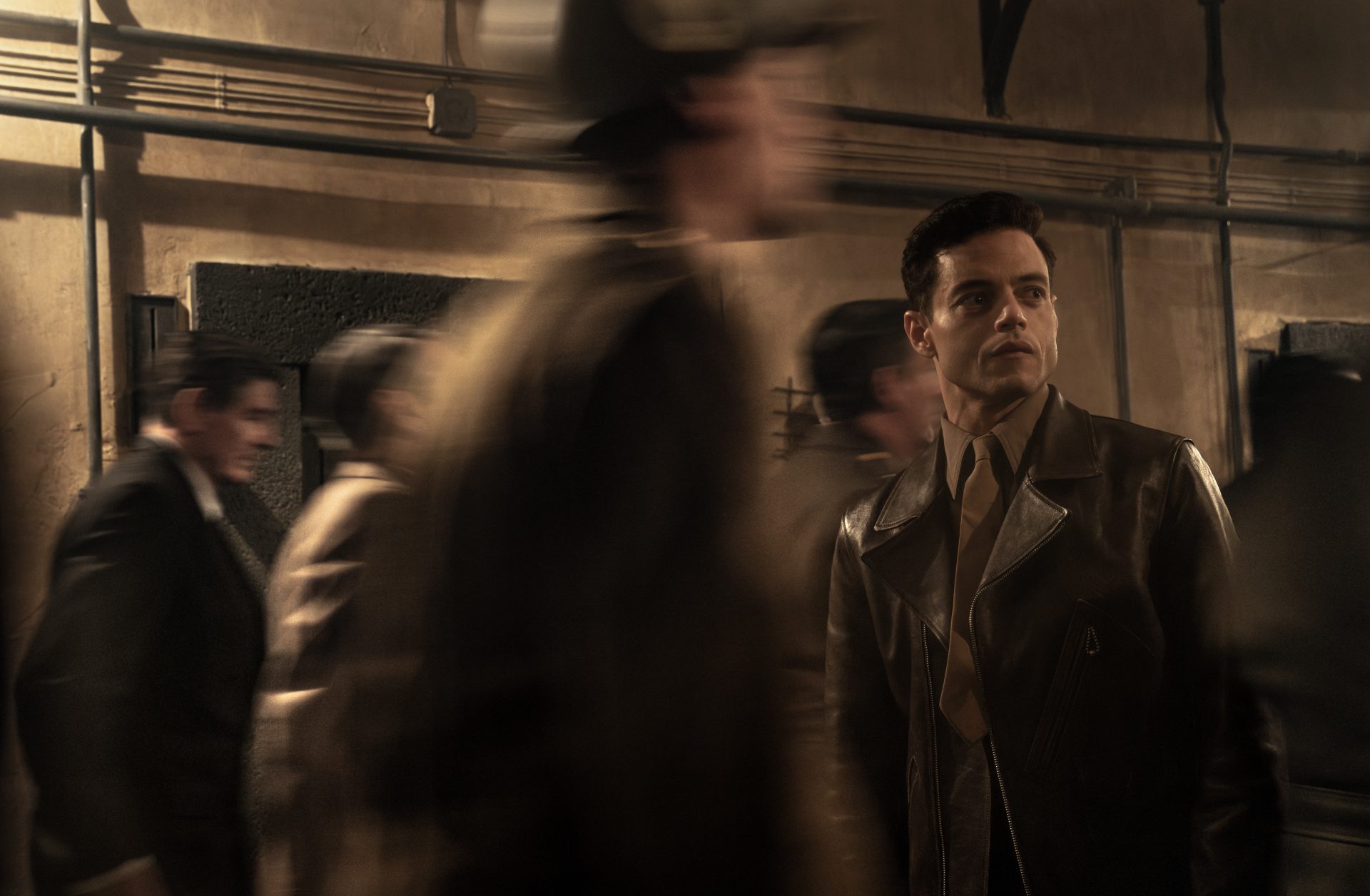
Malek makes Kelley clever, ambitious and rather pleased with his own cleverness. He approaches his patients with the confidence of a man who thinks the clinical setting gives him control, even while he starts to enjoy the attention he receives from his most remarkable subject. The film occasionally overplays Kelley’s agitation, but I found the underlying vanity believable. It is easy to imagine a psychiatrist recognising that his assignment might also make his career.

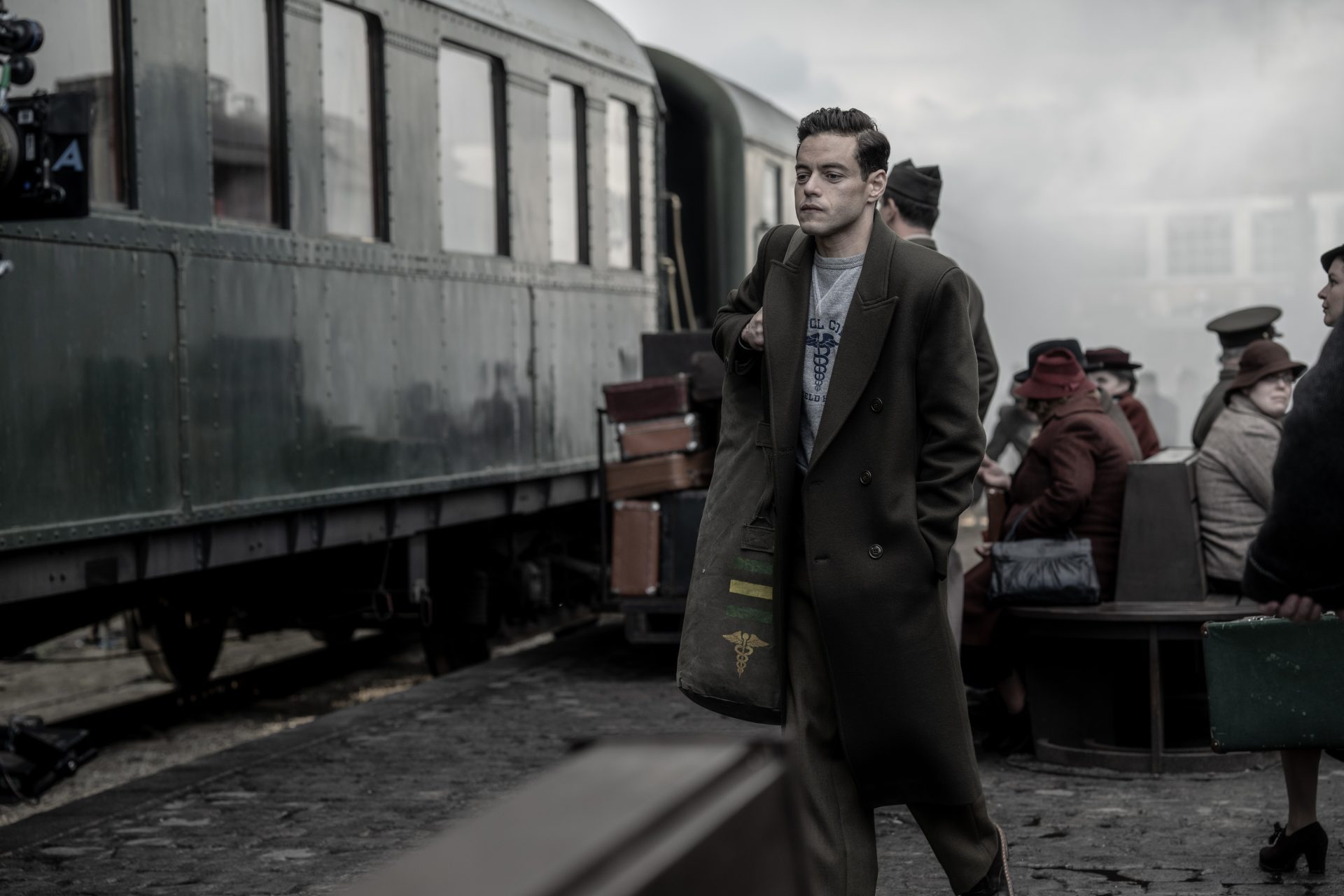
The real Kelley carried out psychiatric work with captured Nazi officials at the American detention centre nicknamed Camp Ashcan, in Luxembourg, and later in Nuremberg. His conclusion that the prisoners could not be explained away as a group of clinically insane men was provocative. Yet the distinction matters: failing to identify a unique psychiatric illness is not the same as declaring perpetrators morally ordinary, harmless or somehow less responsible. The film sometimes moves rather quickly between those ideas, perhaps because an uncomfortable thesis makes for a stronger dramatic line.

Russell Crowe understands the danger of charm
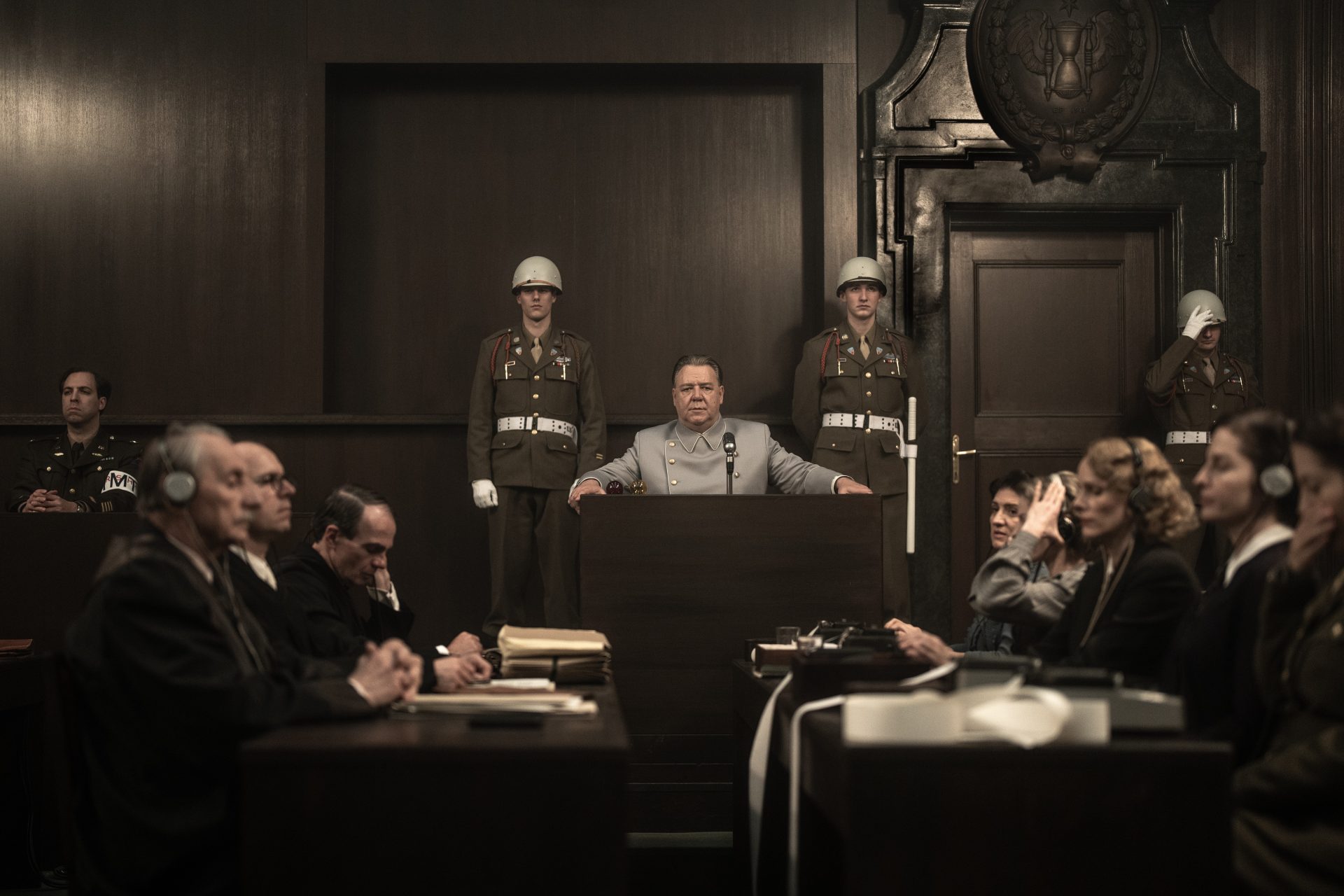
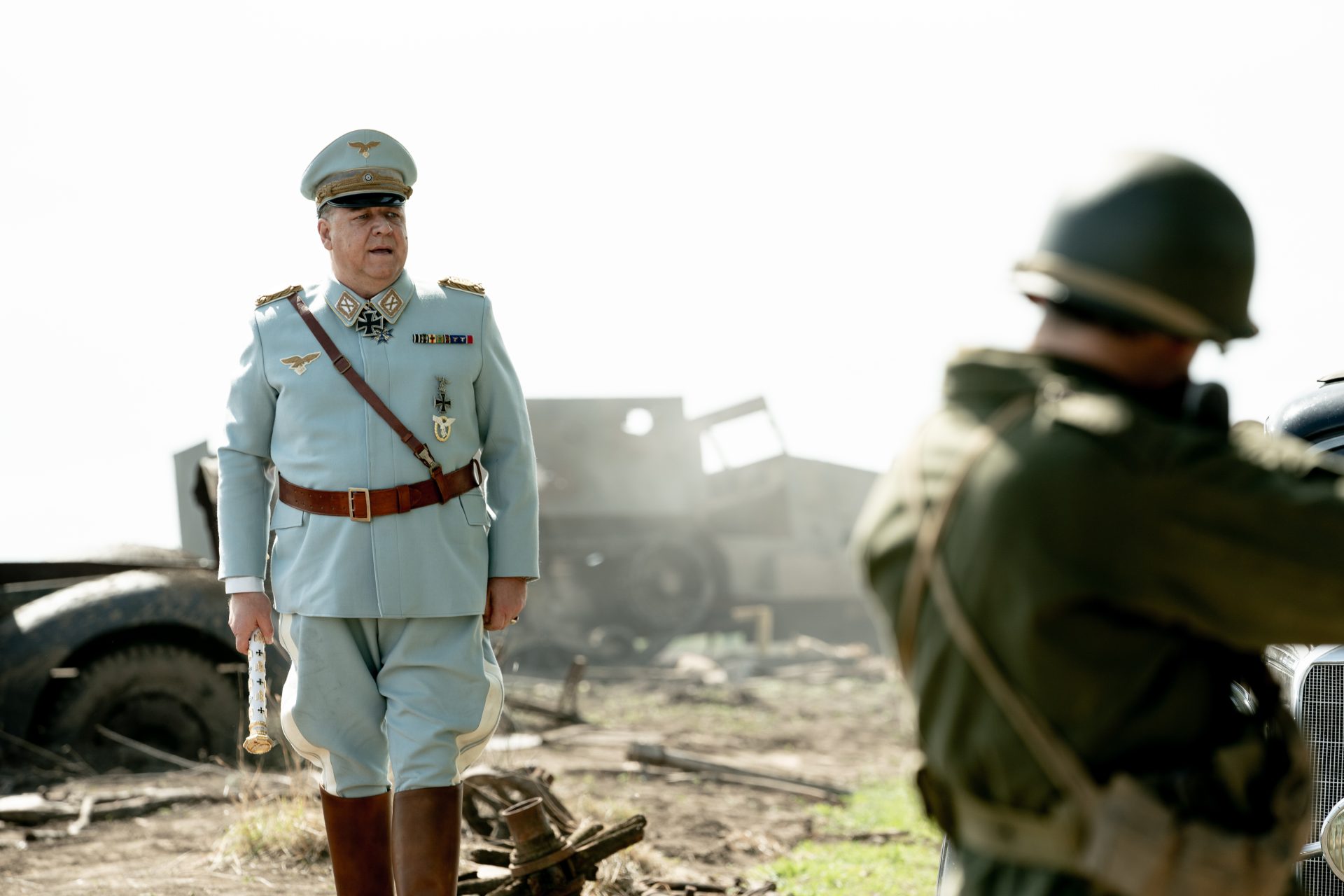
Crowe is the main reason the film holds together. His Göring is intelligent, theatrical, vain and utterly convinced of his own importance. The performance avoids the convenience of a villain who announces his wickedness in every gesture. Instead, he behaves like someone who still expects to be listened to, flattered and remembered. He can be agreeable one moment and chillingly impervious the next. The apparent warmth makes the moral emptiness harder, not easier, to dismiss.
I kept returning to the family stories and magic tricks. Göring’s affection for his wife and daughter is not evidence against his responsibility for Nazi crimes; it is evidence that human affection and brutality can inhabit the same person. Crowe lets that contradiction sit there. He never needs to turn Göring into a pantomime monster, and the film is better for it. The most disturbing detail is the possibility that Kelley begins enjoying his company before realising what that enjoyment might cost him.

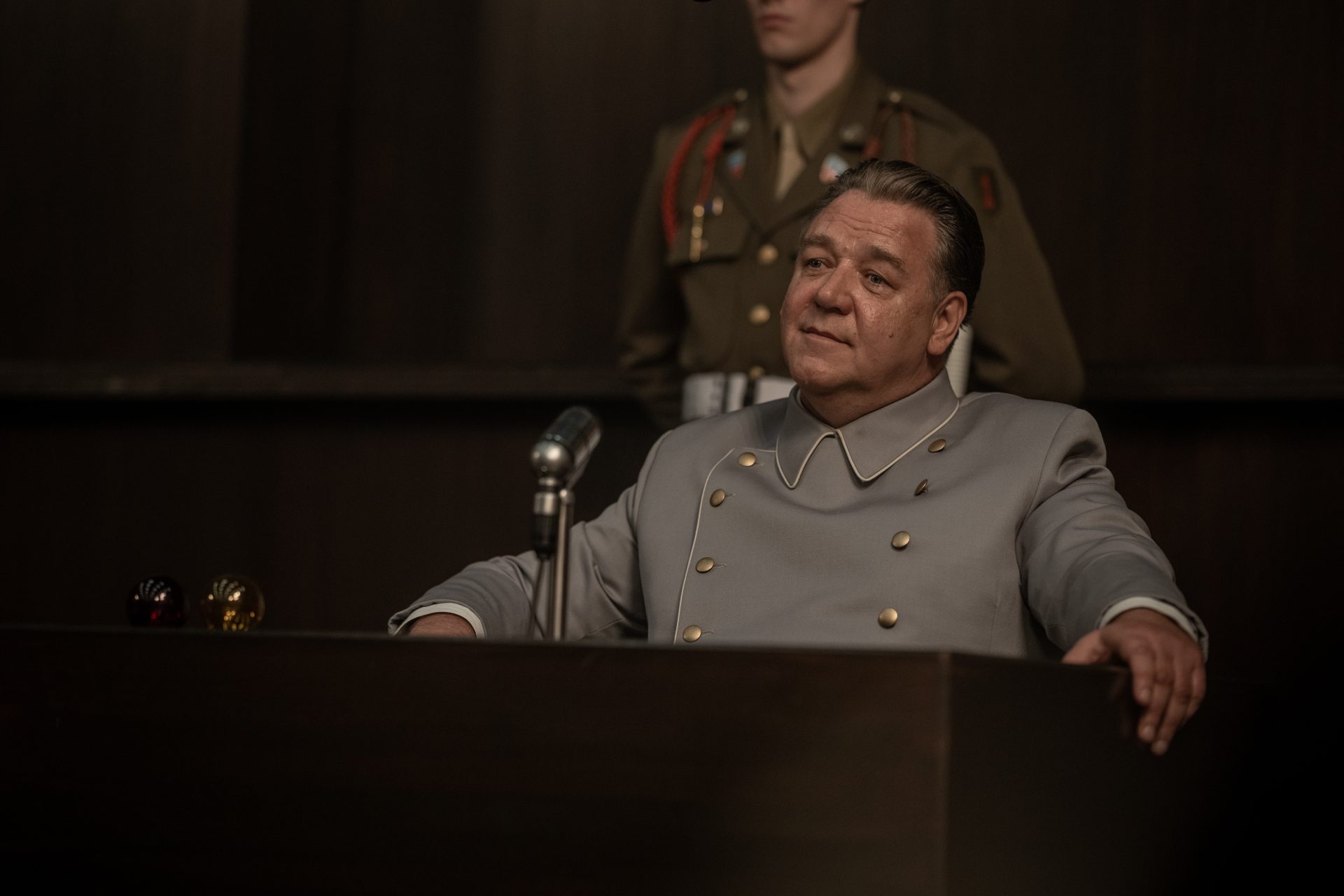

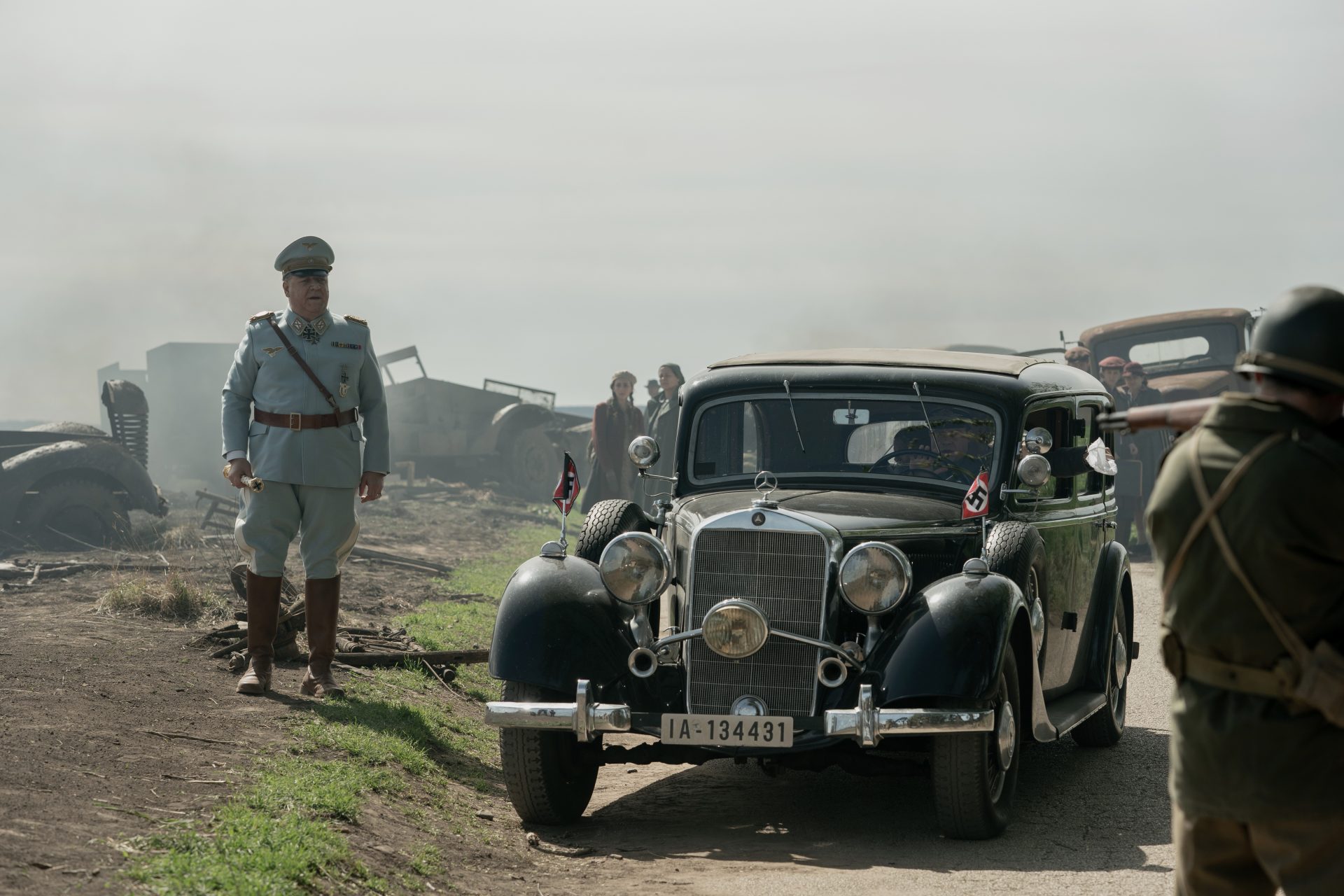
There is also an interesting imbalance between the actors. Crowe seems settled in the room, while Malek’s Kelley is forever shifting position, testing a strategy and then trying to recover from it. The psychiatrist believes that he is observing a prisoner, but Göring understands the usefulness of having a captive audience. He has lost his political power, yet he is still practising the habits that made him dangerous: persuasion, self-mythologising and an instinct for finding another person’s vulnerabilities.

The people outside the interrogation room
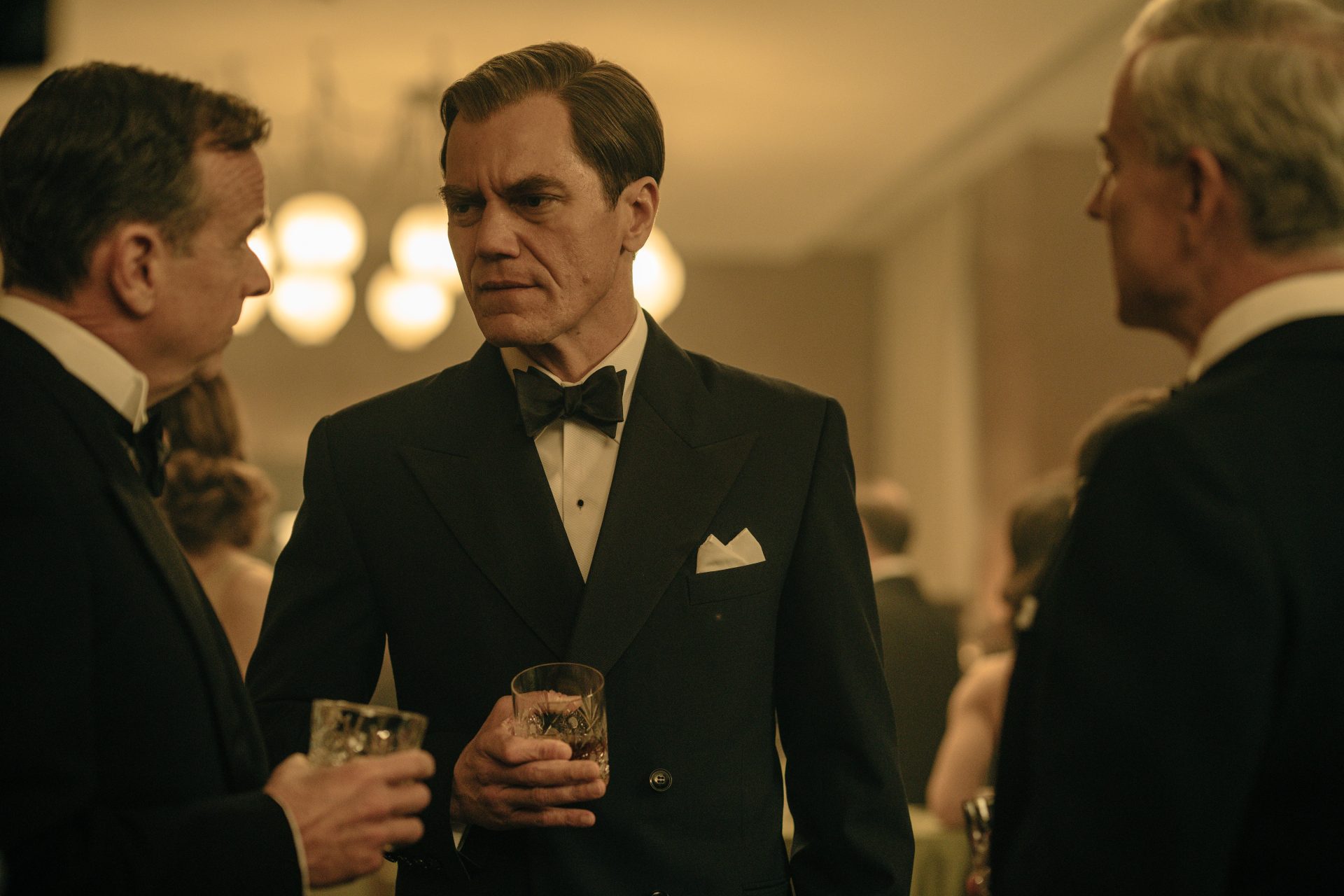
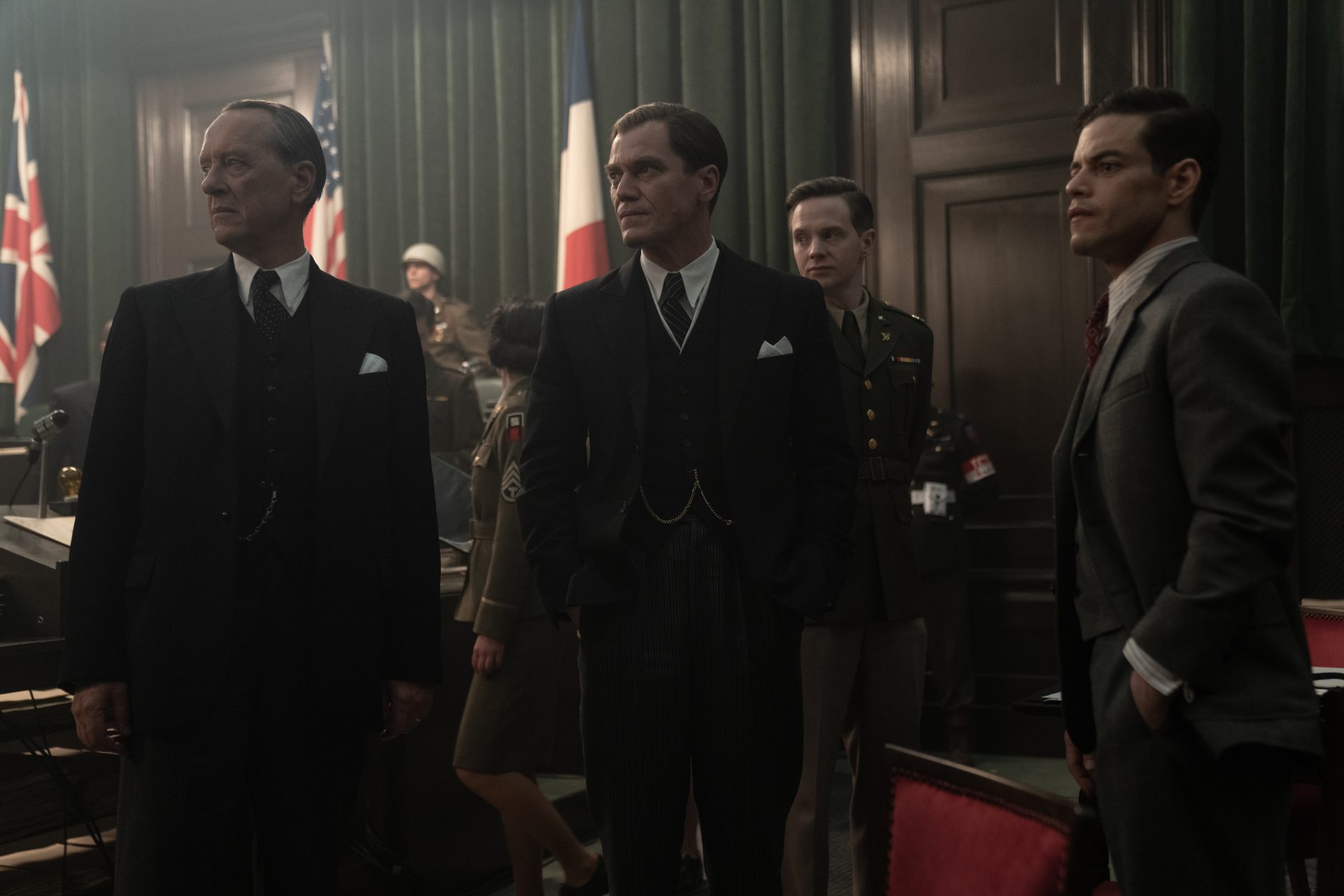
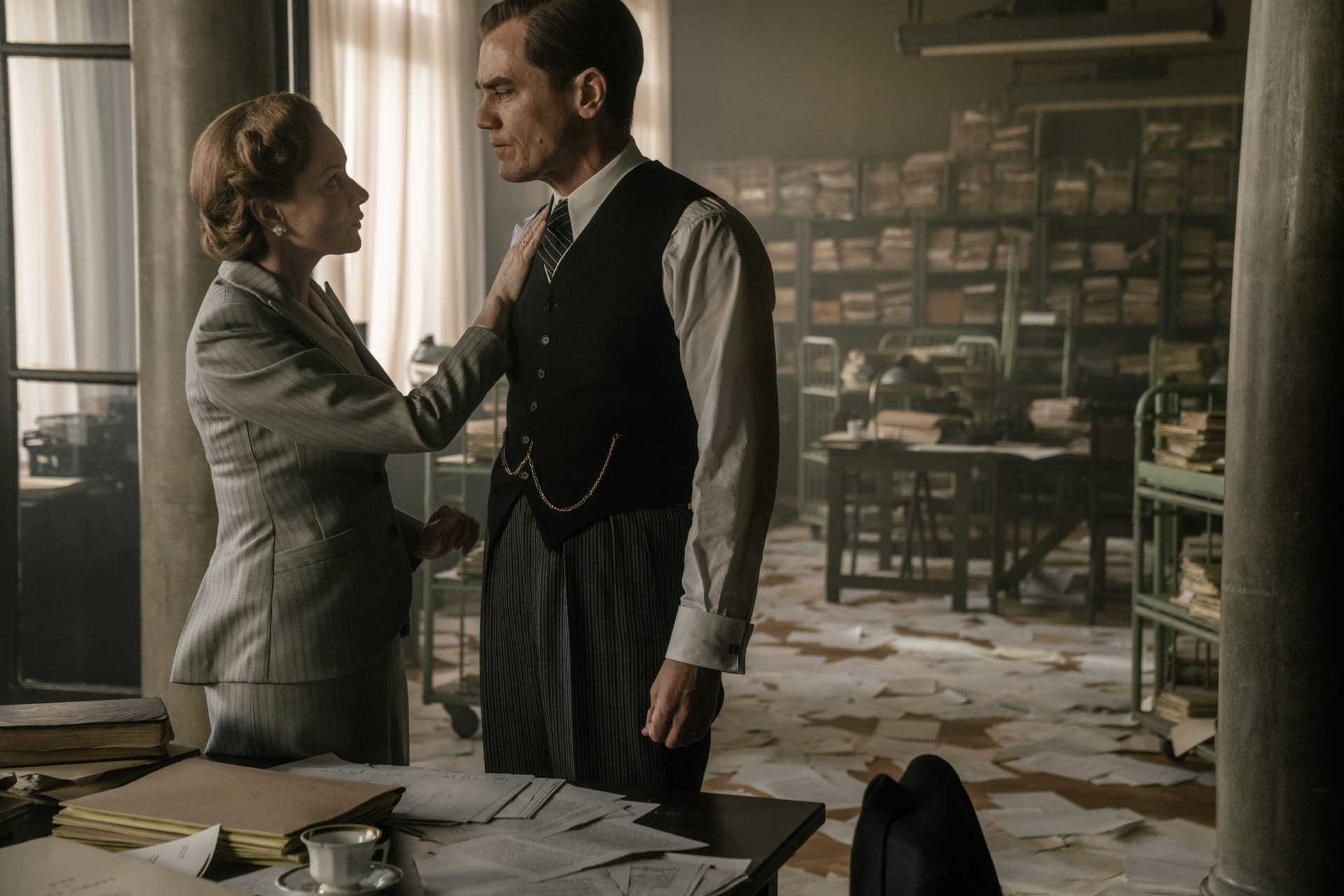
Vanderbilt sensibly gives the film a second centre of gravity in Robert H. Jackson, played with rather stern conviction by Michael Shannon. Jackson wants something more difficult than the execution of defeated enemies. He wants a process that makes the crimes public, records the evidence and establishes that even state leaders can be held to account. The distinction between justice and revenge could easily have become a speech delivered over solemn music, but Shannon keeps it practical. Someone has to make the courtroom work.

Richard E. Grant, as British prosecutor David Maxwell Fyfe, brings a little welcome dryness to proceedings. John Slattery’s prison commandant Burton C. Andrus is less interested in philosophical speculation than in security, while Colin Hanks plays the psychologist Gustave Gilbert, whose interpretation of the prisoners differs from Kelley’s. The supporting cast sometimes feels crowded, but that is also a useful reminder that the trials were not a private competition between two men. They were the work of prosecutors, guards, interpreters, witnesses and an uneasy international coalition.


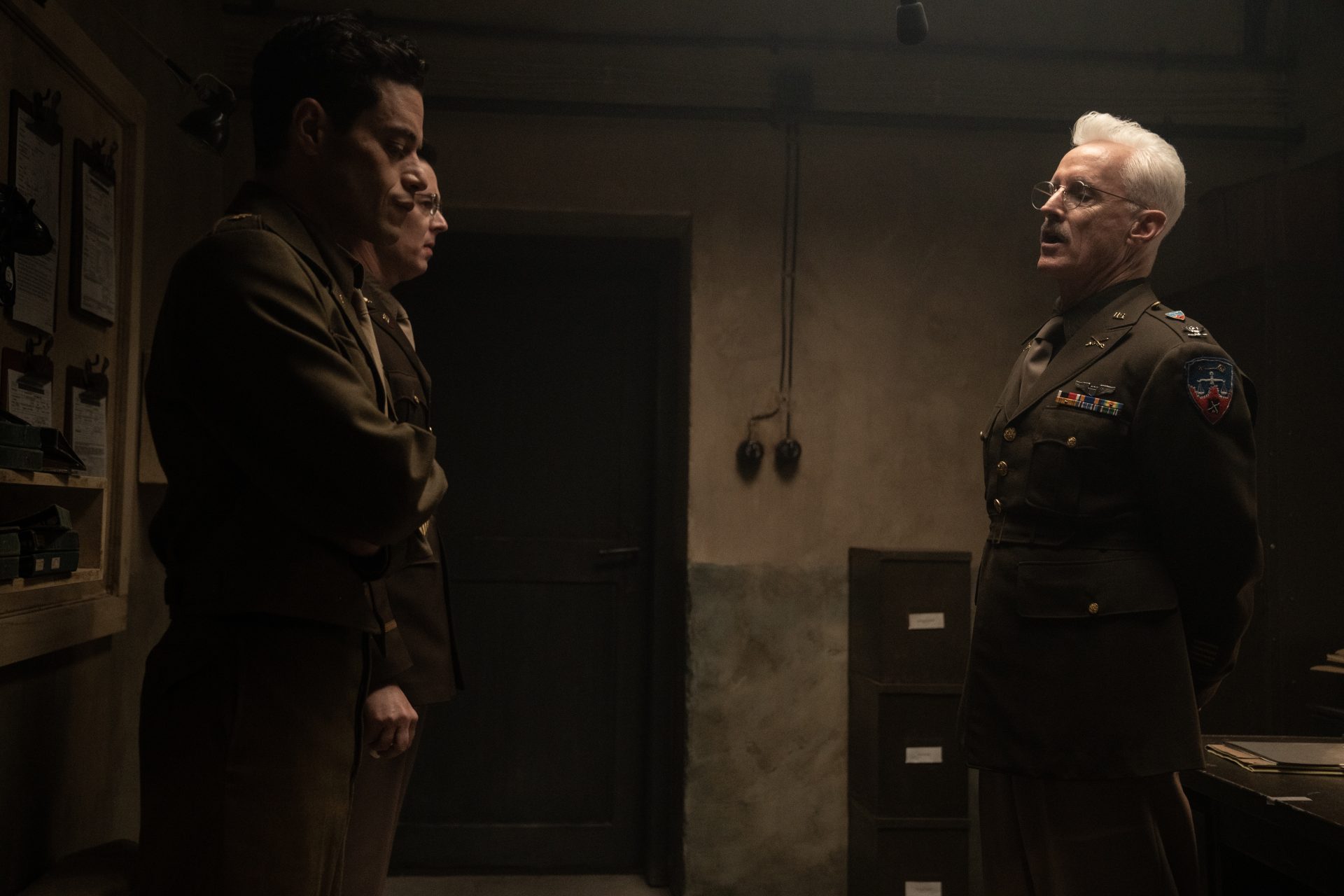
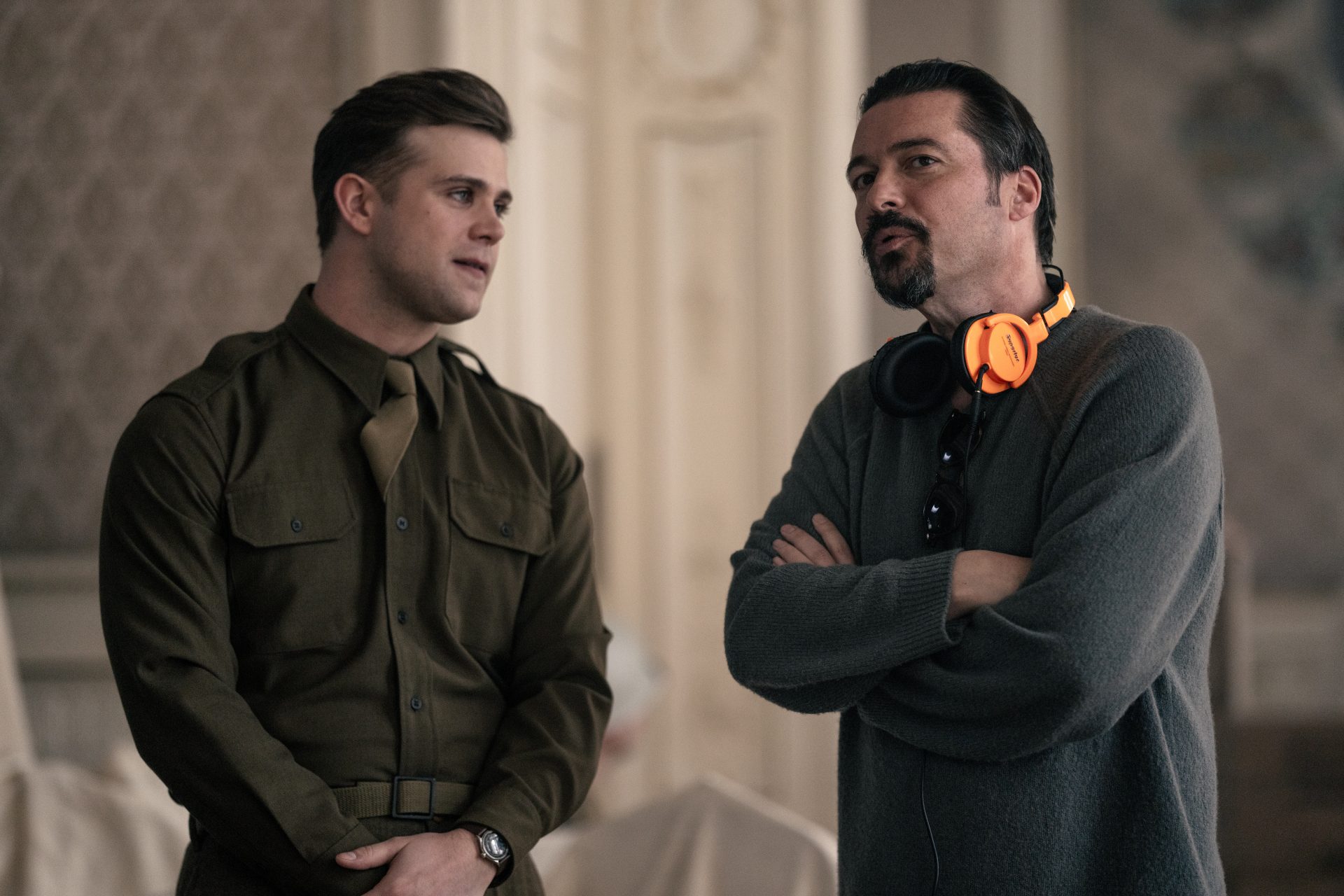
Leo Woodall’s Howie Triest gives the story its necessary counterweight. As Kelley’s interpreter, he is often the quietest man in the room, but his family’s suffering under the Nazi regime exposes the danger of turning the perpetrators into fascinating specimens. There is a point at which psychological curiosity, however legitimate, can begin to crowd out the people who endured the crimes. I found Woodall especially effective because he does not have to win an argument to make that point.

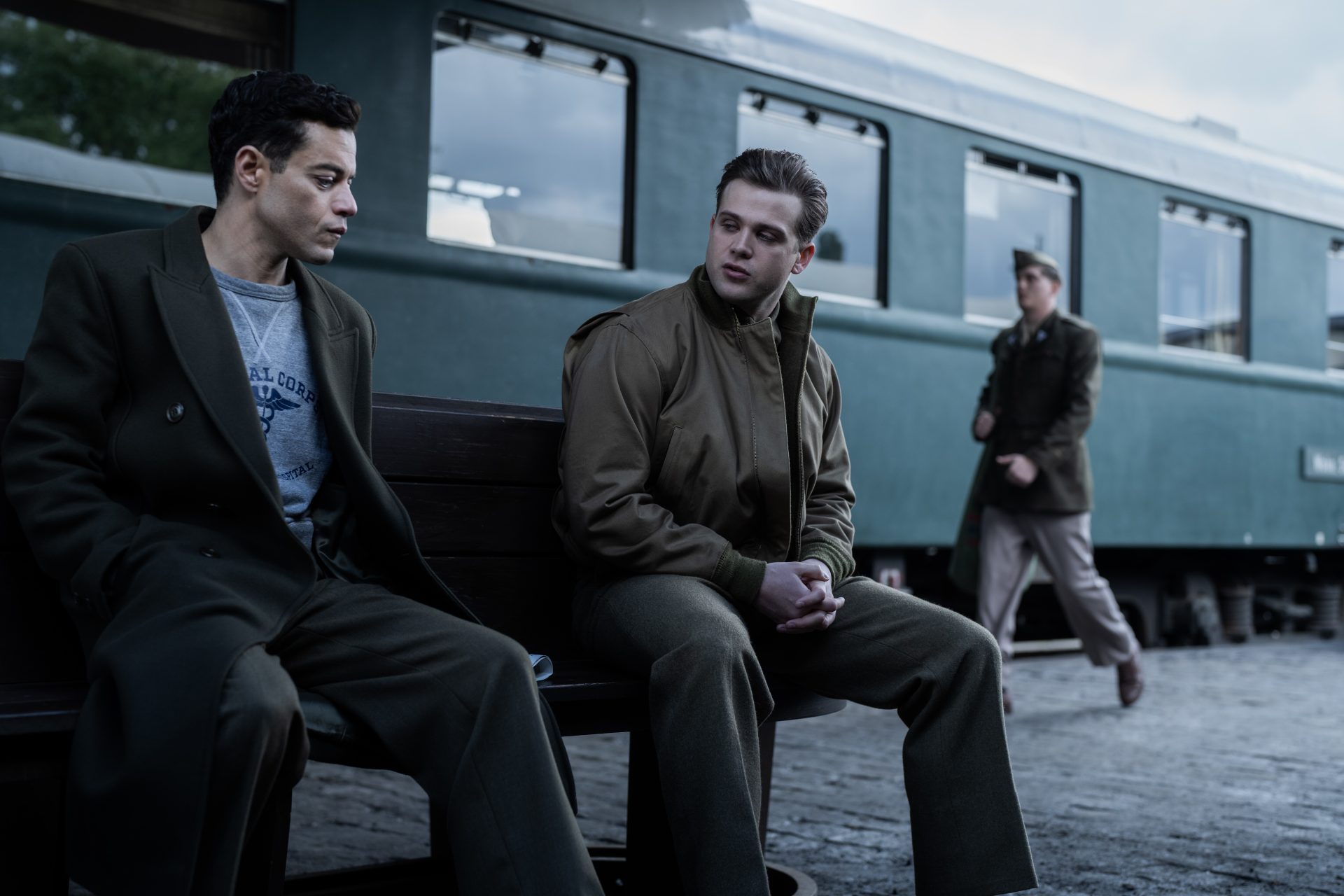


Lydia Peckham’s journalist Lila McQuaide, meanwhile, is part of the film’s more conventional dramatic machinery. She helps draw out Kelley’s desire for recognition and supplies an outside audience for his ideas. I understand why Vanderbilt needed someone beyond the prison walls, although this is one of the strands where the screenplay feels more engineered than observed. The journalist’s part is less convincing than the uneasy silences between Kelley and Göring.

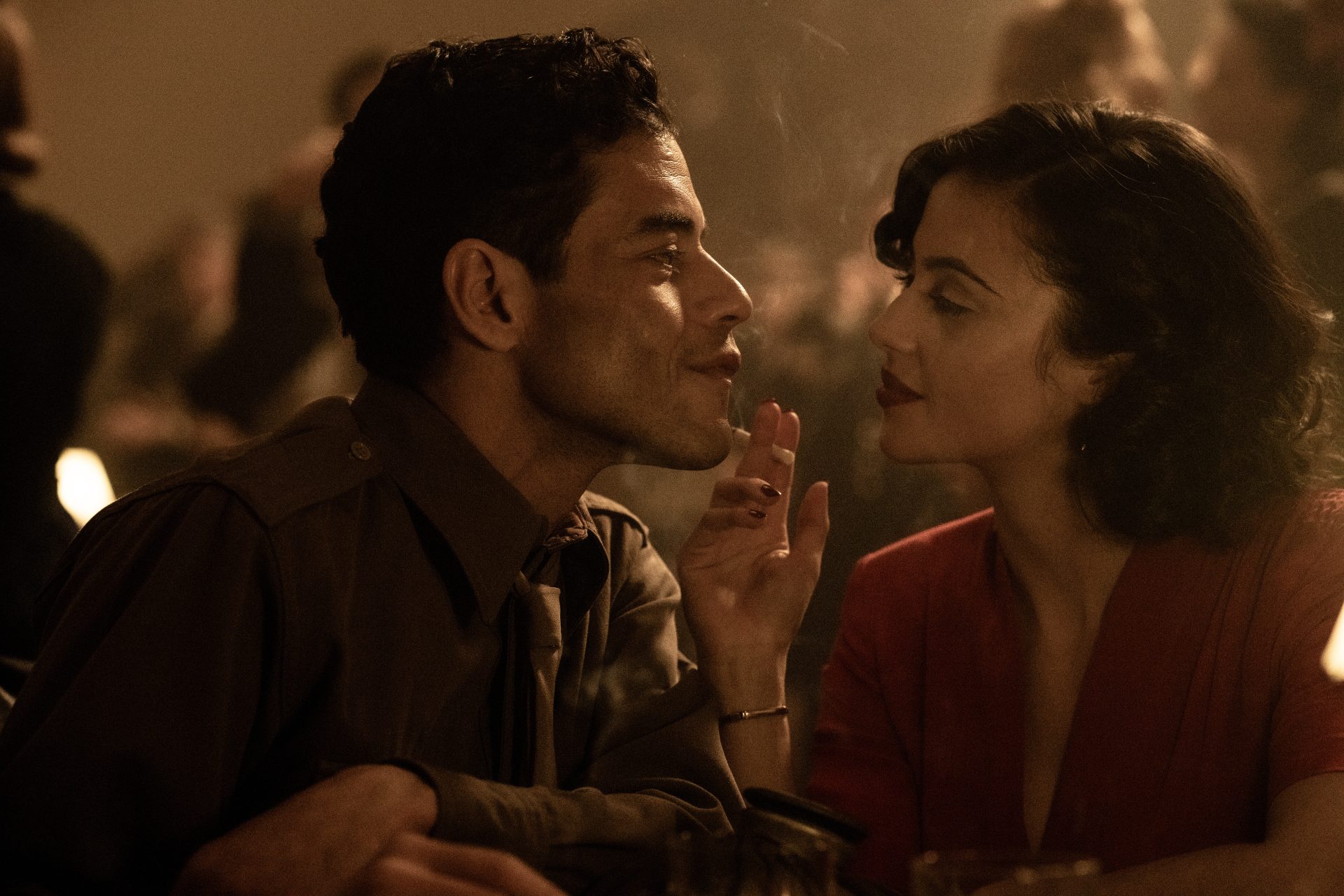
The trial, and the moment the performance stops
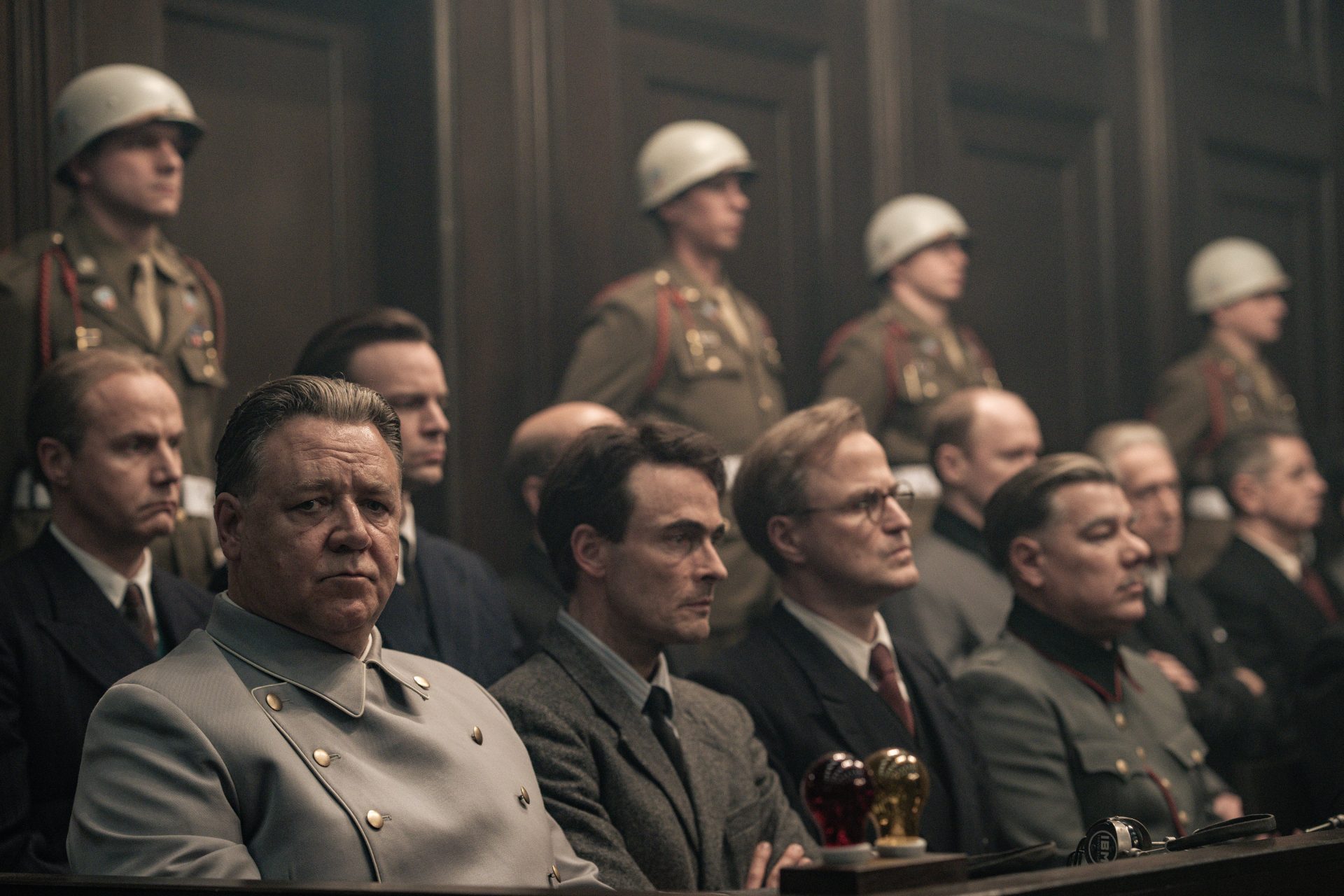
When the action moves into the courtroom, Nuremberg becomes a more familiar prestige drama, full of preparations, strategy and the enormous challenge of putting recently defeated leaders before an international tribunal. It has scale and purpose, but occasionally I could feel the screenplay steering me towards its next major historical moment. Michael Shannon remains compelling, particularly when Jackson’s principled determination comes up against the discomforts of actual legal procedure.


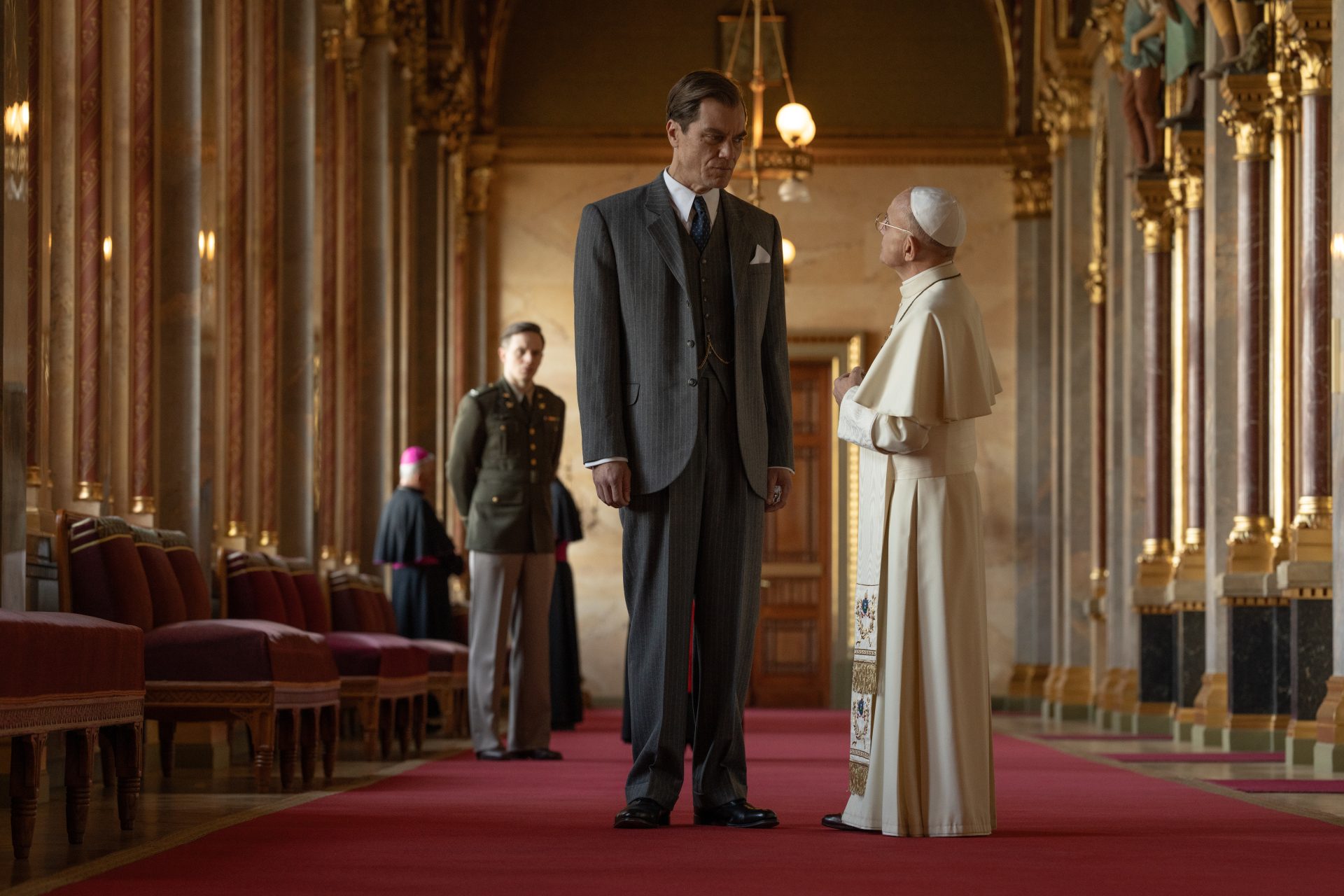
Then the prosecution’s documentary evidence of Nazi atrocities appears. The film incorporates real footage recorded in the aftermath of the camps’ liberation, and its arrival changes the temperature of everything around it. I found these sequences deeply upsetting, not because the film needed another shocking image, but because the human suffering they document refuses to behave like an element in a well-made courtroom thriller. It demands a different kind of attention. The question of whether the drama should reproduce these images at all is a fair one; the material is not just cinema, and it should never be treated as spectacle.
The historical tribunal opened on 20 November 1945 and ran until 1946. Twenty-two defendants stood trial, one in absentia, under charges including crimes against peace, war crimes and crimes against humanity. As the United States Holocaust Memorial Museum’s account makes clear, the court was itself an unprecedented legal undertaking. The film compresses much of that history into a manageable narrative, but it gives a fair sense of why insisting upon a trial was so consequential.

Where the film takes liberties
Historical drama cannot reproduce every conversation or procedural detail, and I do not expect a film to act as a transcript. I do, however, want to know when its most satisfying scenes have been arranged for the benefit of the story. Kelley left Nuremberg before some of Göring’s most celebrated courtroom testimony; the film keeps him closer to the legal climax than the chronology allows. Its depiction of a bitter personal feud between Kelley and Gilbert is likewise much more theatrical than the documented disagreement between them.
This matters because the real dispute was more interesting than a shouting match. Kelley resisted the idea that the Nazi leadership represented a peculiar class of madmen; Gilbert was more inclined to identify severe personality disturbance in individuals such as Göring. Both men were interpreting an unusual and limited sample. Neither position should be allowed to stand in for an exhaustive scientific explanation of Nazism. Jack El-Hai’s work, and the historical account of Kelley’s research, provide a useful corrective to the film’s compressed version.

The phrase ‘the banality of evil’ inevitably comes to mind, but it is worth being careful with it. Hannah Arendt coined it in writing about Adolf Eichmann’s trial years later, not about Göring at Nuremberg. Arendt was not saying that these crimes were trivial or that every ordinary person is a concealed mass murderer. What the film usefully exposes is a related problem: we are so eager for evil to look visibly abnormal that we can miss the institutions, ambition, ideology and willing participation that make it possible.
A handsome film about ugly things
On a technical level, Nuremberg has the confidence of an old-fashioned studio drama. Dariusz Wolski’s restrained lighting and muted interiors give the encounters a claustrophobic intimacy; Eve Stewart’s production design makes the court and prison feel like working spaces rather than historical exhibits. Tom Eagles’ editing moves between the private psychological duel and the public business of building a case. Brian Tyler’s score sometimes leans hard on the weight of events, although the quieter passages do more for me than the grandest cues.
At 148 minutes, the film does not always earn its running time. A few conversations state their themes twice, the journalist subplot lacks depth, and its effort to turn every historical complication into a dramatic showdown can feel a little too tidy. Those weaknesses are real, but they did not quite undo the power of Crowe’s performance or the question underpinning it. The film is most interesting when it distrusts the very neatness of its own explanations.
What I was left thinking about
The real Kelley returned to civilian life, published 22 Cells in Nuremberg in 1947 and continued arguing that the Nazi leaders’ psychology could not be dismissed as something belonging to another species. His later life was complicated and troubled, and he died by suicide in 1958. The film leans heavily on the bleak symmetry of that ending. I am less persuaded by the suggestion that simply looking too closely at evil destroyed him; a person’s life is more complicated than a closing title card, and tragedy is not an argument in itself.
What stayed with me was something smaller and more persistent: the way Göring can talk, laugh and take pleasure in being admired without any of that undoing what he helped bring about. A film can ask us to understand a perpetrator’s personality without asking us to forgive his actions. That is a difficult line to walk, and Nuremberg does not always manage it gracefully, but I think it is worth the attempt.
I would recommend it, particularly for Crowe, Shannon and the moments when Woodall quietly brings the subject back to those who suffered under the regime. I would also recommend reading beyond the film. History does not become more reassuring once the drama has ended, nor does it present the tidy dividing line between monsters and the rest of us that Kelley originally hoped to discover. The television was off, but that particular thought stayed in the room.
Film details: Nuremberg (2025). Written and directed by James Vanderbilt; based on The Nazi and the Psychiatrist by Jack El-Hai. Starring Russell Crowe, Rami Malek, Michael Shannon, Leo Woodall, Richard E. Grant, Colin Hanks, John Slattery, Lydia Peckham and Wrenn Schmidt. Cinematography: Dariusz Wolski. Editing: Tom Eagles. Music: Brian Tyler. Running time: 148 minutes. US distributor: Sony Pictures Classics.
Further reading: United States Holocaust Memorial Museum — The Nuremberg Trials; HISTORY — How a Psychiatrist at Nuremberg Got Inside the Nazi Mind; Sony Pictures Classics — Nuremberg.
Leave a Reply