
I watched Eenie Meanie for a very straightforward reason: Samara Weaving was in it. At this point, that is often enough to get me to press play. She has become particularly good at playing people who have had enough of everyone else’s nonsense but are still expected to survive it. The roles are not always dignified. Sometimes the films around her are barely holding together. Still, she knows how to make panic, irritation and survival instinct look as though they all belong to the same person.

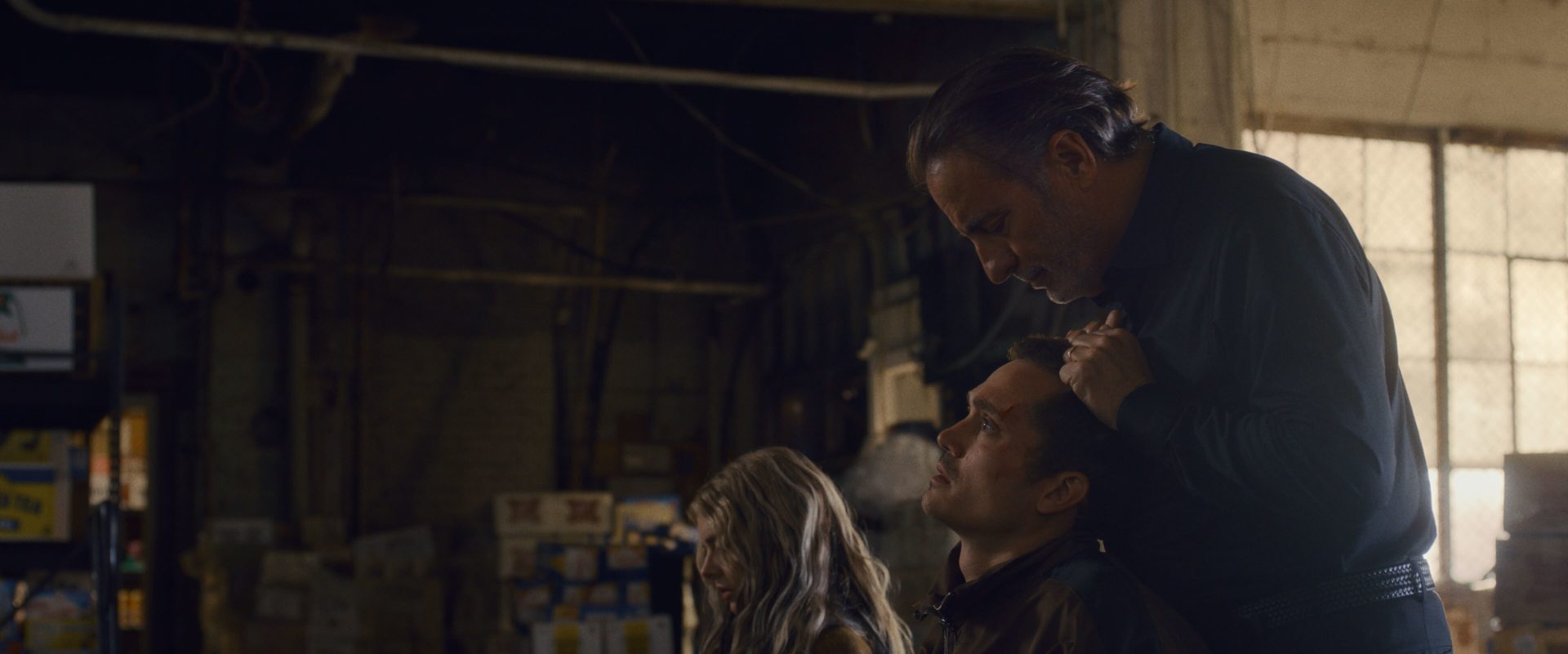
Written and directed by Shawn Simmons, Eenie Meanie (2025) gives her an excellent job title and a miserable personal life. Edie Meaney used to drive getaway cars as a teenager; now she is trying to hold down ordinary work and keep her criminal past at arm’s length. Unfortunately, her spectacularly unreliable ex-boyfriend John (Karl Glusman) gets into trouble with Nico (Andy Garcia), a former employer who remembers exactly what Edie can do behind the wheel. Before long, she is back where she swore she would never be: responsible for someone else’s disaster.
On paper it sounds like a reliable Friday-night film: a casino job, fast cars, a shady old boss and a lead who is better at making a getaway than making a clean break. In practice it is part crime comedy, part bruised relationship drama and part old-fashioned chase picture. The gears do not always mesh, and the film occasionally mistakes wisecracks for character. Yet beneath the noise is a sharper idea about what happens when one competent person becomes everyone’s designated rescue service. That is what held my attention after the novelty of the premise wore off.

Official trailer — an introduction to Edie, John and the trouble ahead. Video: Hulu / 20th Century Studios.
Samara Weaving, and the Appeal of Controlled Panic
There are actors who bring a whole weather system with them. Samara Weaving does that. She has this slightly feral screen quality, which I mean as praise. Even when she is still, she looks like she has already calculated three exits, two insults, and one blunt object within grabbing distance. In horror-comedy, that energy has served her especially well. The Babysitter, Ready or Not, Scream VI — all of them tapped into her ability to play fear, irritation, panic, and survival instinct without turning the character into a joke. Vogue noted in 2025 that Weaving had become strongly associated with horror-comedy and “scream queen” roles, though she has also spoken about wanting to try other kinds of parts rather than be boxed into one lane.


That matters in Eenie Meanie, because Edie is not a horror heroine, but she is built from some of the same emotional equipment. She is quick. She is defensive. She has been shaped by danger long before the movie begins. She is funny, but not because she is carefree. She is funny because sarcasm is sometimes what people use when softness has become too expensive.
The funny thing is that Weaving apparently did not know how to drive before taking the role of a former getaway driver. Vogue reported that she had never driven before the film and had to learn for the part, which is almost too perfect as a behind-the-scenes detail. It sounds like something a screenwriter would invent to make an actor’s press tour more charming. But it also accidentally sharpens the performance. Edie’s driving is supposed to be instinctive, almost bodily. She is someone who learned control in motion because everything else in her life was unstable. The actor learning that skill from scratch adds a strange extra layer to the role.
And that is partly why I watched. Weaving has become one of those actors whose presence makes even uneven genre material more watchable. There is a small club of performers like that. They may not always be in great films, but they give the film a pulse. They bring friction. They make the familiar machinery feel less dead. Eenie Meanie needs that badly.
The Driver Who Never Really Got to Be a Child
Edie Meaney, also known as “Eenie Meanie,” is introduced as someone trying to do the unglamorous work of going straight. She is not living some new dream life. She is working as a bank teller, going to community college, trying to put distance between herself and the criminal childhood that formed her. The film’s opening gives us young Edie, already behind the wheel far too early, pulled into crime through her family. /Film describes the prologue as showing a 14-year-old Edie pressured into driving for her small-time crook father, played by Steve Zahn.


That origin is important, because it makes Edie’s skill feel less like a cool action-movie gimmick and more like damage. She did not become a getaway driver because she wanted a nickname and a reputation. She became one because the adults around her were useless, dangerous, intoxicated, criminal, or some lovely buffet combination of the above.
This is where Shawn Simmons’ background and stated interests begin to matter. In an interview, Simmons said he is drawn to blue-collar worlds and characters from poor communities, connecting Edie and John to the same kind of working-class struggle that shaped his earlier series Wayne. He also said the original seed of the script involved a young girl driving her alcoholic parents around, which he saw as the possible origin story for either a hero or a villain.
That is one of the more interesting ideas in Eenie Meanie: Edie could have become either. In another movie, she might be the villain. In this one, she is the person trying very hard not to become the sum total of everyone else’s failures.
The problem is that going straight is not cinematic in the way crime is cinematic. Paying bills, attending classes, enduring a boring job, trying not to answer calls from your chaotic ex — none of that has the clean visual grammar of a casino robbery or a car chase. But Eenie Meanie does have some patience for that tension. Edie is not just being pulled back into crime. She is being pulled back into an old version of herself that probably felt more powerful, more awake, and more useful, even if it was slowly destroying her. That is the trap. Bad lives sometimes come with better lighting.
John: A Human Check-Engine Light
Then there is John. Karl Glusman plays John as the kind of man who seems to generate consequences the way old cars leak oil. He is not simply unreliable. He is chronically, almost professionally unreliable. The official synopsis calls him Edie’s “chronically unreliable ex-boyfriend,” which is tidy corporate copy but also painfully accurate.

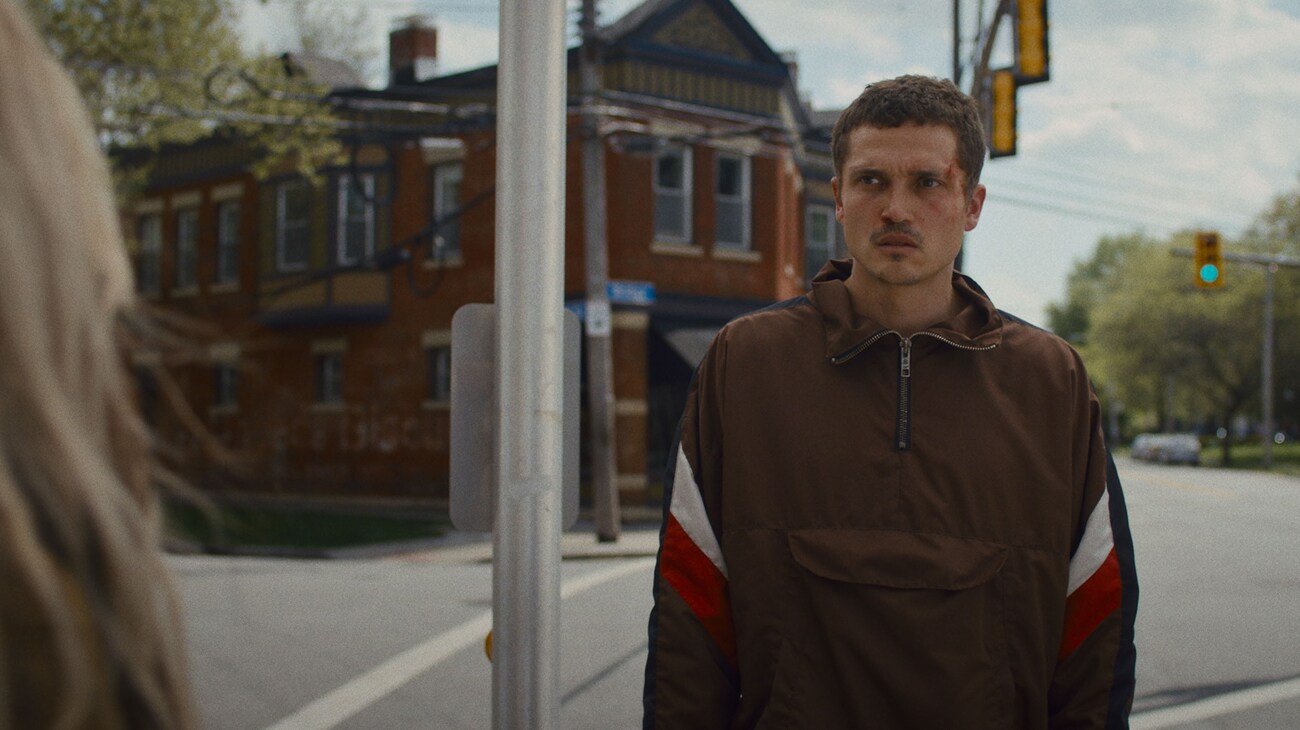
John is the emotional problem at the centre of the film. Not because he is especially profound, but because the movie needs us to understand why Edie keeps being pulled toward him despite all available evidence. That is a hard sell. Some viewers and critics were not convinced. RogerEbert.com argued that the film never fully explains why the audience should root for Edie to stay connected to him, especially given his obvious liability as a partner and catalyst for danger.
I can see that. John is the sort of character who tests the patience of anyone who has ever watched a friend go back to the same terrible person for the ninth time and then explain, with great seriousness, that “you don’t know him like I do.” Sometimes, from the outside, love looks less like mystery and more like bad administration.


But I also think that irritation is partly the point. John is not supposed to be a stable romantic fantasy. He is the old wound with a familiar face. He represents a previous life, a shared history, a kind of gravitational pull that logic has never been good at defeating. Edie does not return to him because he is good for her. She returns because some part of her still recognizes the rhythm of chaos as home.
Glusman’s job is tricky because John has to be pathetic, funny, sexy enough to make the history plausible, dangerous enough to create stakes, and ridiculous enough to keep the comedy alive. /Film found his performance one of the places where the film’s mixture of comic relief, romantic lead, and wild card holds together better than it might have.
For me, John works best when the film stops asking me to like him and simply lets me understand the fatigue of dealing with him. He is less a romantic lead than a test of Edie’s survival instincts. And by the end, the film seems to realize that too.
Nico Knows Where to Apply the Pressure
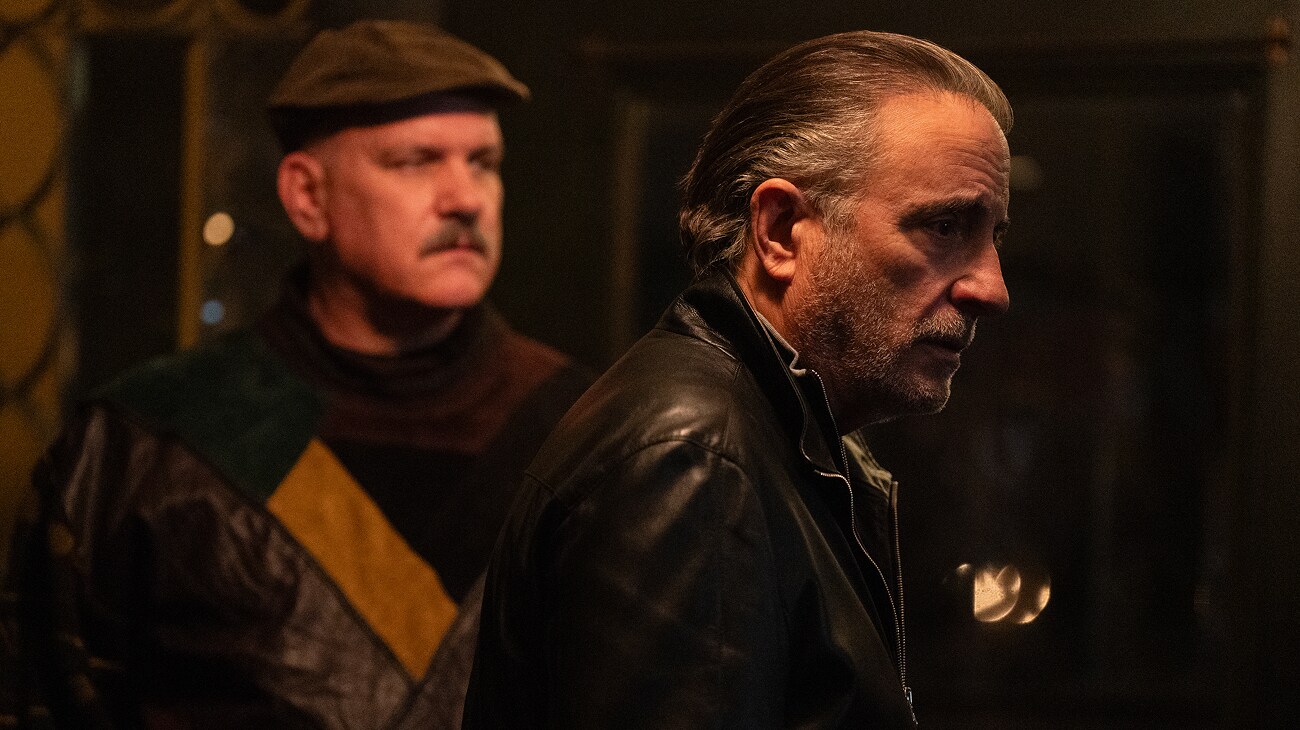
Andy Garcia’s Nico is the former employer who pulls Edie back into the life. He gave her the nickname. He understands her talent. He also understands leverage. The official materials frame him as the past employer who offers Edie a chance to save John’s life, which is a very polite way of saying that the past knows exactly where to press.
Garcia brings the kind of relaxed menace that older actors can sometimes deliver with less effort than younger actors screaming across a room. He does not need to overplay Nico. He just has to make it believable that this man has survived long enough in crime to understand that fear is only one management style. Affection can be another. Nostalgia can be another. Debt, of course, remains evergreen.
Nico’s relationship with Edie has that fake-family criminal intimacy we have seen in many crime films. He is not her father, but he behaves like someone who has claimed emotional rights over her. He knows her history. He knows her skill. He knows that her loyalty and guilt can still be activated if the situation is ugly enough.
This is where Eenie Meanie becomes more interesting than its plot summary suggests. The heist is the external engine, but the real story is about claims. Who gets to claim Edie? Her father? Her ex? Her old boss? Her unborn child? Herself? That last one sounds obvious, but the film takes a long, noisy route to get there.
Too Many Passengers, Not Enough Room
The ensemble is one of those casts where you keep recognizing people and waiting for the film to do slightly more with them. The film includes Jermaine Fowler, Marshawn Lynch, Randall Park, Steve Zahn, Andy Garcia, Karl Glusman, and Samara Weaving, among others.

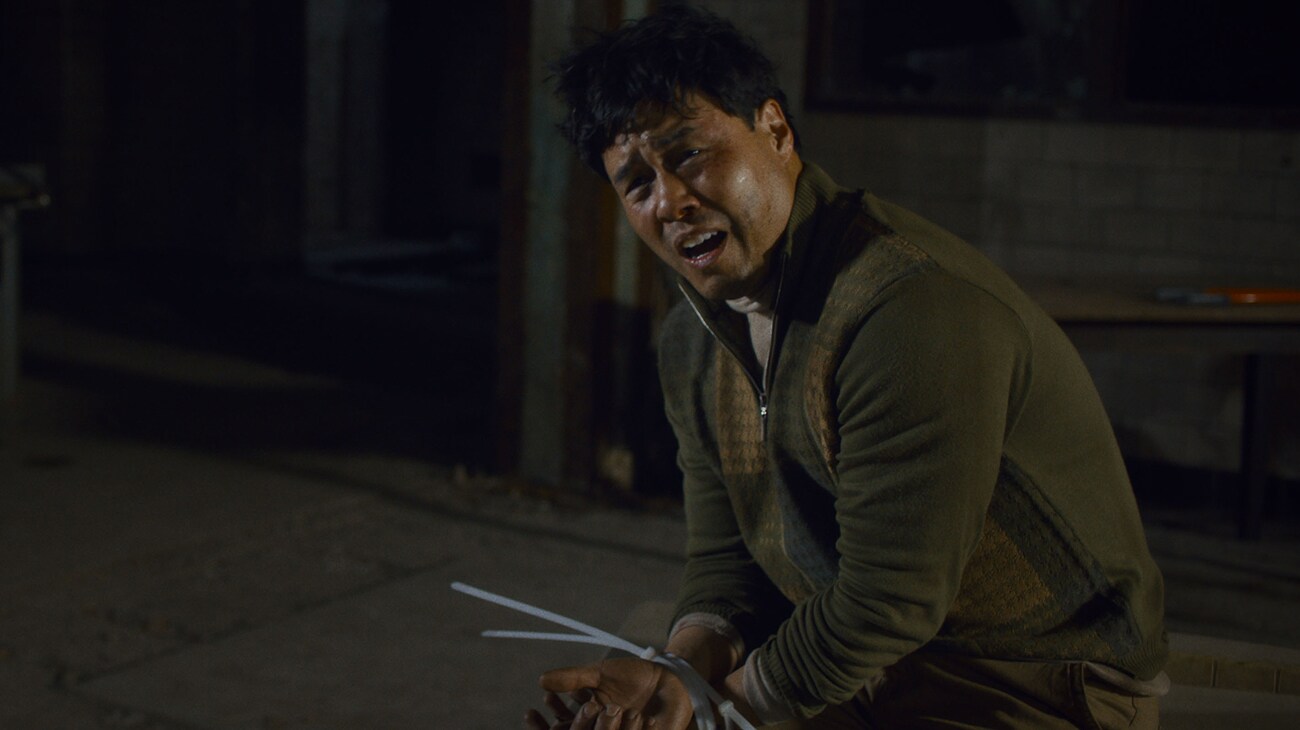
Steve Zahn, as Edie’s father, seems to have walked in from a sadder, more textured version of the movie. His character is not around enough, but he helps explain Edie without overexplaining her. A lesser version of this story would have made her cool simply because cool women driving fast cars are marketable. Zahn’s presence gives her skill a sourer origin. She learned to drive because adults failed her.
Randall Park’s Leo, the card counter John has somehow trapped in his mess, brings a different comic texture. Marshawn Lynch’s Perm Walters adds another unpredictable element. Jermaine Fowler’s The Chaperone adds more genre flavour. Some of these characters are enjoyable in pieces, but the film occasionally feels like it keeps adding ingredients to prove it has a full ensemble, even when Edie and John’s broken orbit already gives it enough material.
This is part of the tonal wobble. Eenie Meanie wants to be a character drama, a car-chase picture, a crime comedy, and a relationship autopsy. That is not impossible. Plenty of great films balance more dangerous combinations. But here, you sometimes feel the gears changing. A scene wants to be emotionally sincere, then swerves into joke rhythm. A comic beat lands just when the movie is trying to convince us of genuine danger. A violent moment appears, but the film’s personality is still wearing sunglasses and tapping the steering wheel. Rotten Tomatoes’ consensus calls it a tonal mishmash, and while that phrasing is a bit tidy, I understand the complaint. The film is at its best when the messiness belongs to Edie’s life, not to the screenplay’s indecision.
The Heist Is Only Half the Problem
The central plot is familiar: Edie has to pull off a casino-related job to save John. The target involves millions in cash, a Dodge Charger, and the kind of plan that sounds simple only because the movie has not started punishing everyone yet. /Film summarizes the job as a Toledo casino heist involving a poker tournament prize car with $3 million in the trunk.

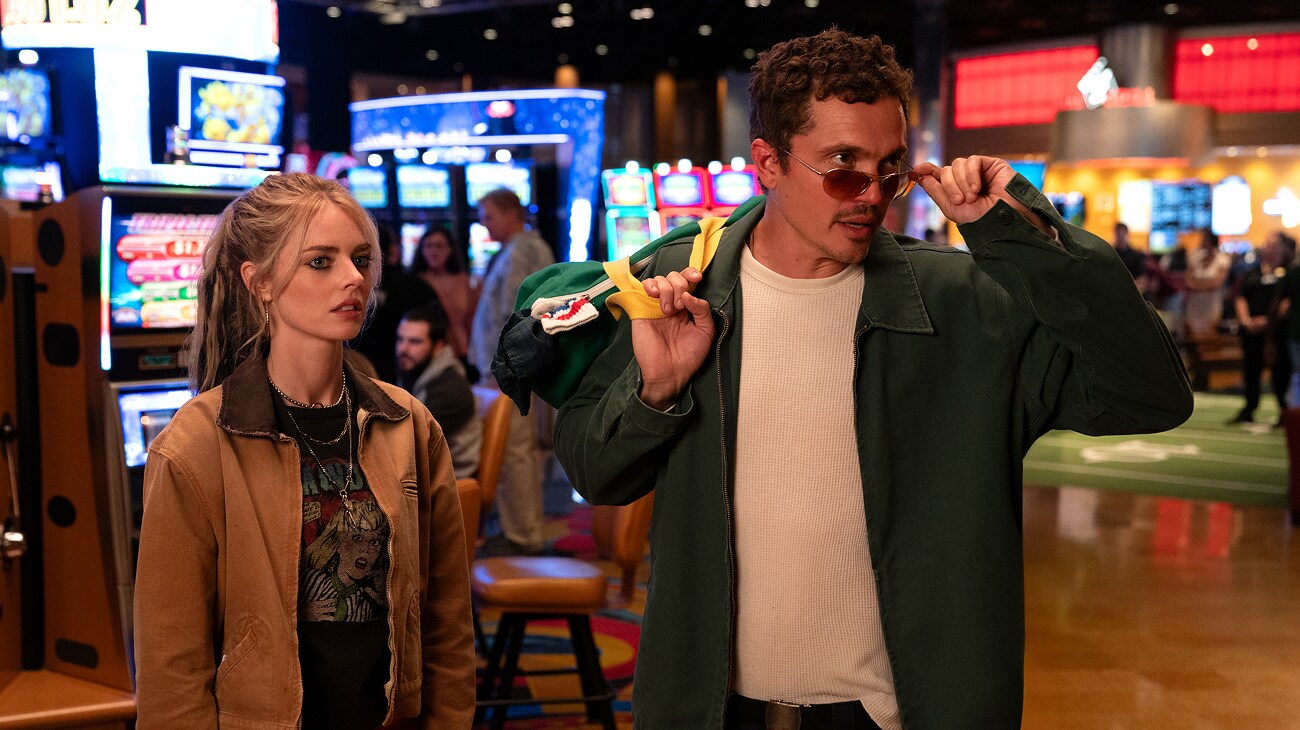
The heist material is not revolutionary. We have seen this shape before. What gives it some weight is Edie’s pregnancy, which changes the emotional arithmetic. She is not only deciding whether to save John. She is deciding what kind of life she is about to drag another human being into.
This is why the movie’s title works better than it first appears. Eenie Meanie sounds childish, almost throwaway. A playground rhyme. A nickname. A joke. But it also suggests selection, chance, fate disguised as choice. Edie has spent her life being chosen by other people’s needs. Her father needed a driver. Nico needed talent. John needs rescue. The film keeps asking whether she has any real choice at all, or whether she is just repeating the rhyme because that is the only rhythm she knows.

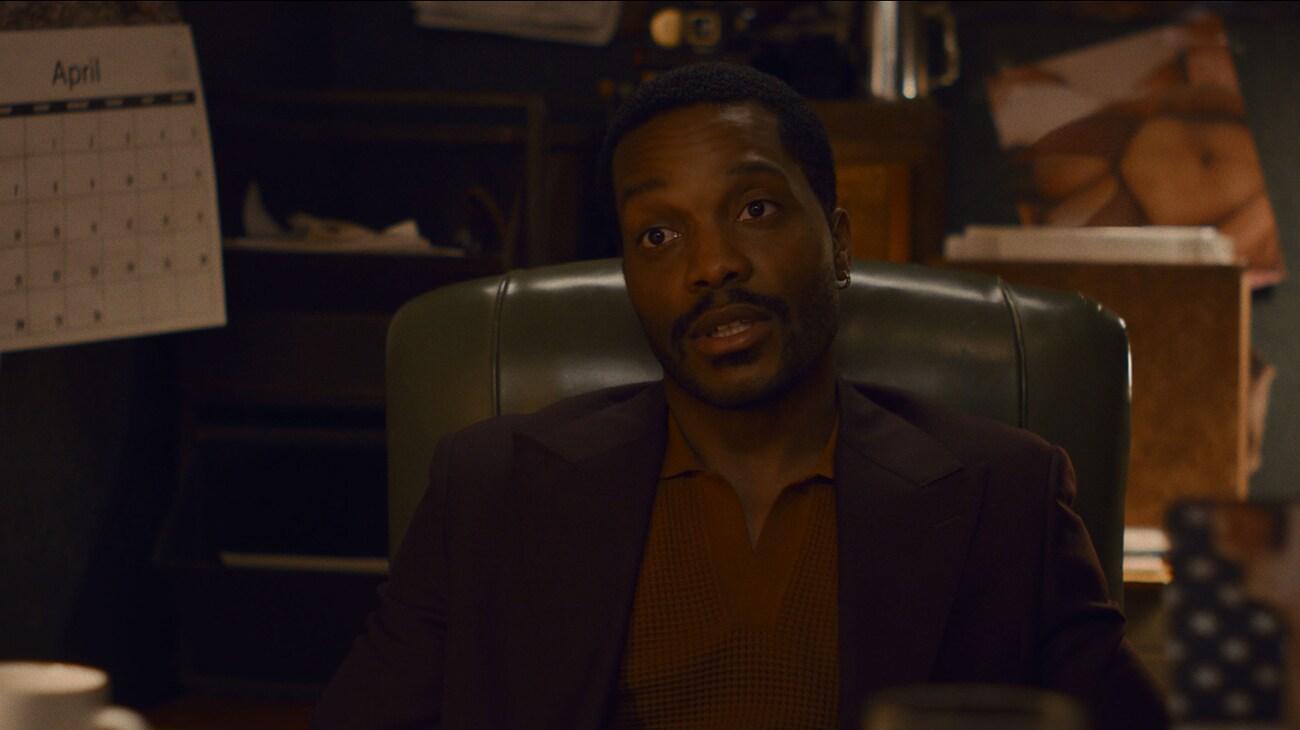
Crime movies often invite us to enjoy transgression without thinking too hard about the emotional residue. The robbery is fun. The car chase is cool. The money is abstract. The bodies are inconvenient but narratively useful. Eenie Meanie sometimes plays that game, but it also seems uncomfortable with it. /Film noted that the movie attempts to combine crime-movie thrills with a more sober moral concern, which is part of why it feels unusual even when its pieces are familiar.
That moral discomfort is not always gracefully handled. Sometimes the film feels like it wants to be irresponsible and responsible at the same time. It wants the cool car, the funny criminals, the snappy dialogue, the violent reversals. But it also wants us to understand that Edie’s life has been bent by people who treated her talent as a resource, not a personhood.
That tension is not a flaw by itself. It may be the most adult thing in the film. The flaw is that Eenie Meanie does not always trust the tension enough. It keeps decorating it.
When the Film Finally Gets Behind the Wheel
For a film about a getaway driver, Eenie Meanie takes its time getting to the proper driving set pieces. That may frustrate viewers looking for a full-throttle action film. But when the car material arrives, there is a tactile quality to it that helps.

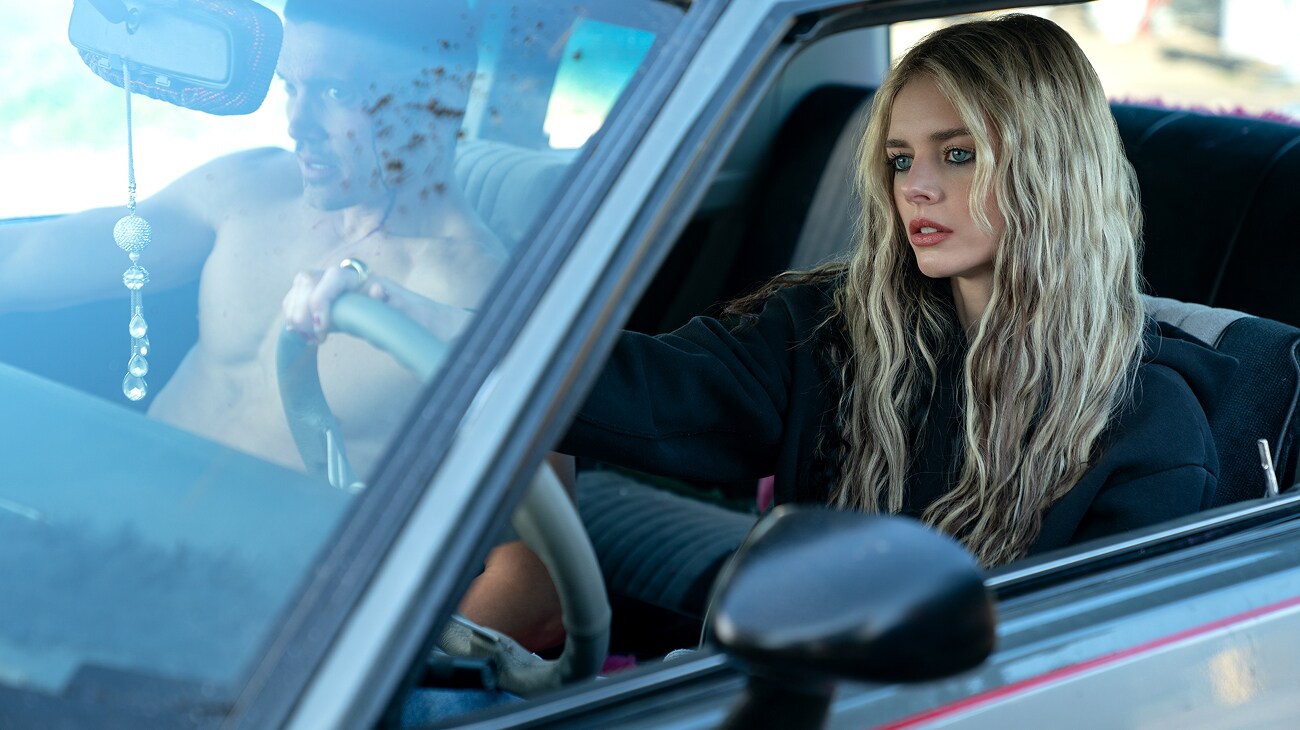
This is not superhero physics. It is not the late-stage Fast & Furious version of car action where vehicles behave like emotional support missiles. The better sequences in Eenie Meanie have weight. Cars skid, slam, flip, and grind against the road in ways that feel closer to older American chase films than digital spectacle. /Film specifically praised the grounded quality of the stunt work and linked the film’s action spirit to older car movies like Vanishing Point, Dirty Mary Crazy Larry, and Death Proof. That helps the movie. A lot.
Because one of the quiet problems with modern streaming action is that it often looks expensive without feeling physical. You can sense the money, but not the impact. Eenie Meanie may not have enough chase sequences for some viewers, but the ones it has feel like they belong to the same world as Edie’s body. She is not a superhero. She is skilled, angry, frightened, pregnant, tired, and surrounded by men who keep making her life worse. The car becomes the one place where she has control. There is something almost primal about that.
Maybe this is also why Weaving works so well in the role. Her screen presence often has that same quality: controlled panic. She can make a scene feel like the character is holding herself together through sheer irritation. Put that person behind the wheel and the metaphor is not subtle, but it does the job.
Driving Diaries — the cast and crew discuss the cars and how the action was made. Video: Hulu.
A Friday-Night Film Lost in the Streaming Menu
One of the stranger things about Eenie Meanie is that it feels like a movie from another release era. Not necessarily a great theatrical release, but the kind of mid-budget adult genre film that used to just exist. You would see the poster at the cinema. You would maybe catch it on a Friday night. It would do okay, not change cinema history, then become a cable staple or DVD discovery.
Now that kind of film often goes straight to streaming, where it has to fight the same battle as everything else: thumbnails, algorithms, laundry, distracted viewing, someone checking their phone during the first act. Eenie Meanie was released by 20th Century Studios on Hulu in the U.S. and on Disney+ internationally on August 22, 2025.

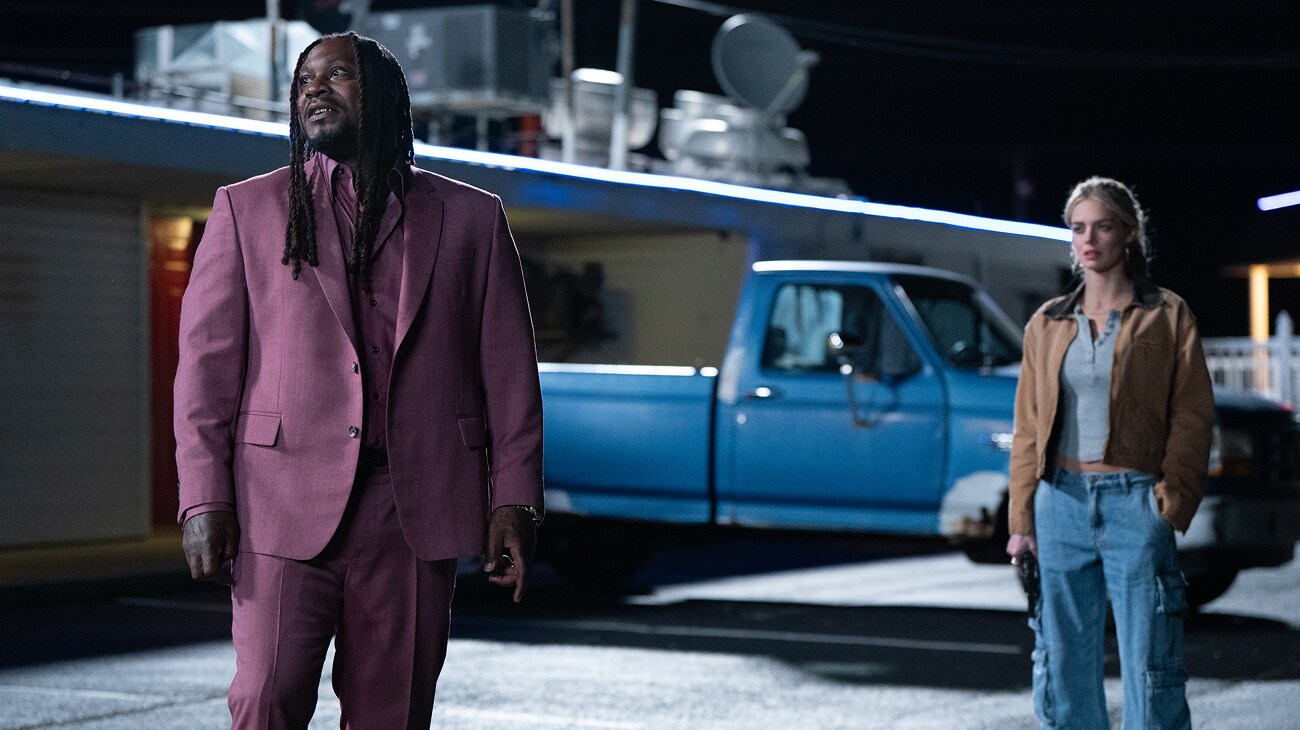
That distribution context matters. This is a film that might have benefited from an audience. Not because it is a masterpiece, but because action comedy is communal by nature. A car flip feels bigger with a room reacting. A joke lands differently when you hear other people laugh. Even tonal wobble can be more forgiving in a theatrical environment where the social energy carries the weaker parts.
On streaming, every flaw becomes more private. You notice the sag. You check how much time is left. You compare it to three better films in your head. The couch is merciless in its own quiet way.
That may be why the critical response feels split between “this is derivative filler” and “this is a solid throwback that deserved better.” Both reactions make sense. RogerEbert.com was harsh, calling the film cliché-heavy and lacking organic tension, while /Film argued that its stunt work, ambition, and Weaving’s lead performance made it more satisfying than it first appears. Those different responses underline the problem: this is a film with enough life to please some viewers and enough familiar machinery to exhaust others. It is a mixed-bag movie with a lead performance trying to outrun the bag.
Spoilers follow: This section discusses the film’s final decisions and their meaning.
The Ending: When Rescue Stops Looking Like Love
The ending is where Eenie Meanie becomes harder to dismiss. Without getting coy, the final movement reframes Edie’s relationship with John and forces her to choose not just between crime and escape, but between repeating an emotional pattern and breaking it. Decider’s interview notes that Weaving saw the twist ending as a metaphor for breaking free from emotional manipulation and refusing the “mothering girlfriend” trope.
That reading makes sense. The entire film has been training us to see Edie as the competent one. She drives. She rescues. She solves. She absorbs the consequences. John creates fires; Edie becomes the emergency response system. It is a dynamic many people will recognise even without crime bosses and casino money. One person gets to be chaotic. The other person becomes “strong,” which is often just a nicer word for exhausted.

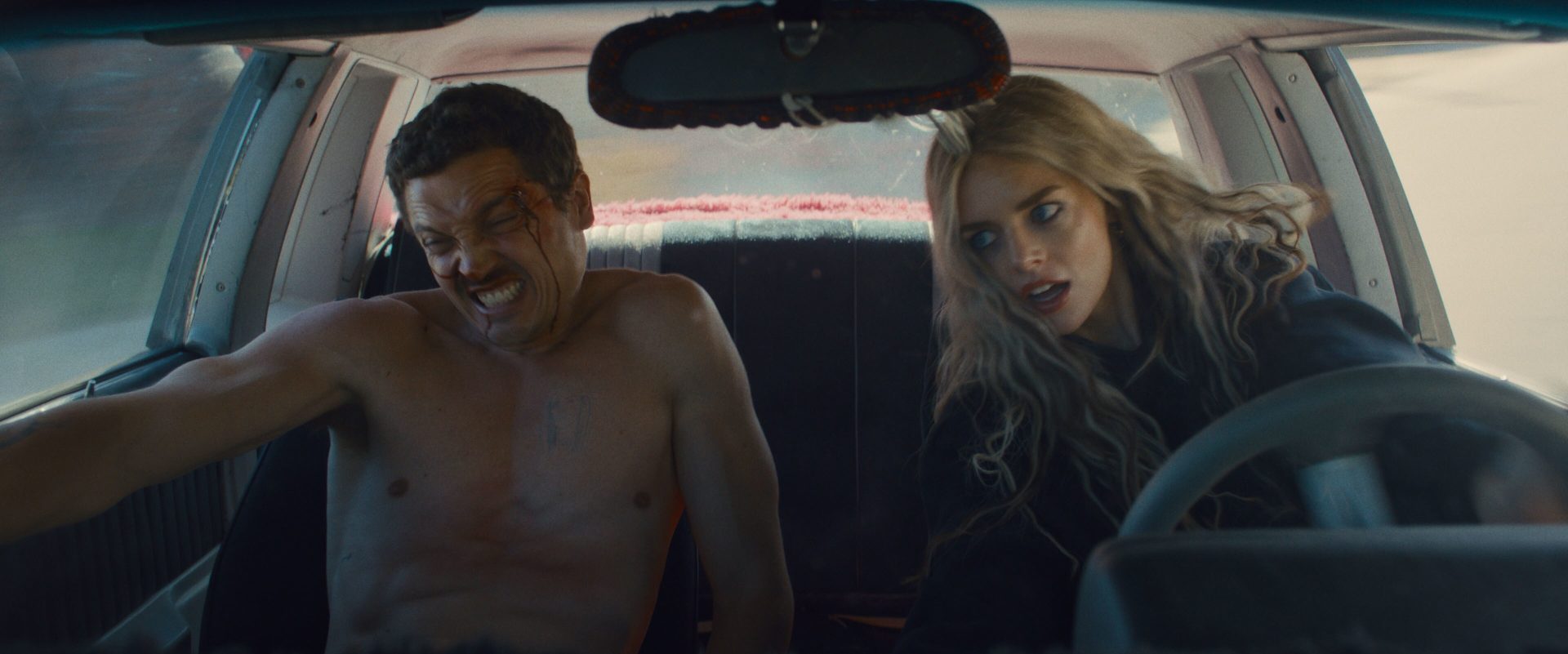
The ending works because it stops romanticizing that exhaustion. It does not let John’s need become the final moral argument. It does not ask Edie to prove her love by ruining herself again. For a film that often seems caught between swagger and sincerity, that final choice gives the story a cleaner spine than it had for much of its runtime.
I am not sure the ending fixes everything. It does not suddenly make every joke sharper or every character richer. But it does make Edie’s arc more coherent. It suggests that the real getaway was never from Nico, the casino, the cops, or the criminal past. It was from the old role she kept being assigned. Driver. Daughter. Girlfriend. Rescuer. Liability manager. At some point, even the best driver has to stop picking up passengers.
Thrill Ride — a look behind the film’s car chases and action sequences. Video: Hulu.
A Good Driver in an Uneven Machine
Eenie Meanie is not a great film. It is also not disposable in the way some streaming originals can feel disposable. It has too much personality for that, even if some of that personality is secondhand. It has good stunt work, a few sharp supporting turns, a stronger ending than expected, and a lead actor who seems increasingly capable of making genre films feel more emotionally interesting than their premises. I watched it because of Samara Weaving, and that still feels like the correct reason.
She is the reason the film has charge. She is the reason Edie feels like more than a cool nickname. She is the reason the ending lands with some sting rather than just shock. Around her, Eenie Meanie sometimes revs, sometimes stalls, sometimes takes a corner too wide. But whenever she is at the wheel, the movie finds its line.
There are worse things than a slightly messy action-comedy with a good lead, practical-feeling car chaos, and a final act that understands the quiet horror of being someone else’s designated rescuer. The film may not catch a tiger by the toe.
I watched it for Weaving, and that remains the simplest recommendation I can make. The film sometimes takes a corner too wide, but its ending knows the difference between getting somebody out of trouble and getting yourself out of a life that has become nothing but trouble.
Production and release information: 20th Century Studios. Film imagery used for editorial commentary, © 2025 20th Century Studios / Disney.
Leave a Reply